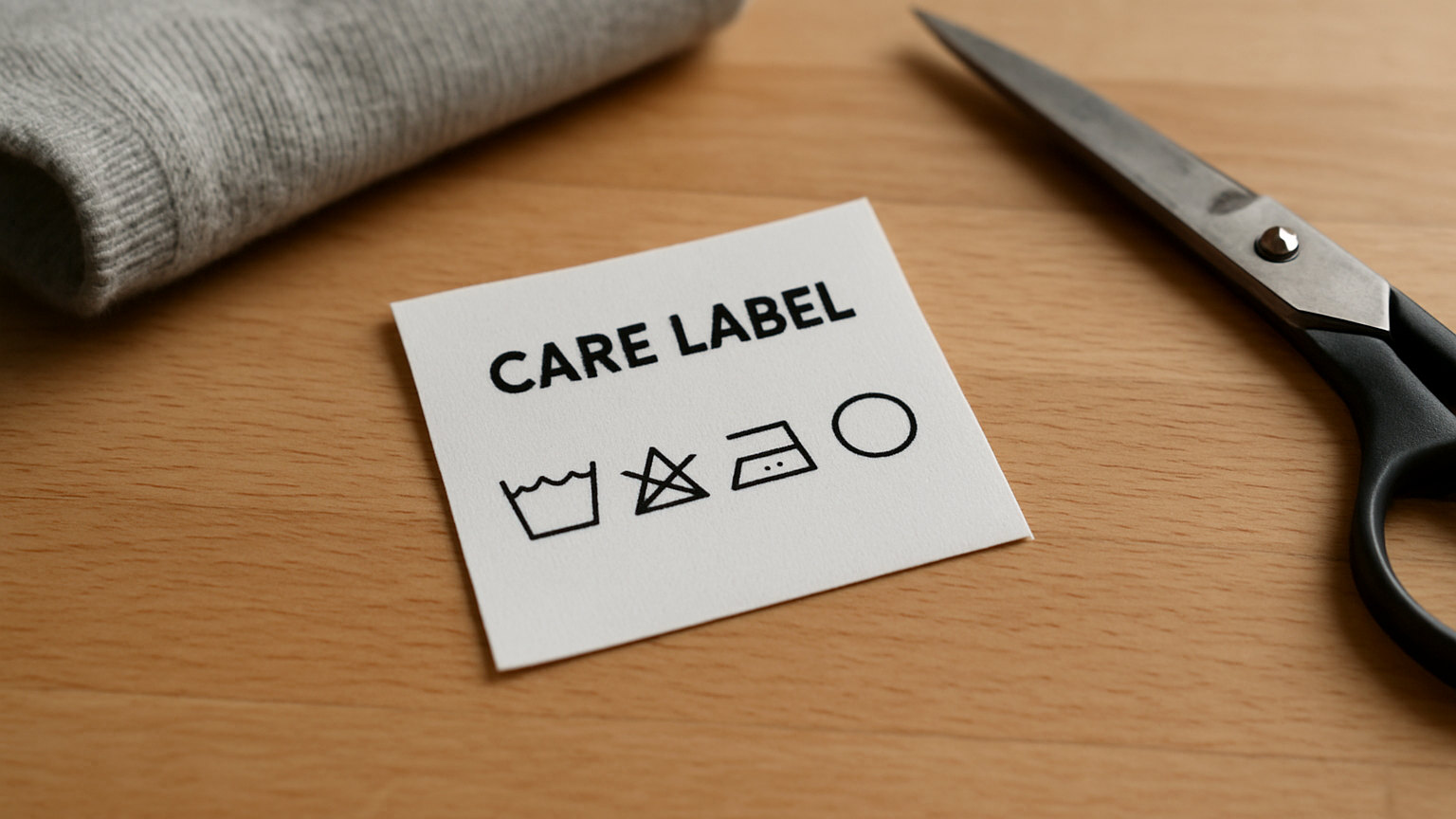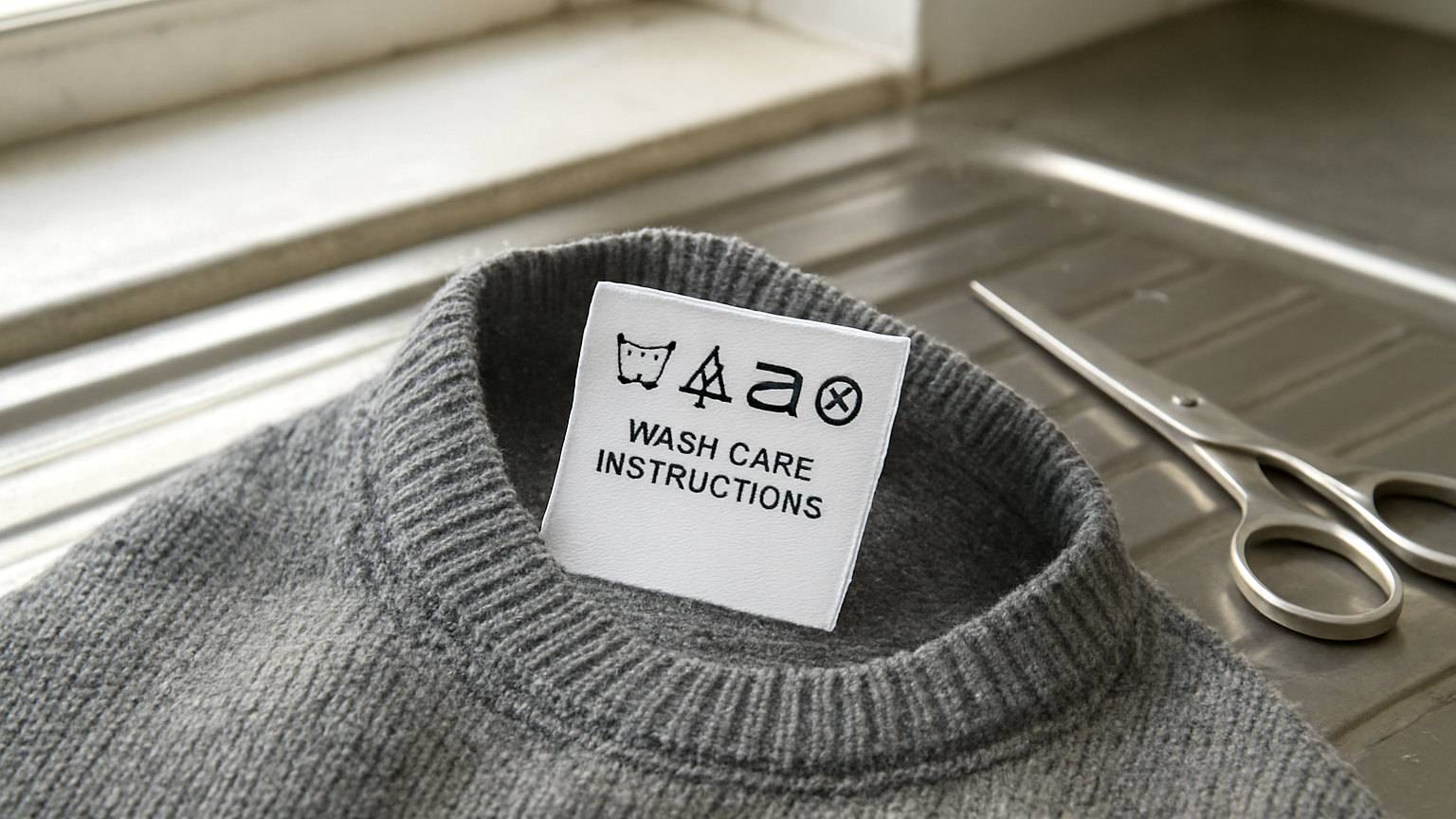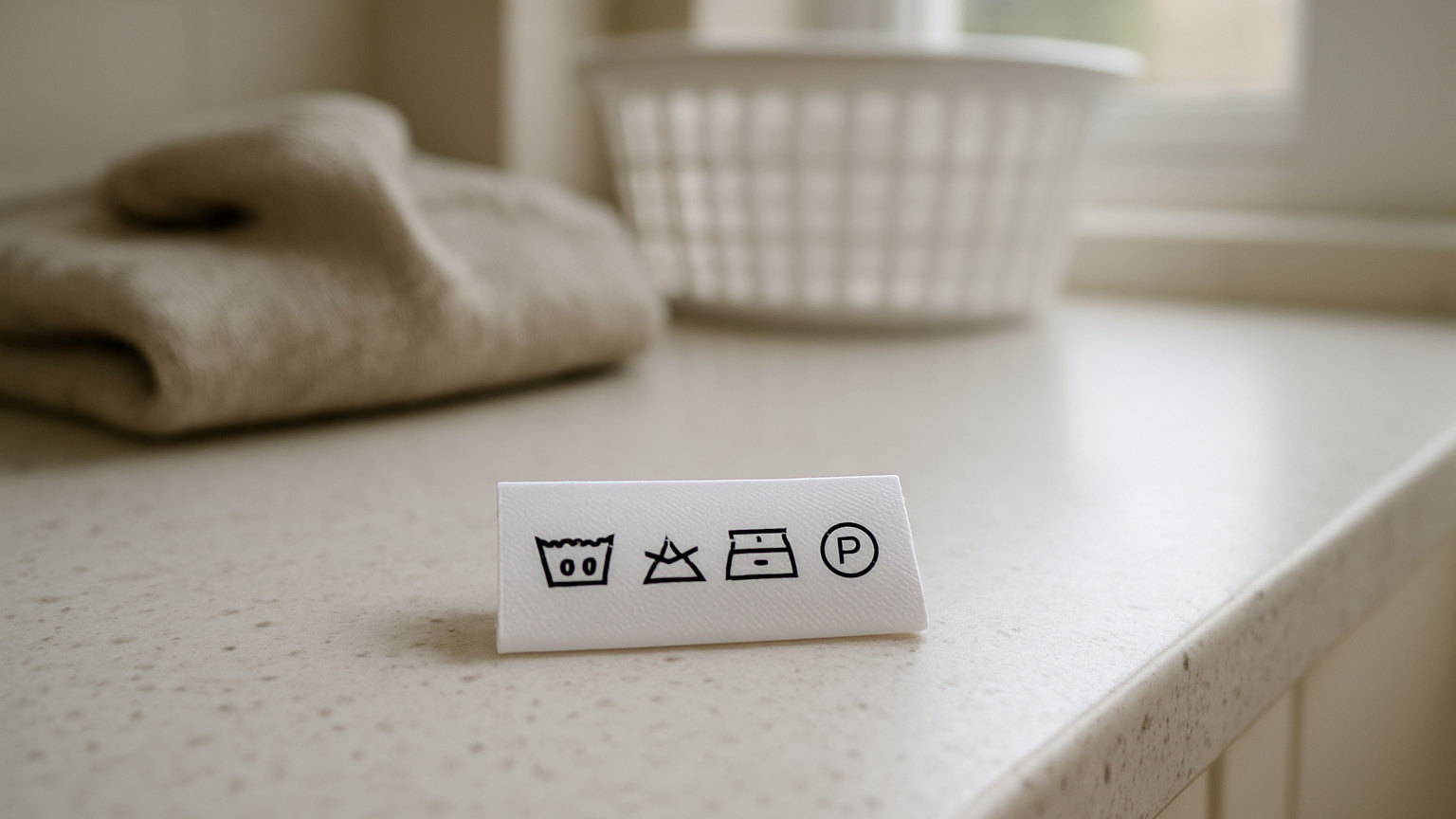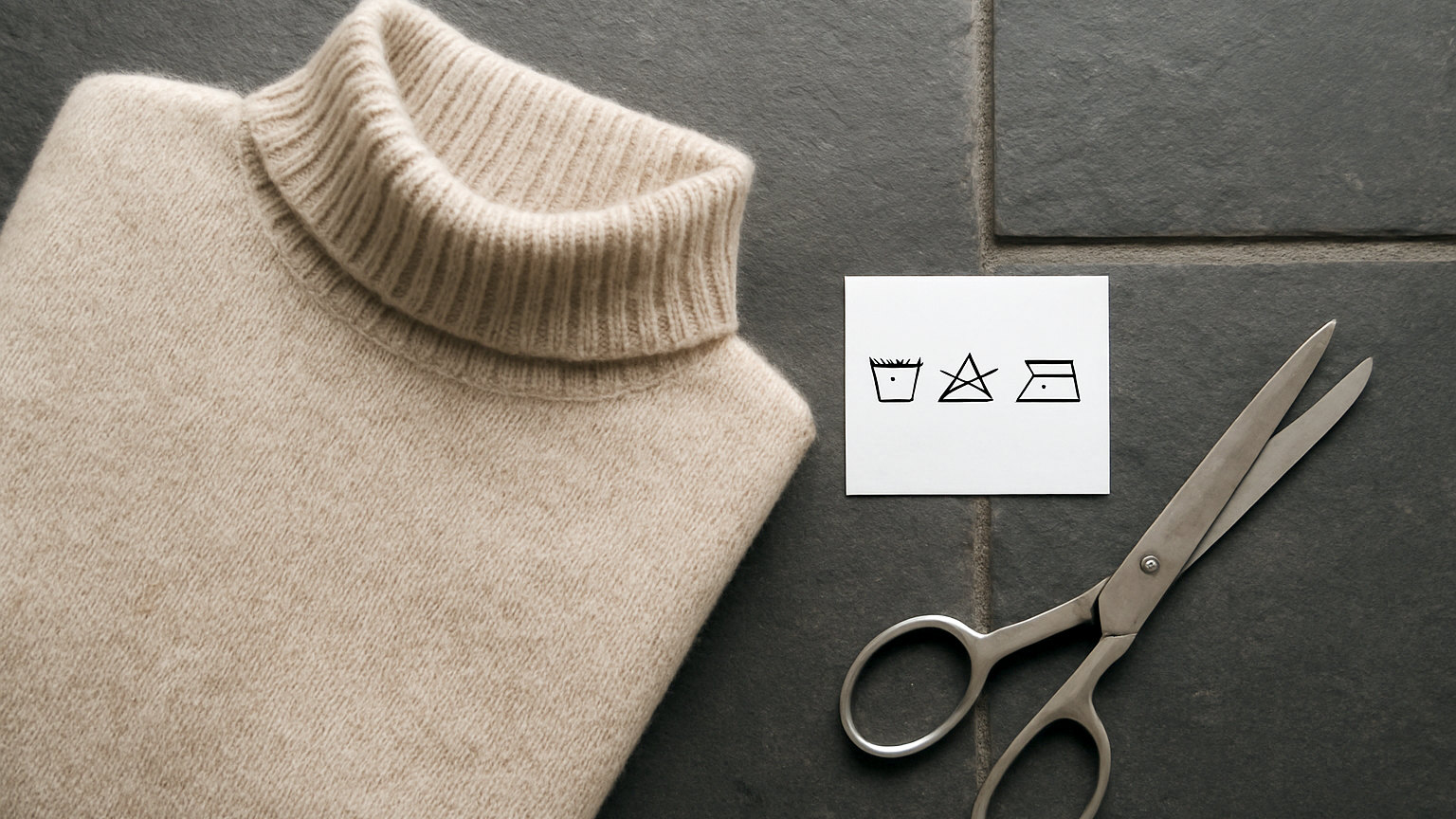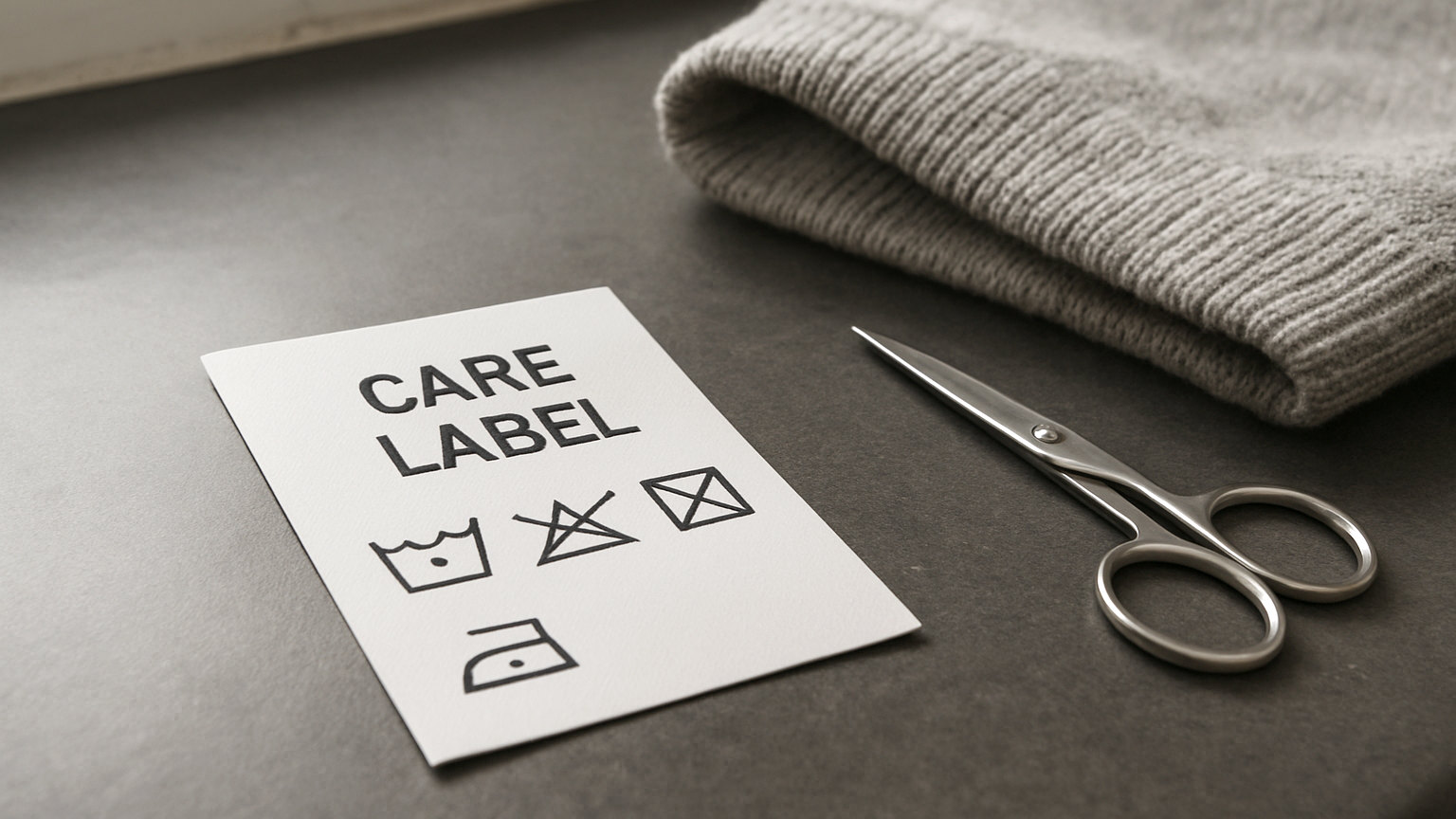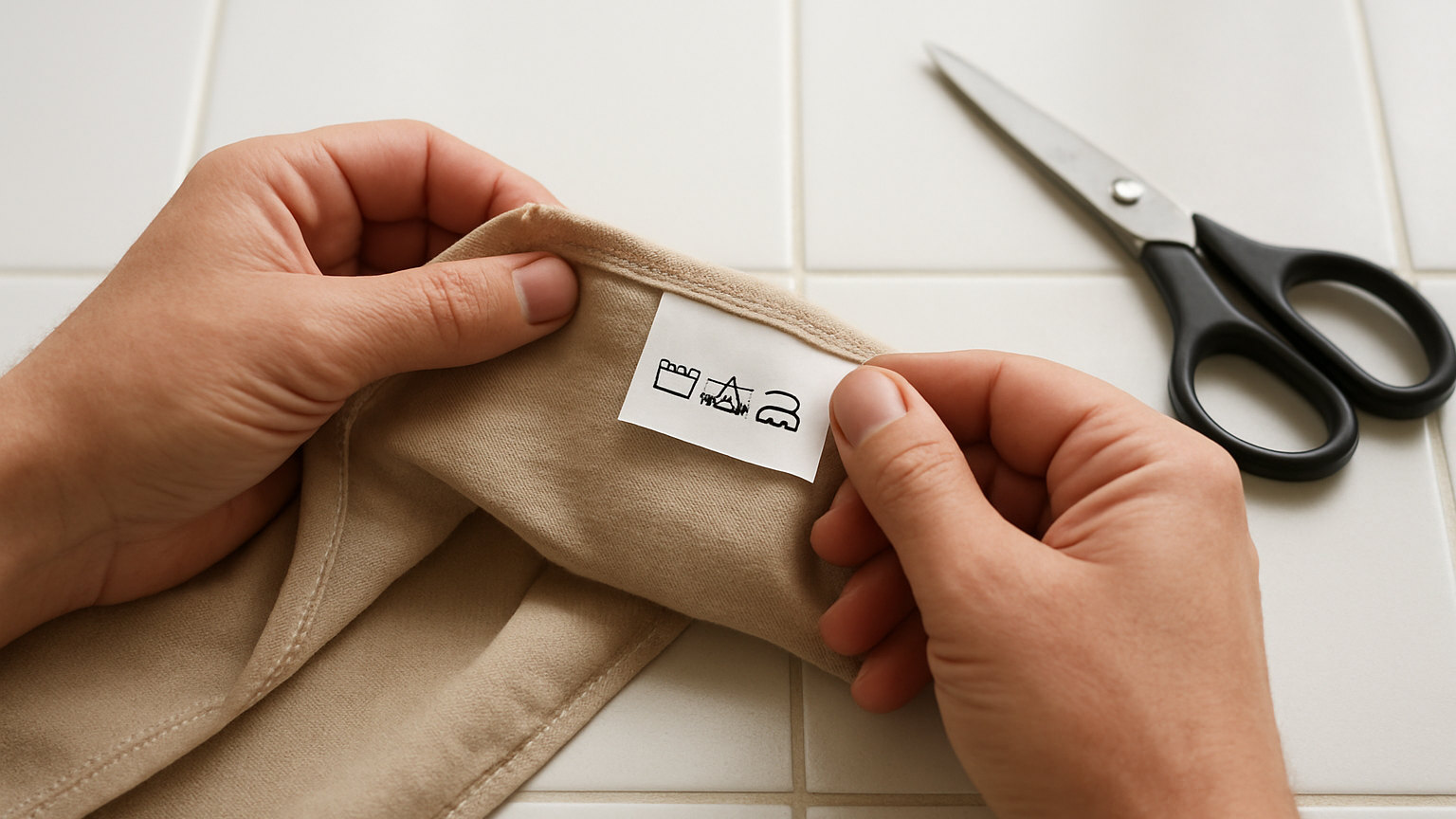
Should You Cut Out Itchy Care Labels?
Cutting a label out is usually fine, and cutting it in the wrong place unpicks a seam, so where you cut matters more than whether you do.
By Cleaning Guides Team
13 Apr 2026

Every symbol on a clothing label, explained, with a chart worth printing.
Cutting a label out is usually fine, and cutting it in the wrong place unpicks a seam, so where you cut matters more than whether you do.
Several systems evolved separately, and clothing sold internationally often carries two or three sets of symbols that do not quite agree.
The fibre content label is legally required and tells you more about how to wash something than the symbols beside it do.
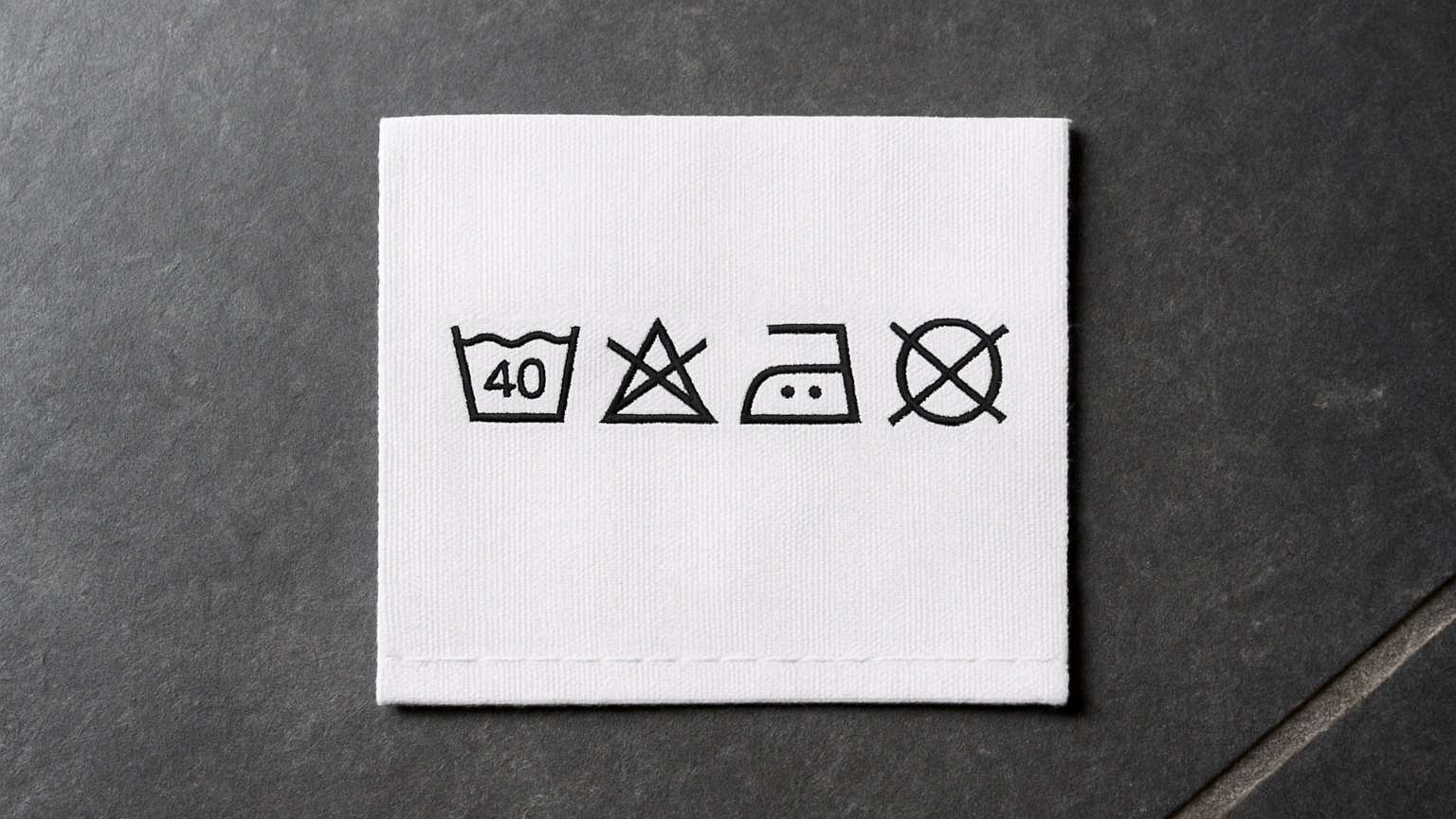
Five symbols account for most laundry mistakes, and four of them are small marks added to a symbol people think they already understand.
Almost every number on a care label is an upper limit rather than a recommendation, which means washing cooler and gentler is always allowed.
Without a label the fabric itself has to be read, and a burn test is too drastic for a garment you own, so touch and behaviour do the work.
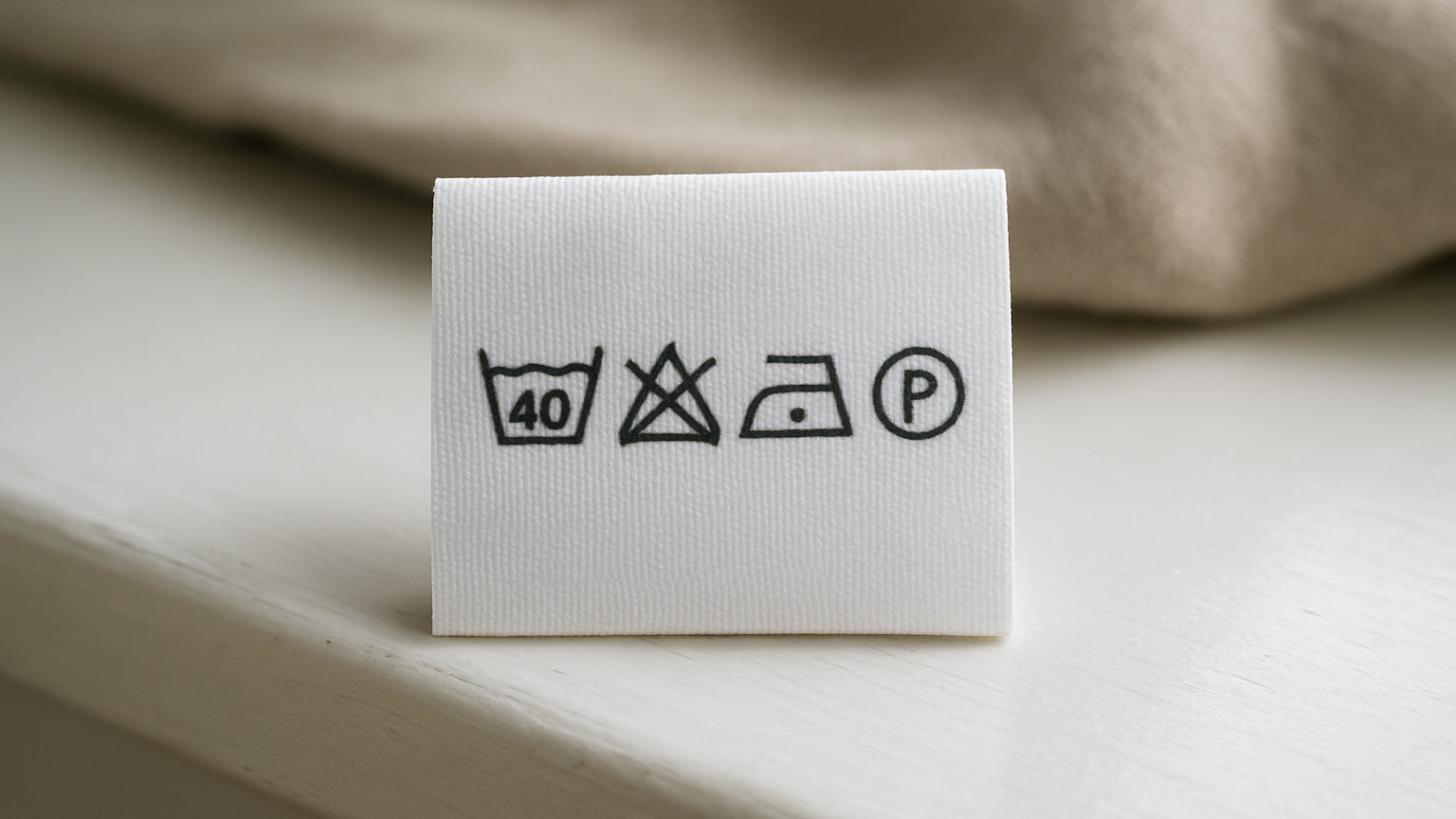
The circle and the letters inside it are instructions to the cleaner rather than to you, which is why they look so unhelpful at home.
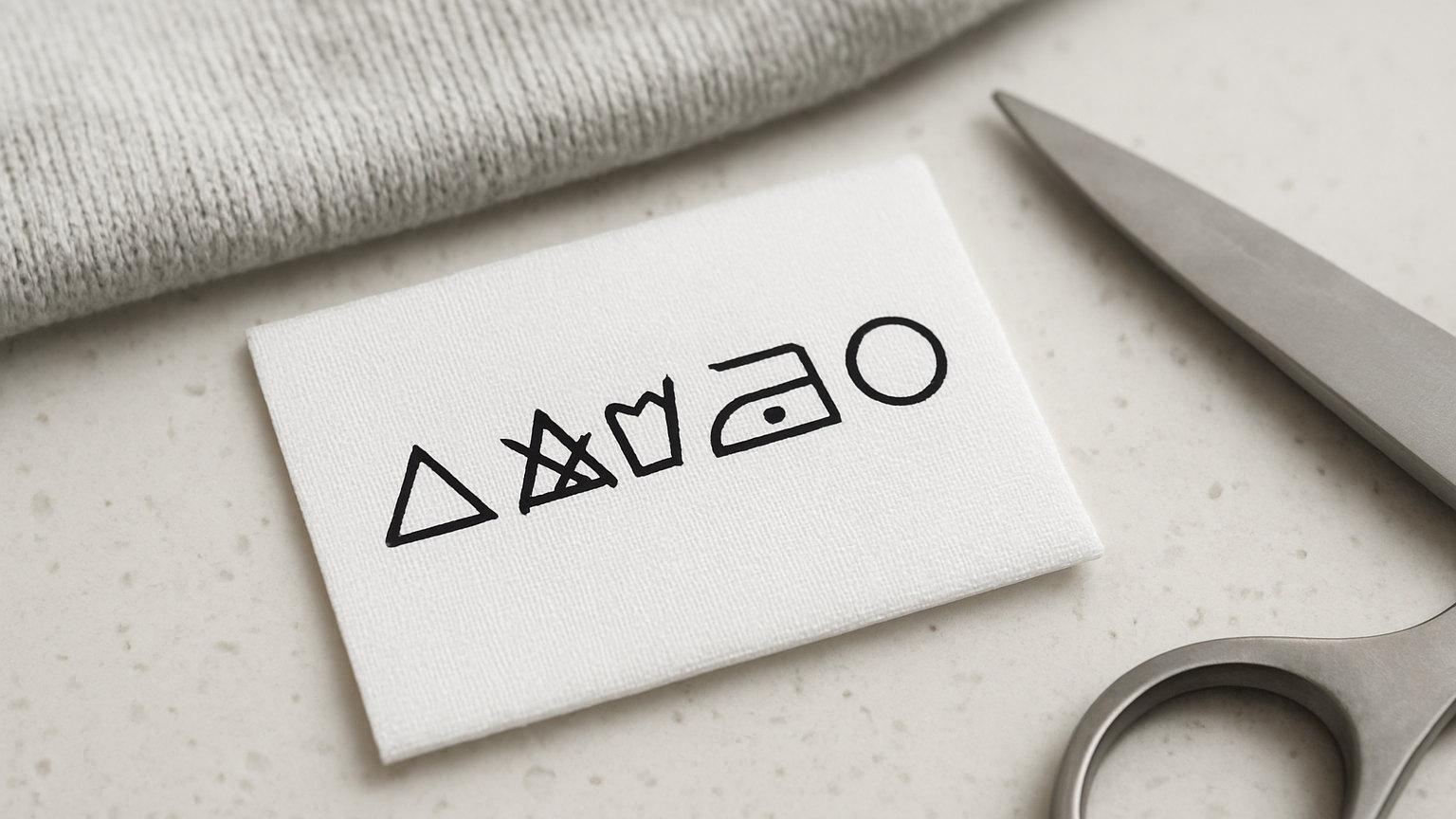
The triangle covers bleaching, and the important distinction is between the empty triangle and the one with two diagonal lines in it.
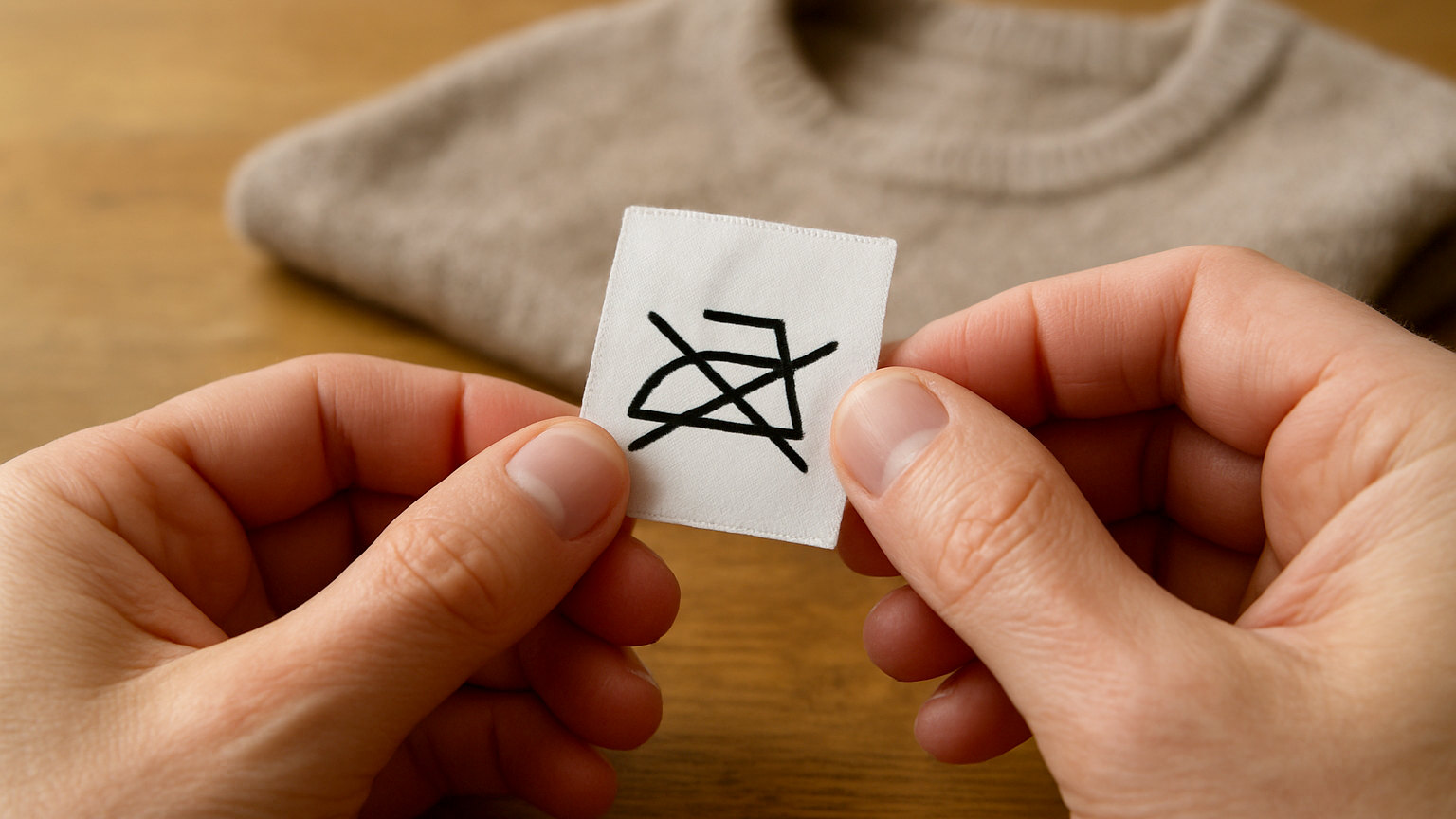
The iron symbol shows the maximum safe temperature, and the crossed out steam lines underneath are the part people miss.
The square is the drying symbol, and what is inside it tells you whether to tumble dry, hang, drip dry or lay the item flat.
Dots set the temperature and bars set the roughness, and the bars are the instruction most people never notice at all.
The tub symbol covers everything about the wash itself, and the variations tell you the temperature, the cycle and whether a machine can be used at all.