How Do You Clean Appliance Cords and Casings?
Kitchen appliances collect a film of airborne grease that ordinary wiping does not touch, and the cord is usually the worst of it.
By Cleaning Guides Team
13 Jun 2026

Kettles, microwaves, toasters, air fryers and coffee machines, plus descaling.
Kitchen appliances collect a film of airborne grease that ordinary wiping does not touch, and the cord is usually the worst of it.
The rule is simpler than it looks: anything with a motor, a heating element or a bearing stays out, and most of the rest depends on the plastic.
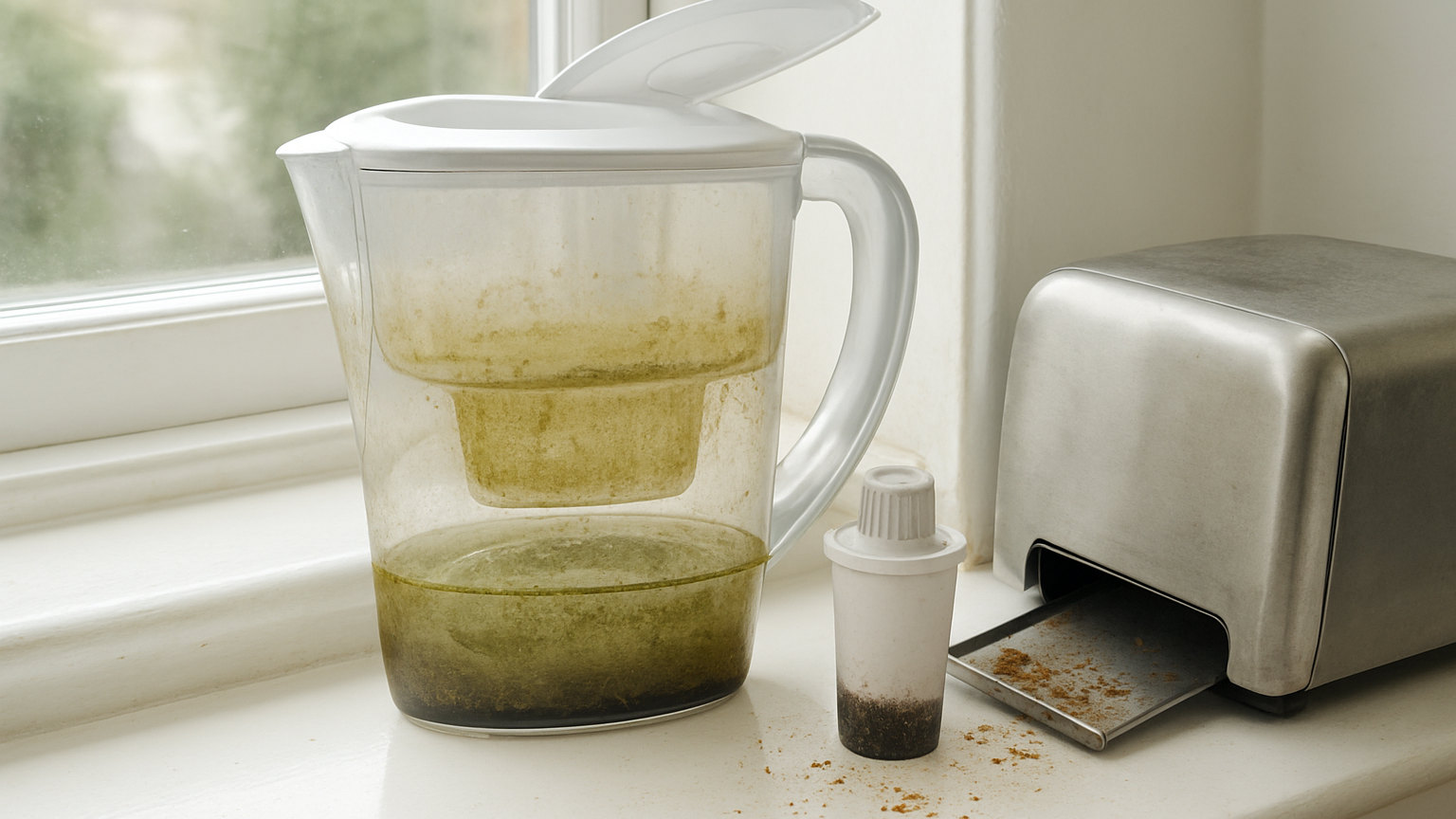
A jug left standing with water in it grows a biofilm in the reservoir, and the filter itself does nothing about that.
The paddle seizing onto its spindle is the most common bread maker failure, and it is caused entirely by how the pan is cleaned.
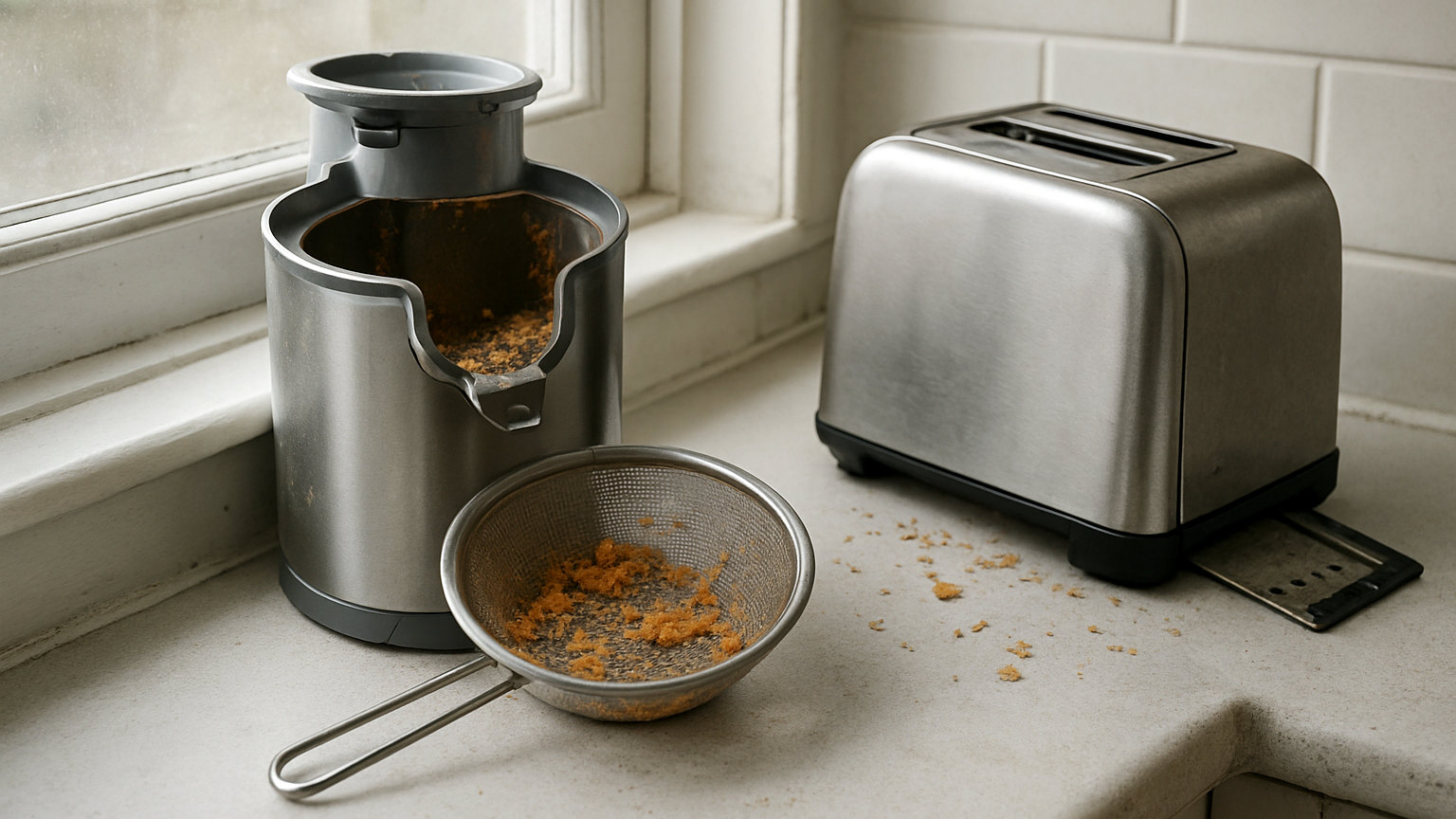
A juicer has to be cleaned immediately or not at all, because dried pulp in a fine mesh filter is close to impossible to remove.
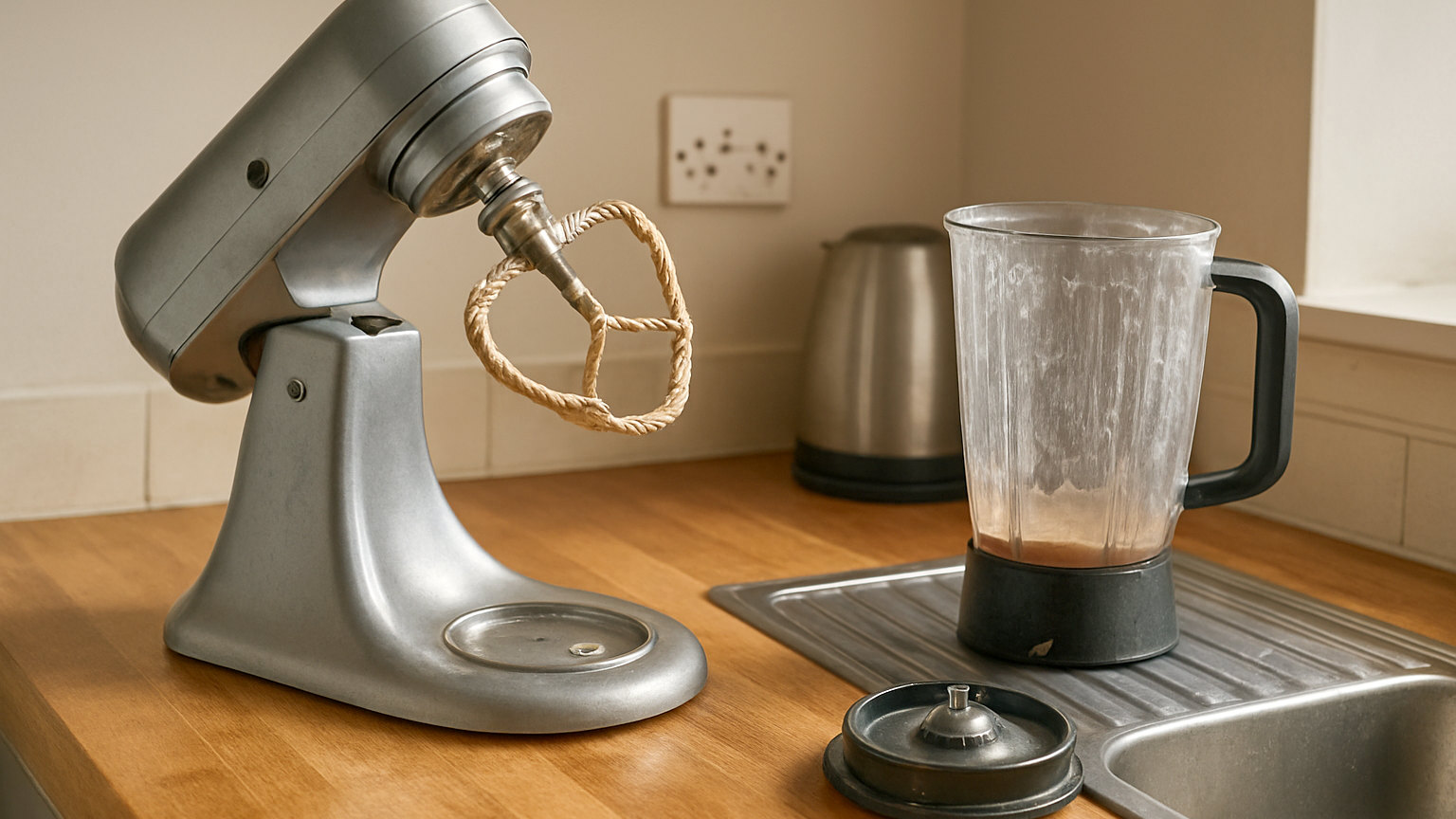
The parts wash easily and the machine itself needs attention in two places most people never look: the beater shaft and the underside of the head.
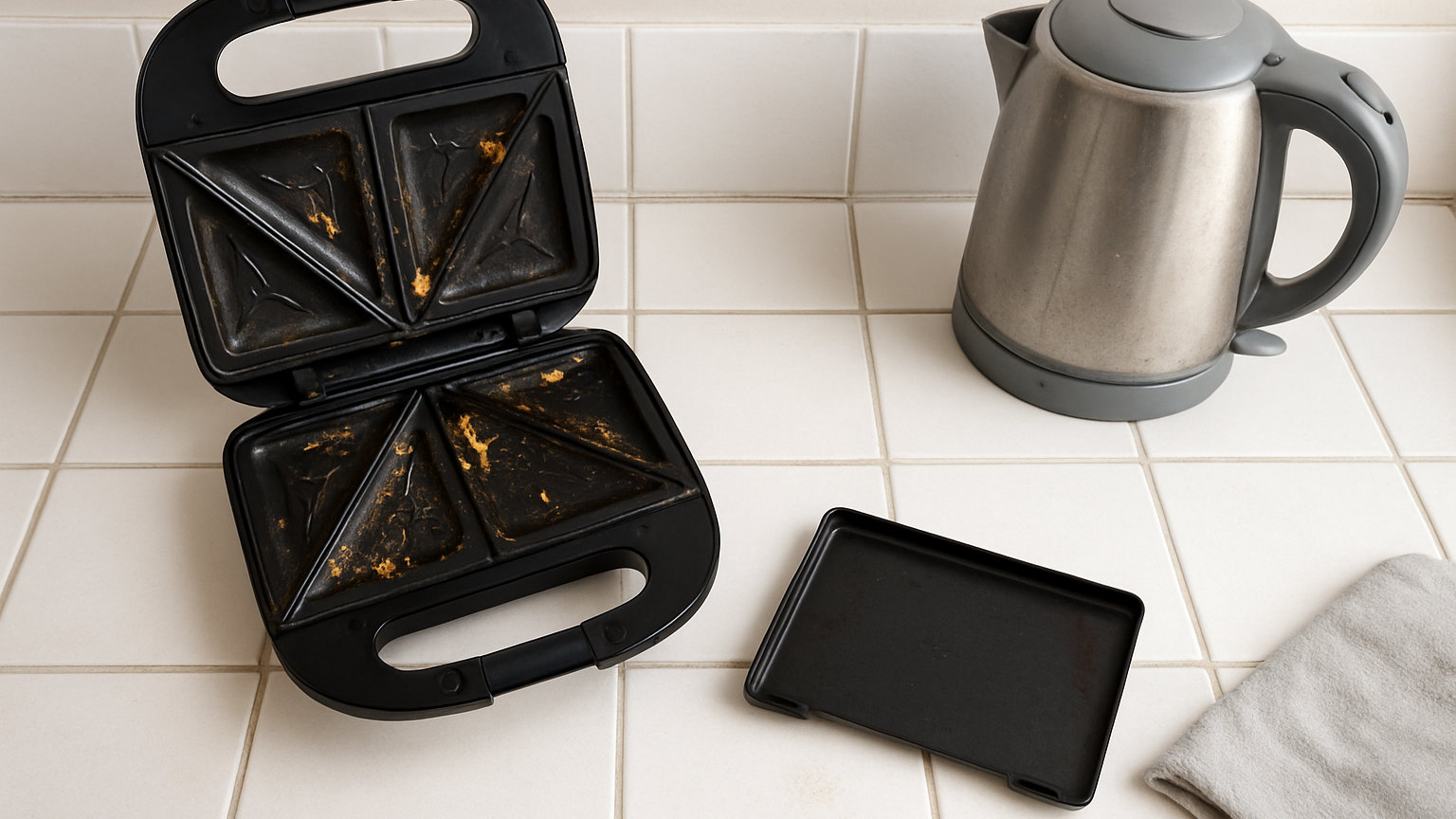
Melted cheese sets like glue once cold, and the whole technique is to clean it while the plates are still warm.
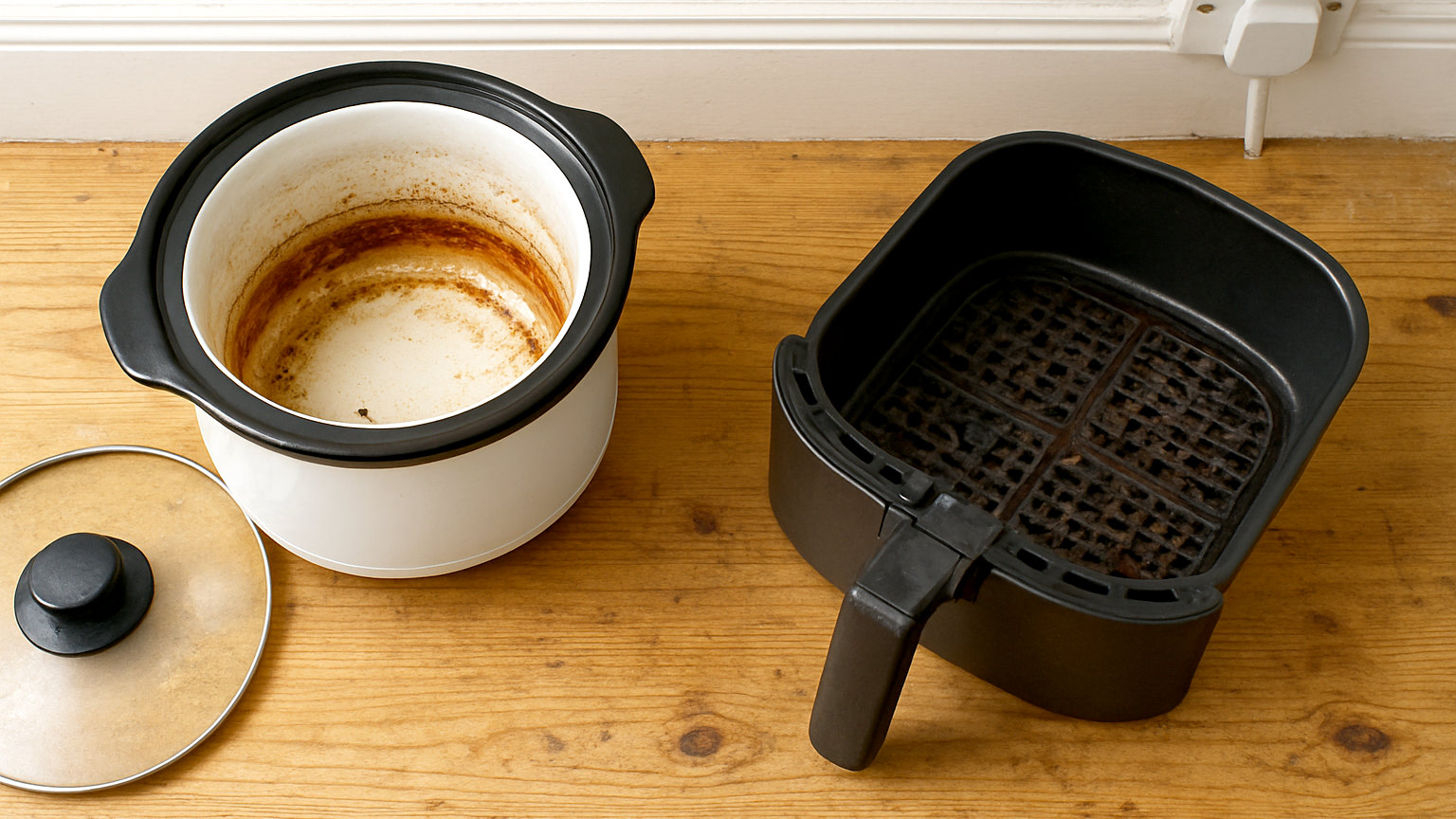
The ceramic pot cleans easily and the ring of baked residue above the food line is where the effort goes, and soaking does most of it.
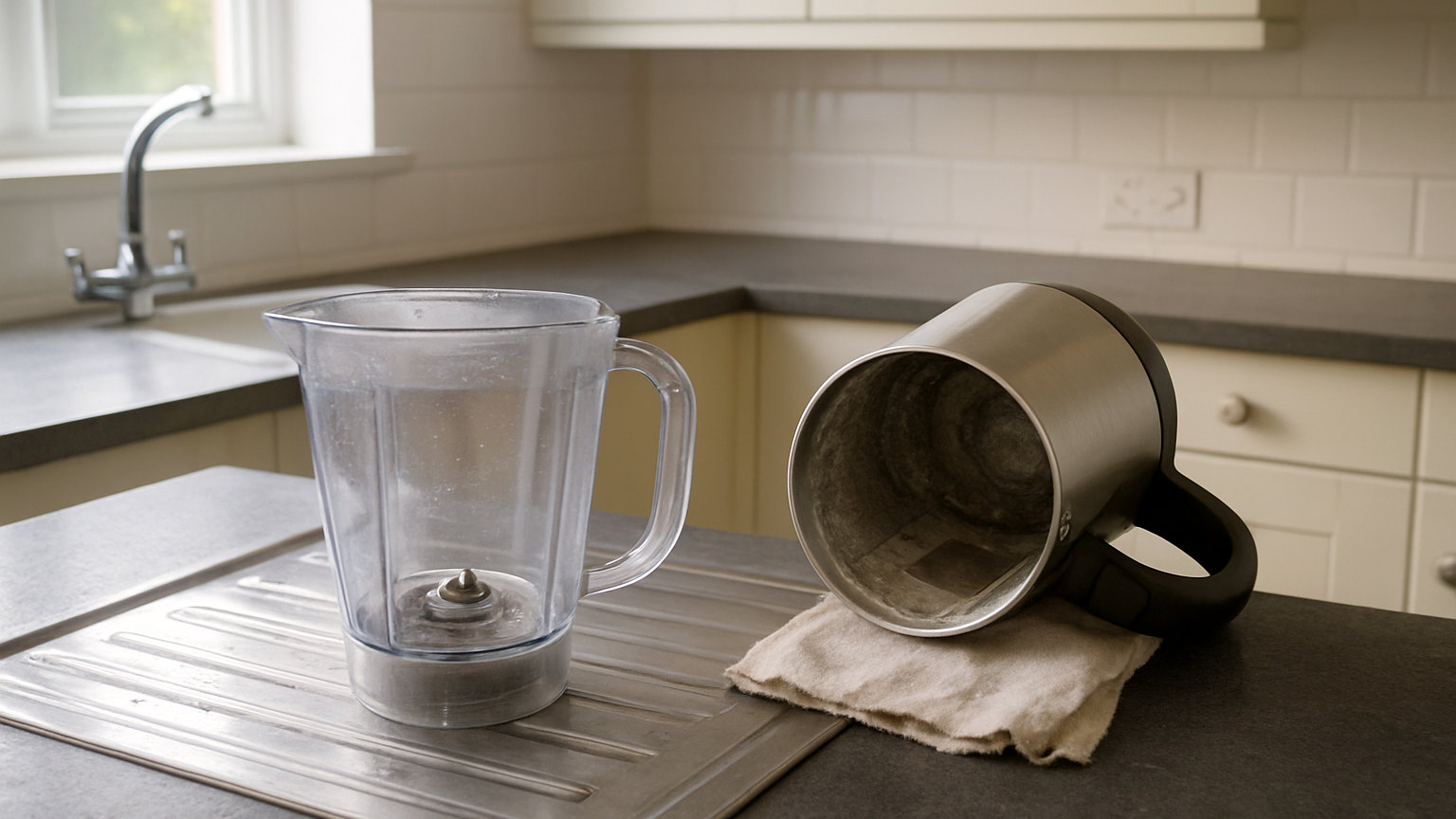
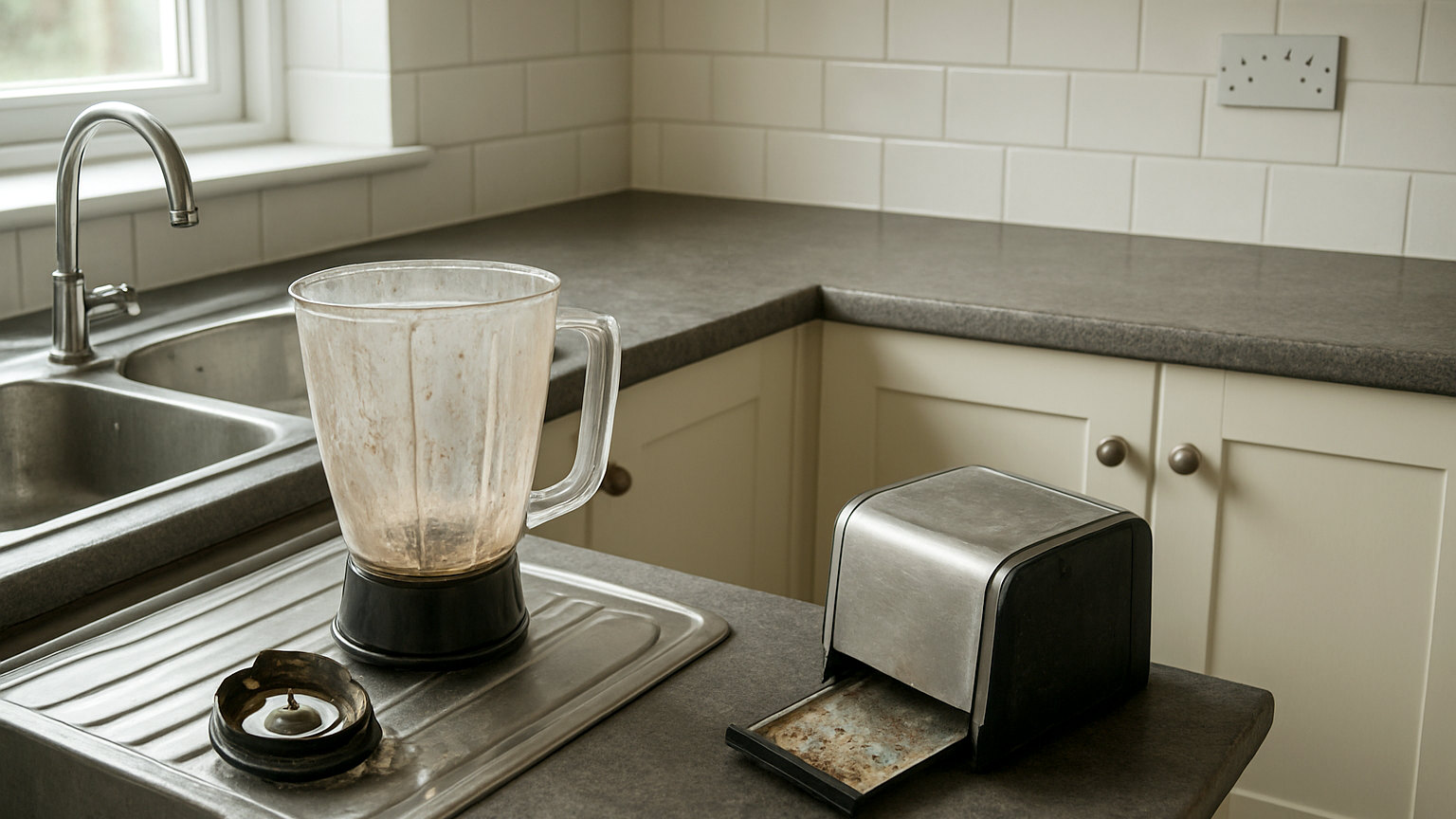
The self cleaning trick works well and it does not reach the blade seal, which is where the smell in a neglected blender comes from.
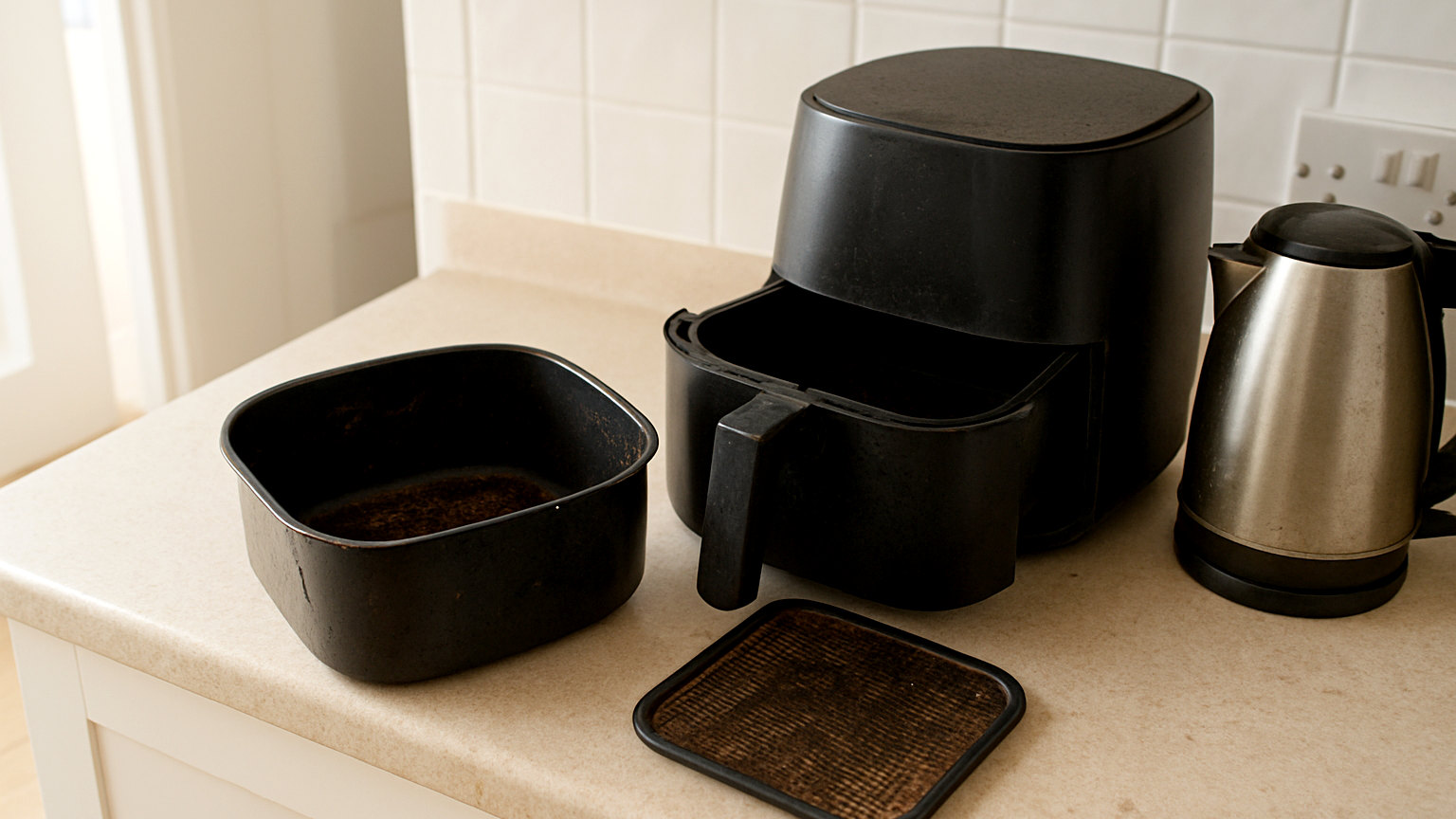
The heating element above the basket collects grease that most people never look at, and it is the reason a well used air fryer starts to smoke.
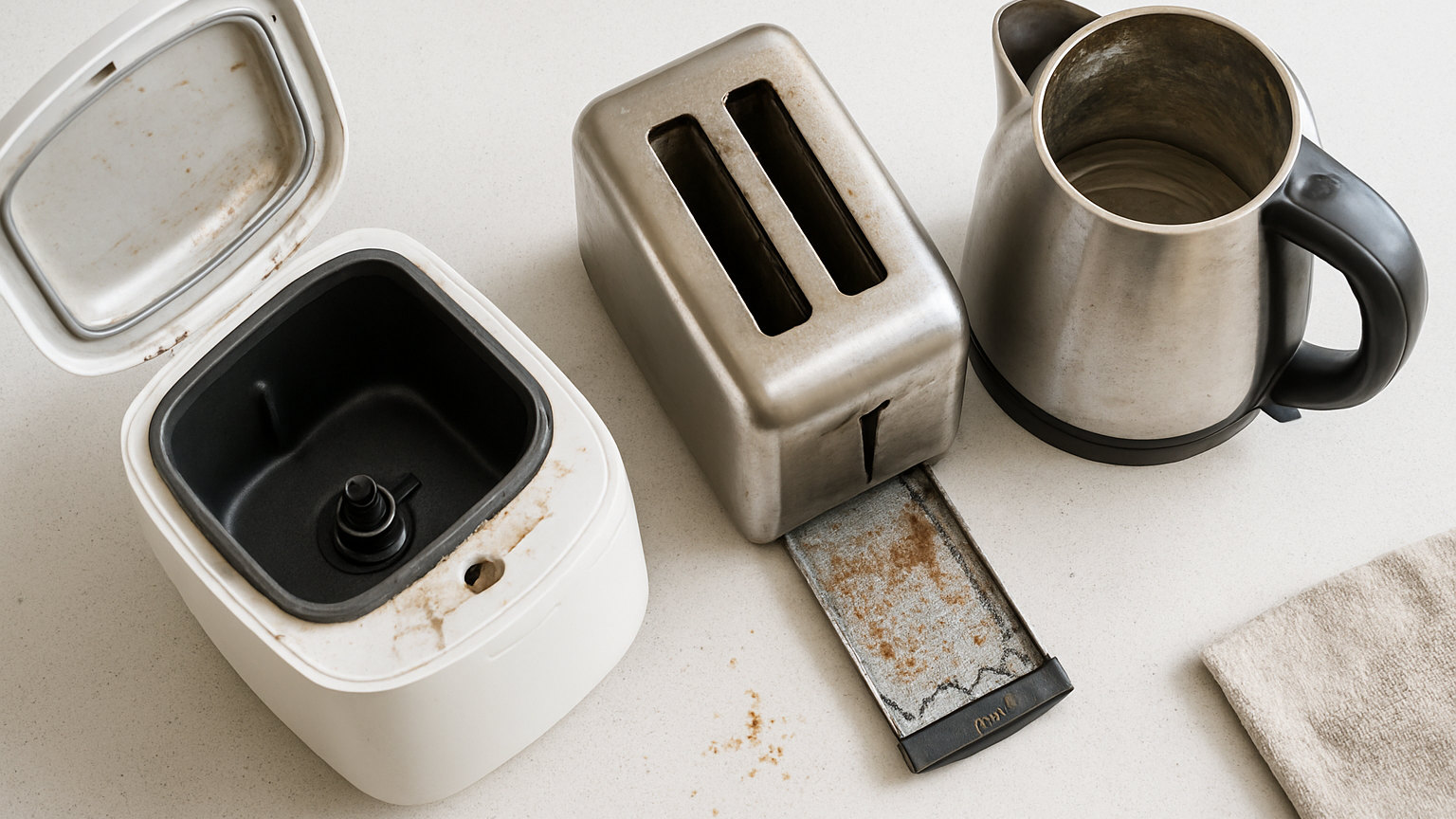
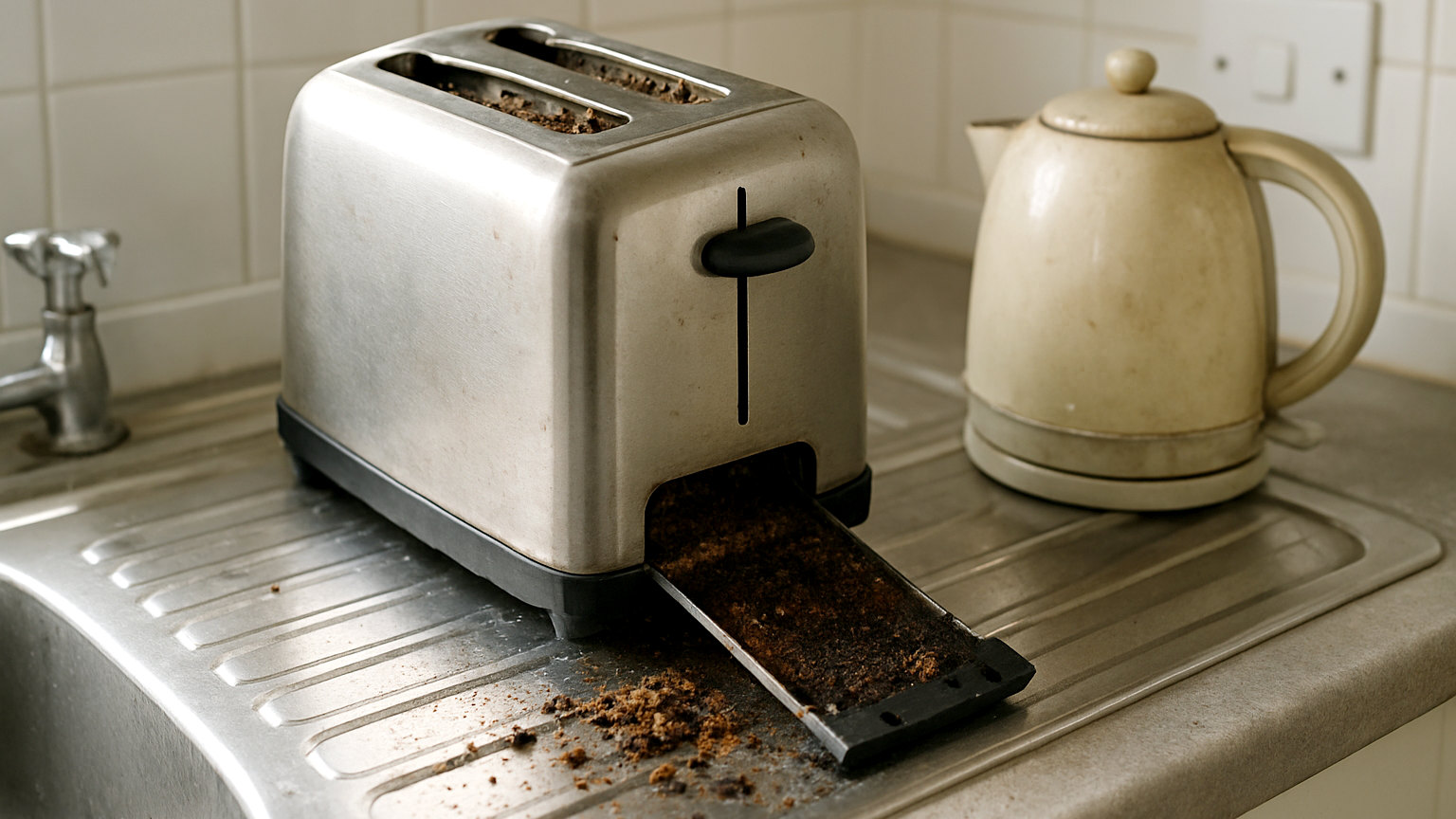
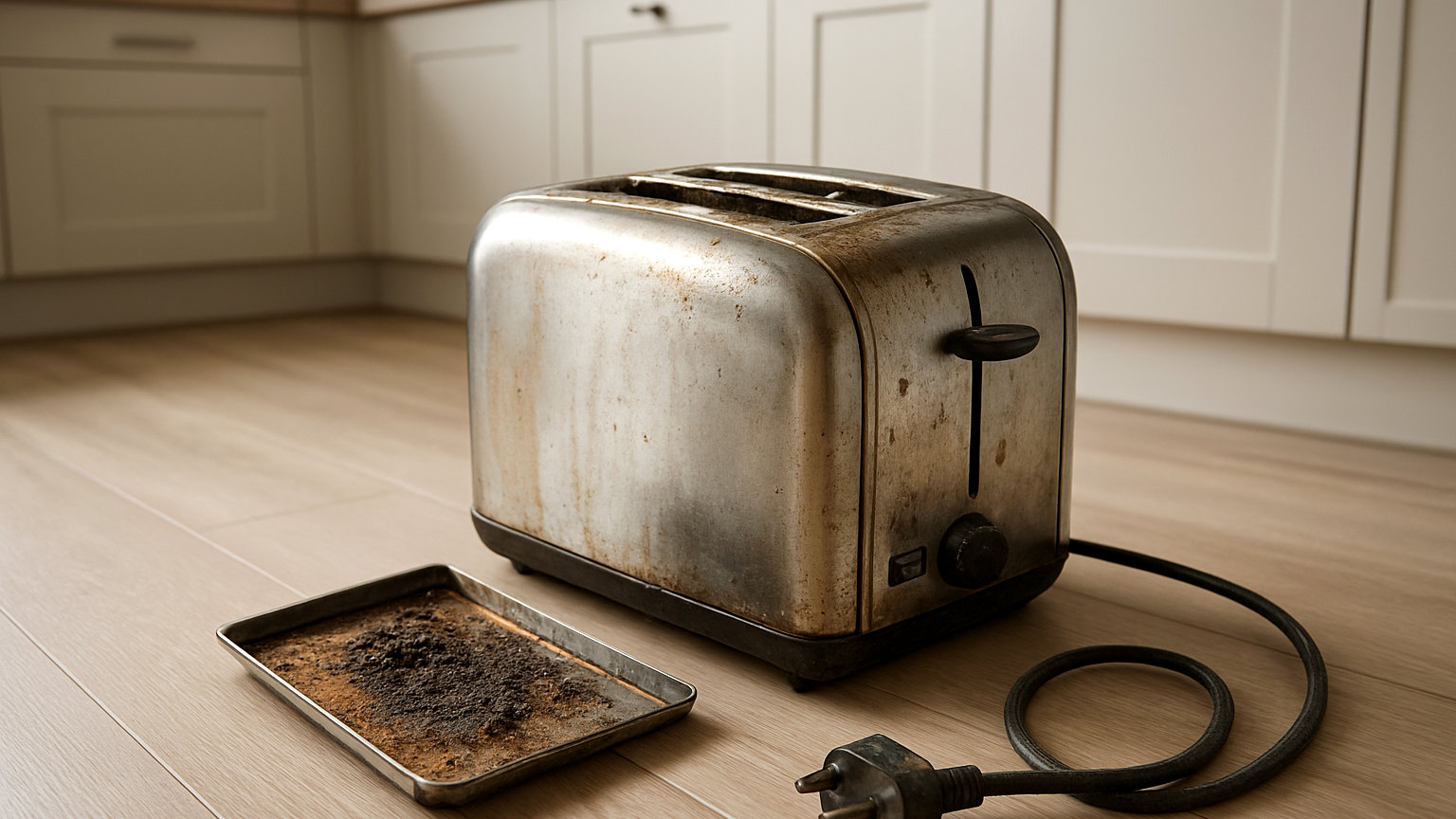
Crumbs in the base of a toaster are a genuine fire risk, and the crumb tray that most people never open is there for exactly that reason.
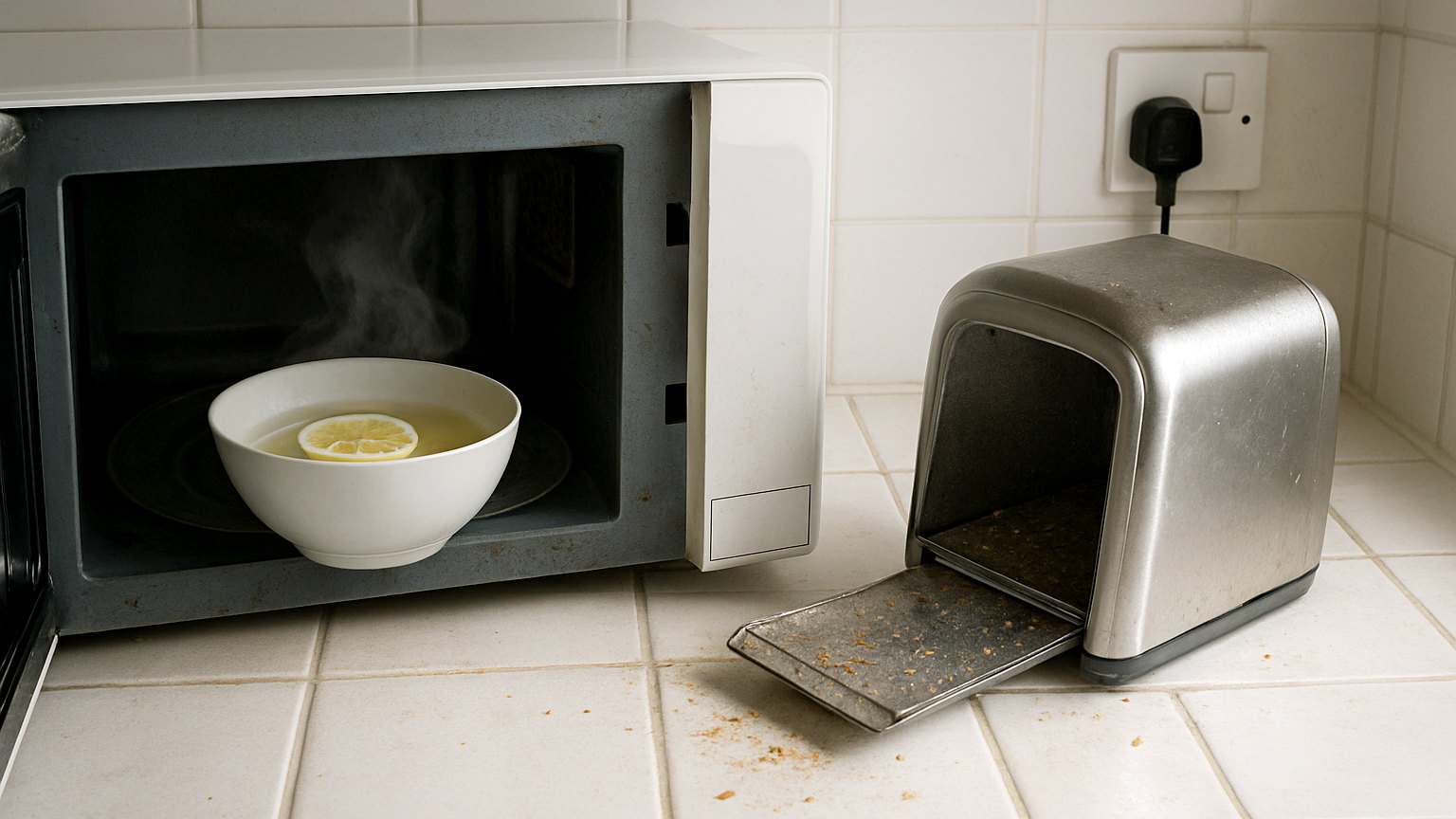
Steam does the whole job, which turns a scrubbing task into wiping a surface that has already released everything stuck to it.