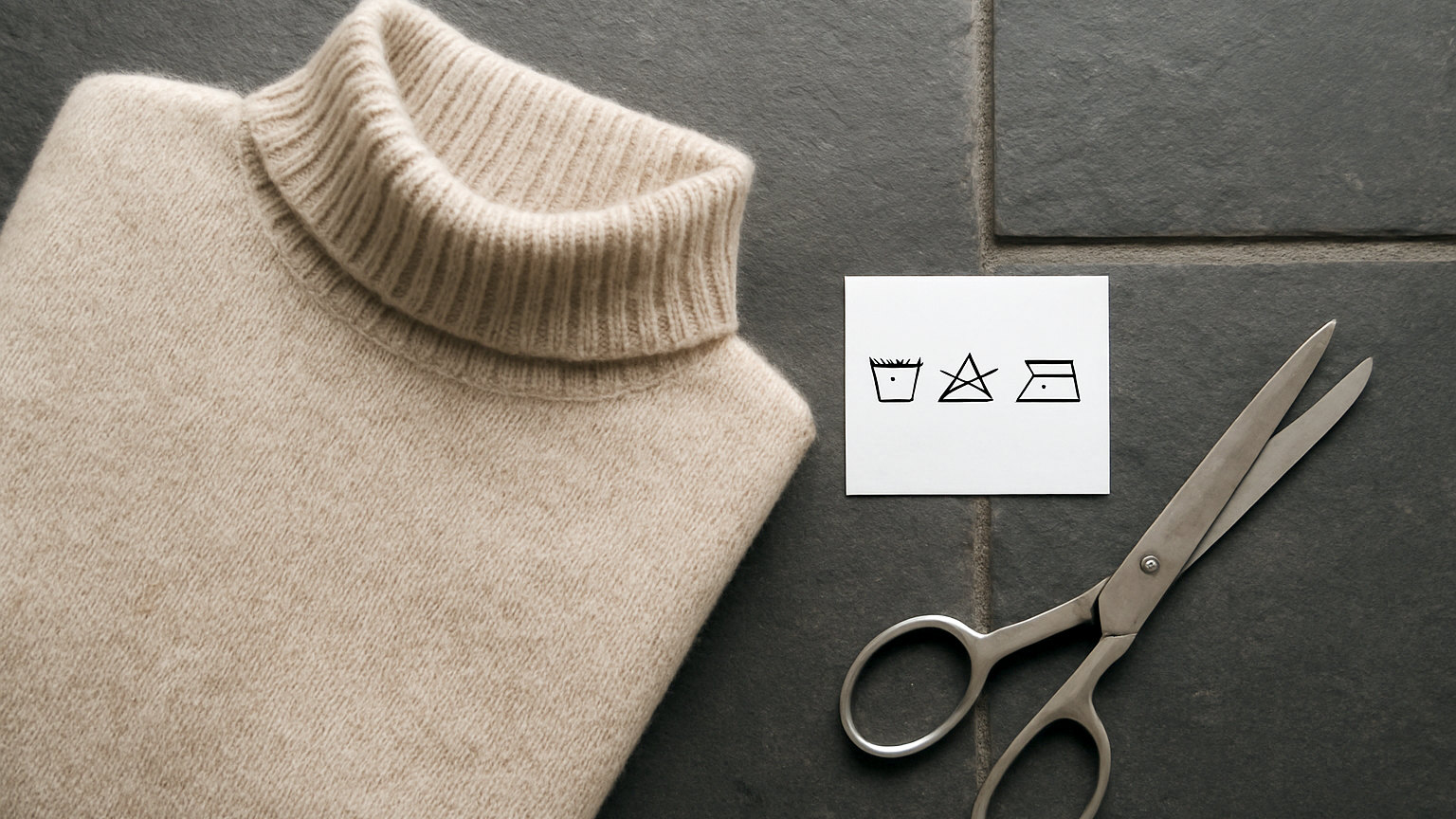
Almost every number and dot on a care label is an upper limit. A tub marked 40 means do not exceed 40 degrees. An iron with two dots means do not exceed the medium setting. A tumble dryer with two dots means do not exceed medium heat. None of them is a recommendation, and going gentler is always permitted.
Why does that matter?
Because it means you have far more latitude than the label appears to give. A shirt marked 40 will wash perfectly well at 30 in most circumstances, use less energy and last longer. A jumper marked with a normal cycle will come to no harm on a delicates programme.
The only direction that carries risk is upward. Washing hotter, drying hotter or ironing hotter than the label allows is where damage happens.
Where is the label a genuine requirement rather than a limit?
- Crossed out symbols, which are absolute prohibitions rather than limits.
- Hand wash only, which specifies a method rather than a ceiling.
- Dry flat, which is an instruction about how, not how much.
- Dry clean only with a crossed out tub, which rules out water entirely.
- Do not use steam under the iron, which prohibits a specific action.
These are the parts of the label that cannot be softened by being more careful, because they are already telling you what not to do.
Is there any case where washing cooler is worse?
Two, and both are about hygiene rather than the fabric. Items that need to be hygienically clean, such as bedding, towels, underwear and anything used during illness, benefit from 60 degrees, and a 30 degree wash does not achieve the same result whatever the label permits.
The second is the machine itself. A washing machine used only on cool short cycles develops a film of residue and starts to smell, so an occasional hot wash is worth running regardless.
Does the label account for how dirty something is?
No, and it cannot. The symbols describe what the fabric will tolerate, not what the soil requires. Heavily soiled work clothes marked 40 may need the full 40 with a prewash; the same garment lightly worn will be perfectly clean at 30.
This is a judgement the label leaves to you, and it is the main reason two people can follow the same label and get different results.
Does it account for the whole garment?
It is meant to. The standard requires the label to reflect the most sensitive component, including the thread, the trim, the buttons and any decoration. A cotton shirt with a delicate trim should carry the trim instruction rather than the cotton one.
In practice labels are sometimes generic across a product range, which is one reason a cautious approach is sensible with anything unusual.
Why are labels often more cautious than necessary?
Because a manufacturer carries the liability for a garment damaged by following its own instructions and carries none for a garment that lasted longer than it needed to. Specifying a lower temperature and dry clean only is the safe commercial choice.
That is why so much unlined, unstructured clothing marked dry clean only can be hand washed successfully.
What is the practical rule?
Treat every dot and number as a ceiling, and every crossed out symbol and method instruction as absolute. Within that, wash cooler, spin slower and dry gentler than the label allows, and reserve the maximum for the loads that genuinely need it.
Clothing washed consistently below its stated limits lasts noticeably longer, which is the practical payoff for understanding the distinction.
How much difference does it actually make?
More than it sounds. Washing at 30 rather than 40, spinning slower, and air drying rather than tumbling all reduce the wear on a garment at every stage, and the effects compound over a hundred cycles. A wardrobe treated consistently below its limits looks noticeably better after two years than an identical one washed at the maximum every time.