Making cleaning products at home means the household has bottles of chemicals that nobody else recognises. That makes storage and labelling more important than with bought products, which at least announce what they are.
What is the most important rule?
Never put a cleaning product in a drinks bottle. Not a water bottle, not a squash bottle, not a milk container. It is a recognised route to accidental poisoning, particularly with children and with anyone visually impaired or confused.
Use proper spray bottles or reused cleaning product containers, and nothing that has ever held food or drink.
How should they be labelled?
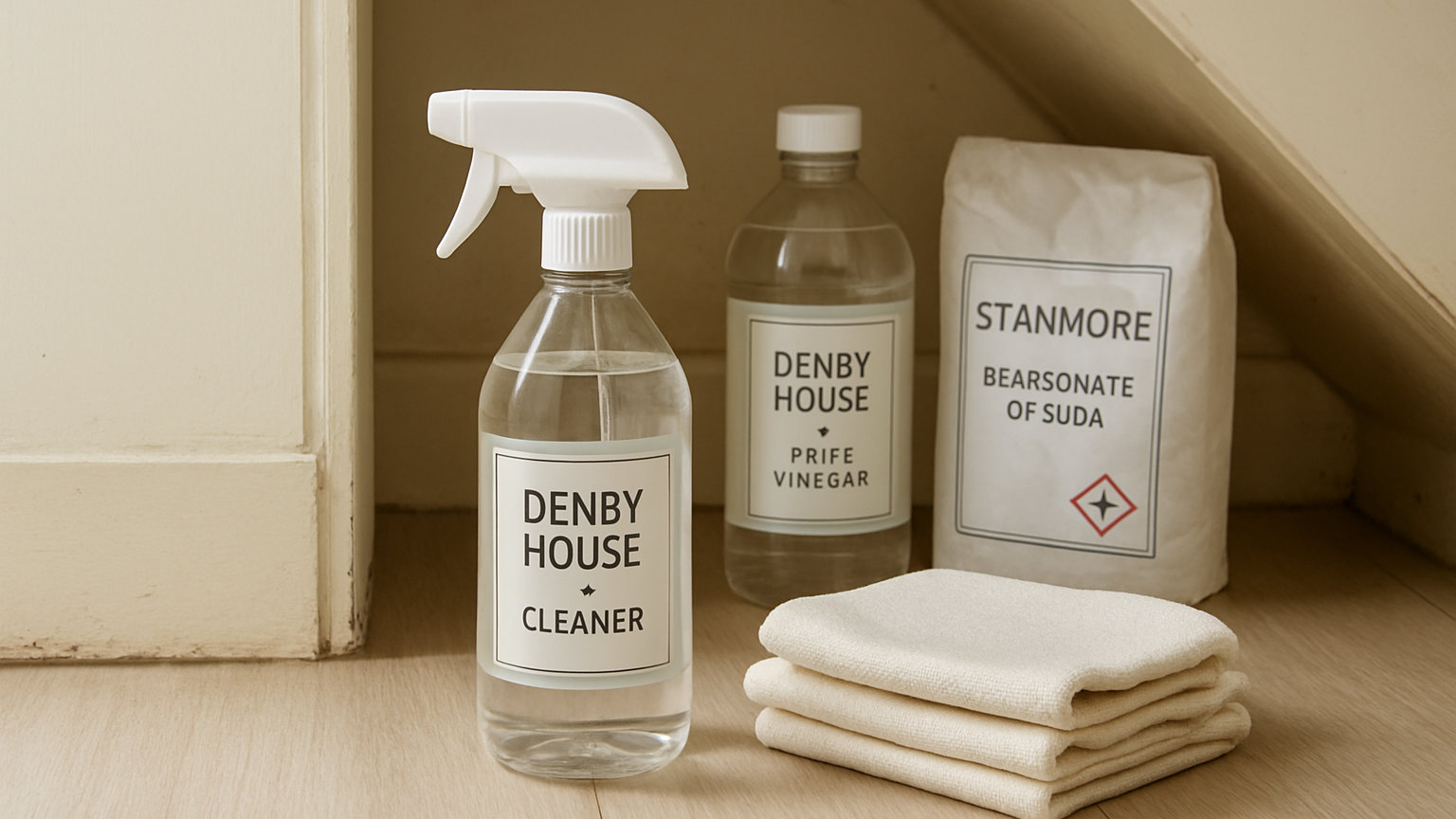
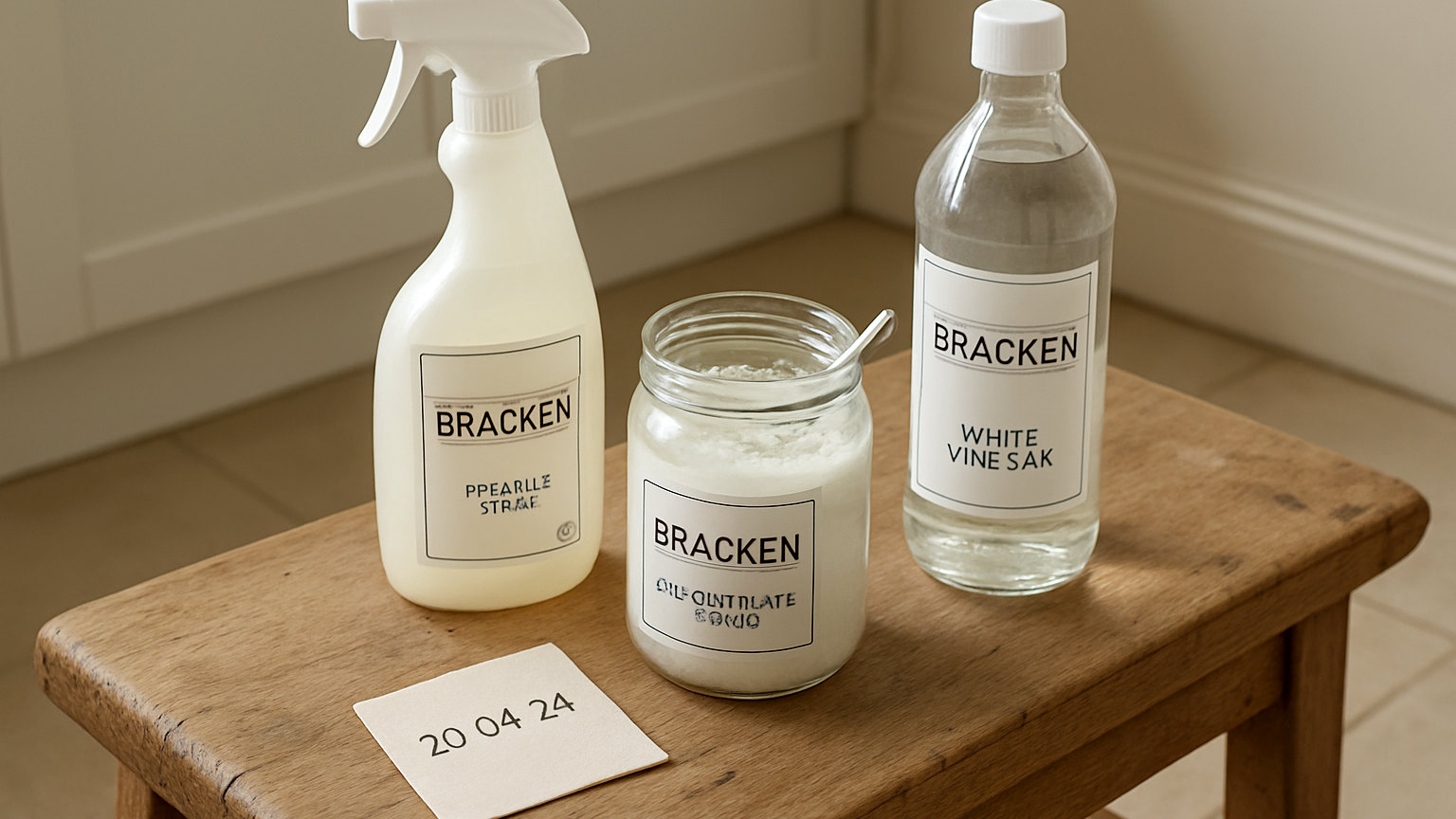
- Write what is in it, in full, not an abbreviation.
- Write the date it was made.
- Note the surfaces it must not be used on, briefly.
- Use a waterproof marker or a printed label with tape over it.
- Relabel whenever a bottle is refilled with something different.
A bottle labelled only vinegar spray tells the next person nothing about whether it contains detergent, alcohol or anything else.
Where should they be kept?
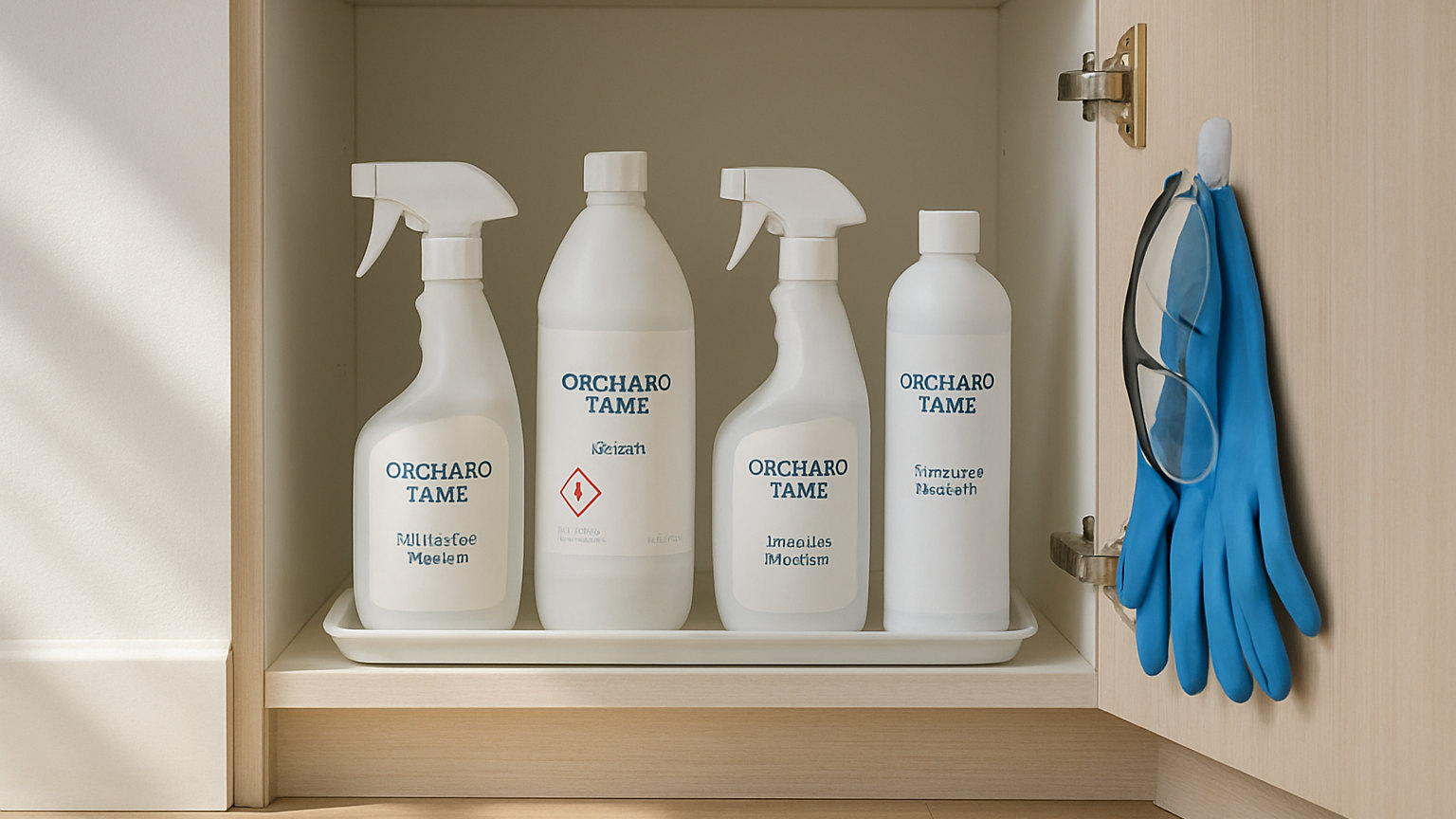
High, or in a locked cupboard, and out of reach of children and pets. The cupboard under the sink is the traditional place and the worst one, since it is at floor level and easily opened.
Child safety catches are inexpensive. Moving cleaning products to a high shelf costs nothing.
What should be stored apart?
Bleach, away from anything acidic. That means vinegar, citric acid, limescale removers and toilet cleaners should not share a shelf where a leak or a knock could bring them together.
Keep bleach in its original container, upright, and never decanted into a spray bottle where it could be confused with something else.
What containers work?
- Purpose made spray bottles, ideally opaque or tinted for anything light sensitive.
- Reused trigger sprays from finished cleaning products, rinsed thoroughly and relabelled.
- Glass jars with sealed lids for pastes.
- Screw top tubs for dry powders, kept dry.
Avoid thin plastic for anything containing citrus oils, which degrade it over time.
What about conditions?
Cool, dark and dry. Heat accelerates the degradation of hydrogen peroxide and bleach and encourages growth in water based mixtures. Sunlight does the same.
Damp is the enemy of dry powders, which clump into solid blocks, and of oxygen bleach in particular, which loses potency once it has absorbed moisture.
Should bottles be sealed tightly?
Yes, with one exception. Never seal anything that is still reacting and producing gas, since pressure builds in a closed container. That includes any freshly mixed vinegar and bicarbonate combination, which is another reason not to make it.
How do you clean a bottle for reuse?
Rinse it thoroughly with hot water several times, particularly if it held something different, and let it dry completely before refilling. Residue of a previous product mixing with a new one is the accidental version of the combinations that should be avoided.
Run clean water through the trigger mechanism as well, which holds liquid in the tube.
What should you do with leftovers?
Water based homemade sprays can be poured down a drain with plenty of running water. Anything containing bleach or a strong acid should go down separately, with a thorough flush before and after, and never following another product.
Check with your local authority for anything you are unsure about.
What is the simplest safe arrangement?
A small number of clearly labelled bottles in one high cupboard, made in small batches so nothing sits for long, with bleach stored separately. That covers the safety and the shelf life question at the same time.
What about a caddy?
A carrier holding the day to day bottles works well and should be treated as storage that moves rather than as an exception to the rules. Keep bleach out of it, since a leak in an enclosed tote brings products into contact, and put it back on a high shelf rather than leaving it on the floor between jobs.