What Is the Fastest Way to Tidy a Bedroom?
Tidying and cleaning are different jobs, and doing them at the same time is why a quick tidy turns into a lost afternoon.
By Cleaning Guides Team
21 May 2026

Mattresses, bedding, dust and wardrobes, and how often each genuinely needs doing.
Tidying and cleaning are different jobs, and doing them at the same time is why a quick tidy turns into a lost afternoon.
Curtains hold a great deal of dust and are usually washed once a decade. Most of the benefit comes from vacuuming them where they hang.
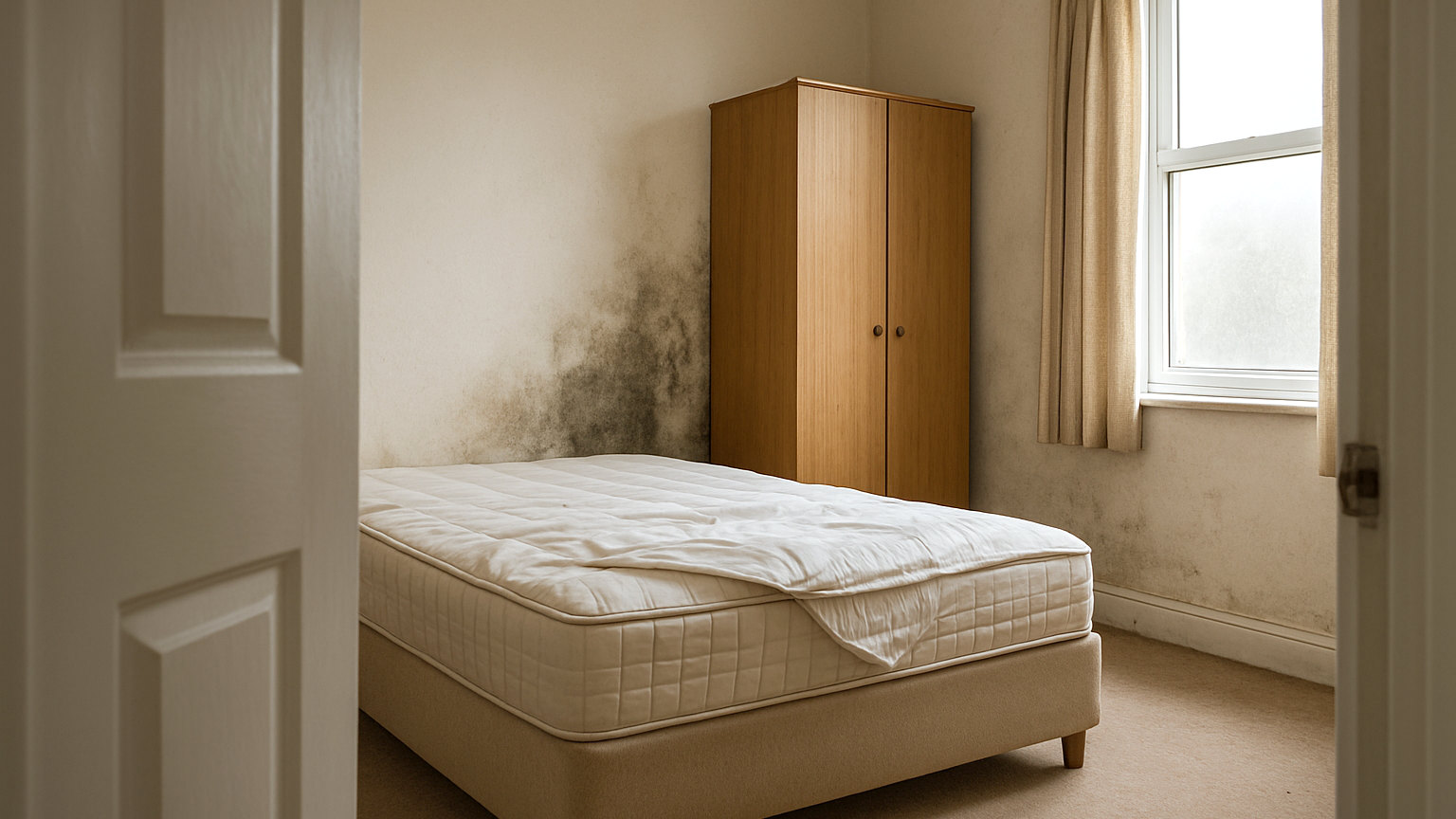
Mould behind furniture on an external wall is condensation, not a leak. The wall is cold, the air cannot move, and moisture settles there first.
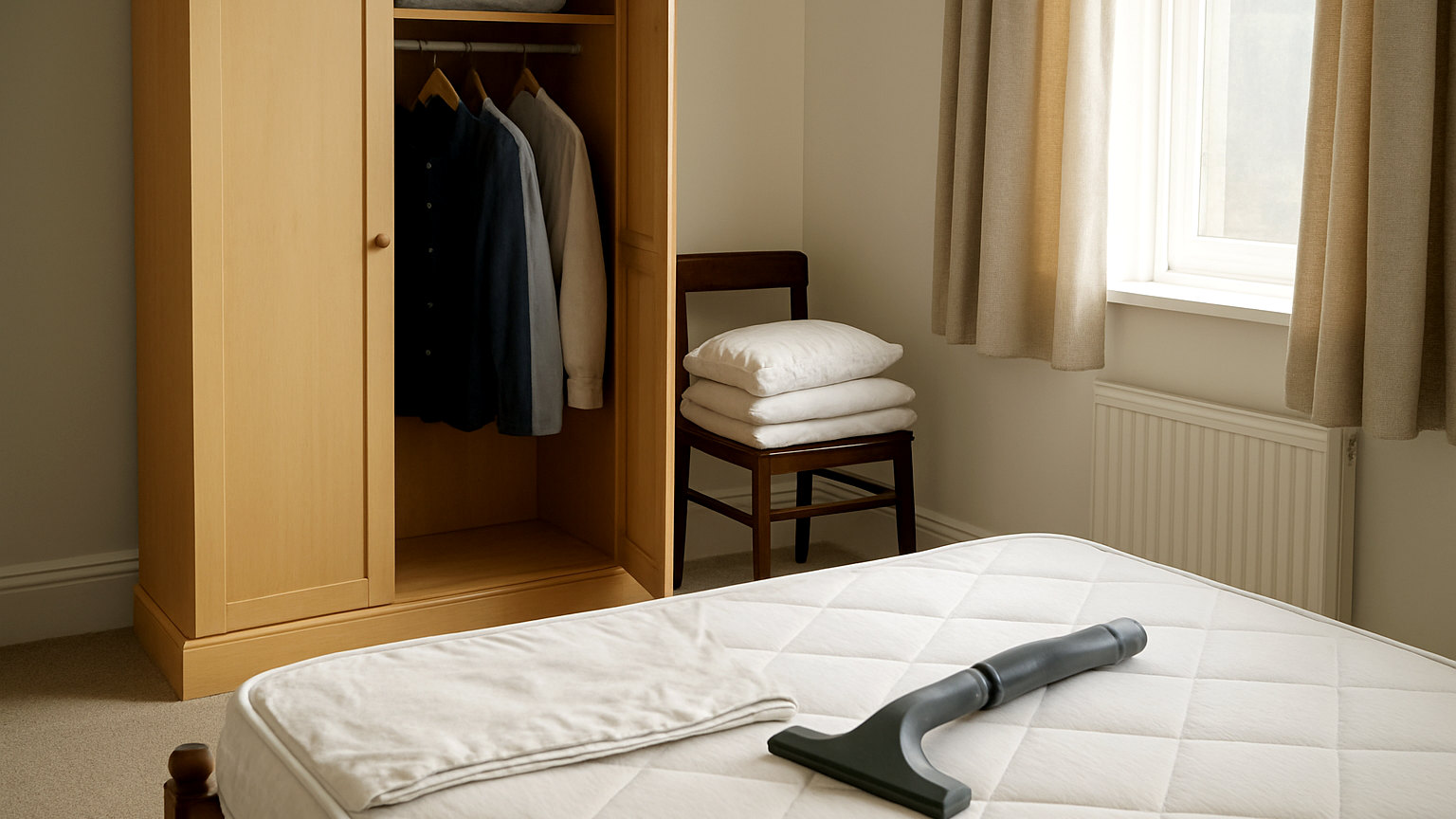
Cleaning out a wardrobe is mostly sorting, and the cleaning takes about ten minutes once everything is out of the way.
The space under a bed collects more dust than the rest of the room combined, and most vacuum heads are too tall to reach the middle of it.
Bedroom dust is mostly skin and textile fibre generated in the room itself, which is why it returns faster there than anywhere else in the house.
A closed bedroom accumulates moisture, carbon dioxide and body odour overnight. The smell is a ventilation problem rather than a cleaning problem.
There are simple physical tests for both. A pillow that stays folded and a mattress with a visible dip have reached the end regardless of their age.
Pillows and duvets need washing two to four times a year, and the difficult part is not the wash but getting them dry all the way through.
Dust mites cannot be eliminated from a home, but their numbers depend almost entirely on humidity and on how bedding is washed.
Most modern mattresses are single sided and must not be flipped, but nearly all of them still benefit from being rotated end to end.
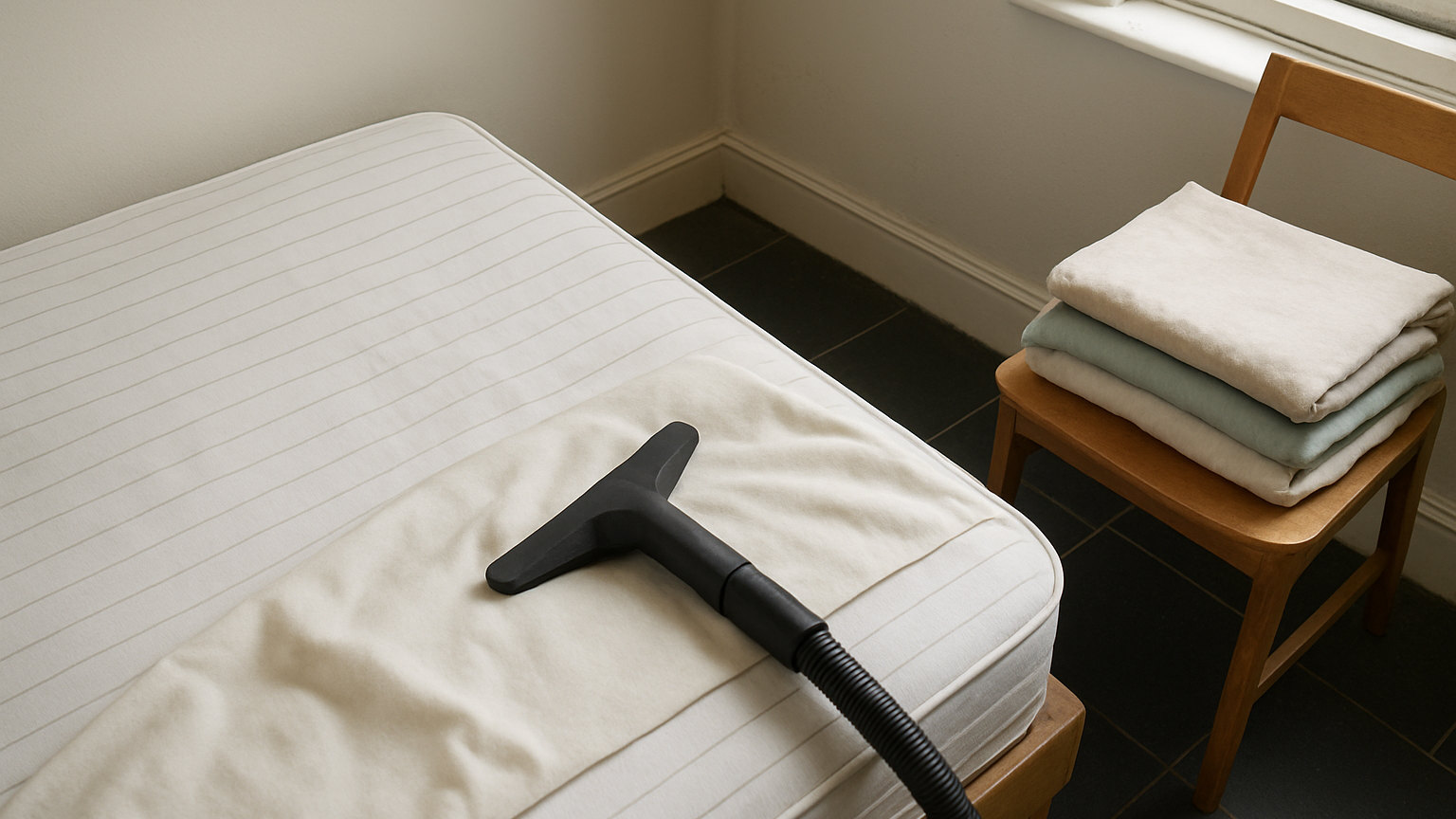
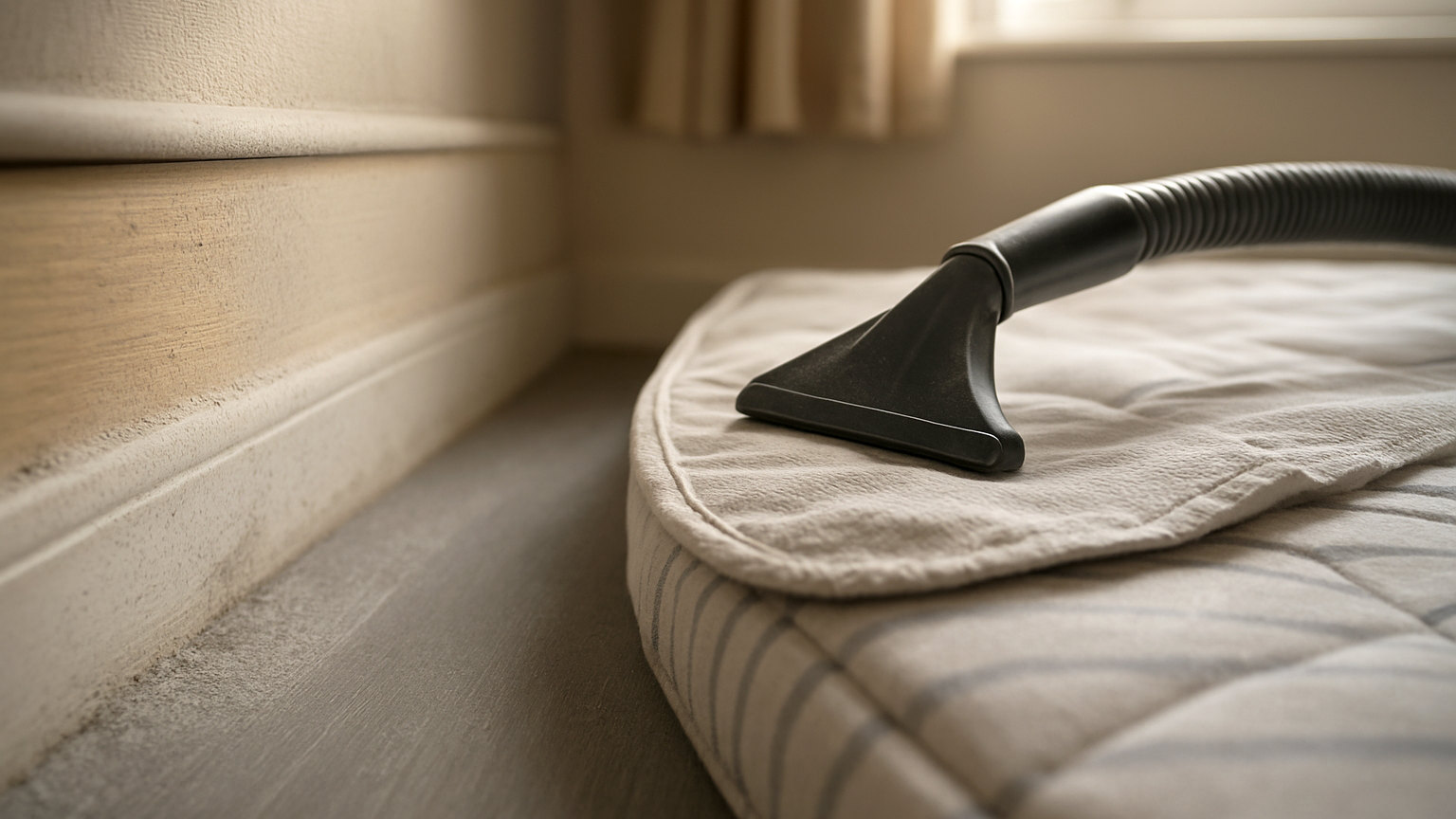
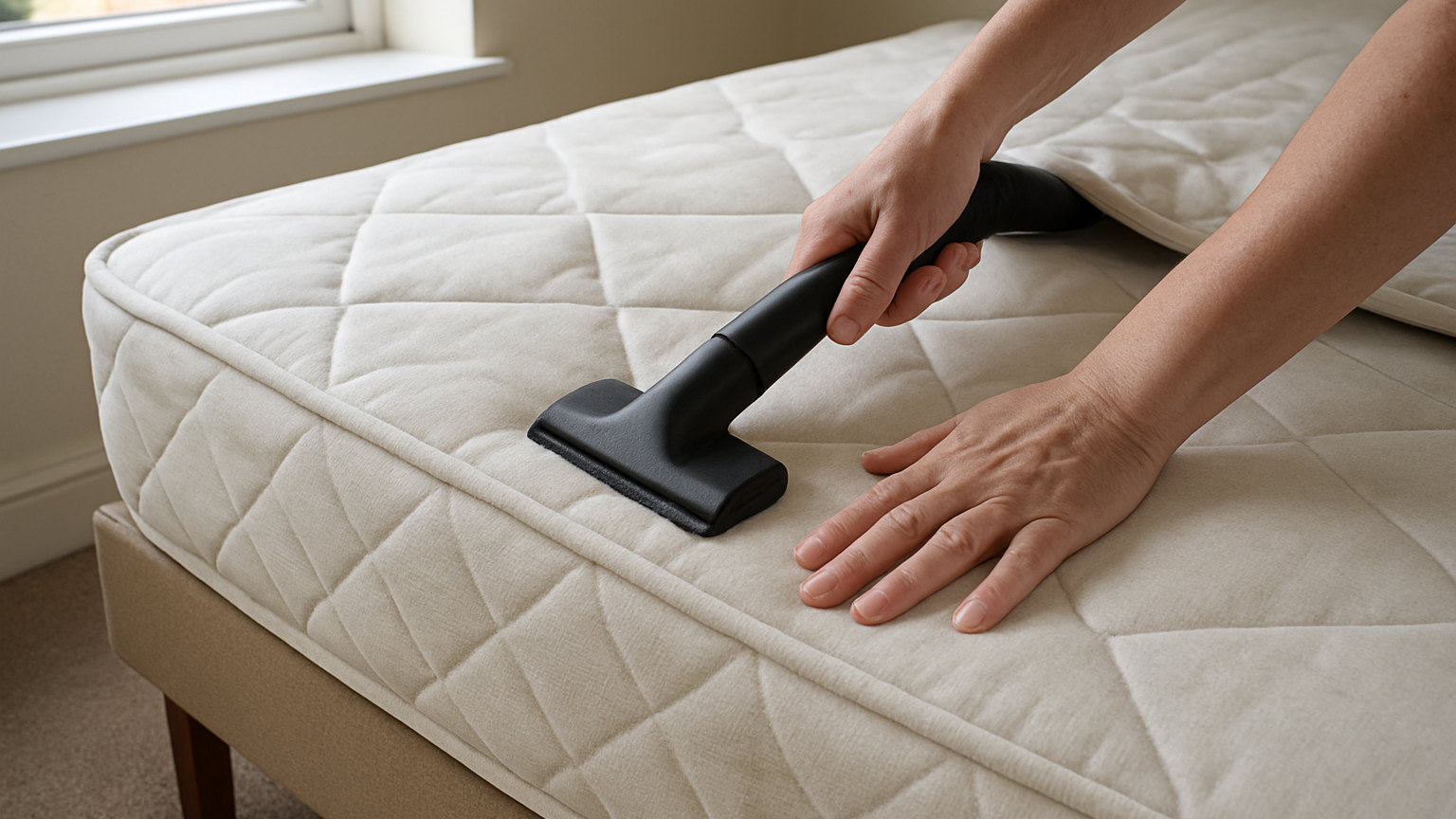
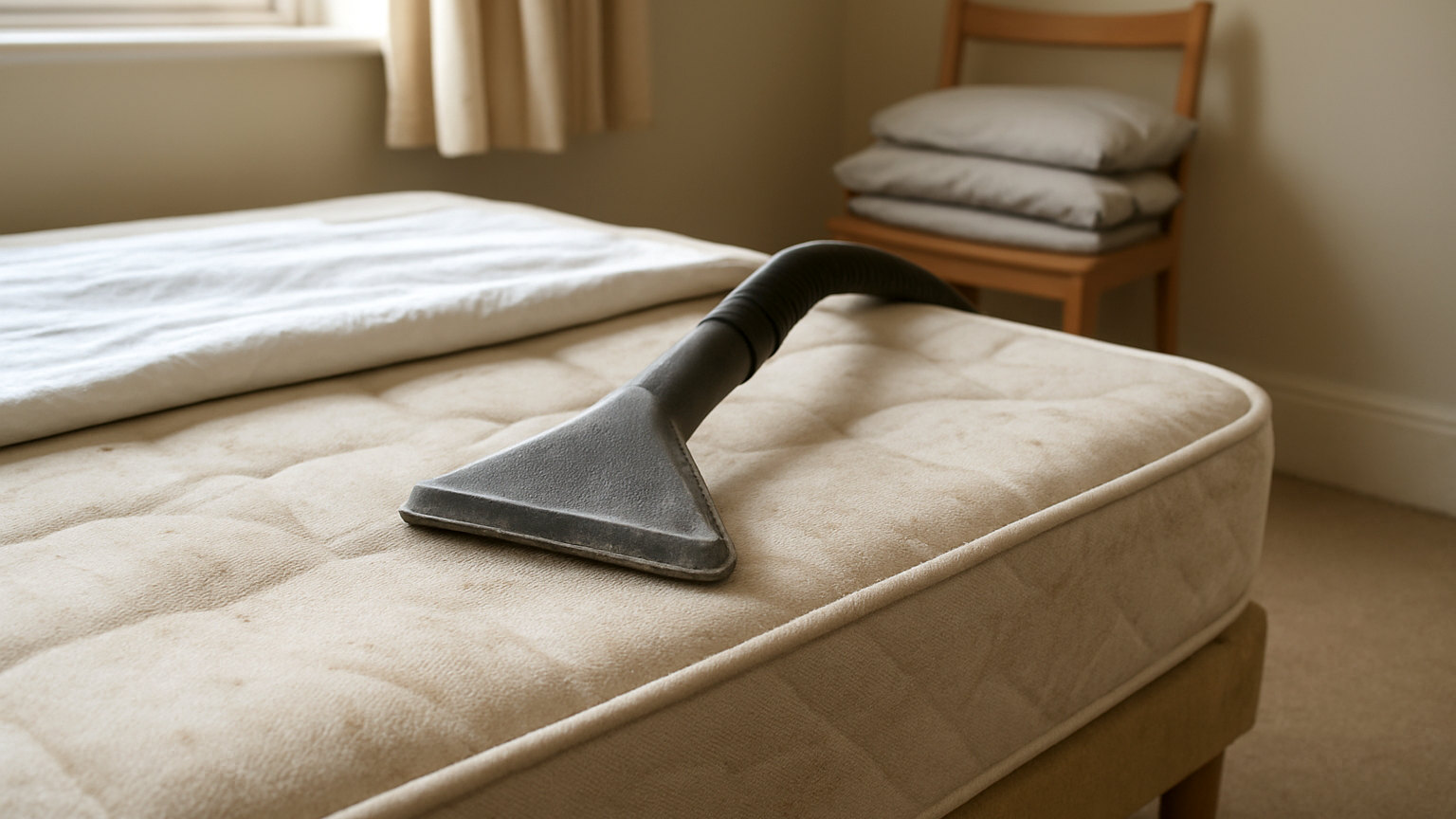
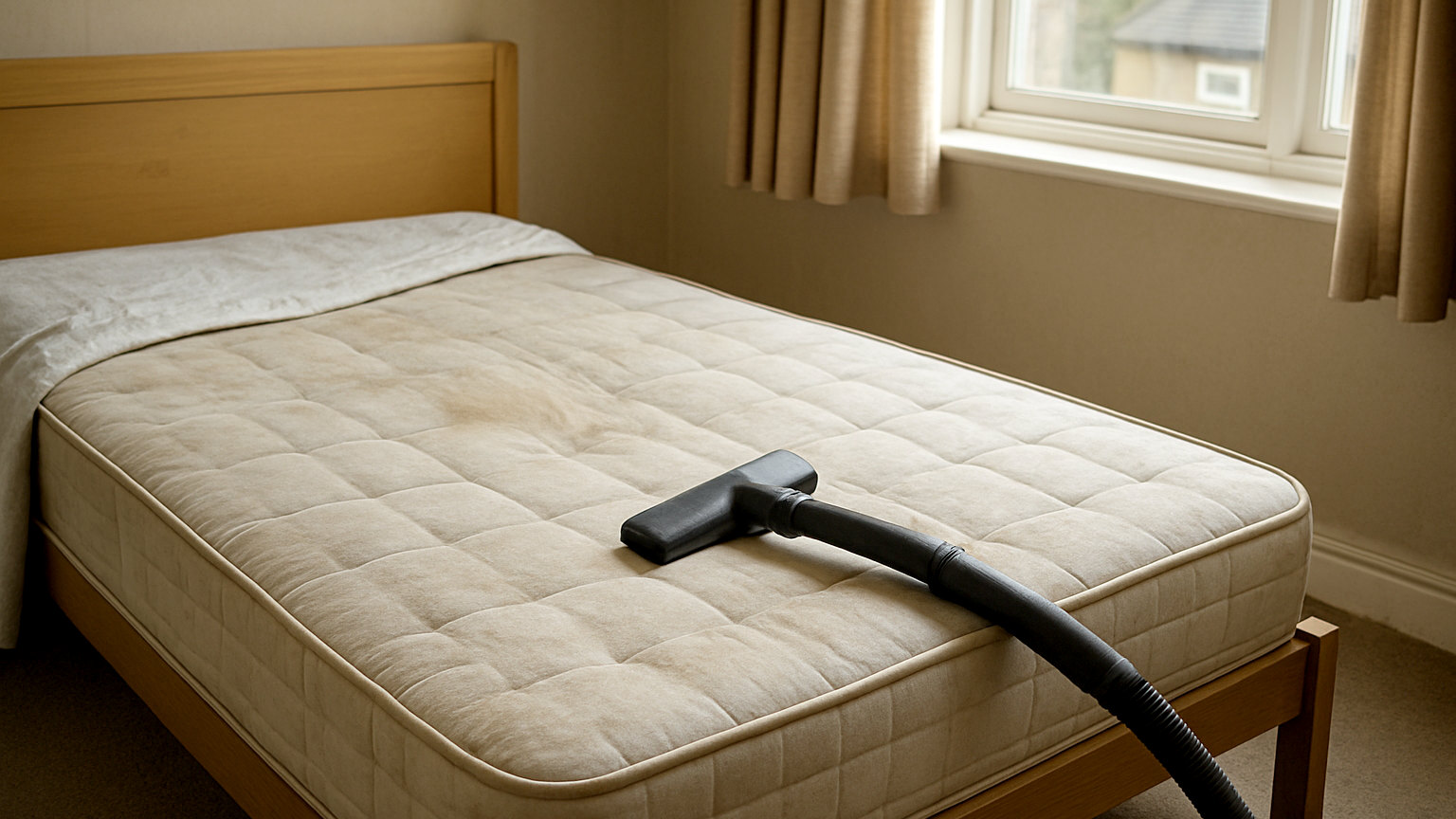
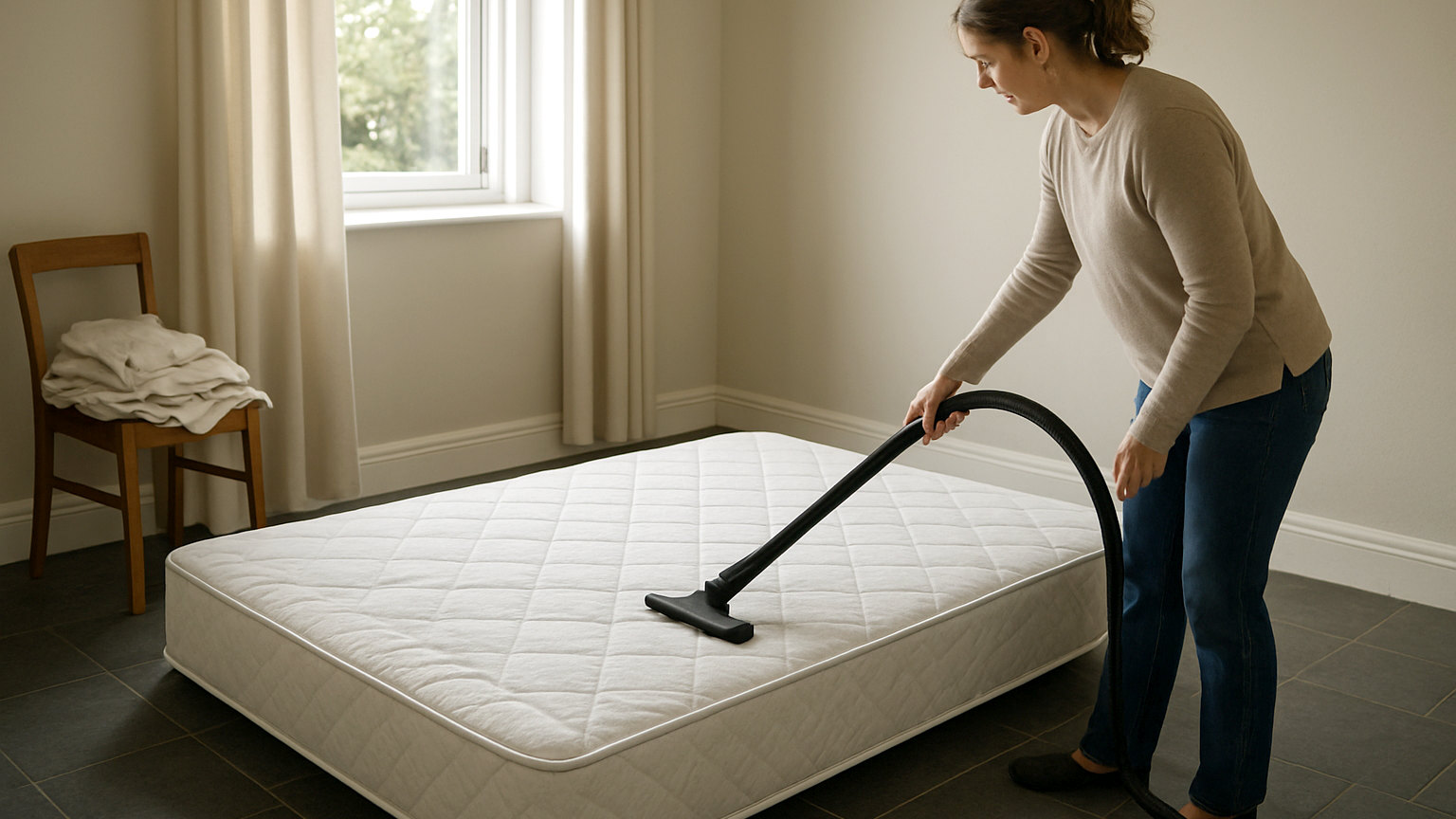
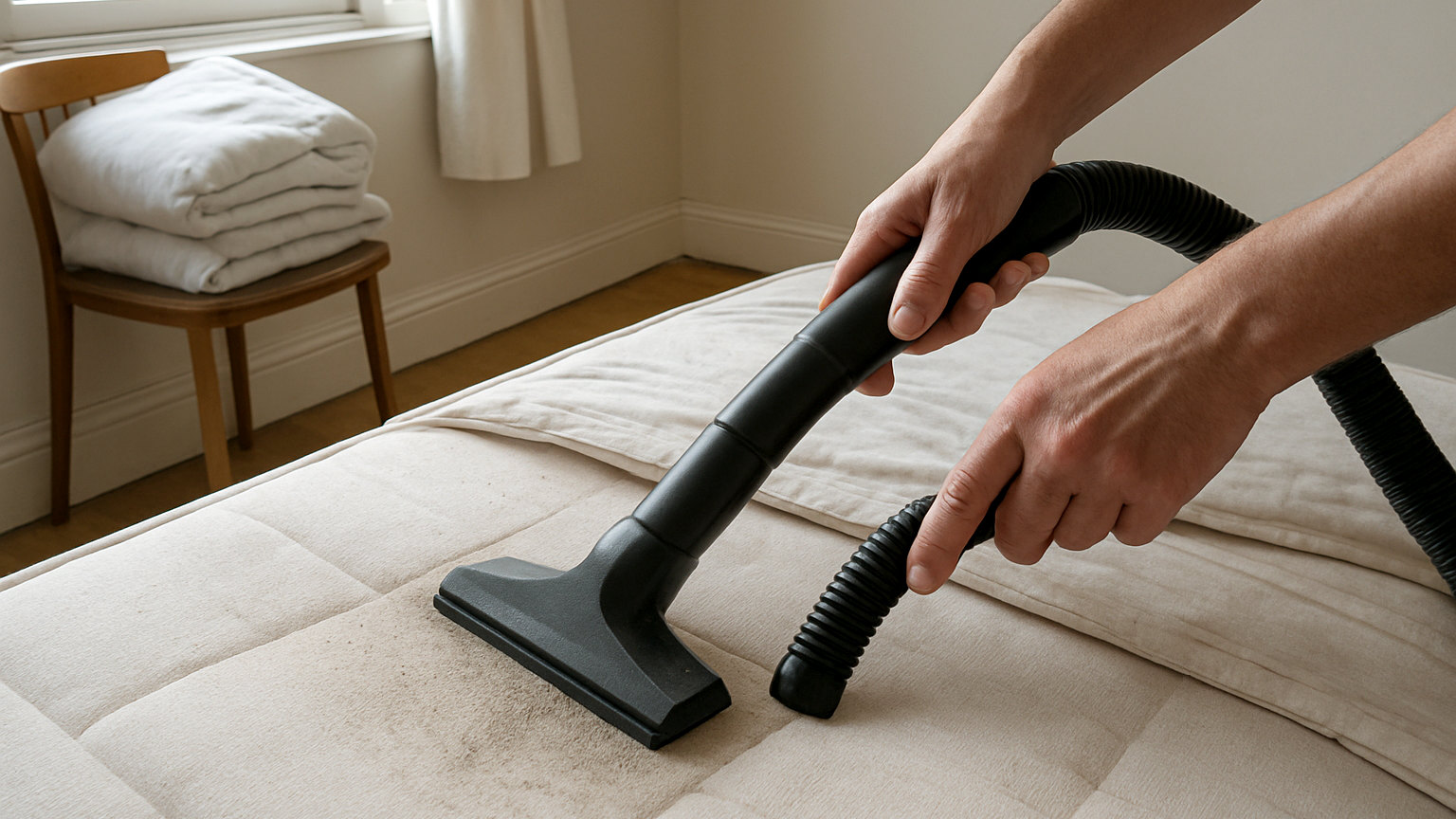
A mattress cannot be washed, so cleaning one is about vacuuming, treating marks with as little water as possible, and getting it dry afterwards.