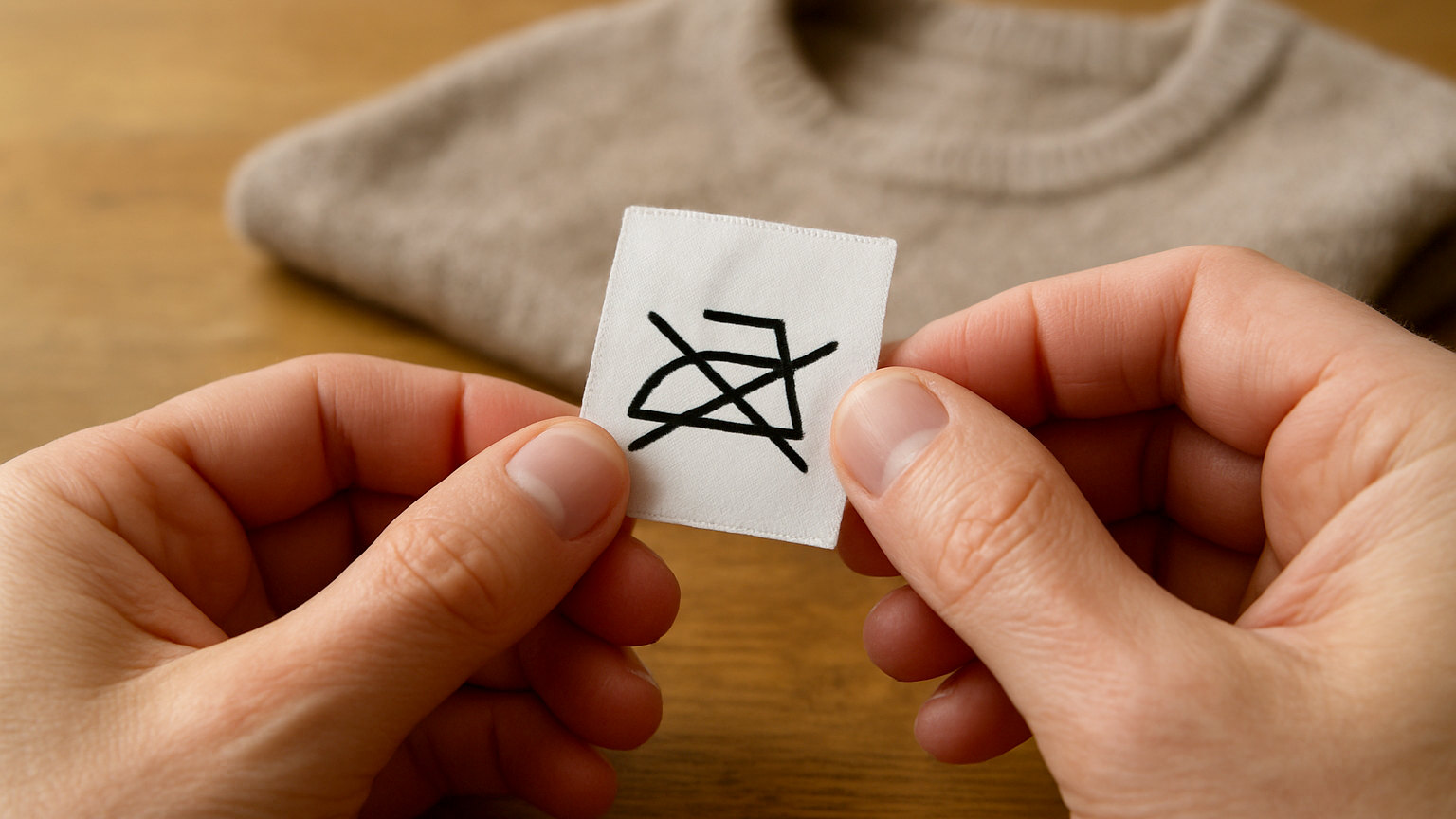
The ironing symbol is a simple outline of an iron, and the dots inside it correspond directly to the dots on the temperature dial of an iron. That correspondence is deliberate and makes the symbol one of the easiest on the label to use.
What do the dots mean?
- One dot – cool, around 110 degrees. Acrylic, nylon, acetate and most synthetics.
- Two dots – medium, around 150 degrees. Polyester, wool, silk and blends.
- Three dots – hot, around 200 degrees. Cotton and linen.
- No dots – ironing is permitted at any temperature the fabric requires, which in practice means use judgement.
- A crossed out iron – do not iron at all.
These are maximums. A two dot garment will often press perfectly well on one dot, and starting low and working up is always safer than starting high.
What do the lines under the iron mean?
This is the part most people miss. Two or three short diagonal lines beneath the iron, with a cross through them, mean do not use steam. The garment can be ironed dry at the indicated temperature, and moisture will damage it.
It appears most often on silk, where water droplets leave permanent ring marks, and on some acetates and coated fabrics that water spots.
Where the steam lines appear without a cross, steam is explicitly permitted, though most labels simply omit them.
What does a crossed out iron mean?
Do not iron, and this usually relates to the finish or the decoration rather than the fibre. It appears on garments with plastic or vinyl prints that melt, on sequinned and beaded items, on fabrics with a crinkle or pleated finish that pressing would flatten, and on some technical and waterproof fabrics where heat damages the coating.
A steamer is usually the right alternative, since it relaxes creases without any contact.
Does the symbol say anything about which side to iron?
No, and that is a gap in the system. Many labels add a written note such as iron on reverse, and where they do not, the sensible default for dark colours, prints, satin, corduroy and anything with a sheen is to iron inside out regardless.
Direct contact between a hot soleplate and the face of the fabric is what causes shine marks, and the label will not warn you about it.
What about a pressing cloth?
Also not covered by the symbols. A thin piece of clean cotton between the iron and the garment prevents shine, spreads the heat and protects decoration, and it is worth using on anything delicate, dark or embellished whatever the label says.
Where a garment is marked with one dot, a pressing cloth is close to essential, since synthetics that melt do so with no warning.
How reliable are the temperatures?
The mapping between dots and degrees is standardised, and iron thermostats are approximate. Irons vary, soleplates have hot spots, and a dial set to two dots may not deliver exactly 150 degrees.
Test on an inside seam before touching the visible part of a garment, particularly with an unfamiliar iron or an unlabelled item.
What if there is no ironing symbol?
Work from the fibre content. Cotton and linen take three dots. Wool and silk take two with care. Polyester takes two. Acrylic, nylon and acetate take one. Anything containing elastane should be treated as one dot, since the elastic degrades well below the temperature the outer fibre can take.
Does the symbol account for damp fabric?
It does not, and it makes a considerable difference. Cotton and linen iron far more easily when slightly damp, because moisture lets the fibres relax and reset. Ironing them bone dry at the same temperature is slower and gives a worse result, which is a technique point the label has no way of conveying.
Should you iron at all?
The presence of a symbol is a permission rather than a recommendation. Plenty of garments that can be ironed do not need it, and jersey, knitwear and anything with drape usually look better without. A good drying routine, with items shaken out and hung promptly, removes most of the pile before it reaches the board.