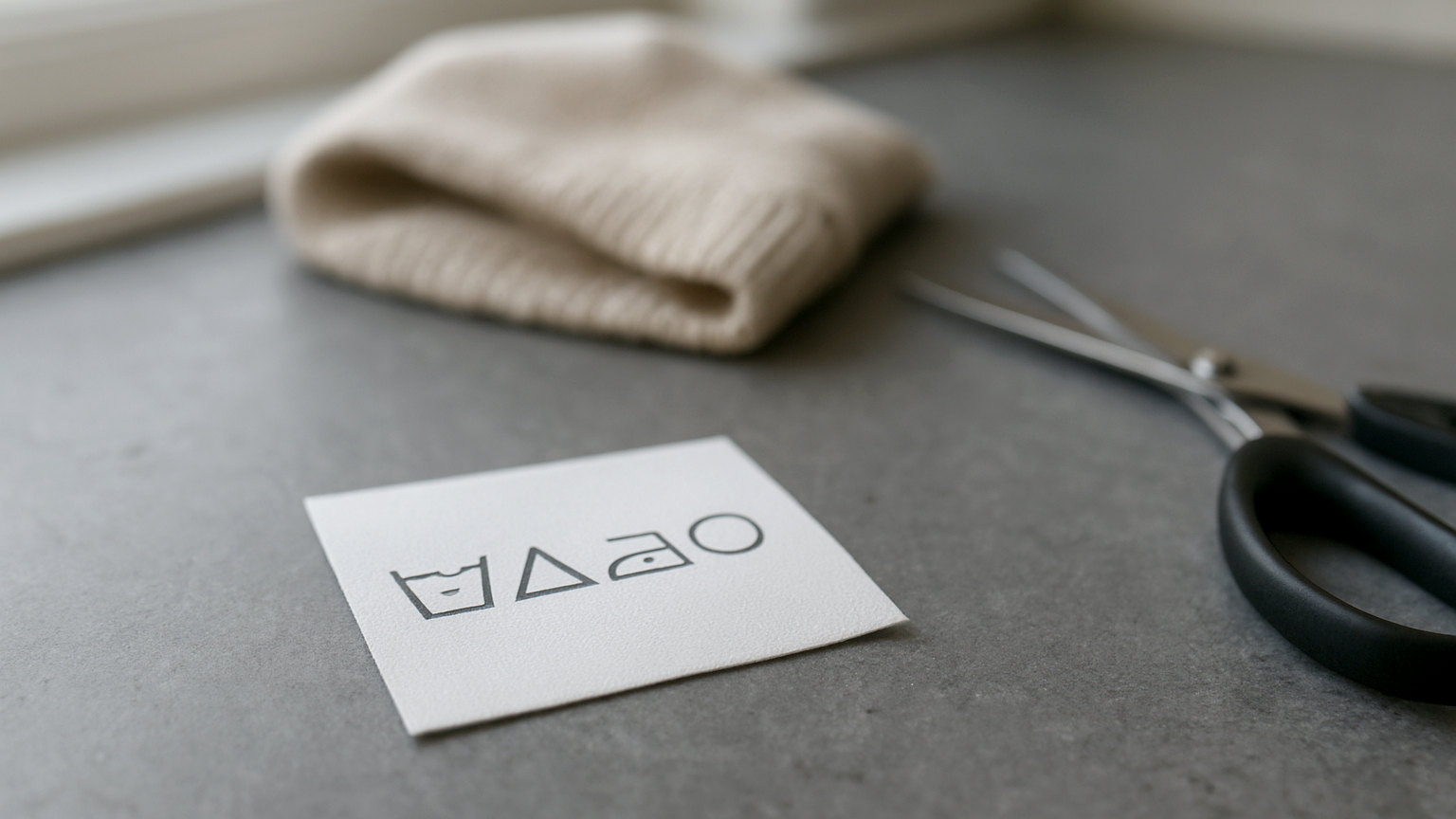
A missing label is common. Tags get cut out because they scratch, printed labels wear off, and vintage and handmade items often never had one. Without it you have to work from the fabric itself, and the safe approach is to identify what you can and then treat the garment more cautiously than it probably needs.
What is the cautious default?
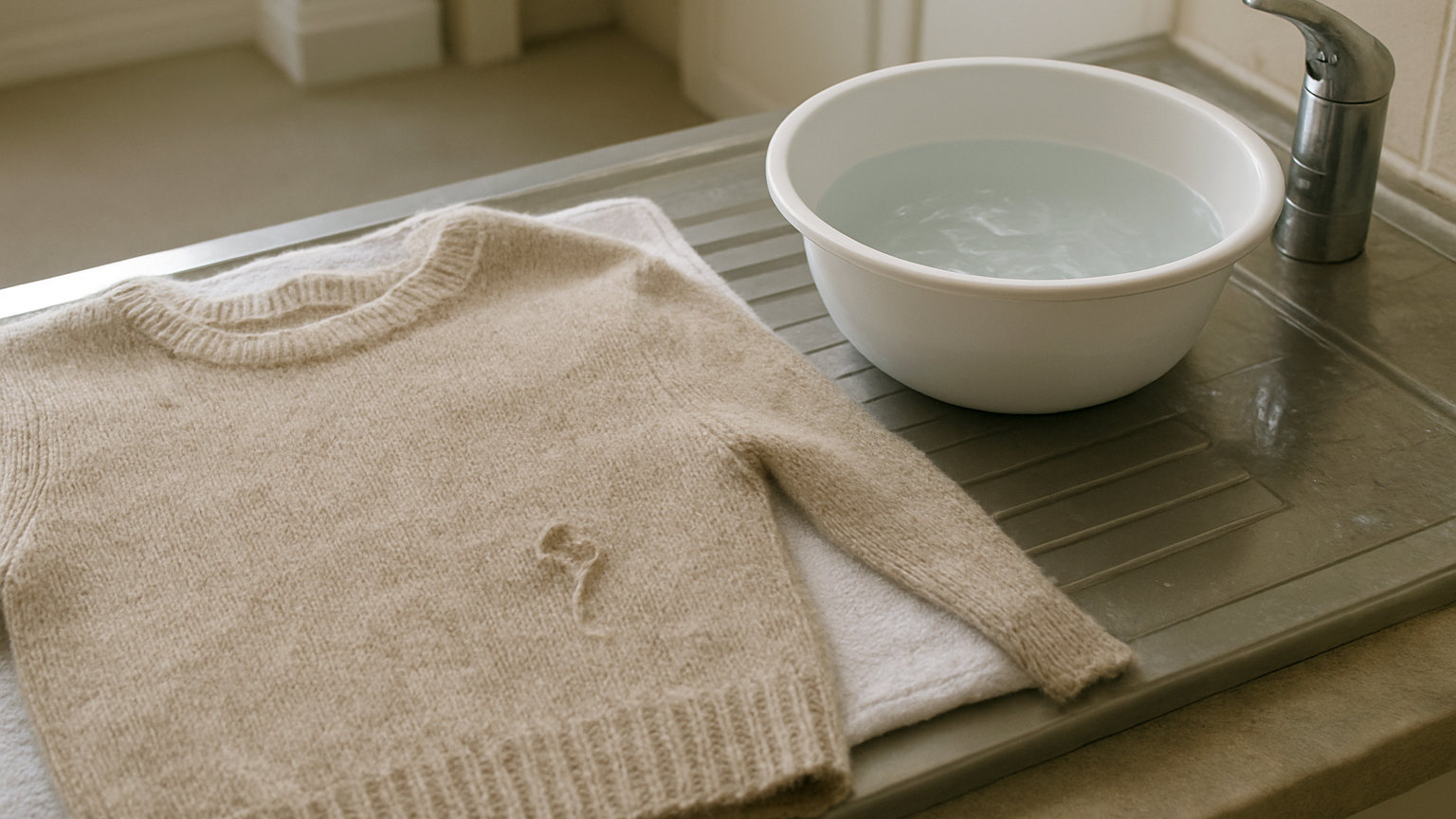
Hand wash in cool water with a mild detergent, no wringing, no spin, dried flat away from heat and sunlight. That treatment will not damage anything. You can always be less careful next time, and nothing about the first wash will have caused harm.
Test for colour fastness first by dampening a hidden area and pressing a white cloth against it for a minute.
How do you identify the fibre by feel?
- Cotton – soft, breathable, creases readily, feels slightly warm, absorbs water quickly.
- Linen – cool and crisp, visible slubs in the weave, creases sharply.
- Wool – springy, slightly textured, recovers when crushed in the hand, smells faintly of lanolin when damp.
- Silk – smooth, cool, with a subtle sheen, warms quickly against the skin.
- Polyester – smooth and slightly slippery, springs back from creasing, does not absorb water readily.
- Viscose – drapes heavily, feels soft and slightly dry, creases badly and feels weak when wet.
- Elastane blends – obvious from the stretch and recovery.
What does the water drop test tell you?
Put a drop of water on a hidden area. Natural fibres such as cotton, linen and viscose absorb it quickly and darken. Polyester and nylon repel it and the drop sits on the surface. Wool absorbs slowly. It is a rough test and it takes ten seconds.
What about the burn test?
Taking a few fibres from a seam allowance and burning them identifies fibre reliably, since cotton burns to a soft grey ash and smells of paper, wool smells of burning hair and self extinguishes, and synthetics melt into a hard bead. It is the standard identification method in textiles.
It is also drastic for a garment you own and intend to wear, and it requires care with a naked flame. For most domestic purposes, feel and behaviour give enough information.
How do you judge the construction?
Look inside. A lining, shoulder padding, interfacing or a stiffened collar all point towards professional cleaning. Beading and sequins point the same way. A garment that is simply fabric with seams can almost certainly be washed.
Check the seams themselves. Overlocked edges and even stitching suggest modern manufacturing and a fabric likely to tolerate a machine. Hand finishing and bound seams suggest something older or more valuable.
What should you assume about temperature?
Cool, always, on a first wash. Cool water cannot shrink, cannot felt and cannot set a stain, and it releases far less dye. If the garment comes through it well, you can go warmer next time with more confidence.
What about vintage and second hand items?
Treat them as the most fragile thing they could be. Older fibres are weaker, older dyes are less stable, and construction methods vary. Hand wash cool, support the garment fully when wet, dry flat, and test everything in a hidden area first.
Anything genuinely old or valuable is worth taking to a specialist rather than experimenting with.
How do you avoid the problem next time?
Photograph the label before cutting it out, and keep the photographs in one album on a phone. If a label irritates, cut it close to the seam rather than removing it entirely, or unpick the stitching at one end so it can be folded away. The information is worth keeping even when the tag itself is not.
What about items given or inherited?
Ask, if you can. The person who owned a garment usually knows how it has been washed, and that history is better information than any test. Where that is not possible, treat it as unknown and start cautiously, which costs one gentle cycle and protects something that may not be replaceable.