How Do You Keep an Oven Clean Between Cleans?
Almost everything that makes an oven hard to clean is a spill that was baked on repeatedly, and a liner or a lid prevents most of them.
By Cleaning Guides Team
9 Jun 2026

Oven interiors, racks, glass doors, gas burners and induction tops, with and without chemicals.
Almost everything that makes an oven hard to clean is a spill that was baked on repeatedly, and a liner or a lid prevents most of them.
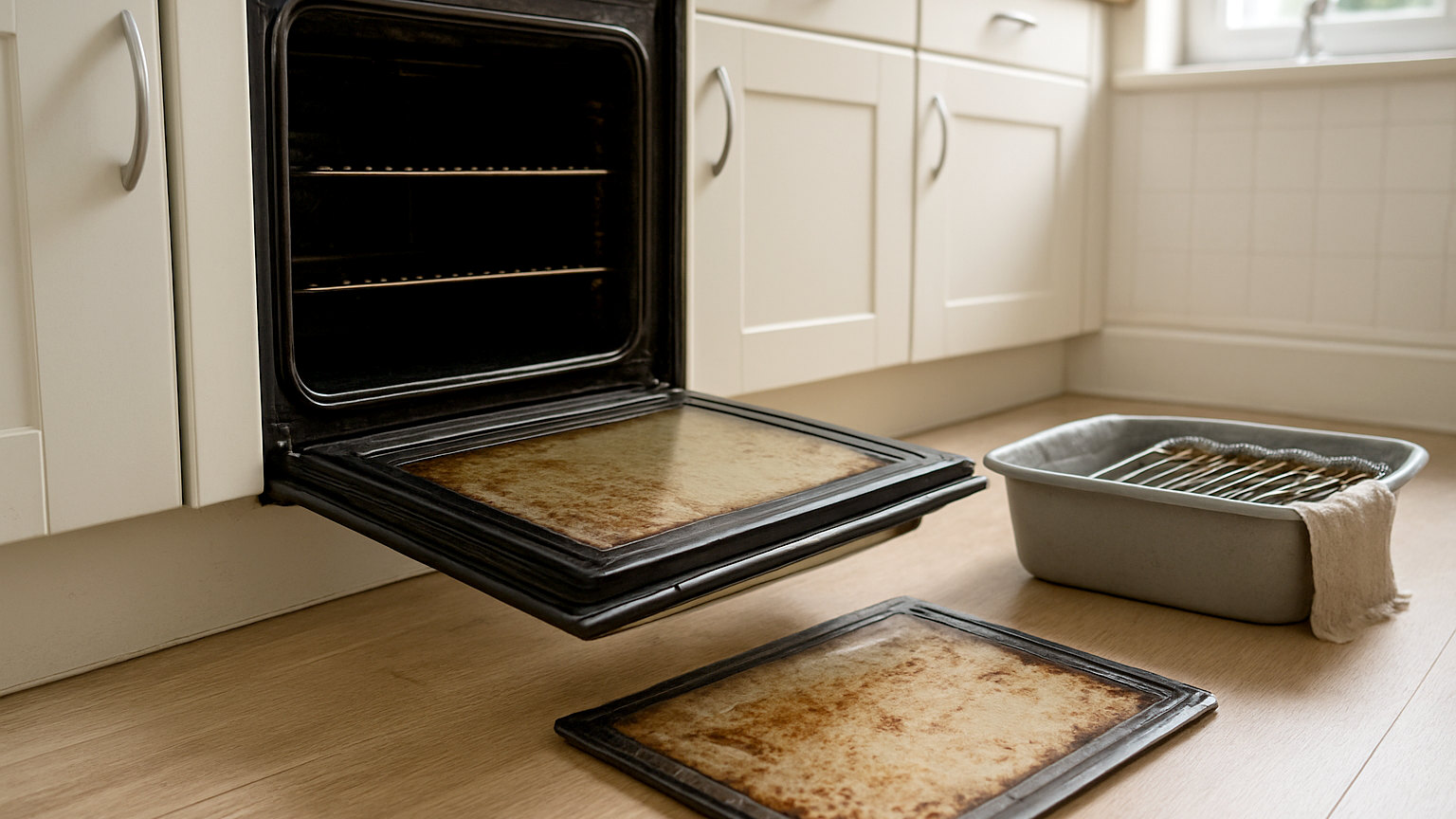
A badly neglected oven is a sequence of soaking jobs run in parallel, and the whole thing takes an evening and a morning rather than one long session.
Caustic oven cleaners work by dissolving fat chemically, and the same chemistry works on skin, aluminium and several oven components.
The gap beside and behind a cooker collects everything that falls down it, and in most kitchens it has not been touched since installation.
A grill pan is the single greasiest item in most kitchens and also the one most often put away without being properly cleaned.
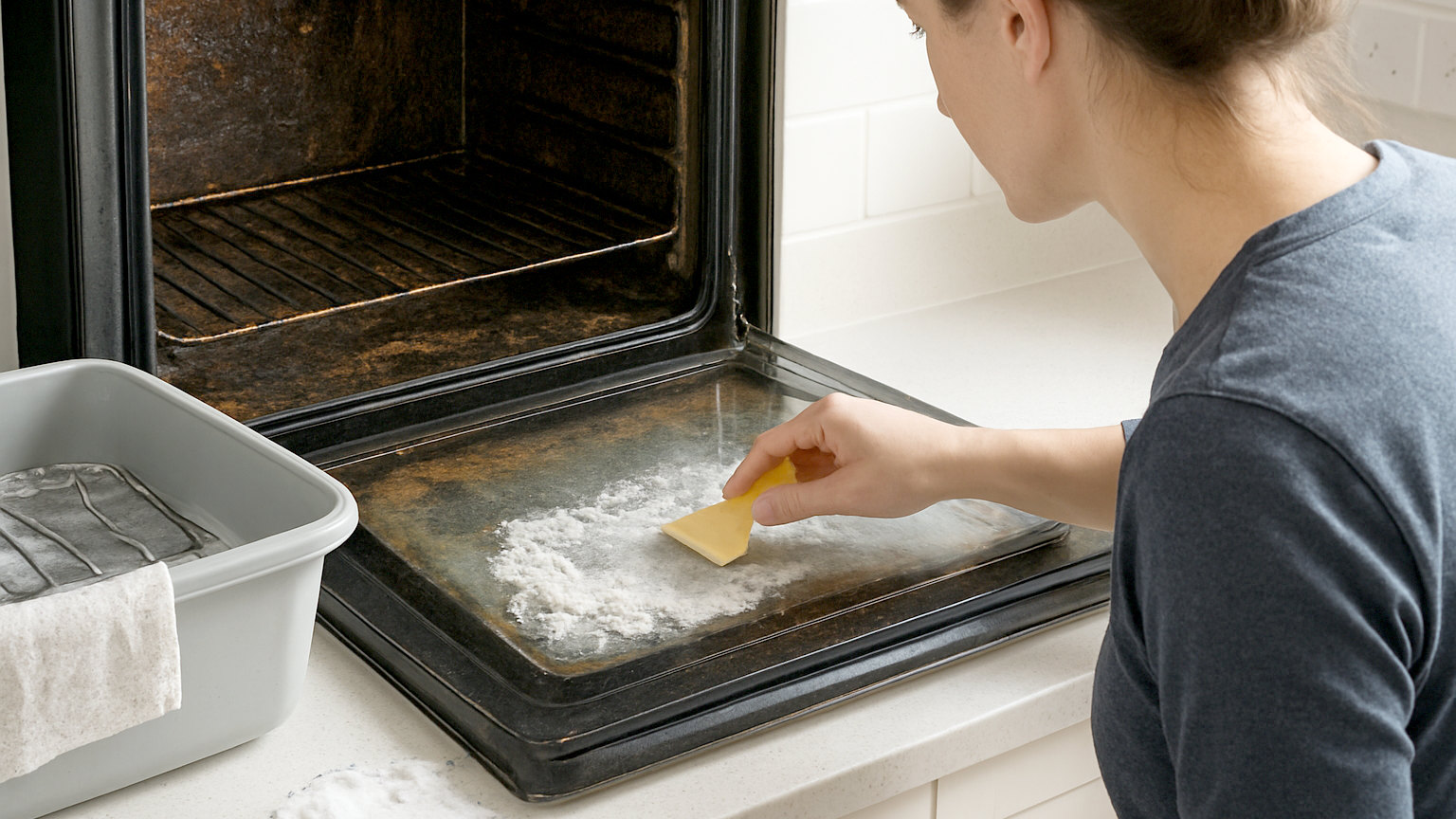
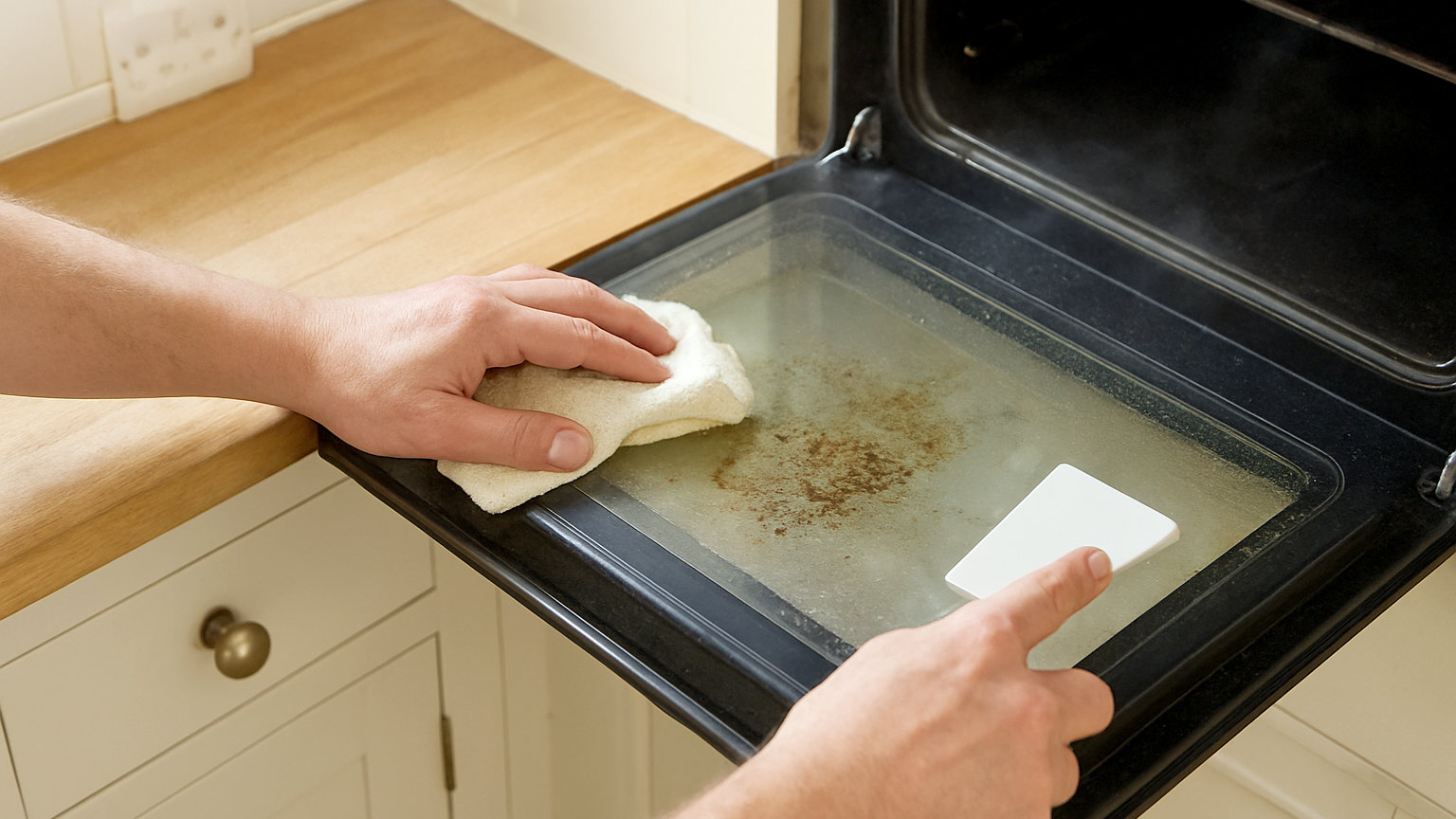
Softening is the whole technique, because burnt on residue lifts easily after twenty minutes under a damp cloth and barely at all when dry.
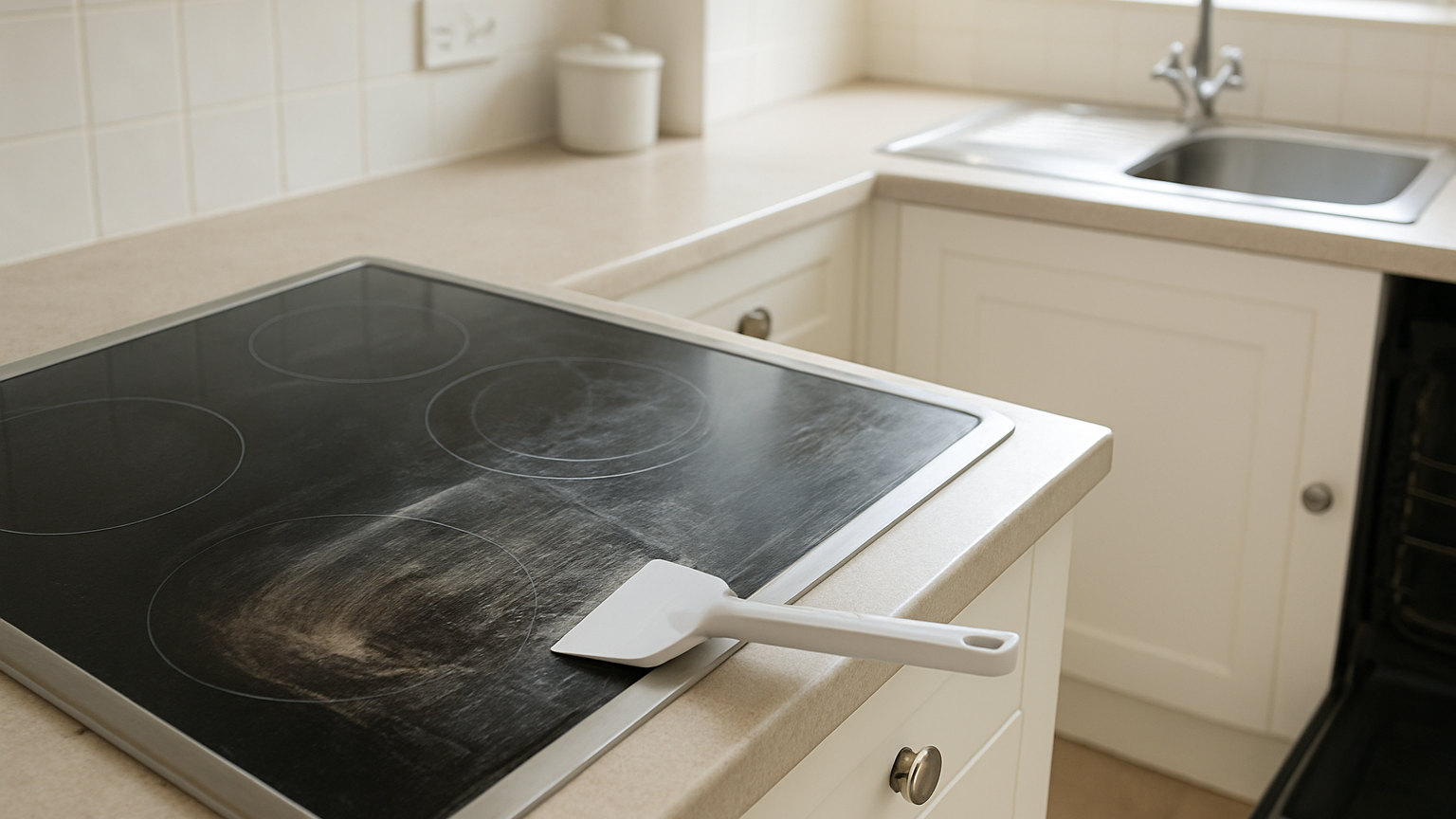
A glass hob is easy to clean and easy to scratch permanently, and almost all the damage comes from the cloth rather than the cleaner.
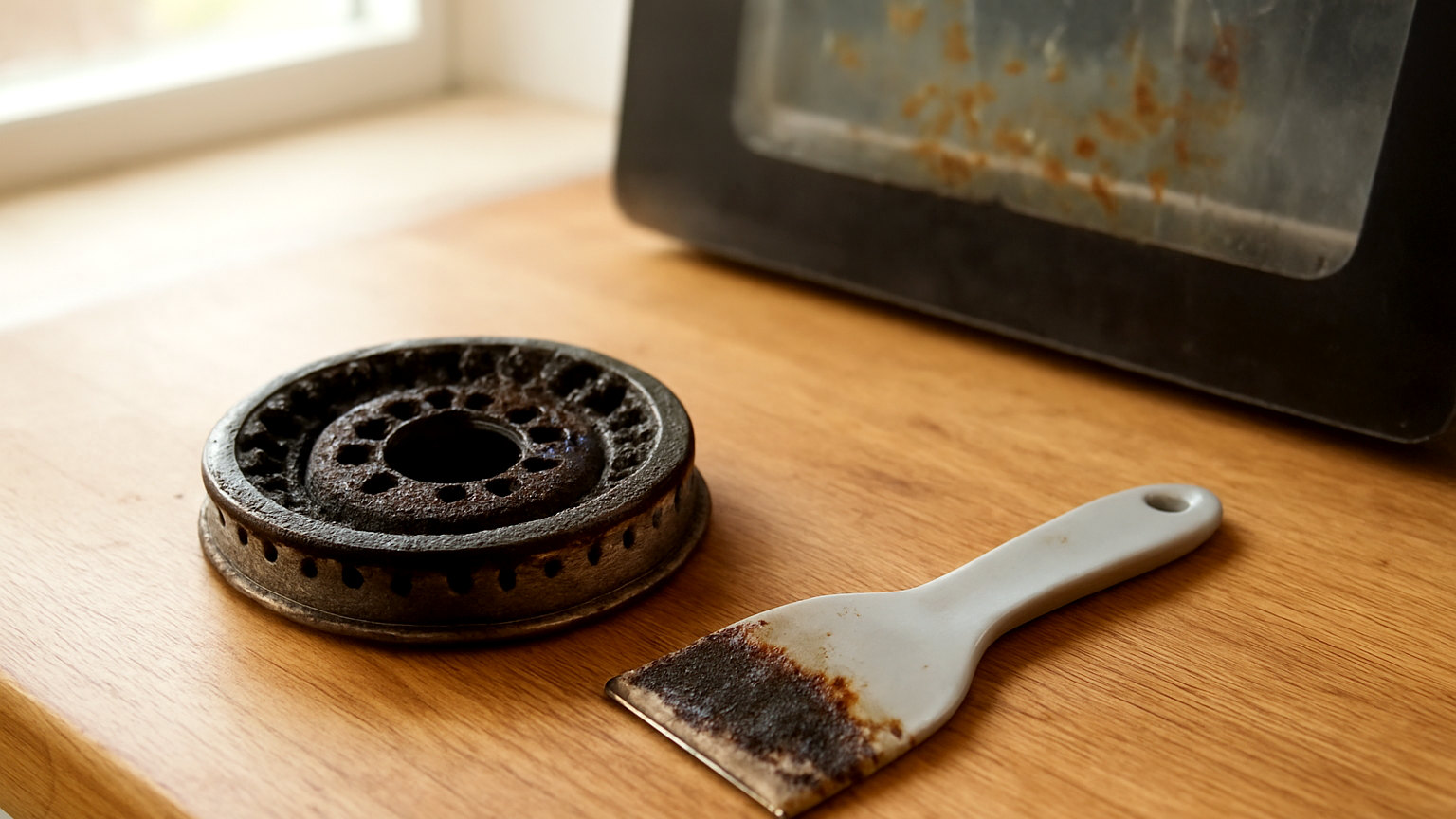
The parts that need most attention are the burner crowns, where blocked ports change the flame from blue to yellow and the cooking with it.
Catalytic liners clean themselves during normal cooking, and any attempt to clean them with a product destroys the coating permanently.
They genuinely work, reducing everything inside to ash at around 500 degrees, and there is a short list of things they do not clean.
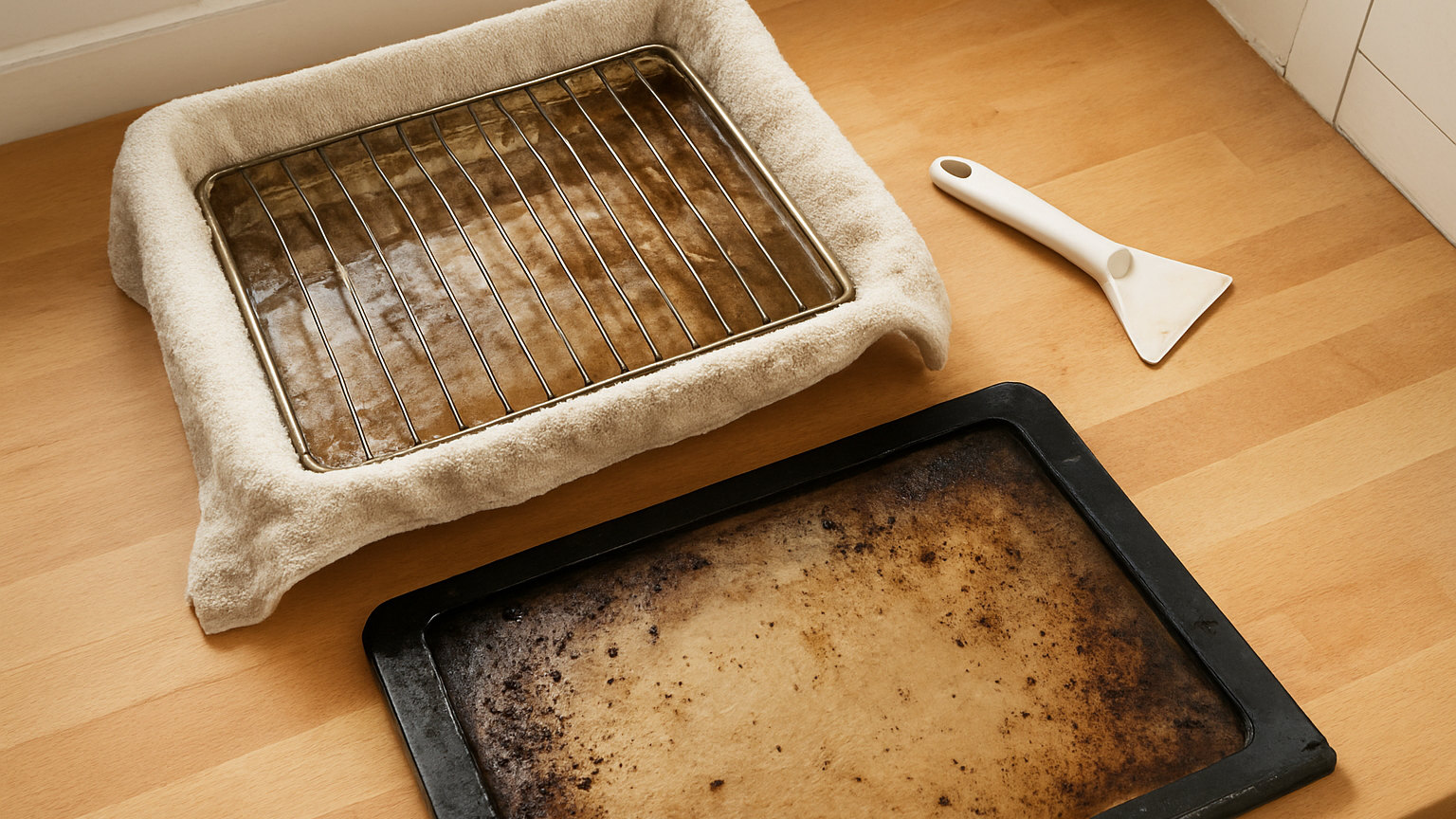
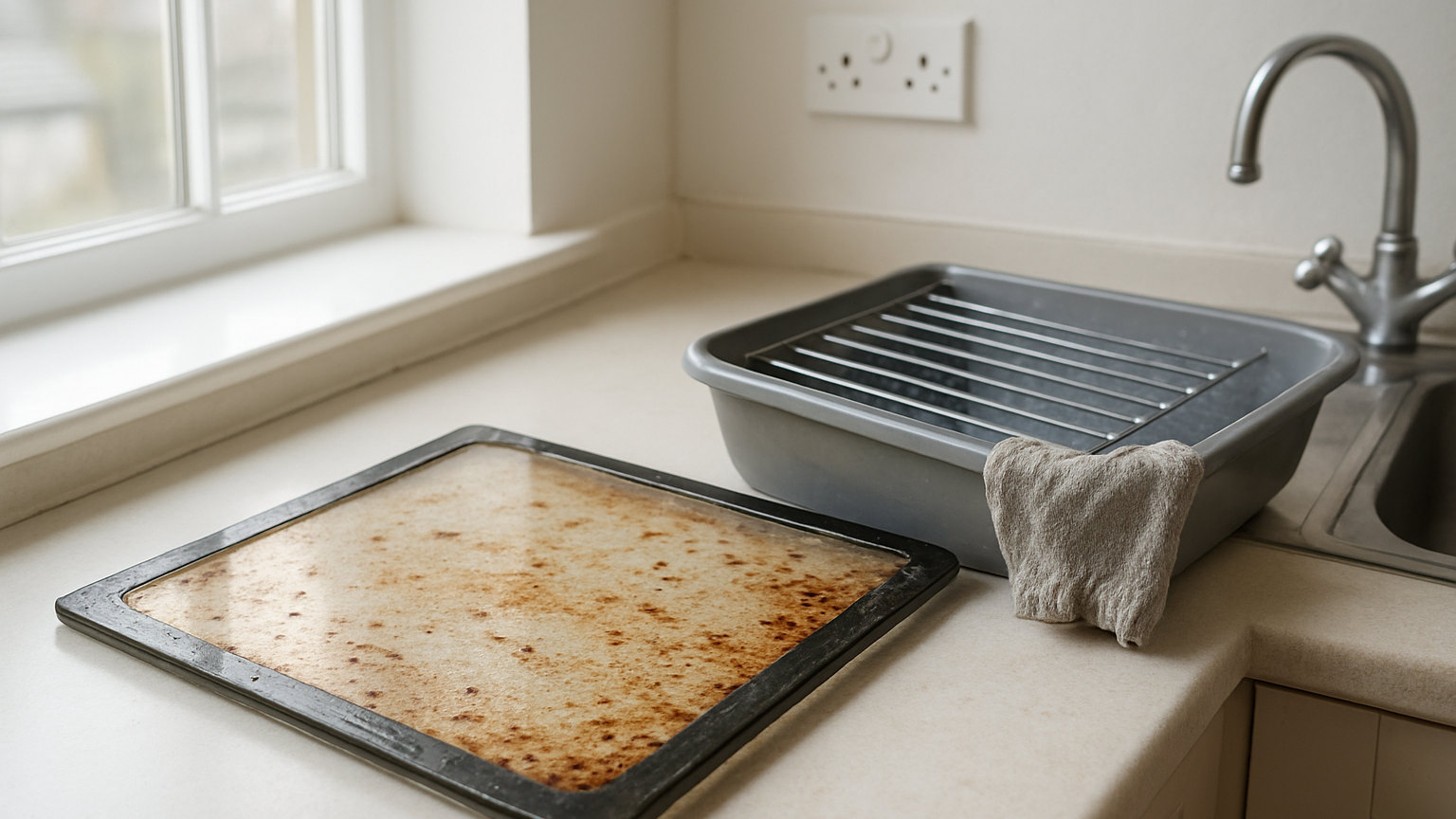
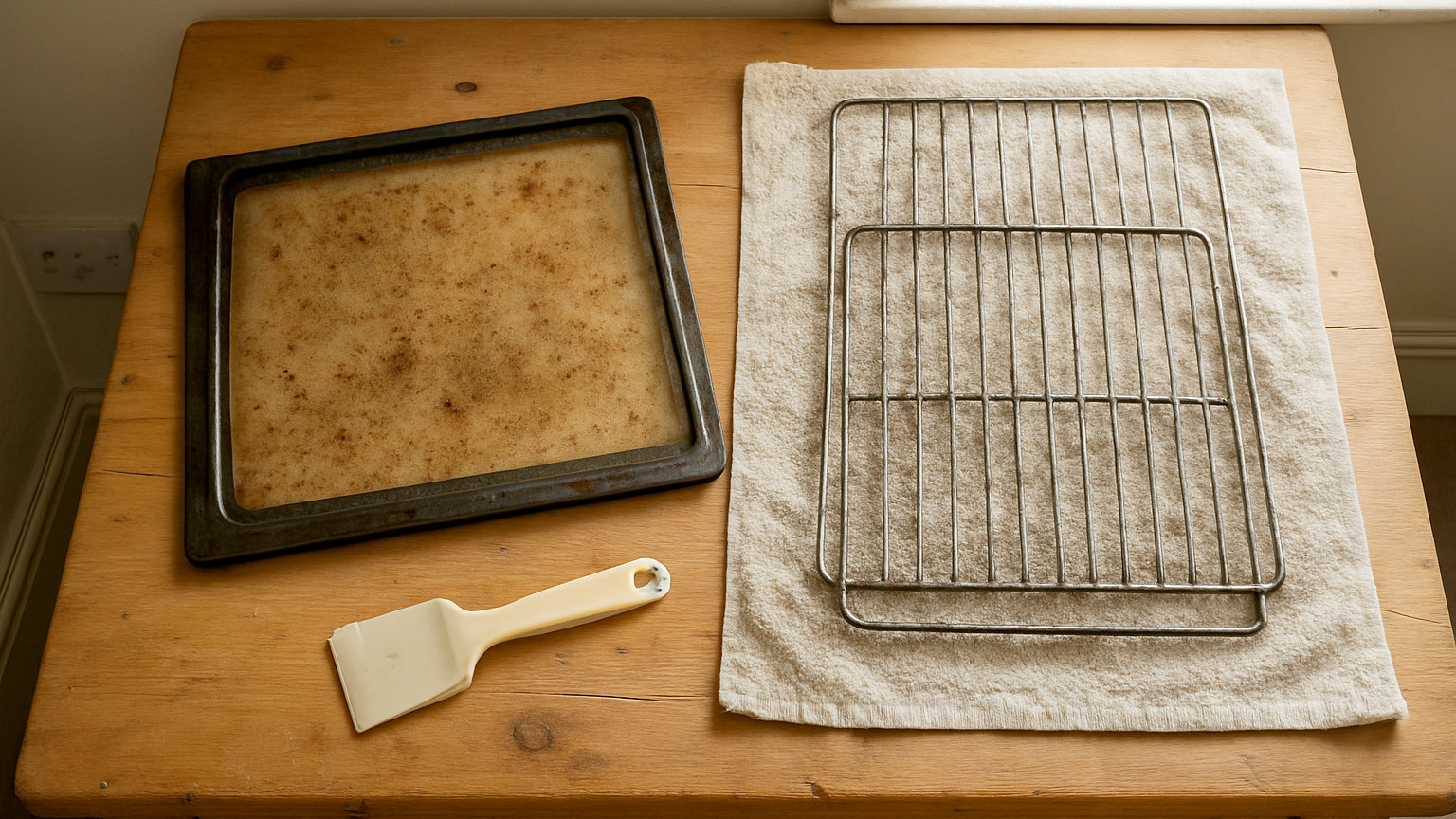
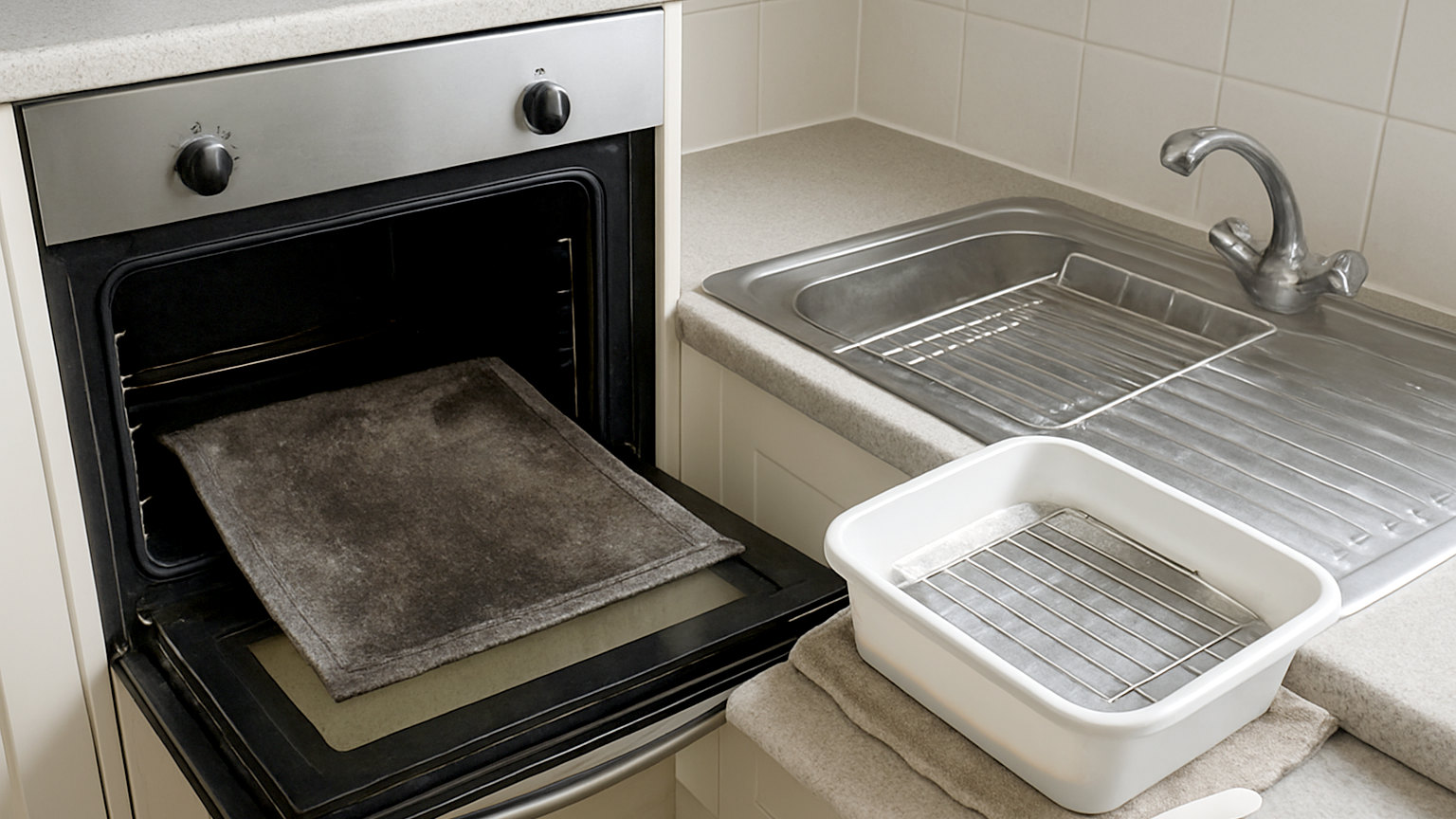
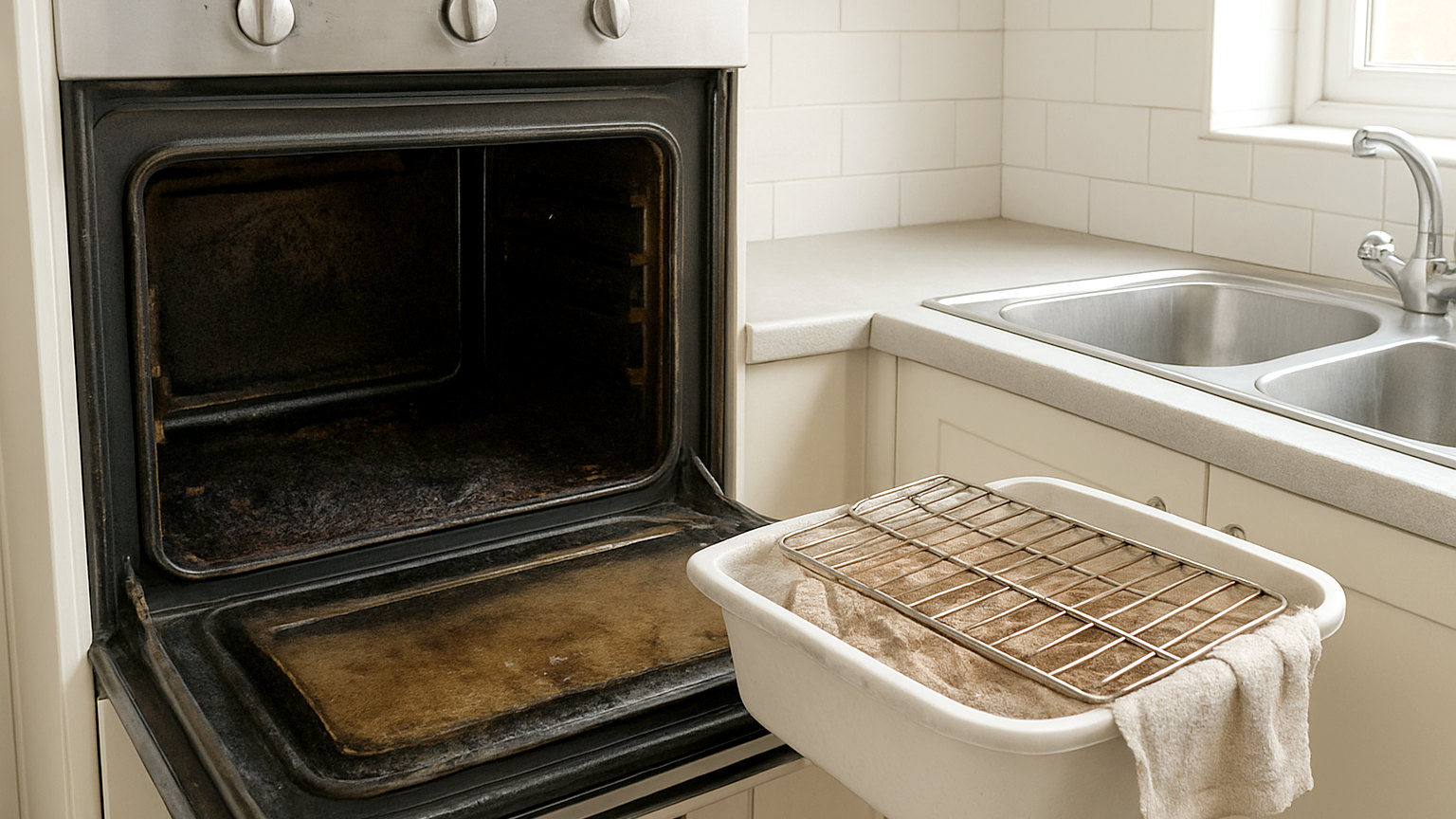
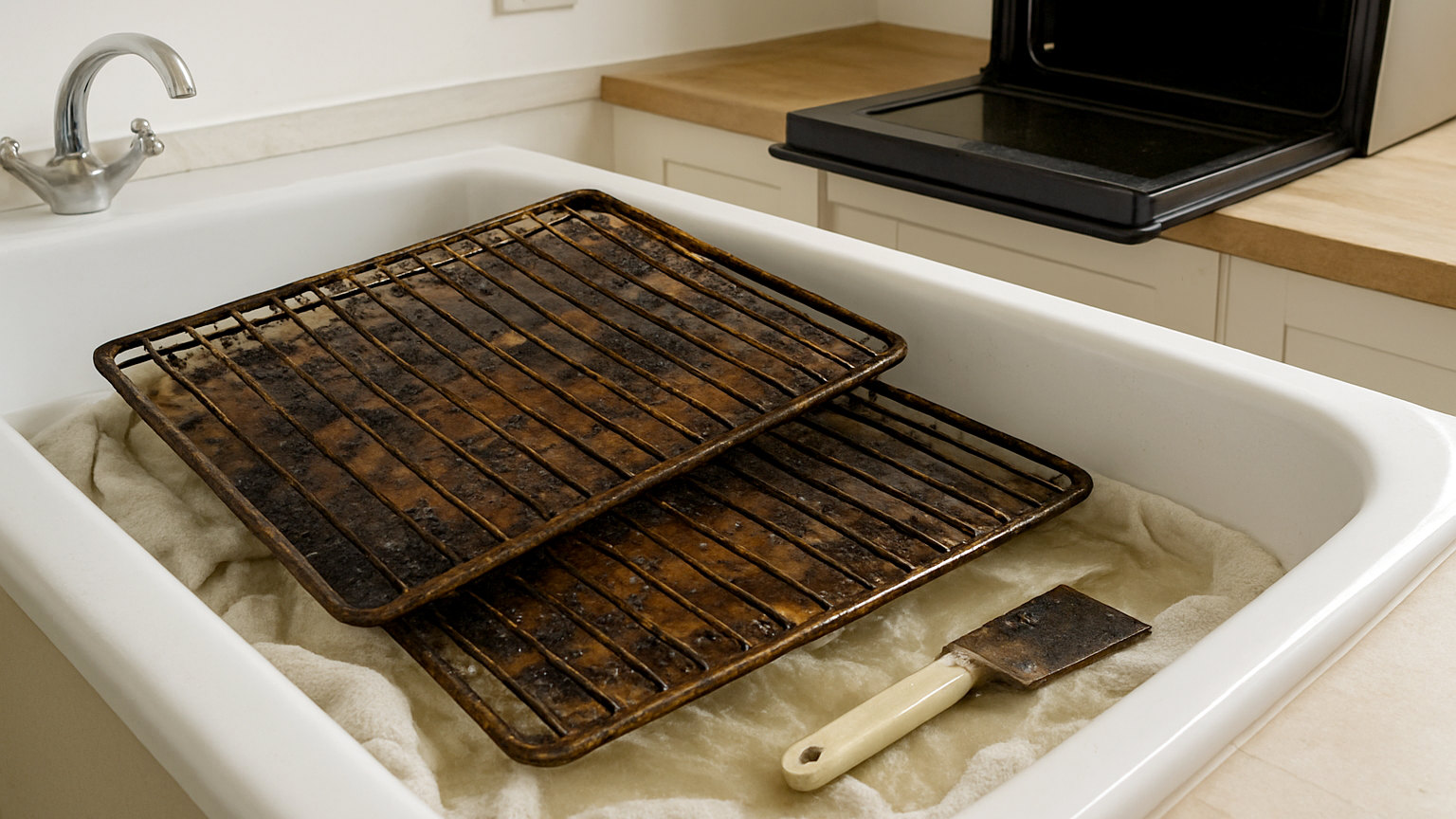
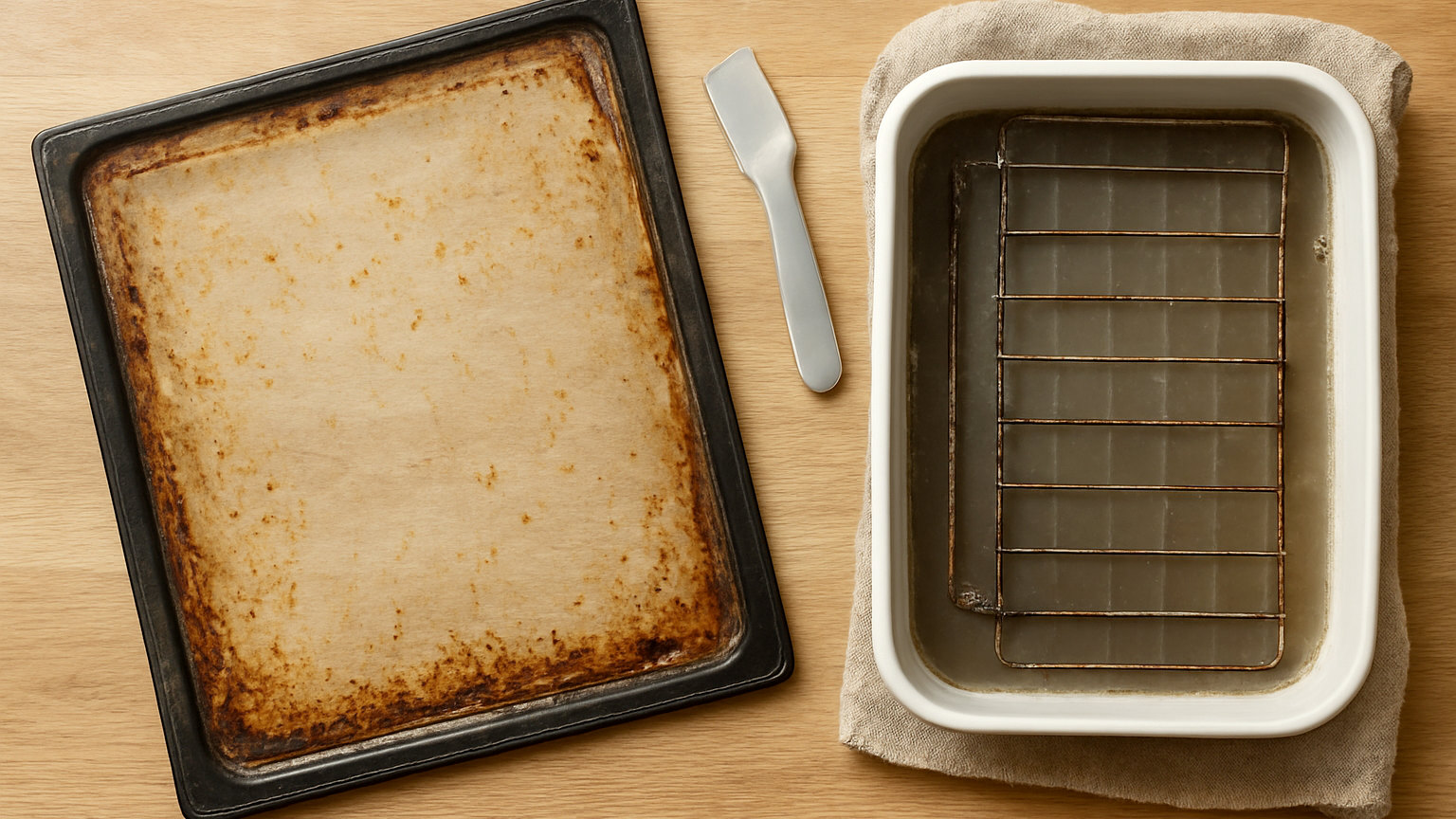
Soaking removes almost everything from oven shelves, and the difficulty is finding somewhere large enough to soak them.
The brown haze that will not come off is usually between the panes rather than on them, which changes the job entirely.