How Do You Look After a Dishwasher?
Weekly filter cleaning and a monthly hot cycle prevent almost every fault a dishwasher develops, and neither takes more than ten minutes.
By Cleaning Guides Team
25 Apr 2026

Filters, spray arms, salt and rinse aid, and why glasses come out cloudy.
Weekly filter cleaning and a monthly hot cycle prevent almost every fault a dishwasher develops, and neither takes more than ten minutes.
Limescale builds on the heating element and inside the spray arms, and in a hard water area a machine that is never descaled fails early.
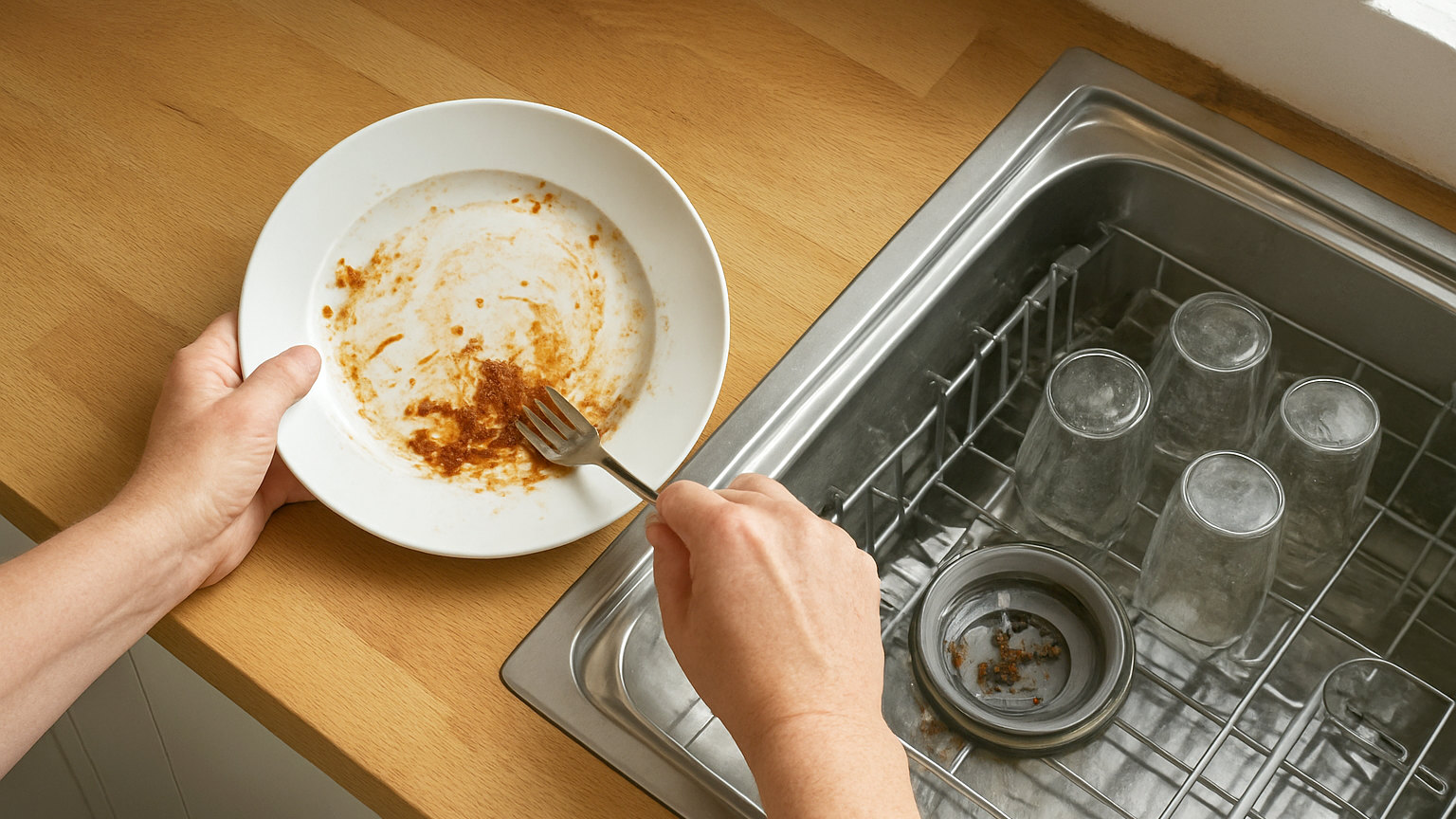
Scrape, do not rinse. Modern dishwasher detergent needs something to work on, and a rinsed plate can genuinely come out worse.
Standing water in the base is usually a blocked filter or a blocked sink waste, and both can be dealt with in half an hour.
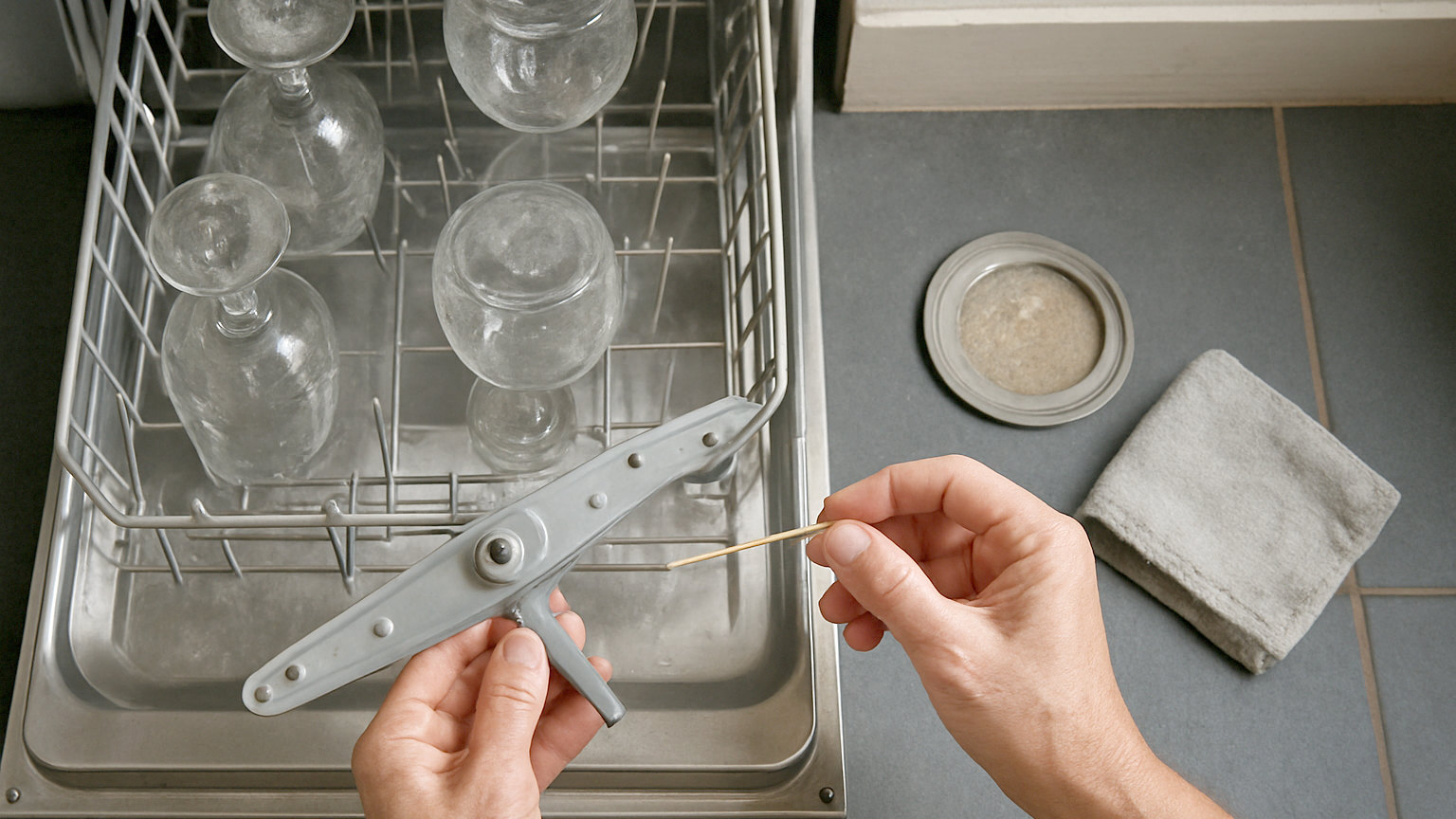
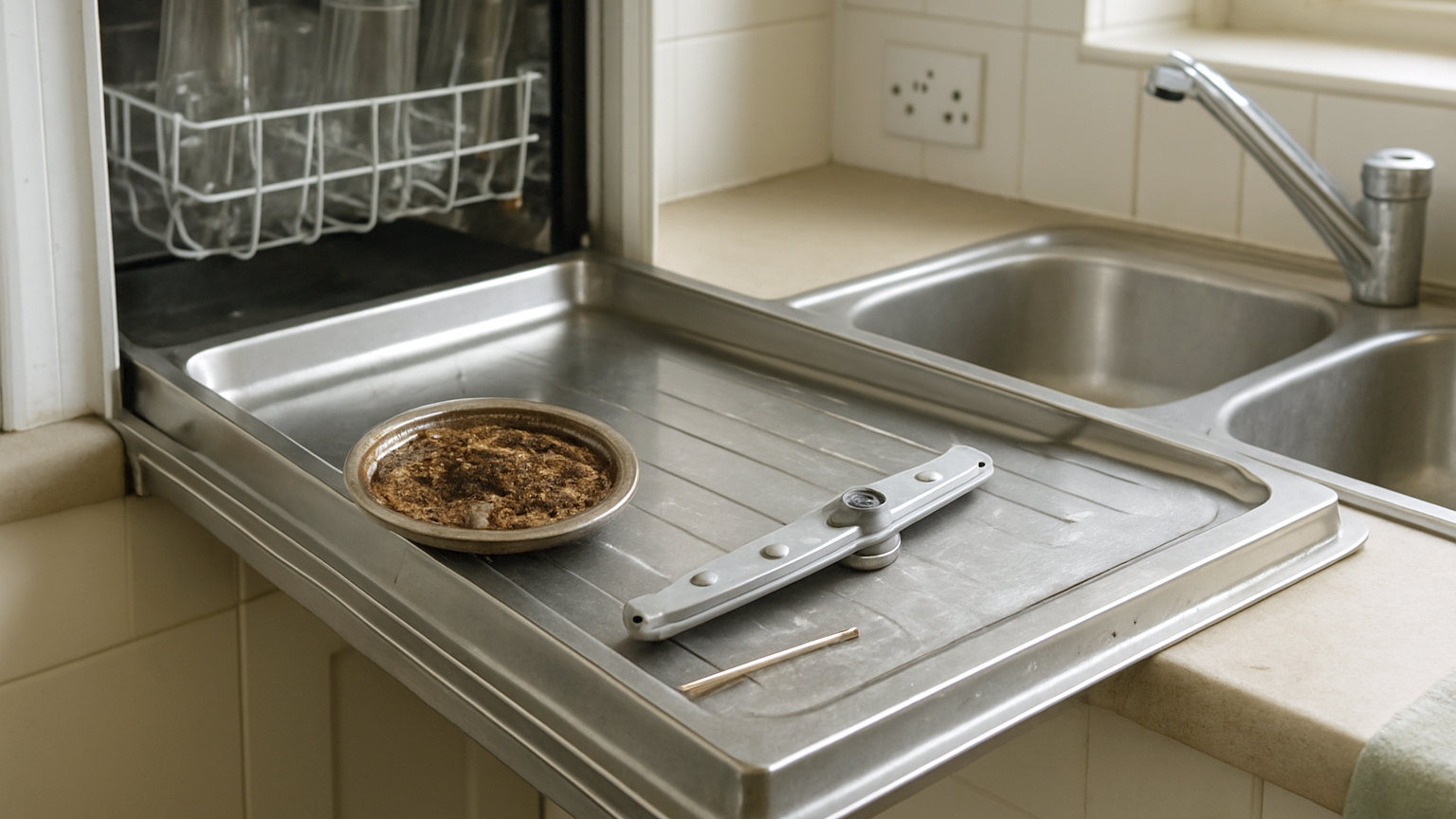
A blocked jet leaves one section of the load dirty while everything else comes out fine, which is the clue that points straight to the spray arms.
Dishwasher detergent is strongly alkaline and abrasive, which is fine for a dinner plate and destructive to aluminium, wood and a good knife.
Six causes account for nearly all of it, and five of them are free to fix before anything needs replacing.
Everything dirty has to face the spray arms, and almost every complaint about dishes not coming out clean traces back to that one principle.
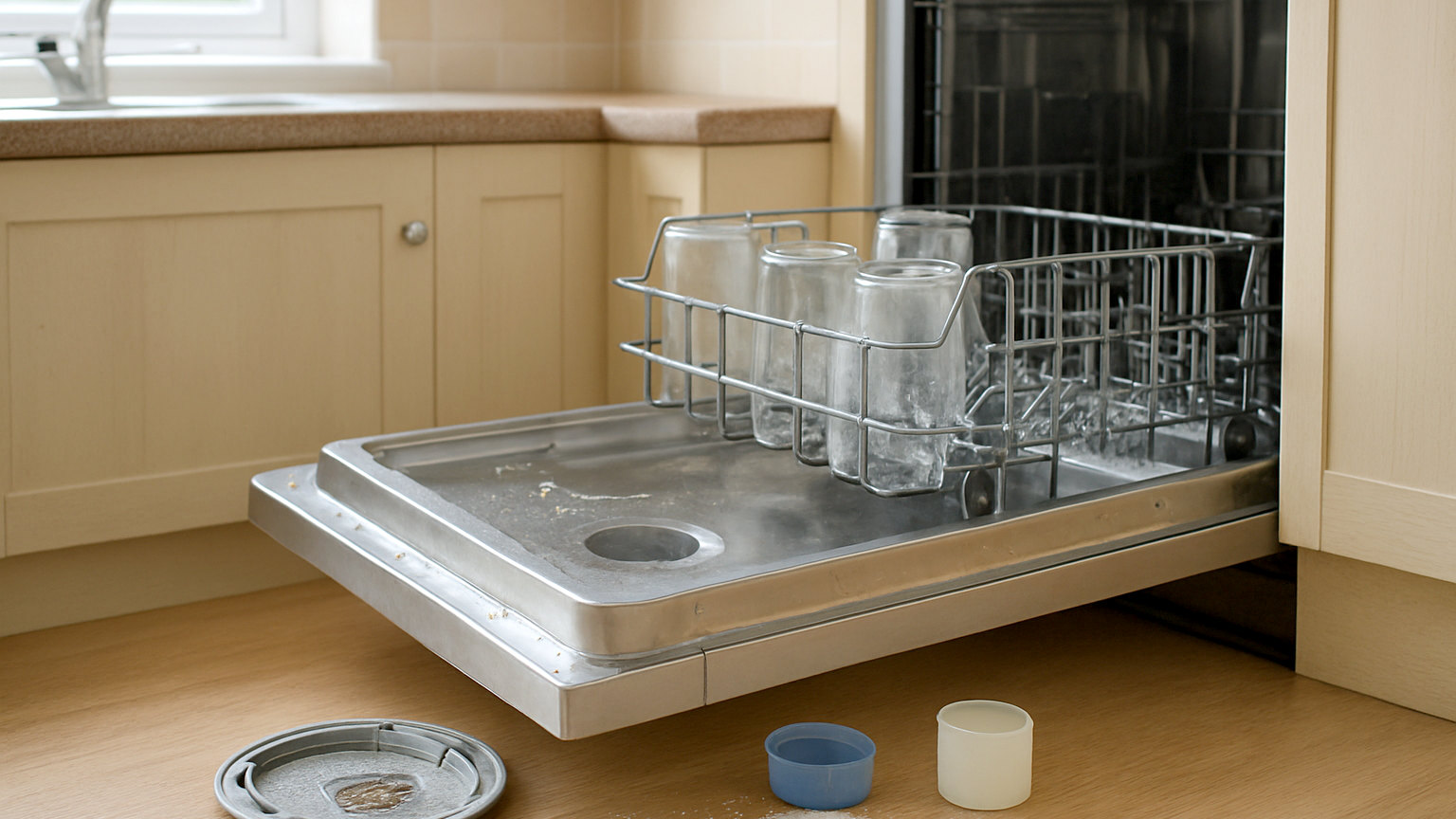
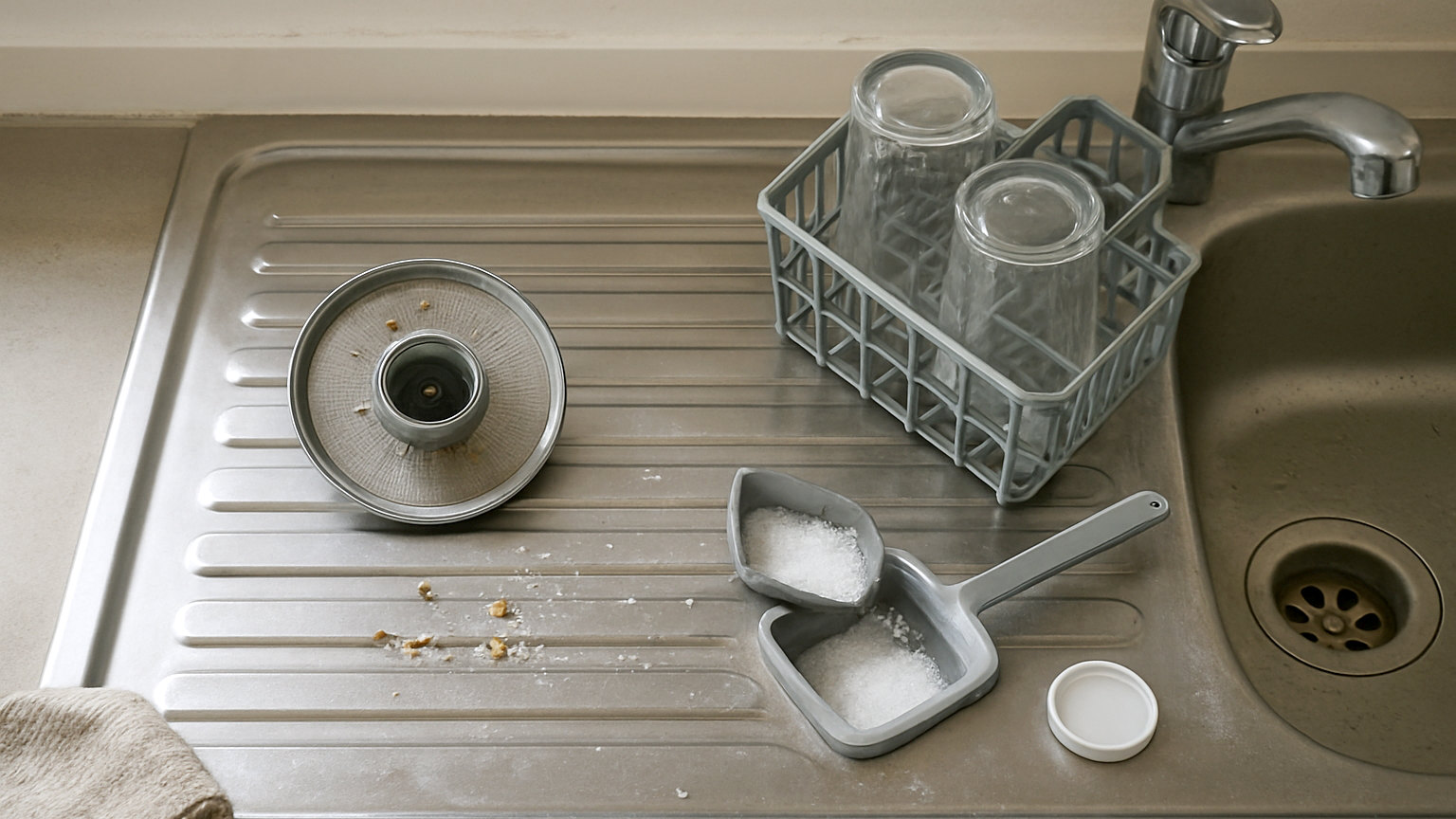
They do two entirely different jobs, and whether you need salt depends on your postcode rather than on your dishwasher.
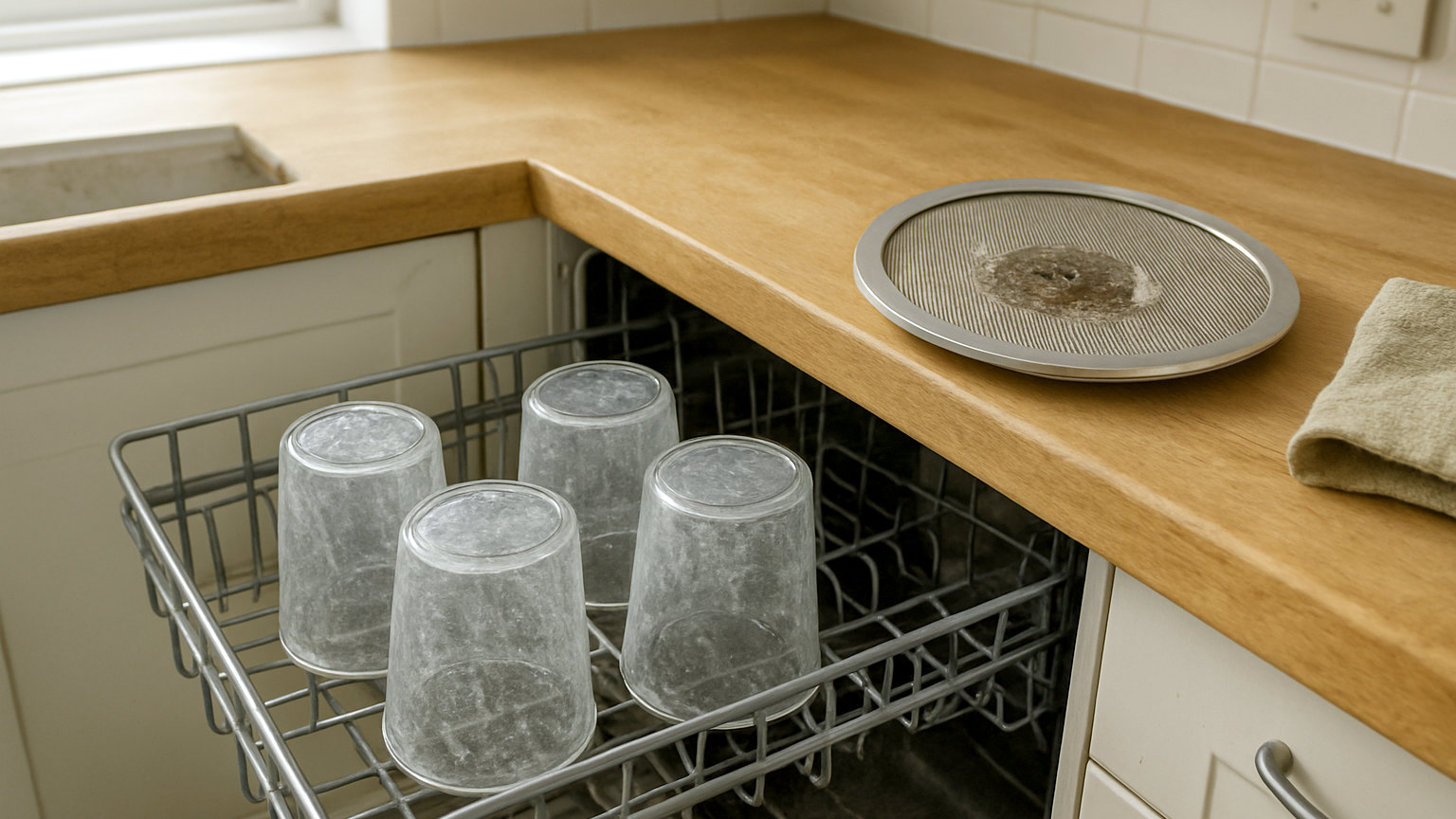
There are two completely different causes, and a simple vinegar test tells you which one you have and whether it can be reversed.
The filter is the usual answer, and when it is not, the smell is almost always coming from the drain rather than the machine.
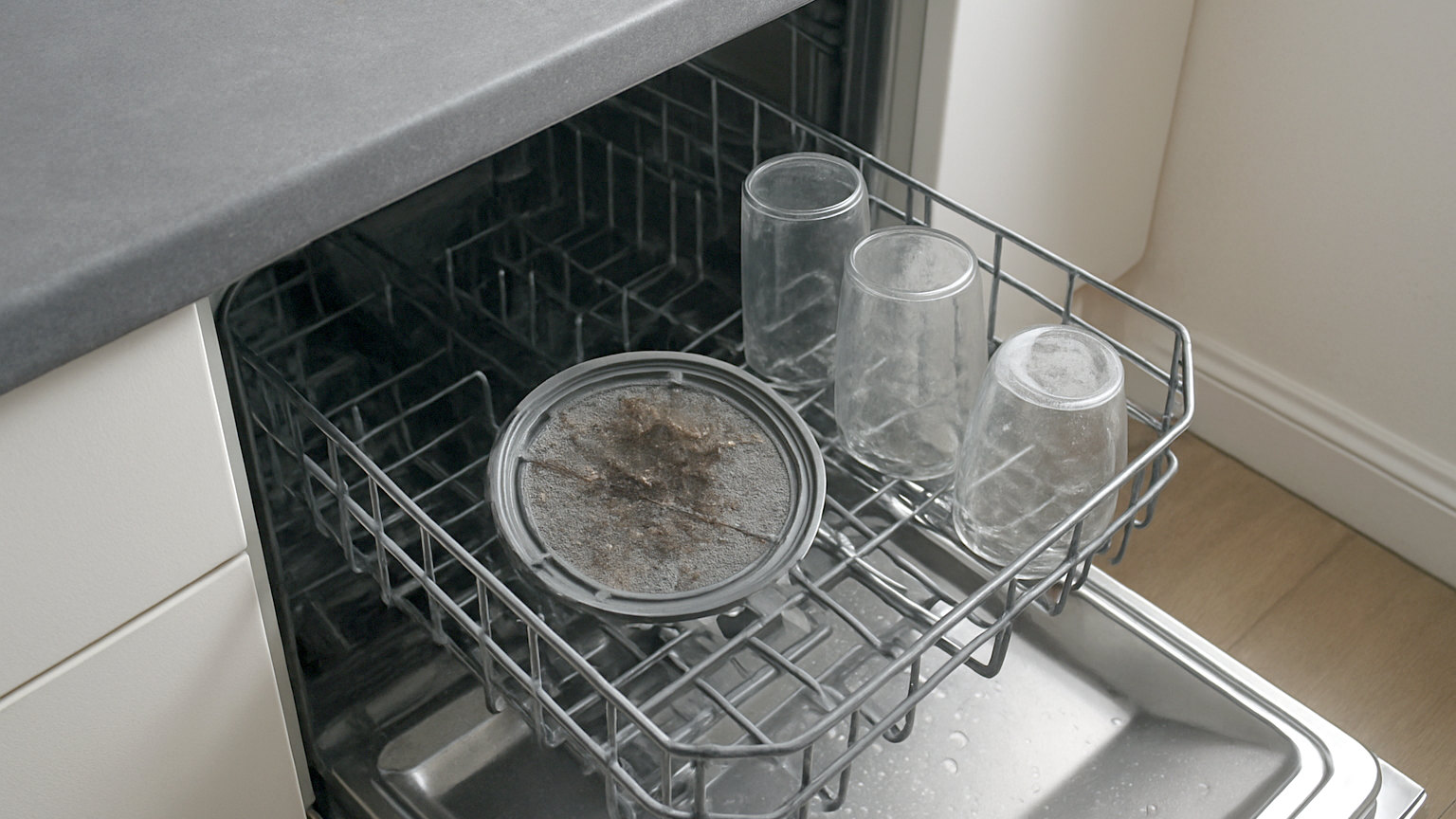
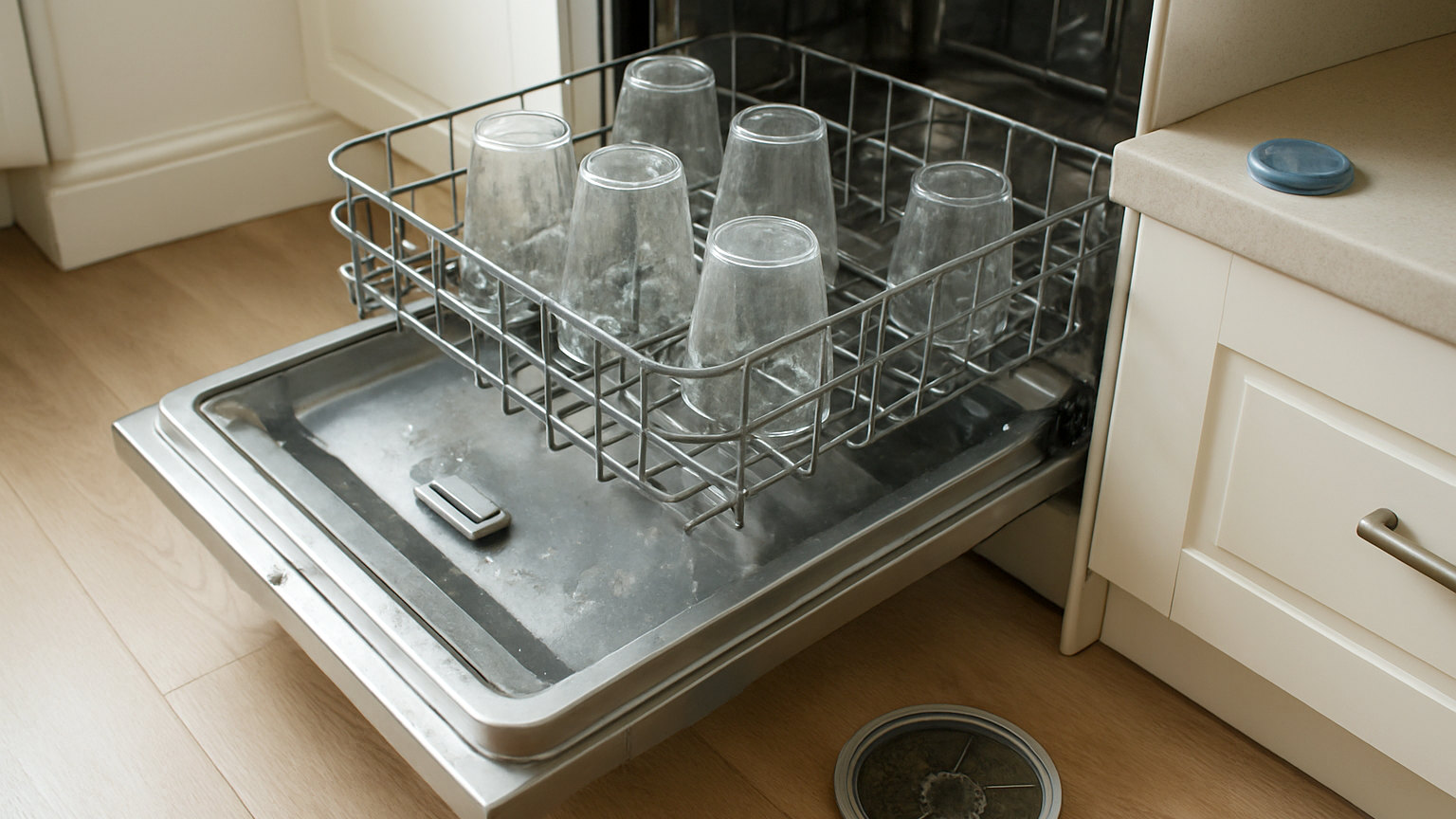
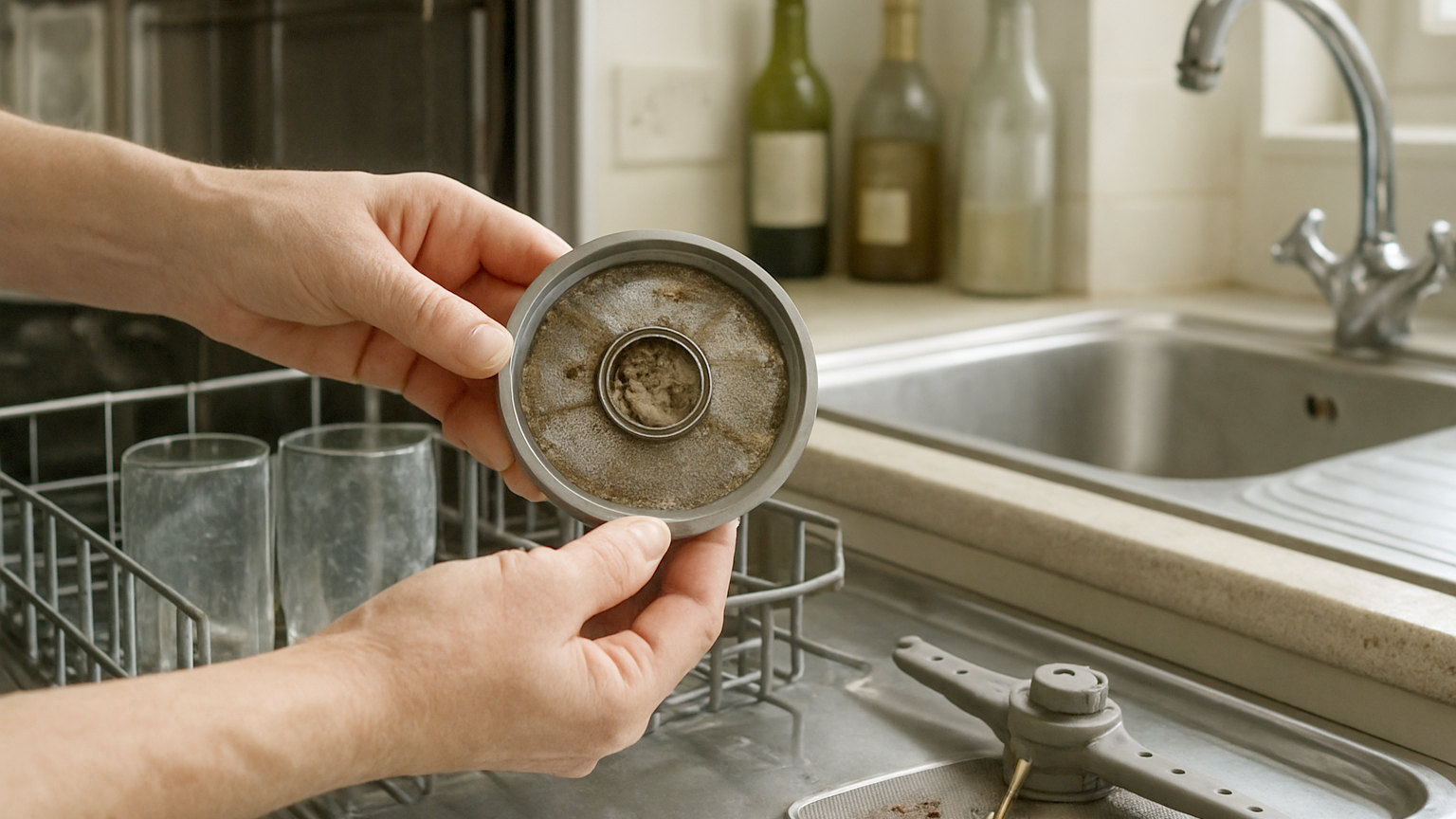
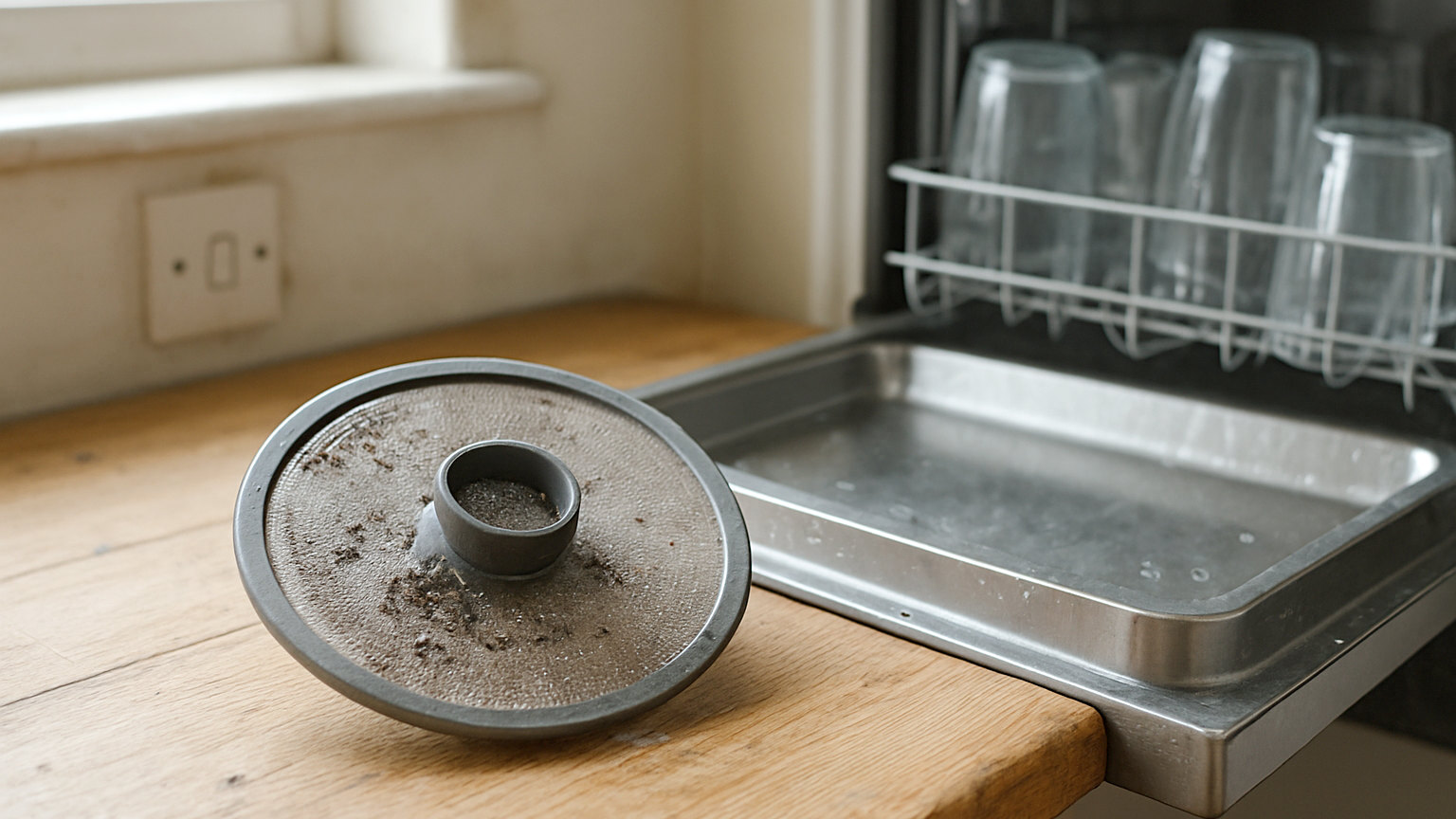
It lifts out in a few seconds, it holds everything the machine has washed off your plates, and most people have never touched it.