Most domestic mould is condensation and is resolved by ventilation, heating and cleaning. A smaller proportion is caused by water getting into the building, and no amount of household change will fix that. Knowing which you have determines whether to open a window or pick up the phone.
What does condensation look like?
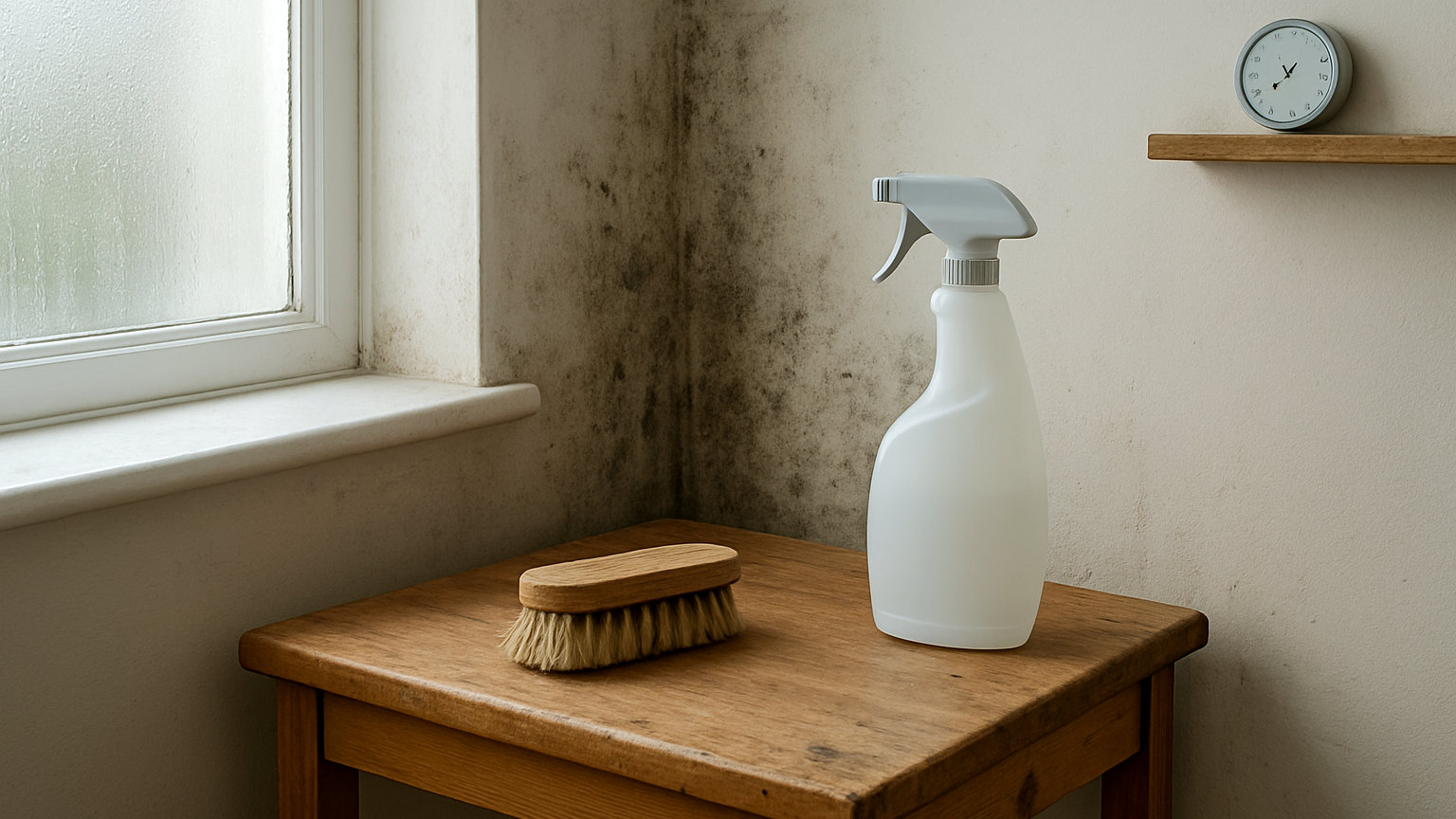
Seasonal, appearing in autumn and improving in summer. Concentrated on cold surfaces: window reveals, external corners, behind furniture on external walls, in unheated rooms. Diffuse black speckling rather than a defined patch. The wall behind it is sound and dry to the touch.
This responds to ventilation, steady heating and keeping furniture off external walls.
What suggests a building fault?
- Damp present all year rather than only in winter.
- Worse after rain, which points to penetrating damp.
- A defined tide mark rising from floor level.
- Blown or crumbling plaster, or paint lifting away from the wall.
- White salt deposits on the surface.
- A patch that is genuinely wet rather than merely mouldy.
- Damp in an unexpected place, such as the middle of an internal wall.
- A musty smell with no visible growth.
Any of these warrants investigation rather than more cleaning.
What are the likely causes?
A plumbing leak, often small and slow, is the most common and the most frequently missed. Then failed pointing or render, a blocked or leaking gutter, a defective roof detail, a bridged cavity, blocked underfloor air bricks, or a failed damp proof course.
Rising damp is diagnosed far more often than it occurs, which is worth knowing before agreeing to expensive injection treatment.
Who should you call?
An independent damp and timber surveyor, ideally one who does not also sell remedial work. A company offering a free survey has an obvious commercial interest in finding something that needs treating, and injection damp proof courses are frequently sold where the actual problem was a leaking gutter or a raised external ground level.
A surveyor with the relevant professional qualifications, paid for their opinion rather than compensated by the works, is the better route.
What should a good survey include?
Moisture readings taken at several heights and locations, an external inspection of gutters, pointing, render and ground levels, a look at underfloor ventilation, and an assessment of the internal environment including humidity and heating patterns.
A report that recommends chemical injection without having examined the external cause is worth a second opinion.
When should you call a plumber first?
Where the damp is localised, present all year round, and anywhere near pipework, a bathroom, a kitchen or a heating pipe run. A slow leak under a floor or inside a wall cavity produces exactly the pattern that people commonly attribute to rising damp, and it is considerably cheaper to find and fix than any remedial damp treatment.
A water meter check with every tap and appliance turned off for an hour is a simple first test, and a reading that has moved means water is going somewhere it should not.
What if you rent?
Report it in writing with photographs and dates, and keep copies. Landlords have legal obligations regarding damp and mould, and those have been strengthened in recent years. If the landlord does not act, the local authority environmental health department can inspect and require works.
Tenants should not be held responsible for condensation in a property that cannot be adequately heated or ventilated.
What should you do in the meantime?
Keep cleaning growth as it appears, ventilate as much as the weather allows, run a dehumidifier, and move furniture off affected walls. None of it fixes the cause and all of it limits the damage while the cause is dealt with.
What does it cost?
An independent survey typically costs a few hundred pounds, which is modest against the price of unnecessary remedial work. Chemical injection damp proofing runs into thousands and is frequently unnecessary. Repointing, clearing a gutter, lowering an external ground level or fixing a leaking pipe are all far cheaper and are the actual answer in a substantial proportion of cases.