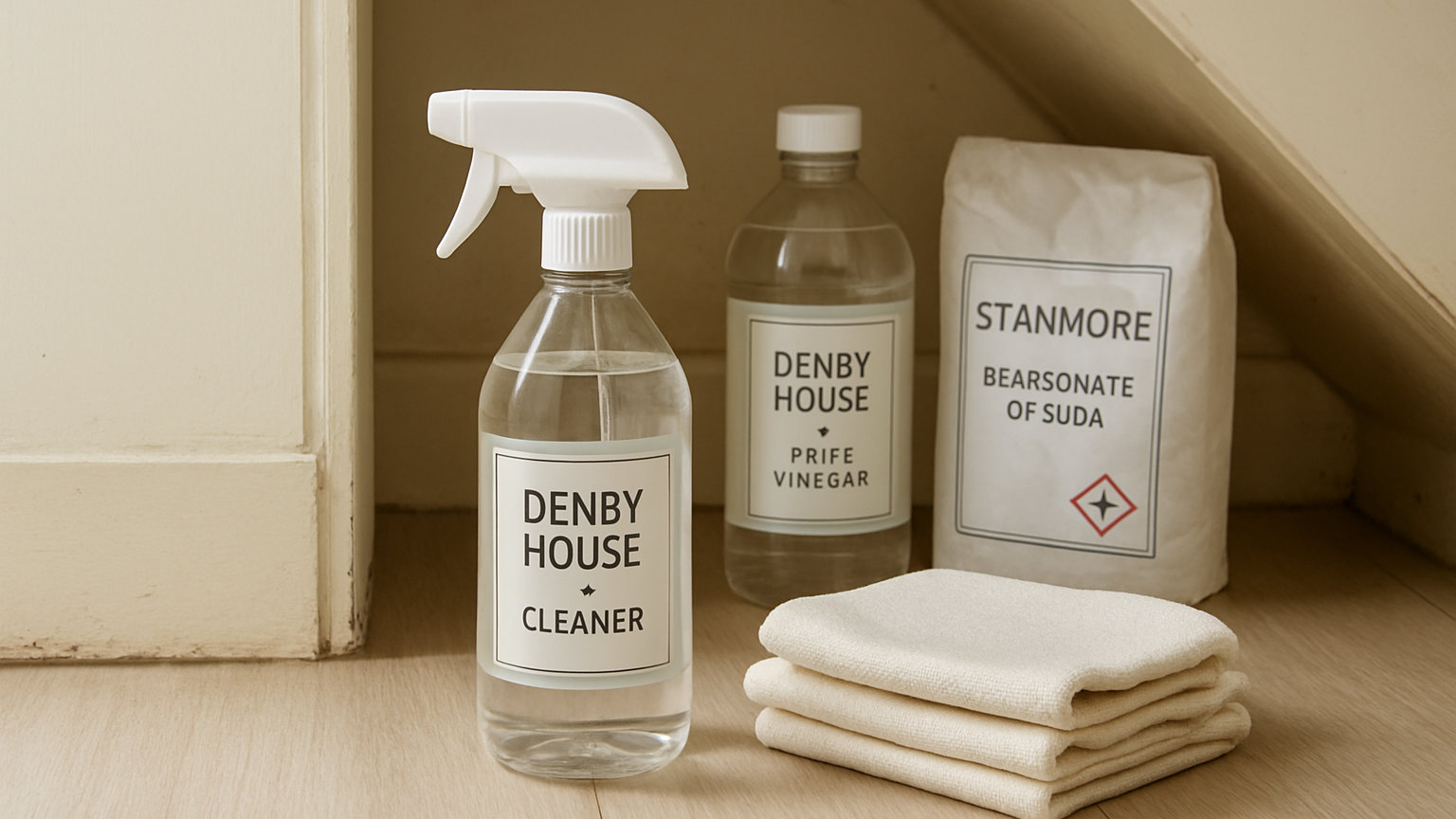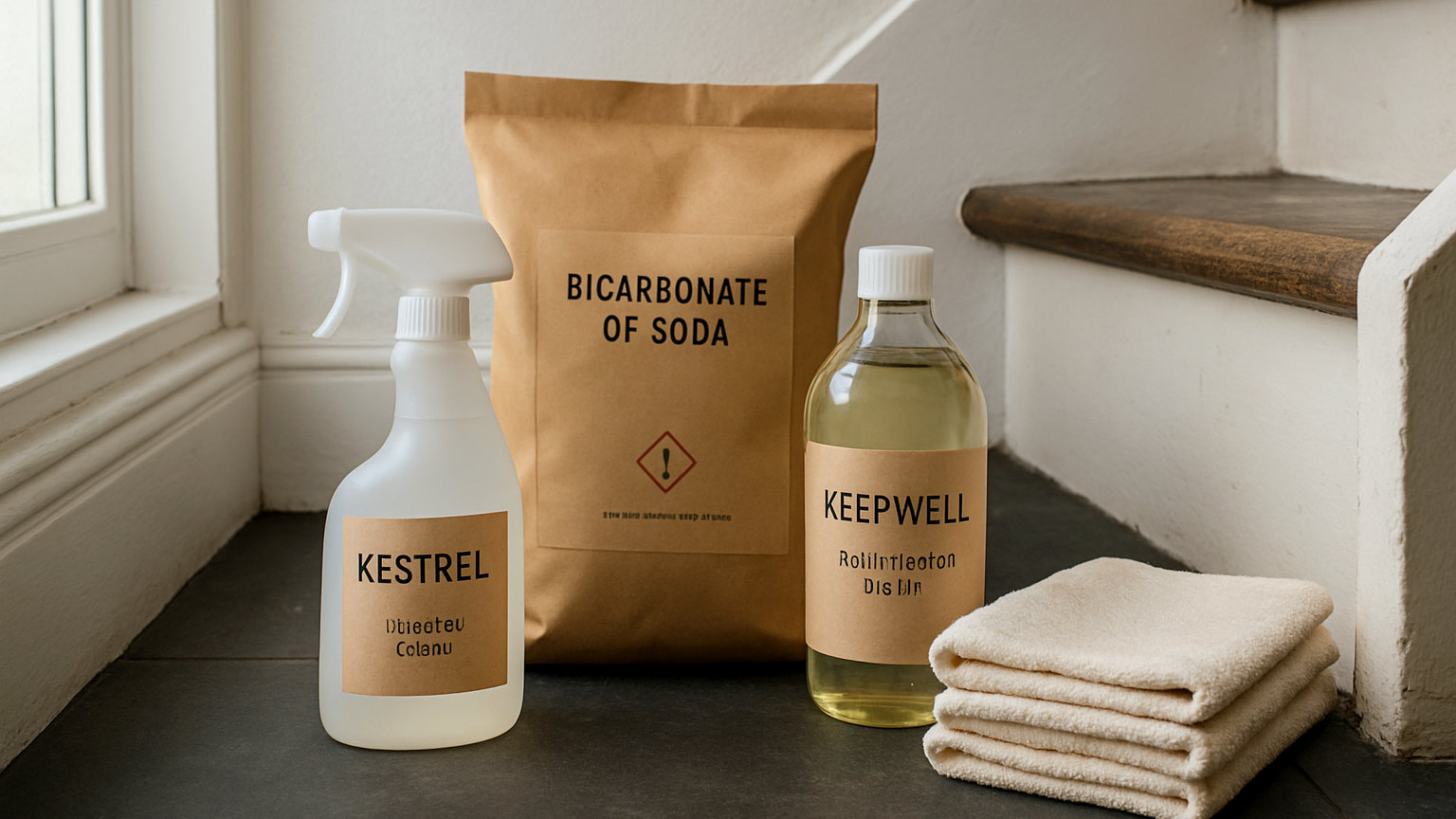
Most households own far more cleaning products than they use, and the majority duplicate each other. Six products cover the great majority of jobs, because between them they handle the four kinds of soil found in a home: grease, protein, mineral deposit and pigment.
What are the six?
- Washing up liquid – a degreaser, safe on almost every surface, and the first thing to reach for on anything oily.
- Bicarbonate of soda – mild abrasive, mild alkali and odour absorber.
- Soda crystals – strongly alkaline, and the heavy duty version of bicarbonate for grease and drains.
- White vinegar – acidic, for limescale, soap scum and mineral deposit.
- Oxygen bleach – colour safe oxidising powder for stains, laundry and grout.
- A biological or enzyme detergent – for protein soil such as blood, milk, egg and food.
Add a bag of microfibre cloths and that is a complete household kit.
Why does that cover everything?
Because cleaning problems fall into categories, and each category responds to a particular chemistry.
Grease needs a surfactant or an alkali. Protein needs enzymes and cold water. Mineral deposits such as limescale need acid. Coloured stains such as tea, wine and fruit need oxidation. Everything else is a variation on those four.
What is worth adding?
- A cream cleaner, for sinks, hobs and anything needing gentle abrasion.
- An enzyme cleaner for pet accidents, which is genuinely different from laundry detergent.
- Surgical spirit, for ink, adhesive residue and marker.
- A disinfectant, for the specific situations that need one.
- A glass cleaner, though vinegar and water does the same job.
What is usually unnecessary?
Most single purpose products, which do one job at a high price that a general product does nearly as well. Specialist sprays for individual rooms, which are usually the same formulation with a different fragrance. And anything promising to clean everything, since the chemistry for grease and for limescale is opposite.
A cupboard with fifteen bottles usually contains four or five distinct products and ten variations.
Why does opposite chemistry matter?
Because acids and alkalis neutralise each other. Vinegar removes limescale because it is acidic; bicarbonate of soda cuts grease because it is alkaline. Mixed together they fizz impressively and produce salty water that does neither job.
Using the right one for the problem is most of what effective cleaning is.
What about disinfectants?
Needed less often than the marketing suggests. Cleaning removes soil and the bacteria in it; disinfecting kills what remains. For most household surfaces, cleaning properly is sufficient.
Disinfect where it matters: after raw meat, during illness, on nappy changing areas and after any contamination. The rest of the time, hot soapy water is the right tool.
What does this cost?
Considerably less than a cupboard of branded sprays. Bicarbonate, soda crystals, vinegar and citric acid are all sold cheaply in bulk. Oxygen bleach as a plain powder costs a fraction of the branded stain removers that contain it.
The saving comes from buying ingredients rather than formulations.
What is the one safety rule?
Never mix products. Bleach with any acid releases chlorine gas. Bleach with ammonia releases chloramine. Both are genuinely dangerous in an enclosed room such as a bathroom, and both happen accidentally when one product is used after another without rinsing.
One product at a time, rinse in between, and ventilate.
What tools matter as much as products?
Microfibre cloths in several colours, a non-scratch pad, a narrow brush for grout and detail work, a squeegee for the shower and a decent vacuum. Tools are worth spending money on in a way that products often are not, since a good microfibre cloth genuinely outperforms a cheap one and a squeegee prevents more bathroom cleaning than any spray removes.
How do you avoid buying duplicates?
Ask which of the four chemistries a product is before buying it: surfactant, alkali, acid or oxidiser. If you already own something in that category, you almost certainly do not need it. That one question prevents most of the accumulation that fills a cupboard under a sink.