A glass ceramic hob, whether ceramic or induction, is a single sheet of toughened glass with no crevices, which makes it the easiest cooking surface to clean. It is also the easiest to damage, and the damage is permanent. Nearly all of it comes from grit trapped under a cloth or from using the wrong pad rather than from anything in a bottle.
What is the daily routine?
Wipe the surface with a damp cloth once it has cooled to warm, and dry it. That is all a hob needs on a day when nothing has been spilled, and doing it every time prevents almost every difficult clean.
Check for grit on the cloth first. A single crumb trapped under a wiping cloth will leave a scratch across the whole surface.
What is the proper method for burnt on marks?
- Let the hob cool completely, except for sugar spills, which are dealt with hot.
- Apply a proprietary ceramic hob cream to the marks.
- Leave it for a few minutes to soften the deposit.
- Work it over with a clean damp cloth or a non-scratch pad.
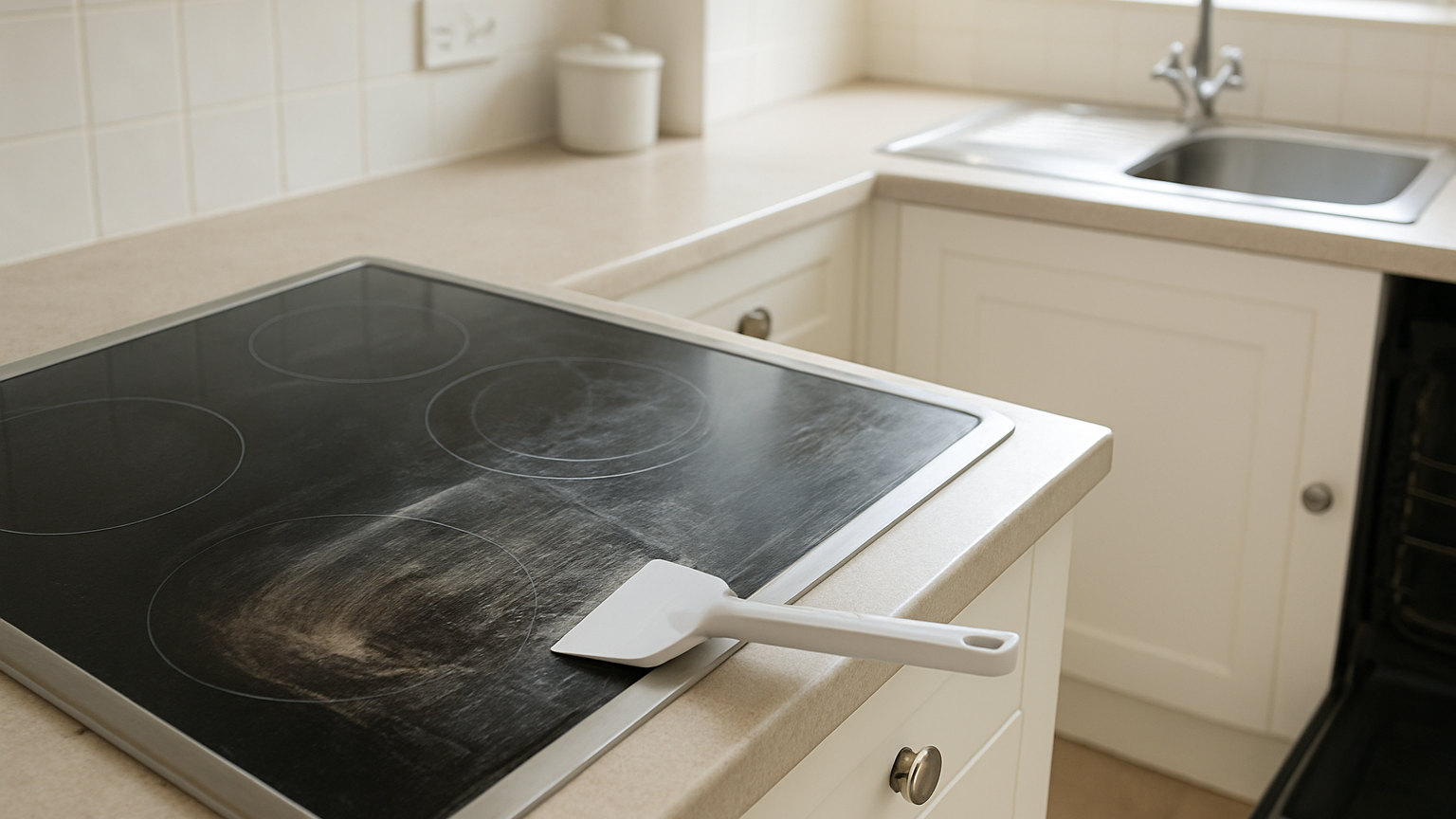
- For anything remaining, use a hob scraper held at a shallow angle of about thirty degrees.
- Wipe away the residue and buff dry with a clean microfibre cloth.
Is a scraper safe on glass?
Yes, and it is the correct tool for the job rather than a risky improvisation. A hob scraper with a fresh blade, held at a shallow angle and used on a cool surface, removes baked deposit cleanly without marking the glass underneath. Scraping is considerably safer than scrubbing, because it lifts the deposit off rather than grinding it across the surface with an abrasive.
Keep the blade flat to the glass, replace it when it nicks, and never use a scraper on a hot hob or on the edges and the printed control markings.
Why do sugar spills need immediate action?
Because molten sugar bonds to hot glass and, as it cools, it can pull a small piece of the surface away with it, leaving a permanent pit. Jam, sugar syrup, boiled sweets and anything containing melted plastic all behave this way.
Turn the zone off and scrape the spill off immediately while it is still molten, using a scraper and an oven glove to protect your hand. Do not wait for it to cool.
What should never be used?
- Scouring pads and wire wool, which scratch the glass irreparably.
- Abrasive powders, for the same reason.
- Melamine sponges, which are more abrasive than they appear.
- Oven cleaner, which can etch the surface and damage the printing.
- A cloth used elsewhere, which may carry grit.
- Bleach, which marks the surface.
What causes the dull patches?
Either fine scratching, which is permanent, or a build up of limescale and cleaner residue, which is not. Try a hob cream first, which usually clears residue and restores the shine. A hob that is still dull afterwards has been scratched.
Rainbow or iridescent staining is usually mineral deposit from boiled over water and responds to a hob cream or a little white vinegar on a cloth, rinsed and dried.
What about metal marks from pans?
Grey streaks left by aluminium or steel pan bases are metal transfer rather than scratches, and they come off with a hob cream and a non-scratch pad. They are common with pans that have a rough base, and checking the base of a new pan for burrs is worth doing.
Does induction differ from ceramic?
Only in that the surface stays cooler, since the heat is generated in the pan rather than the hob. That means spills are far less likely to bake on, which makes an induction hob noticeably easier to keep clean. The glass surface itself needs the same care.
What about the control panel?
Touch controls are printed onto the same glass surface and are the most easily damaged part of it. Never use an abrasive or a scraper over the markings, which will wear away and leave an unusable panel. Wipe them with a damp cloth only, and dry them, since a wet touch control will sometimes register a press or refuse to respond at all.