Every difficult oven cleaning job started as an easy one. A spill that is wiped out the same day takes thirty seconds. The same spill left in place is baked at every subsequent use until it carbonises into a layer that needs chemicals. Keeping an oven clean is almost entirely about interrupting that sequence.
What is the single most useful habit?
Wiping spills out while the oven is still warm. Not hot, which is dangerous, but warm enough that the deposit has not fully set. At that stage a damp cloth removes it completely.
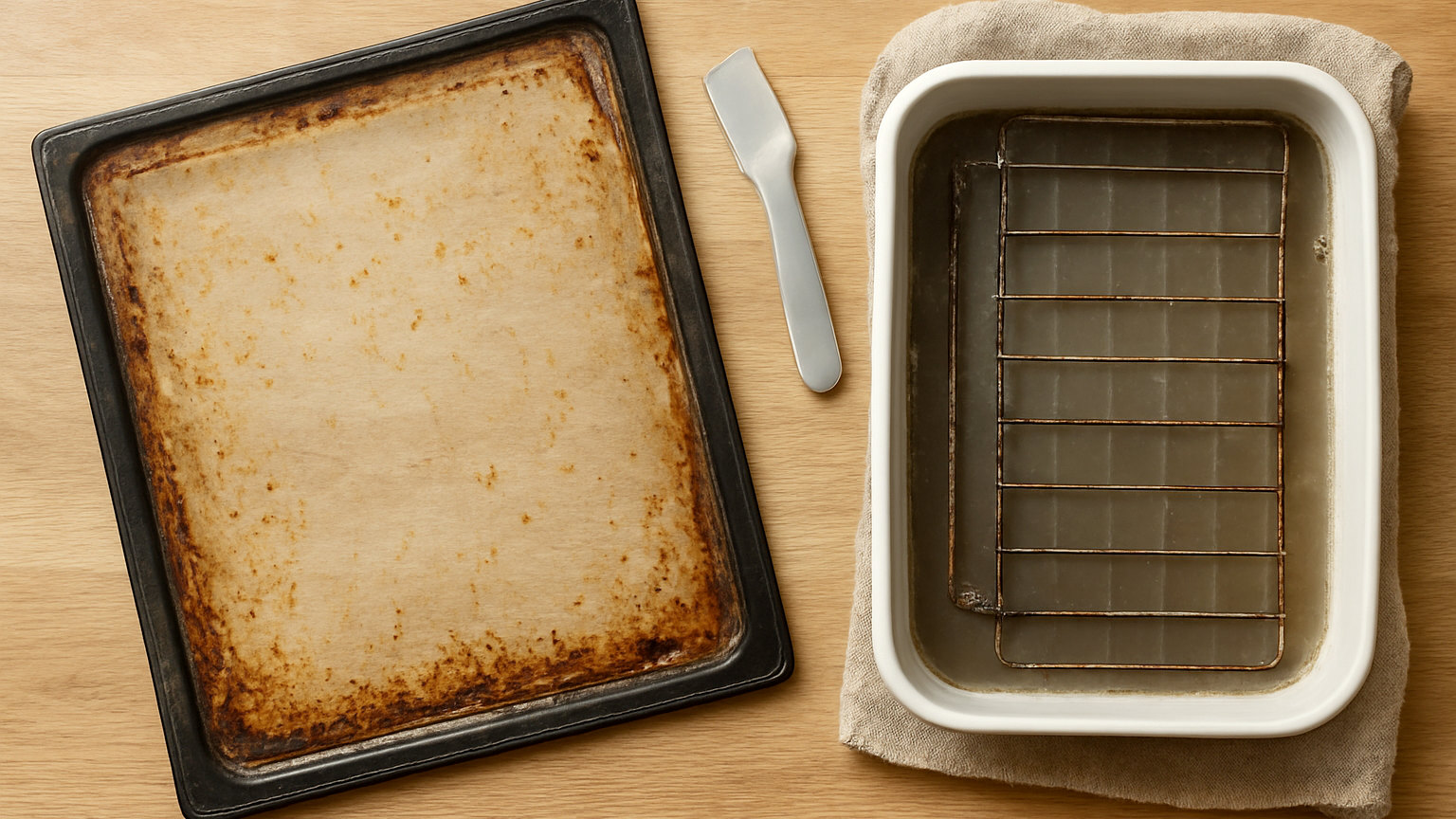
Once the oven has cooled and the spill has hardened, it needs soaking. Once it has been reheated two or three times, it needs a scraper.
What prevents spills in the first place?
- A roasting tin with higher sides than seems necessary, which contains fat that would otherwise spit.
- A baking tray on the shelf below anything likely to bubble over, such as a pie or a lasagne.
- Lids and foil on dishes that spit, removed for the last few minutes for browning.
- Not overfilling dishes, which is the usual cause of a boil over.
- A shallow tray under a whole chicken or joint, which spits considerably.
Are oven liners a good idea?
A reusable liner on the base catches spills and lifts out for washing, and it genuinely reduces the work. It has to be a proper oven liner cut to size and sitting flat.
It must never cover the base vents, never sit directly on the element, and never be used in a way that blocks airflow. Some manufacturers advise against liners entirely because they affect heat distribution and can cause the thermostat to misread, so check the manual.
Foil laid on the base is the version to avoid. It reflects heat, can damage the enamel where it touches, and in a fan oven it can be blown against the element.
What about the shelves?
Wash them when they are lightly soiled rather than waiting for a deposit. A shelf rinsed in hot soapy water after a roast takes two minutes; a shelf with baked deposit needs an overnight soak.
Keeping a spare set means a dirty one can wait to be washed without the oven being unusable.
What about the door glass?
Wipe it while the oven is warm after anything that spits, which is what keeps the door clear. A glass wiped weekly never needs a scraper, and the door is the part of an oven people look at most.
Is a monthly routine realistic?
Twenty minutes covers it: wipe the interior with hot soapy water, do the glass properly, wash the shelves, and wipe the door seal and the frame. Done monthly, that oven will never need a caustic product.
Put it on the same day as another monthly job so it is not a separate decision each time.
What about the hob?
The same principle on a shorter cycle. Wipe after every use while warm, which prevents everything. A hob wiped daily needs a proper clean weekly; a hob left needs a scraper and a cream cleaner.
Does using the oven more make it dirtier?
Not necessarily. An oven used daily at high temperatures burns off a certain amount of light residue as it goes, particularly one with catalytic liners. What makes an oven dirty is spillage left in place, not frequency of use, and a well used oven with good habits stays cleaner than a rarely used one that is never wiped.
What about the extractor above it?
Worth including in the same routine, since a saturated filter stops capturing grease and simply recirculates it back into the kitchen, where it settles on the hob you have just cleaned. Wash the metal filter every four to eight weeks depending on how much frying you do, and wipe the underside of the hood at the same time. It is the same job, the same cloth and about five extra minutes, and skipping it means the hob gets dirty again faster than it should.