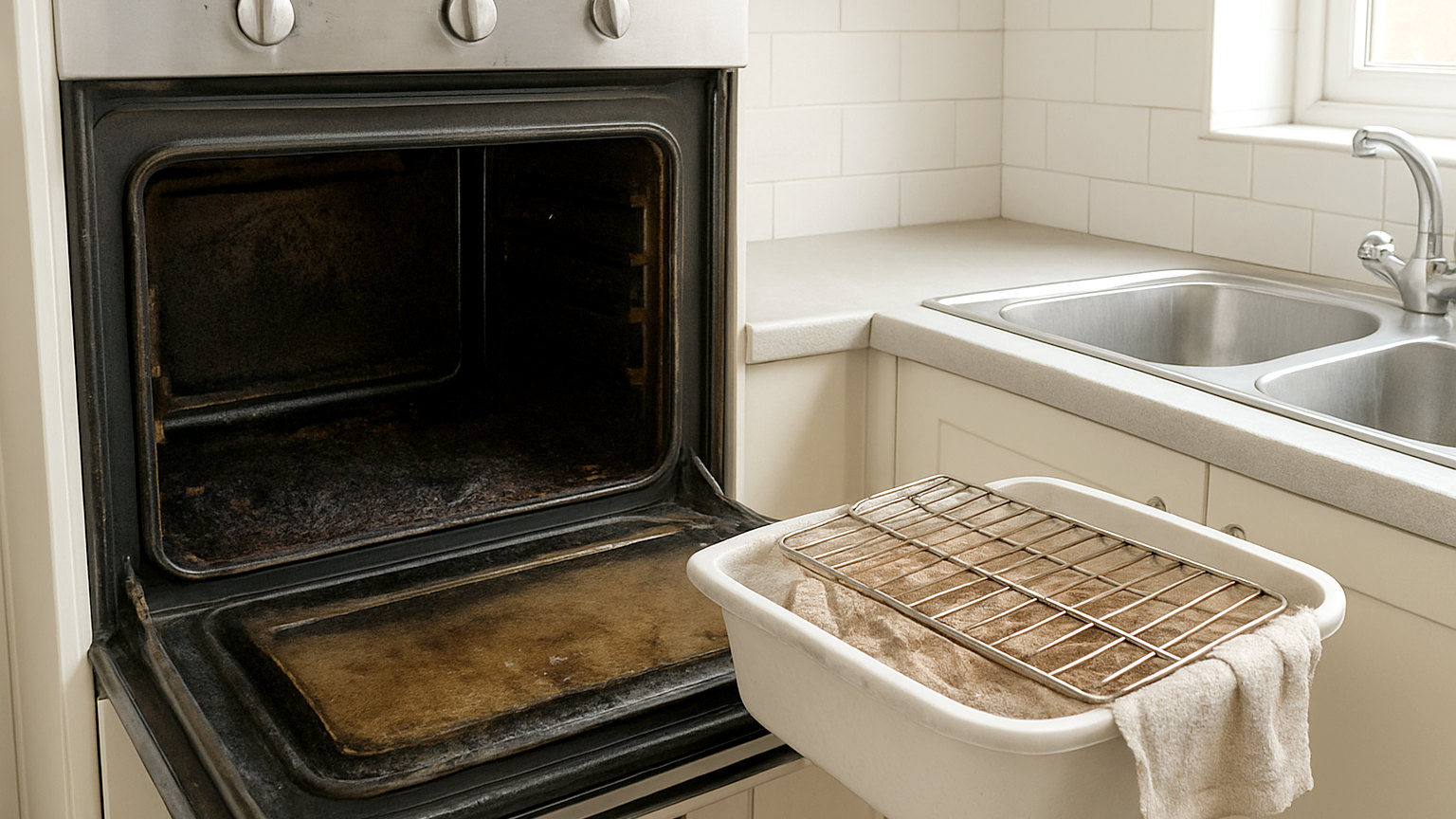
Pyrolytic ovens do work, and the mechanism is straightforward. The oven locks its door and heats the cavity to around 500 degrees, far hotter than any cooking temperature, which reduces grease and food residue to a fine grey ash. When it cools, you wipe the ash out with a damp cloth.
How long does a cycle take?
Typically ninety minutes to three hours depending on the setting, plus a cooling period during which the door stays locked. Most ovens offer two or three cycle lengths for light, medium and heavy soiling.
Choose the shortest cycle that will do the job, since the longer ones use considerably more electricity and are harder on the components.
What does it not clean?
- The shelves, which must be removed. Leaving them in discolours them permanently and can warp them.
- The side racks and runners, particularly telescopic ones, which will be damaged.
- The door glass, which usually still needs doing by hand.
- The door seal, which must not be cleaned with anything abrasive.
- The area outside the seal, including the frame and the door edge.
- The hob above, if it is a range cooker.
Some manufacturers supply shelves rated as pyro safe. Check the manual rather than assuming.
What should you do before running it?
- Remove every shelf, tray, rack and runner unless the manual states otherwise.
- Scrape out any loose debris and wipe up large spills, since a big deposit will smoke heavily.
- Wipe the door seal and the area around it by hand.
- Open a window and turn on the extractor.
- Move any pets, particularly birds, out of the room and preferably out of the house.
- Do not leave the house while it runs.
Why does ventilation matter?
Because the cycle produces smoke and fumes from the burning residue, and the smell is noticeable. It is generally regarded as safe in a ventilated kitchen and it is genuinely hazardous to birds, which are extremely sensitive to airborne compounds. Remove any bird from the house entirely.
Anyone with a respiratory condition may prefer to be out of the room while it runs.
What does it cost to run?
Meaningfully more than an ordinary cooking session, since it holds a very high temperature for a long period. A typical cycle uses several kilowatt hours. Used three or four times a year that is not significant; used monthly it adds up.
Run it when the oven is genuinely dirty rather than on a schedule.
Does it damage the oven?
Repeated use at the highest setting puts stress on the elements, the door seal and the electronics, and the seal in particular is a wear item. Ovens are designed for it, and using the shortest adequate cycle a few times a year rather than the longest cycle monthly extends the life of the components.
Very heavy deposits can also smoke enough to trip a smoke alarm, which is worth anticipating.
What about catalytic ovens?
A different technology. Catalytic liners are rough panels that absorb and oxidise grease at normal cooking temperatures, around 200 degrees and above, gradually rather than in a cycle. They need no special programme and they must never be cleaned with any product.
The two are frequently confused, and treating a catalytic liner as a manually cleanable surface destroys it.
Is it worth paying extra for?
For anyone who dislikes cleaning an oven, which is most people, yes. It removes the worst household cleaning job almost entirely, and the remaining work is the shelves and the glass. Whether it justifies the price difference depends on how often you would actually use it.
What should you expect afterwards?
A layer of fine grey ash on the base and the sides, which wipes out with a damp cloth in a few minutes. Some staining may remain where a spill was particularly heavy, since pyrolysis burns the organic material away and does not remove mineral deposits. A cycle that leaves a black sticky residue rather than dry ash usually means the oven was too dirty and a second shorter cycle will finish it.