Most strong oven cleaners are based on sodium hydroxide, which is caustic soda. It works by saponifying baked on fat, converting it chemically into something water soluble. That is genuinely effective, and it is the same reaction that makes it hazardous to skin, eyes and several materials found in and around an oven.
What protection is needed?
- Chemical resistant gloves, not thin disposable ones, which caustic will penetrate.
- Eye protection, since a splash to the eye is a serious injury.
- Long sleeves and old clothing.
- Open windows and an extractor running throughout.
- Children and pets out of the room, and birds out of the house.
- A bowl of clean water to hand for immediate rinsing if anything contacts skin.
Caustic burns do not hurt immediately, which is why people notice them late. Any contact with skin should be rinsed under running water for several minutes.
What must caustic cleaner never touch?
- Aluminium, which it attacks violently, producing hydrogen gas and destroying the metal.
- Catalytic liners, which are ruined permanently.
- Self cleaning pyrolytic coatings, per most manufacturers.
- Heating elements, the fan and the thermostat probe.
- Door seals, which it degrades.
- Oven glass with printed markings, which it can etch and strip.
- Worktops, floors and cupboard doors, where drips will mark.
The aluminium point matters because a great many oven trays, some shelves and many extractor filters are aluminium.
What are the gentler alternatives?
Bicarbonate of soda paste left overnight, which is safe, cheap and effective on an oven in reasonable condition. Steam, either from the oven steam clean function or from a dish of water heated for half an hour, which softens deposits for wiping.
Soda crystals dissolved in hot water are stronger than bicarbonate and milder than caustic, and they suit soaking shelves well. They should not be used on aluminium either.
There are also non-caustic oven cleaners based on milder alkalis, which are slower and considerably safer.
How should a caustic product be used?
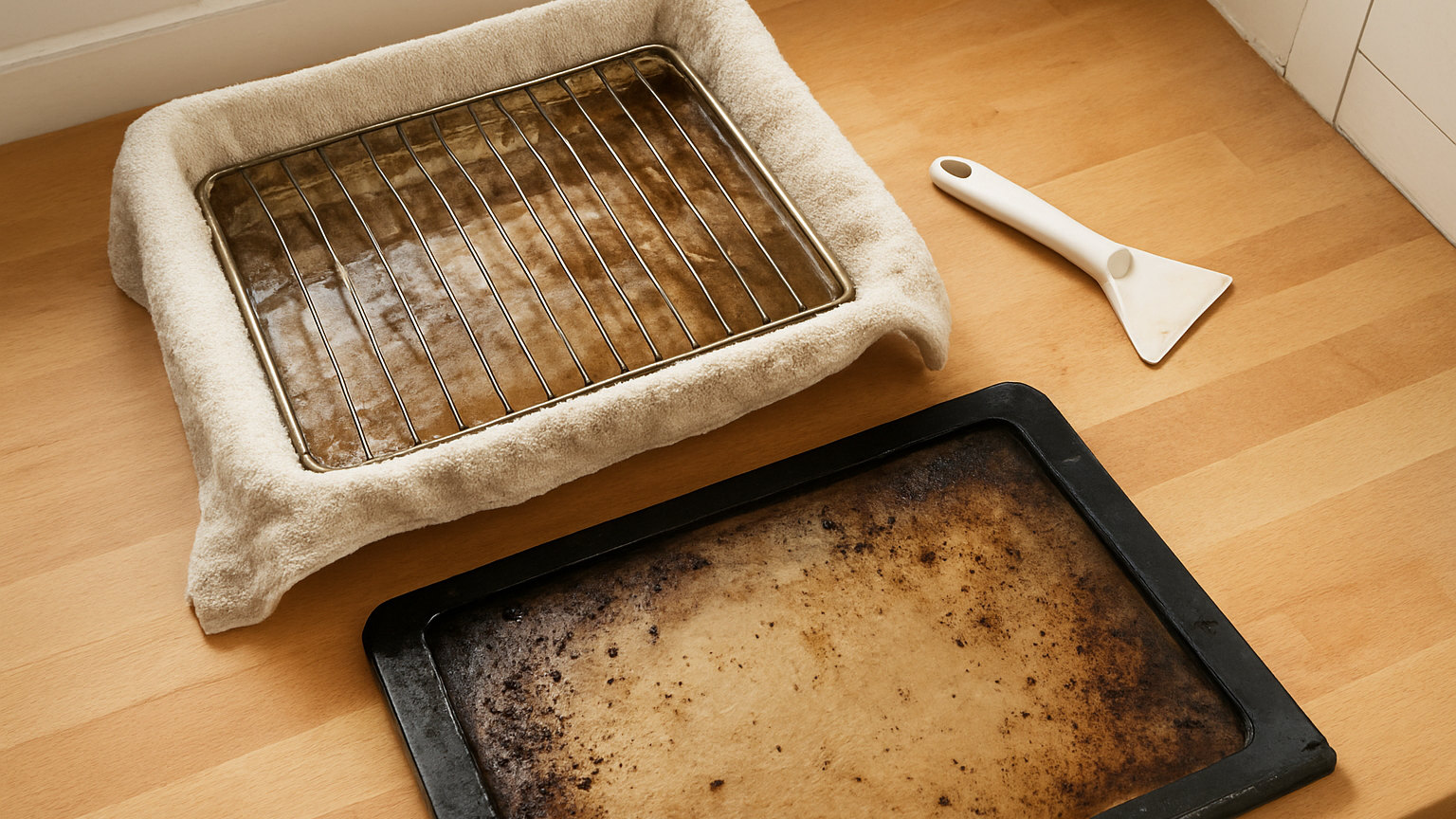
Follow the instructions rather than improvising, since the dwell times and the rinsing requirements matter. Apply it to a cold oven unless the product specifies otherwise. Cover the base to catch drips. Leave it for the stated time rather than longer, then rinse thoroughly with clean water several times.
Residue left in an oven will produce fumes the next time it heats, which is unpleasant and worth avoiding by rinsing properly.
What should never be mixed?
Any oven cleaner with any other product. Combining a caustic cleaner with an acidic one produces a violent reaction and heat. Combining anything with bleach risks chlorine gas. Never apply a second product before the first has been fully rinsed away.
What about the bag method for shelves?
Several products come with a bag for sealing shelves with the gel inside. It works well and it concentrates a caustic chemical in a sealed bag, which needs to be handled carefully, kept away from children and pets, and opened outdoors with gloves on.
Do not use an ordinary bin bag for this, since the gel can degrade thin plastic.
Are the natural products any good?
Plant based and non-caustic oven cleaners work, more slowly, on ovens that are not badly neglected. They suit regular maintenance cleaning well and will not clear a hard carbonised layer built up over years.
Matching the product to the state of the oven is the practical approach: mild products for a regularly cleaned oven, caustic as a reset for one that has been left.
What is the safest overall approach?
Clean the oven often enough that a caustic product is never needed. An oven wiped after spills and given a bicarbonate treatment three times a year stays in a condition where nothing stronger is required, which removes the hazard entirely.
How should they be stored?
Upright, sealed, in a locked or high cupboard away from children and pets, and well away from any acidic product such as limescale remover or toilet cleaner. Caustic cleaners should never be decanted into another container, since an unlabelled bottle of something that burns skin is a genuine hazard to anyone else in the house.