A dishwasher smell is caused by decomposing food debris or by stagnant water, and both have a limited number of hiding places. Working through them in order is far more effective than running cleaning cycles and hoping.
Where should you look, in order?
- The filter, which holds everything washed off the dishes.
- The sump underneath the filter, where sludge settles.
- The door seal, particularly the bottom corners.
- The lip below the door, outside the seal, which no cycle reaches.
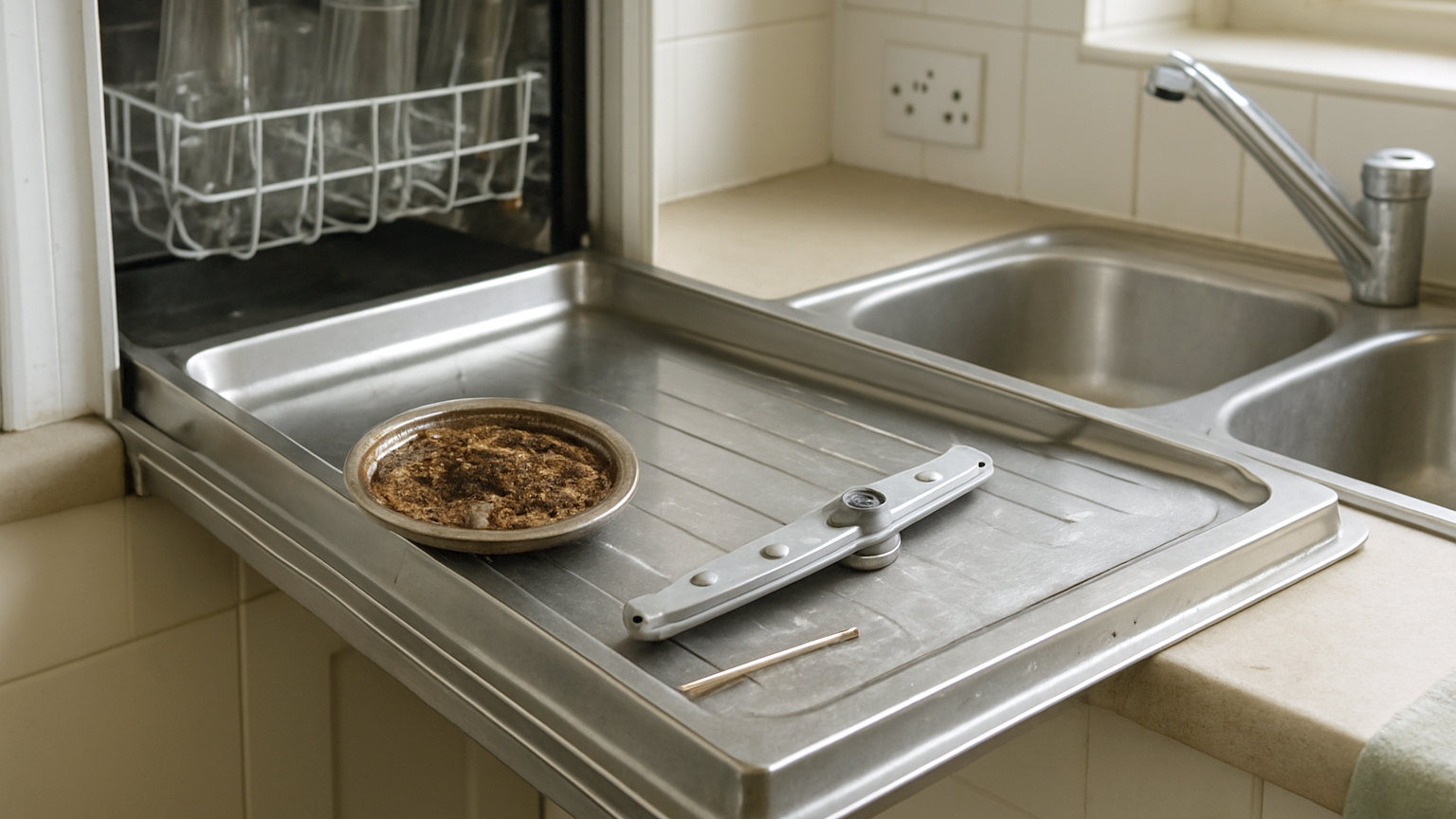
- The spray arms, where debris lodges in the jets.
- The drain hose and the sink trap.
The first two account for the majority.
Why does the drain matter?
Most dishwashers drain into the waste pipe under the kitchen sink. If that trap is blocked with grease and food, or if the sink itself smells, the odour travels back into the dishwasher, and no amount of cleaning the machine will fix it.
Test by smelling the sink plughole. If the two smell the same, deal with the drain rather than the dishwasher.
Clear the sink trap by hand over a bucket, and pour a kettle of hot water with soda crystals down the waste afterwards.
What about the drain hose?
It should rise in a loop to a point high under the worktop before dropping to the waste connection. That loop prevents dirty water from the sink siphoning back into the machine. A hose that runs flat, or sags, holds stagnant water and smells.
Check it when the machine is next pulled out, and check the connection at the waste for a blockage where the two meet.
What is the cleaning sequence?
- Remove and scrub the filter, and wipe out the sump.
- Unclip the spray arms and clear the jets.
- Wipe the door seal and the lip below the door.
- Take out the cutlery basket and wash it.
- Run an empty cycle on the hottest programme with a dishwasher cleaner, a cup of white vinegar in a bowl on the top rack, or citric acid.
- Leave the door ajar afterwards to dry.
Why does leaving the door shut cause it?
Because the interior stays warm and damp for hours after a cycle, which is exactly the condition bacteria need. A dishwasher left closed between cycles never dries out.
Leaving the door ajar is the single most effective preventative measure, and it costs nothing.
What about running it less often?
A dishwasher that is loaded over three or four days with dirty plates sitting in it will smell regardless of how clean the machine is. Either run it more often, or rinse plates lightly before they go in if the machine will not run for a day or two.
Some machines have a rinse or pre-wash programme that uses very little water for exactly this.
What if it still smells?
Check for standing water in the base, which means a drainage fault rather than a cleaning problem. Check the filter is correctly locked in place. And check the sink trap again, since it is the most commonly missed cause.
A machine that has stood unused for weeks may also have a dry trap in the waste pipe, letting drain smells through. Running a cycle refills it.
Does a deodoriser help?
The hanging fresheners mask rather than remove, and they let the actual cause continue. They are reasonable as a finishing touch once the filter and drain have been dealt with and pointless before that.
How quickly should it improve?
Immediately after the filter is cleaned and a hot cycle has run, in most cases. A smell that is unchanged the next day means the source has not been found, and the sink waste and the drain hose are the two places worth checking before anything else in the machine.
Does the detergent make a difference?
Some. Cheaper tablets rinse away less completely and leave a residue that contributes to the problem over time. More relevant is the programme: a household that only ever runs eco or quick cycles is never getting the machine hot enough to clear the grease film, and one hot cycle a month resolves that.