In a hard water area, limescale deposits on the heating element, inside the spray arms and across the interior of a dishwasher. The element is where it matters: scale insulates it, so cycles take longer, use more electricity and the element eventually fails.
Do you need to?
It depends on your water hardness, which your supplier publishes by postcode. Much of southern and eastern England is hard or very hard; much of Scotland, Wales, Northern Ireland and the north west is soft.
In hard water, descale quarterly. In soft water, it is unnecessary.
What should you use?
- Citric acid – around 100g in the detergent compartment or the base, run on the hottest cycle. Cheap and effective.
- White vinegar – a cup in a bowl on the top rack, milder and slower.
- A proprietary dishwasher descaler – formulated for the job, usually citric acid based.
Run the machine empty. Do not descale with dishes in it, and do not combine descaler with detergent in the same cycle.
What is the method?
- Empty the machine completely.
- Clean the filter first, since a blocked filter reduces circulation.
- Add the descaling agent.
- Run the hottest, longest programme available.
- When it finishes, wipe the interior and the door seal, which will have loosened deposits.
- Run a short rinse cycle to clear any residue.
Why does the salt setting matter more?
Because descaling removes existing deposits while the built in water softener prevents them forming. A machine with the correct hardness setting and a full salt reservoir barely scales at all.
Most dishwashers are left on the factory hardness setting, which is frequently wrong for the area. Finding it in the manual and setting it correctly does more than any descaling routine.
Use only dishwasher salt, never table salt, which contains additives that damage the softening resin.
What are the signs of scale?
A white film on glasses, plastics and the interior. White deposits visible around the spray jets. Longer cycle times. A gritty feel on the tub walls. And eventually a heating element failure, which shows as dishes that are neither clean nor dry.
Scale in the kettle is a reliable indicator that the dishwasher is affected too.
Can you descale the spray arms separately?
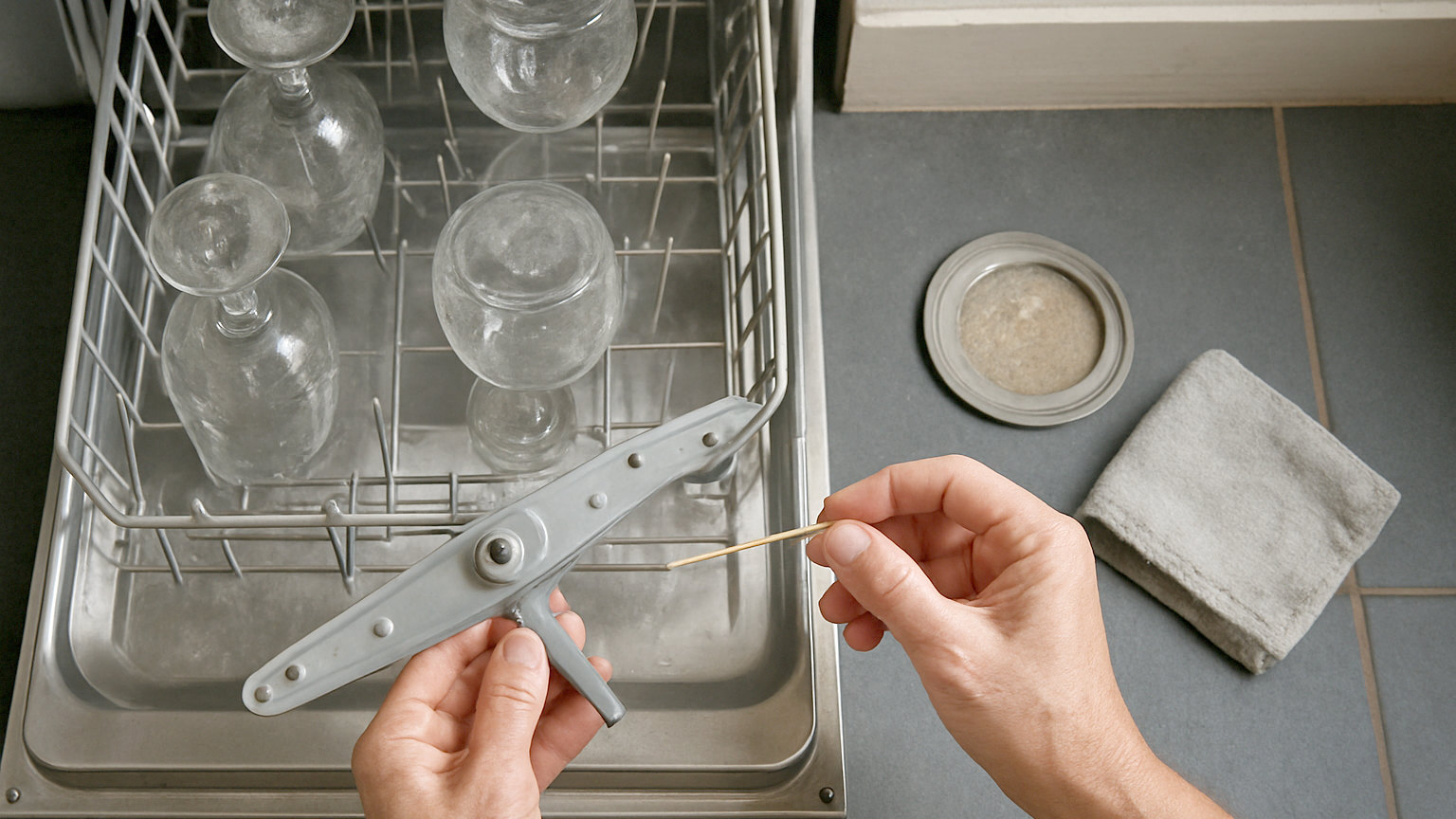
Yes, and it is worth doing at the same time. Remove each arm and soak it in a warm citric acid or vinegar solution for thirty minutes to an hour, then rinse through and clear any remaining jets with a cocktail stick.
Scale inside the arms restricts flow and is not fully cleared by a descaling cycle alone.
Is it safe for the machine?
Citric acid and vinegar used occasionally are fine. Using vinegar in every cycle, which is sometimes suggested, is not recommended by most manufacturers because prolonged acid exposure can affect rubber seals over time.
Quarterly is sensible. Weekly is not.
What else does it help with?
A descaling cycle also removes grease and light residue, so it doubles as a general clean. Alternating a descaling cycle with a detergent based cleaning cycle covers both jobs across a quarter, which is a practical routine for a hard water area.
Does it help with a plastic tub?
Considerably. Plastic interiors stain more readily than stainless steel, particularly with tomato and turmeric, and a citric acid cycle lightens those marks noticeably. It will not restore a badly stained tub to new condition, and doing it quarterly stops it getting progressively worse.
Can you descale with dishes inside?
No. Citric acid and vinegar at that concentration will affect aluminium, some glazes and anything with a metallic decoration, and the acid needs to be working on the machine rather than being consumed by the load. Run it empty, then run a short rinse cycle before the next normal wash.
What should you do straight afterwards?
Wipe the door seal and the interior, which will have loosened deposits sitting on them, and run a short rinse to clear the acid residue. Check the filter too, since scale flakes released during the cycle collect there and will simply recirculate on the next wash if left.