Water left standing in the base of a dishwasher at the end of a cycle means something is preventing it draining. The causes are limited and most of them are accessible. A small amount of water in the sump is normal on many machines; several centimetres across the base is not.
What should you do first?
- Switch the machine off at the wall.
- Bail out the standing water with a cup and a sponge, into a bucket.
- Remove the bottom rack.
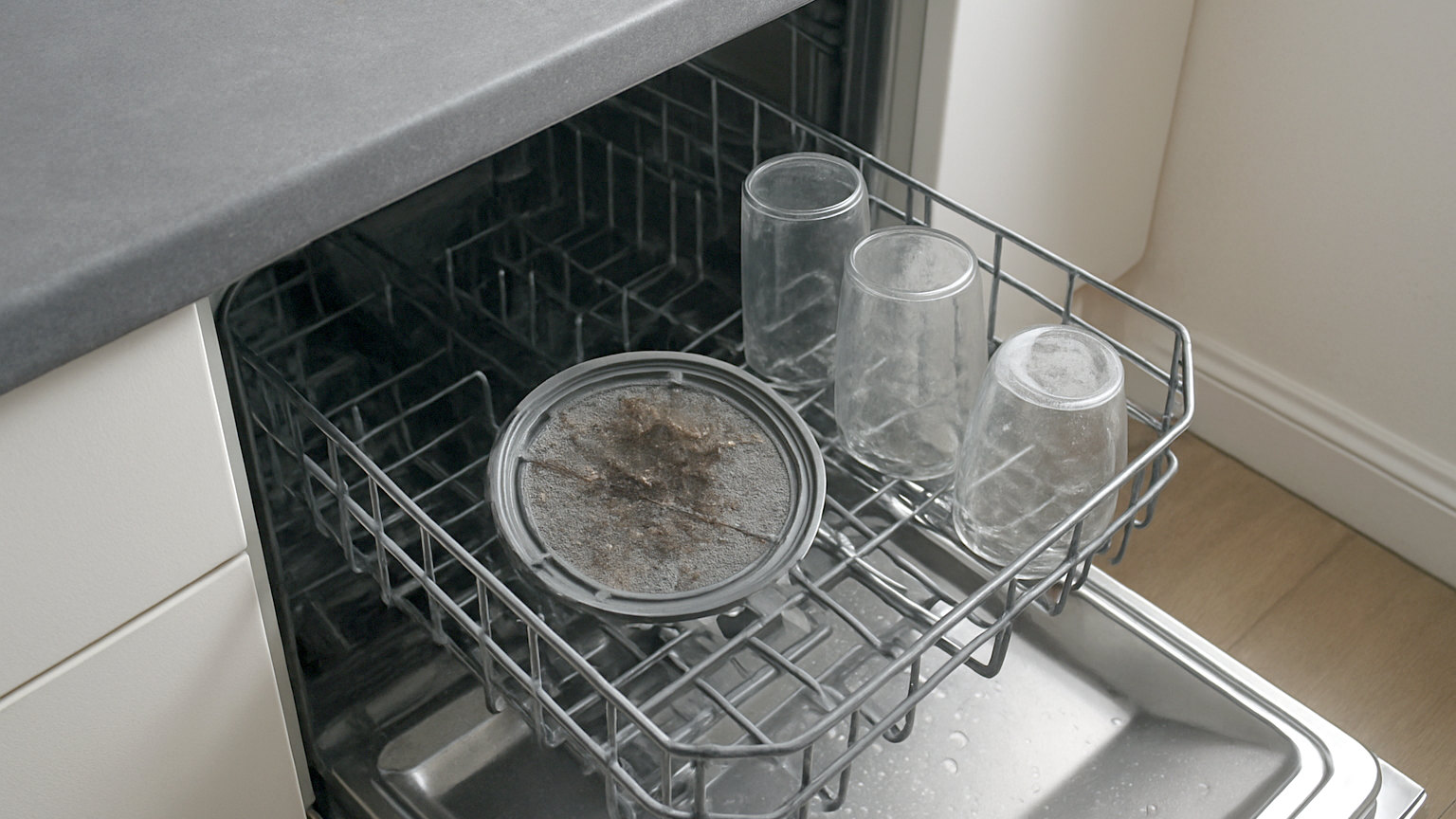
- Remove the filter and check it.
- Check the sump underneath for debris.
Bailing out first makes everything else easier and lets you see what is in the base.
Is it the filter?
The most common cause. A filter packed with food debris restricts the flow to the drain pump. Twist it out, rinse and scrub it, clear the mesh screen beneath, and wipe out the sump.
Check for anything solid in the sump: broken glass, a label, a bone or a fruit stone are all common and all capable of blocking the outlet.
Is it the sink waste?
The second most common cause and the one people miss. Most dishwashers drain into the waste pipe under the kitchen sink, and that connection blocks with grease and food.
Look for the spigot where the dishwasher hose connects to the waste. On a new installation, check the blanking plug in that spigot was actually removed, which is a classic fault on a machine that has never drained properly.
Clear the sink trap by hand over a bucket, and check the spigot itself for a grease plug.
Is it the drain hose?
Pull the machine out and inspect the whole length for kinks, crushing and sagging. The hose should rise in a loop to a high point under the worktop before dropping to the waste, which prevents siphoning.
Disconnect it at the waste end over a bucket and check water runs through freely. Flush it with hot water if not.
Is it the pump?
If the filter, hose and waste are all clear and it still will not drain, the drain pump may be blocked or failed. Some machines allow access to the pump impeller through the sump once the filter is out, where a shard of glass or a fruit stone can be removed carefully with the power off.
A pump that hums without moving water, or is silent when it should be running, needs an engineer.
What about error codes?
Most machines display a code for a drainage fault. Look it up in the manual before assuming, since some indicate a sensor or a flood protection trip rather than a blockage.
Many machines also need resetting after the fault is cleared, usually by holding a button or running a cancel and drain programme.
What if water appears in the machine between cycles?
That is usually siphoning from the sink waste back into the machine, caused by a drain hose that has no high loop or an incorrect connection. It can also be a faulty inlet valve letting water through.
The high loop is the usual fix and is worth checking on any machine that has been moved or newly installed.
How do you prevent it?
Scrape plates properly, clean the filter weekly, and avoid putting anything in that can shed a label or shatter. Run a hot cycle with a cleaner monthly, which keeps grease from building in the hose and the waste.
What about the flood protection?
Many dishwashers have a float or a sensor in the base that cuts the water supply if it detects a leak, and a tripped sensor presents as a machine that will not fill or drain and shows an error. Tilting the machine gently forward to drain any water from the base tray sometimes resets it. If it trips again, there is a genuine leak and it needs looking at rather than repeatedly resetting.