Rinsing plates before they go in the dishwasher is one of the most widespread kitchen habits and one of the least useful. It wastes water, it takes time, and with modern detergents and machines it can produce a worse result than loading the plates as they are.
Why does rinsing make it worse?
Two reasons. Dishwasher detergents contain enzymes that break down food residue, and those enzymes need something to act on. With no soil present they have nothing to bind to and the detergent is effectively wasted.
Second, many machines have a soil sensor that measures how dirty the water is during the pre-wash and adjusts the cycle accordingly. Pre-rinsed plates produce clean water, the sensor selects a shorter, gentler cycle, and the remaining residue is not properly removed.
What should you do instead?
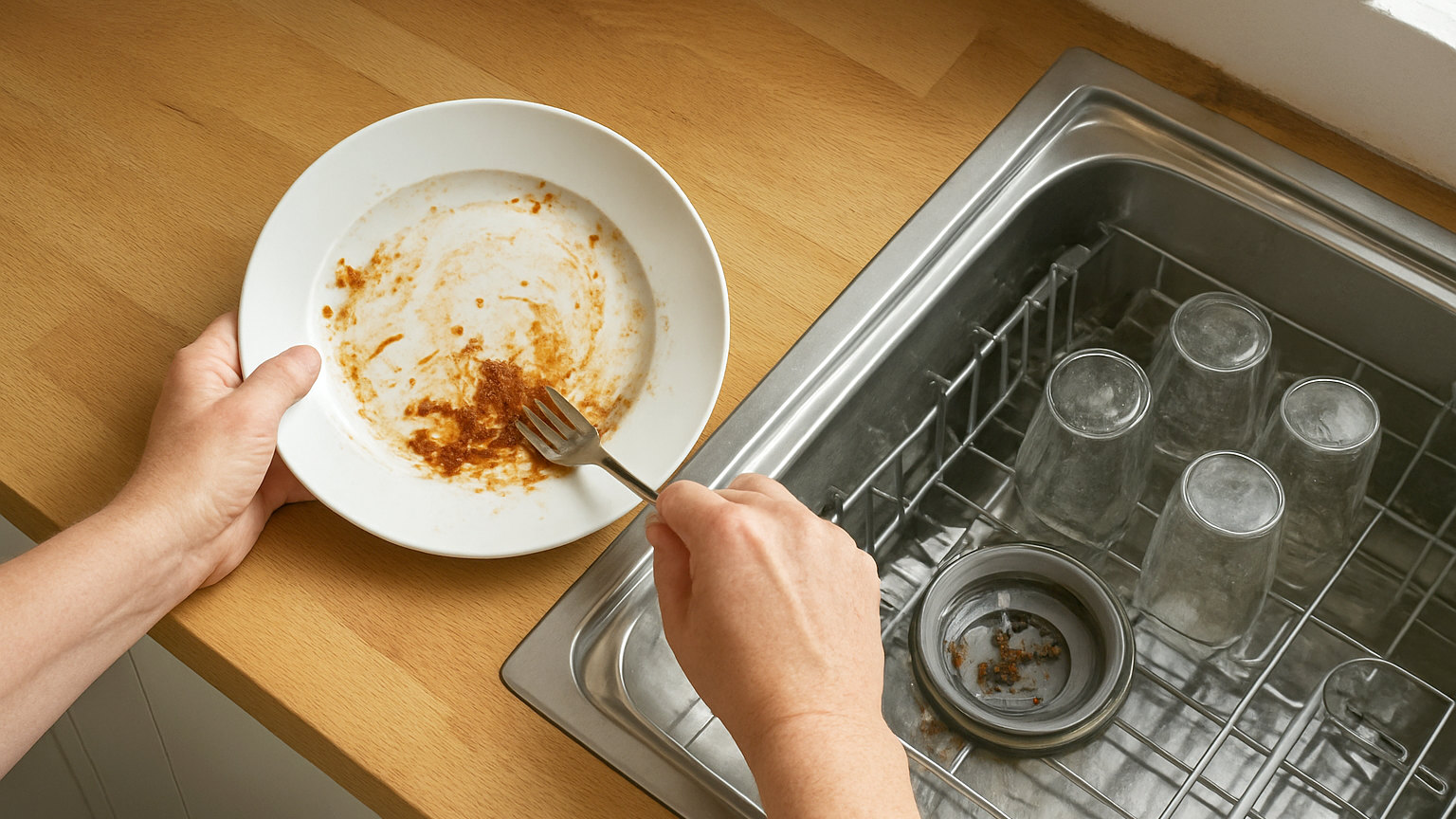
- Scrape solid food into the bin or the food waste caddy.
- Remove bones, stones, labels and anything that will block the filter.
- Load the plate as it is.
- Run the machine promptly rather than letting it stand for days.
Scraping is the important part. Loose food is what blocks filters and spray jets, and removing it is not the same as rinsing.
When is a rinse justified?
- If the machine will not run for a day or two, since dried food is much harder to remove.
- Egg, cheese and porridge, which set hard and are worth a quick rinse.
- Anything with a sauce that will dry to a glaze, such as curry or tomato.
- Heavily burnt or baked on pans, which should be soaked rather than rinsed.
A quick cold rinse for those is sensible. Washing the plate to the point where it looks clean is not.
What about the pre-rinse programme?
Many machines have a rinse or pre-wash cycle that uses a small amount of cold water and no detergent. It is designed for exactly this situation, where the machine will be loaded over a couple of days.
It uses far less water than rinsing plates individually under a tap.
How much water does rinsing use?
A running tap uses several litres a minute. Rinsing a full load of dishes can use more water than the dishwasher cycle itself, which on an eco programme may be under ten litres for the whole load.
That is the strongest argument against the habit: it frequently uses more water and energy than the machine does.
Does it depend on the machine?
Older machines and older detergents were less capable, which is where the habit comes from. A machine from the 1990s with the detergents of the time genuinely benefited from pre-rinsing.
Modern machines with enzyme detergents do not, and manufacturers generally advise against it in their manuals, which is worth checking.
What if dishes still come out dirty?
The answer is rarely rinsing. Check the filter, the spray arms, the loading and the programme. A blocked filter or a shielded plate causes far more poor results than unrinsed food does.
Using a longer, hotter programme for greasy loads also does more than any amount of pre-rinsing.
What about hygiene?
A dishwasher running at 60 degrees or above with detergent achieves a level of cleaning that hand washing rarely matches. Food left on a plate in a closed machine for a day is unappealing and is not a safety problem, since everything is washed at temperature before use.
If it bothers you, run the machine more often or use the rinse programme rather than the tap.
What do the manufacturers say?
Most now advise against pre-rinsing in their manuals, and several detergent makers state it explicitly on the packaging. The advice changed as detergents and soil sensors improved over the past couple of decades, which is why the habit persists so strongly among people who learned it on an older machine.
Does it save time?
Dropping the habit saves several minutes at every load, which over a year is a meaningful amount of standing at a sink. It is one of the few pieces of household advice where doing less produces a better result, uses less water and takes less time, which is worth stating plainly because most people assume the opposite.