An air fryer is a small fan oven, and it circulates hot air past a heating element directly above the food. Grease from whatever is cooking is carried up onto that element and onto the roof of the cavity, where it bakes on. Cleaning the basket alone misses the part that causes most of the problems.
What is the routine after each use?
- Unplug and let it cool.
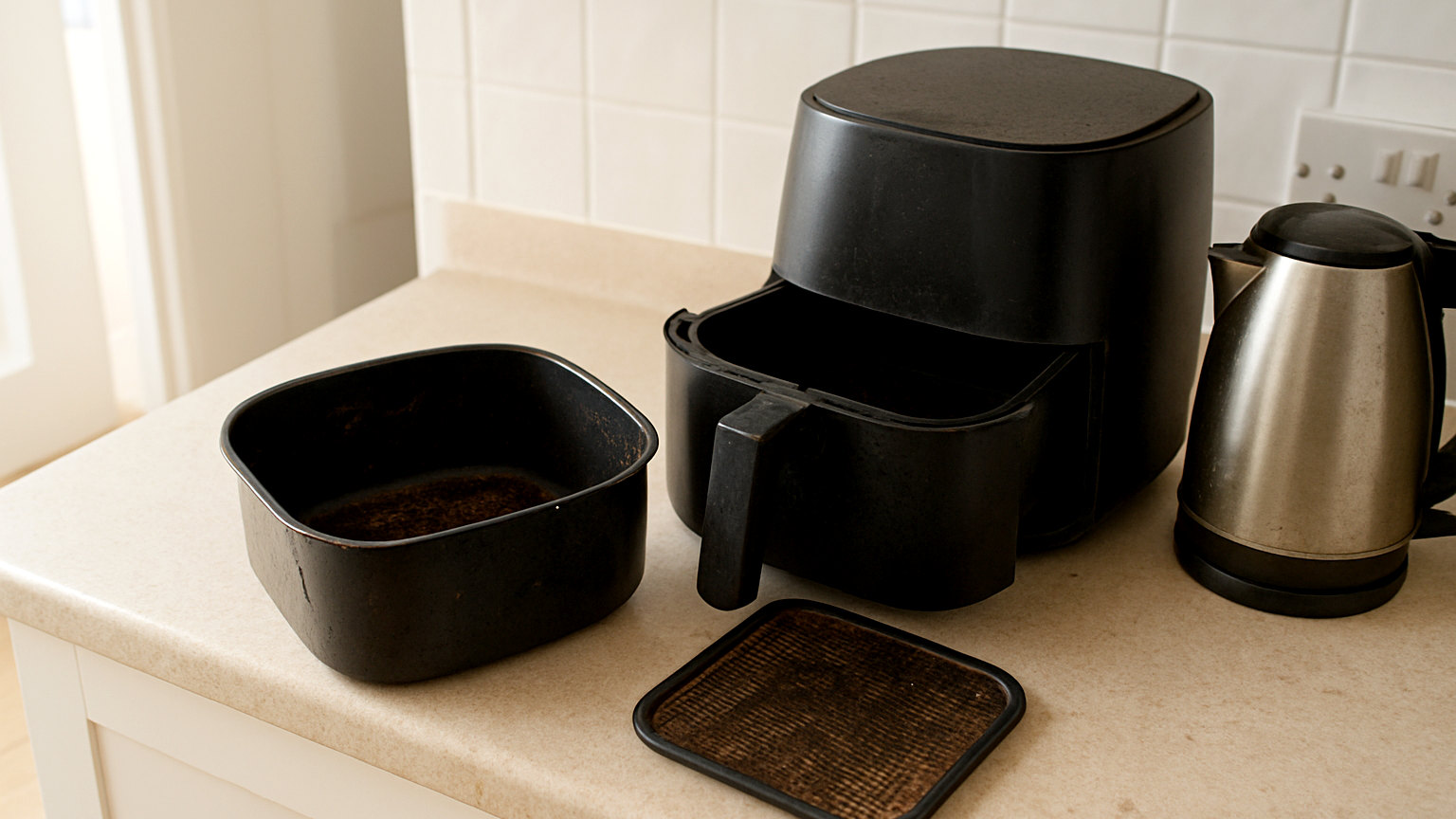
- Take out the basket and the crisper plate.
- Wash both in hot soapy water with a soft sponge.
- Wipe out the drawer or cavity underneath.
- Dry everything before reassembling.
Doing it after each use takes two minutes. Leaving it means soaking, since air fryer grease bakes hard.
How do you clean the element?
Turn the whole unit upside down or on its back, with it unplugged and cool, so you can see up into the cavity. The element and the roof above the basket will usually be coated with baked grease.
Wipe with a cloth dampened in hot soapy water, and use a soft brush or a non-scratch pad on the roof. Work carefully around the element itself and do not bend it. Never pour or spray liquid into the cavity.
A paste of bicarbonate of soda works on stubborn deposits, applied with a brush and left for ten minutes before wiping.
Why does it start smoking?
Almost always grease on the element or in the drawer burning off. It is the standard sign that the interior needs cleaning rather than a fault.
It can also be caused by cooking something very fatty with nothing in the drawer to catch it. A tablespoon of water in the drawer beneath the basket stops the fat reaching smoking point, which is a useful trick for bacon and sausages.
How do you deal with baked on residue in the basket?
Soak it. Fill the basket with hot water and a squirt of washing up liquid and leave it for half an hour, then wipe with a soft sponge. Repeat rather than scrubbing.
The coating is non-stick, and scouring pads, wire wool and abrasive powders will destroy it. Once the non-stick is damaged the basket sticks permanently and needs replacing.
Can the parts go in the dishwasher?
Many manufacturers state they can, and most cooks find hand washing makes the non-stick last considerably longer. Dishwasher detergent is aggressive and dulls the coating over repeated cycles.
Check the manual, and if you do use the dishwasher, use a lower temperature programme.
What about the smell?
An air fryer that smells of the last thing cooked in it has grease residue on the element or in the cavity. Clean those properly, then run it empty at a high temperature for ten minutes with the kitchen ventilated to burn off what remains.
Half a lemon in the basket during that empty run helps, as does a wipe with a vinegar solution beforehand.
What should you avoid?
- Abrasives of any kind on the non-stick.
- Immersing the main unit, which contains the fan and the electrics.
- Oven cleaner, which damages the coating.
- Aerosol cooking spray, which builds a sticky varnish on the basket that is very hard to remove.
- Metal utensils in the basket.
How often does the element need doing?
Every few weeks for a fryer in regular use, and immediately if it starts smoking. It is the job that keeps an air fryer performing, and it is the one almost nobody does until something goes wrong.
What about the drawer and the seal?
Fat runs down into the drawer beneath the basket, and on many models there is a seal or a lip where the drawer meets the body that collects it. Wipe both after every use. A greasy drawer is the second most common cause of smoking after the element itself.
Do liners help?
Paper and silicone air fryer liners catch drips and reduce the cleaning considerably. They must be weighted down by the food rather than placed in an empty basket, since a loose paper liner can be lifted into the element by the fan, which is a genuine fire risk.