Most small appliances have some parts that can go in a dishwasher and some that absolutely cannot, and mixing them up is expensive. The underlying rule is straightforward once the reasons are clear.
What never goes in?
- Anything containing a motor: blender bases, food processor bodies, mixer housings, juicer motor units.
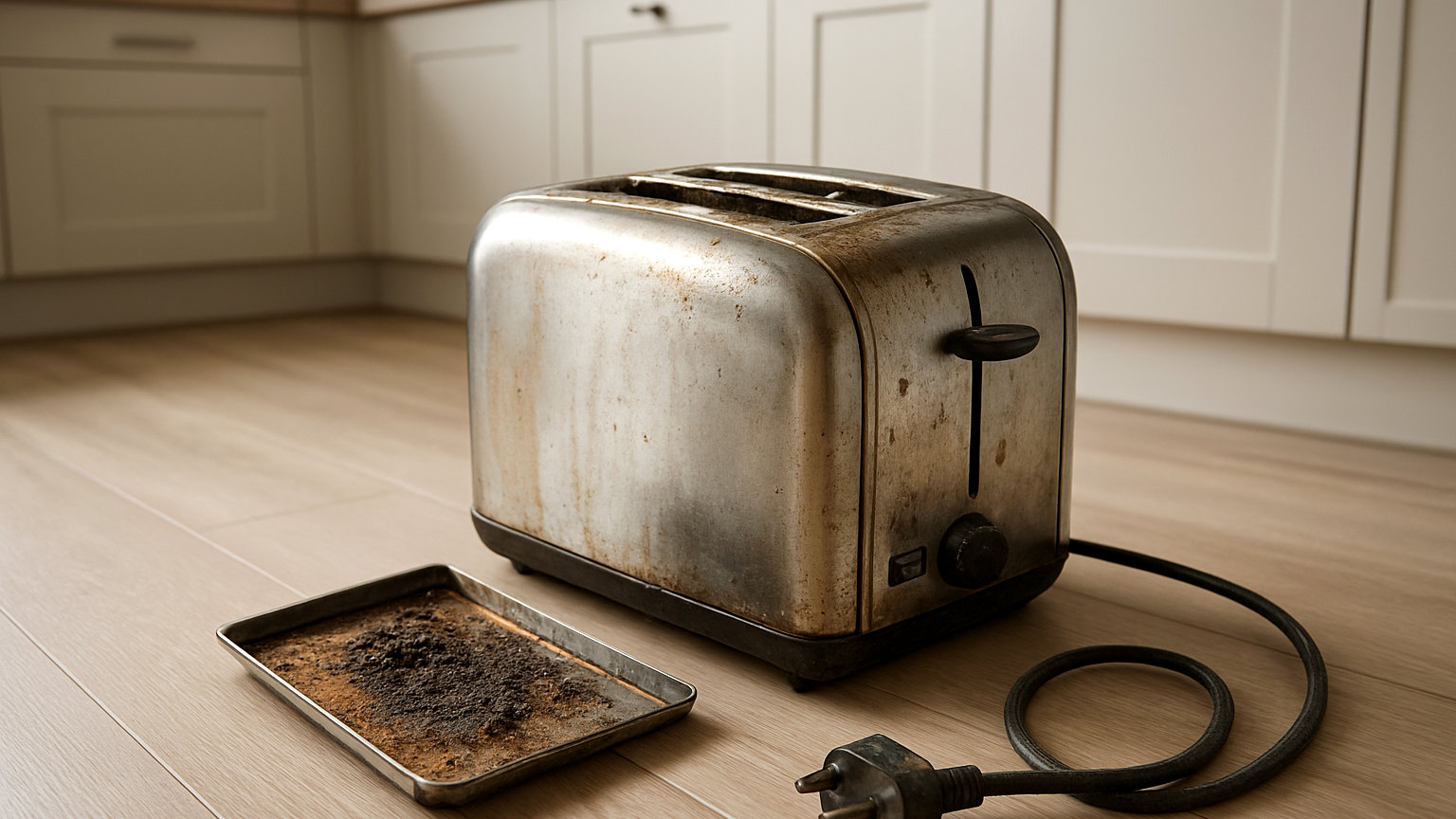
- Anything with a heating element: kettles, toasters, slow cooker bases, sandwich toasters, air fryer main units.
- Anything with a sealed bearing, such as a bread maker pan or a blender jug with the blade fitted.
- Anything with electrical contacts or a cord.
These are wiped with a damp cloth and never immersed.
Why is aluminium a problem?
Dishwasher detergent is strongly alkaline, and alkali reacts with aluminium. The result is pitting, dulling and a grey discolouration that cannot be reversed.
That covers many older mixer beaters, some baking trays, moka pots, and a surprising number of parts that look like stainless steel. If a metal part is unmarked and lightweight, assume aluminium and wash it by hand.
Why does non-stick suffer?
Because dishwasher detergent is mildly abrasive as well as alkaline, and repeated cycles at high temperature dull and degrade the coating. Manufacturers frequently state a part is dishwasher safe, meaning it will survive, rather than that it will last as long.
Air fryer baskets, sandwich toaster plates and bread maker pans all last noticeably longer washed by hand.
Why does plastic craze?
Many appliance plastics are not rated for the sustained heat of a dishwasher, particularly in the lower rack near the element. They develop a network of fine cracks, go cloudy, and become brittle.
Where a plastic part is dishwasher safe, it is almost always top rack only for exactly this reason.
What is usually fine?
Stainless steel bowls and beaters. Glass jugs and lids. Ceramic slow cooker pots, where the manual permits. Most modern blender and processor bowls, on the top rack. Removable grill and sandwich toaster plates, where stated. Silicone parts.
Check for a dishwasher safe symbol, usually plates and droplets, on the underside.
What about blades?
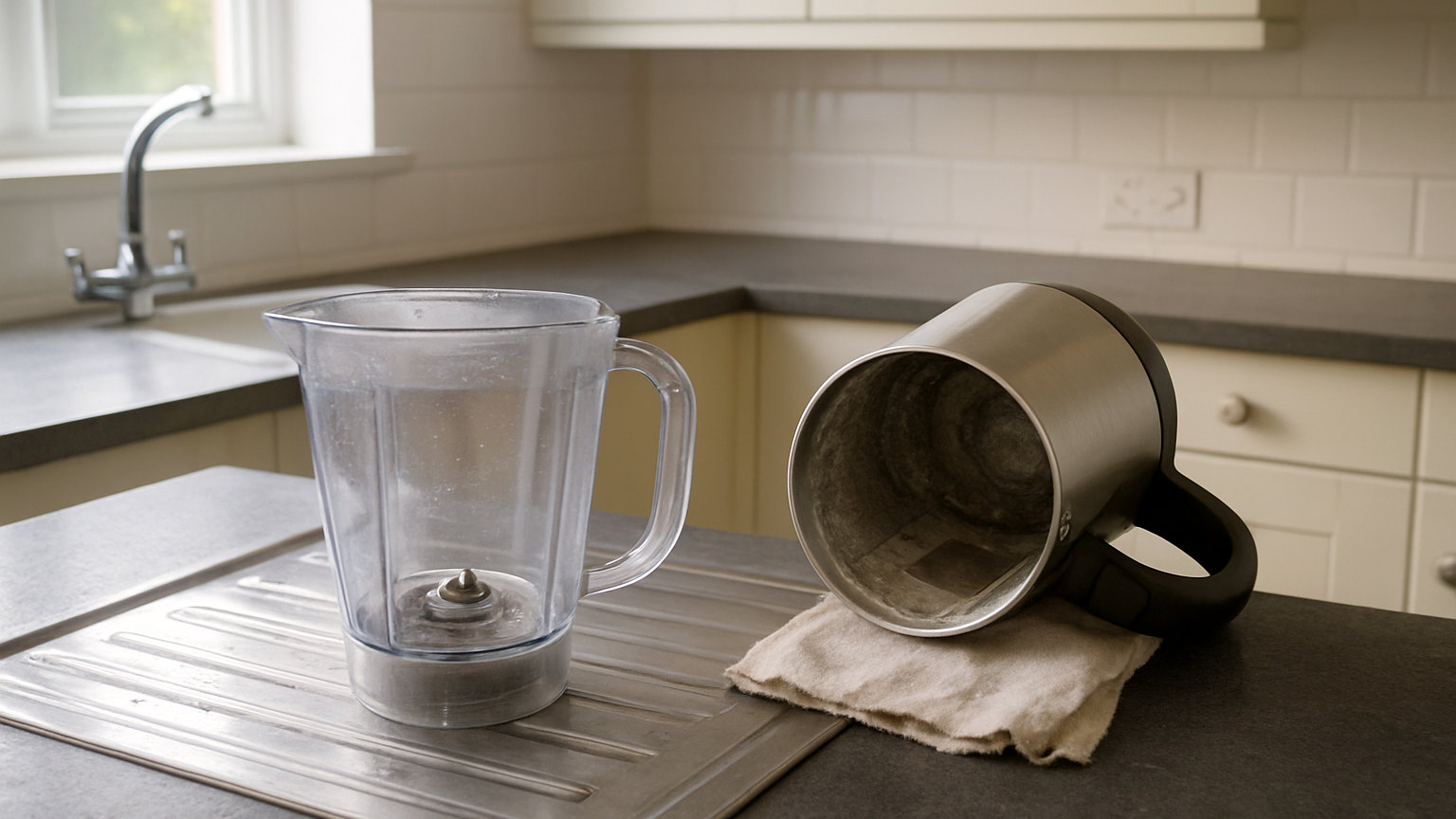
Blender and processor blades are often marked as dishwasher safe and are better washed by hand. Detergent dulls the cutting edge and the blade knocks against other items in the basket.
There is also a safety point: a sharp blade loose in a dishwasher basket is easy to catch a hand on when unloading.
What about rubber seals and gaskets?
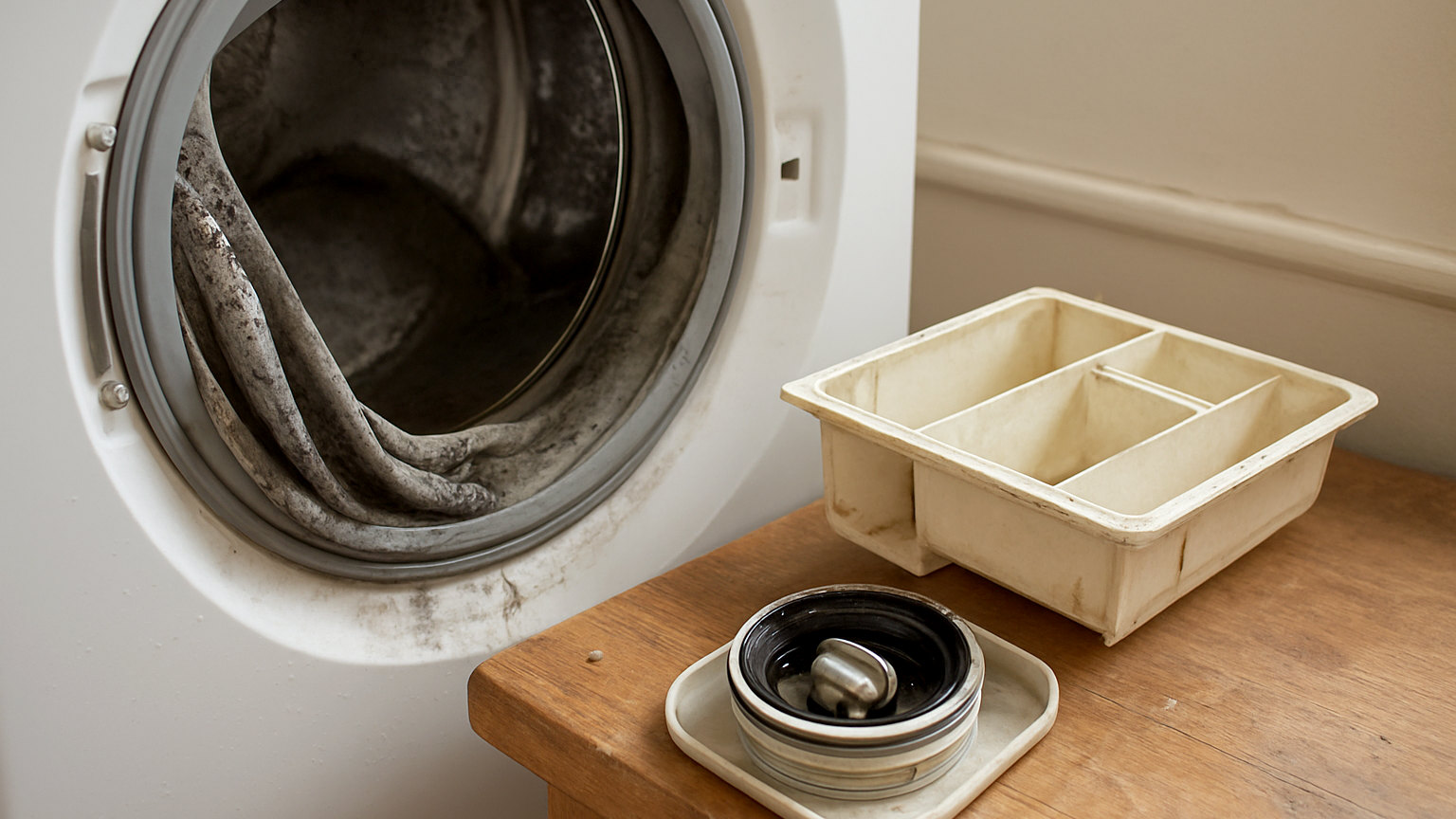
Take them out and wash them separately by hand. Dishwasher detergent and heat harden rubber over time, and a perished gasket on a blender jug or a pressure cooker lid leaks.
They also trap food and need individual attention that a dishwasher will not give them.
What is the safe default?
If it is unmarked, metallic and light, wash it by hand. If it is coated, wash it by hand. If it has a motor, an element, a bearing or a cord, wipe it only. Everything else, check the manual once and note it.
The cost of getting it wrong is usually the part rather than the appliance, and on things like an air fryer basket or a bread maker pan those parts are not cheap.
Does dishwasher safe mean it will not be damaged?
It means it will survive rather than that it will be unaffected. Manufacturers test for function rather than appearance, so a part can be correctly labelled dishwasher safe and still fade, dull or lose its printed markings over a few hundred cycles. For anything you want to keep looking good, hand washing is the safer choice.
What about the top rack rule?
It exists because the lower rack is closer to the heating element and gets considerably hotter, particularly during the drying phase. A plastic part that is fine on the top rack may warp on the bottom. Where a part is marked top rack only, that is the reason and it is worth observing.