A microwave is the easiest kitchen appliance to clean because steam does the work. Heating water inside softens every dried on splash in a few minutes, after which the whole interior wipes clean with a cloth. Scrubbing a cold microwave is unnecessary and risks damaging the interior finish.
What is the steam method?
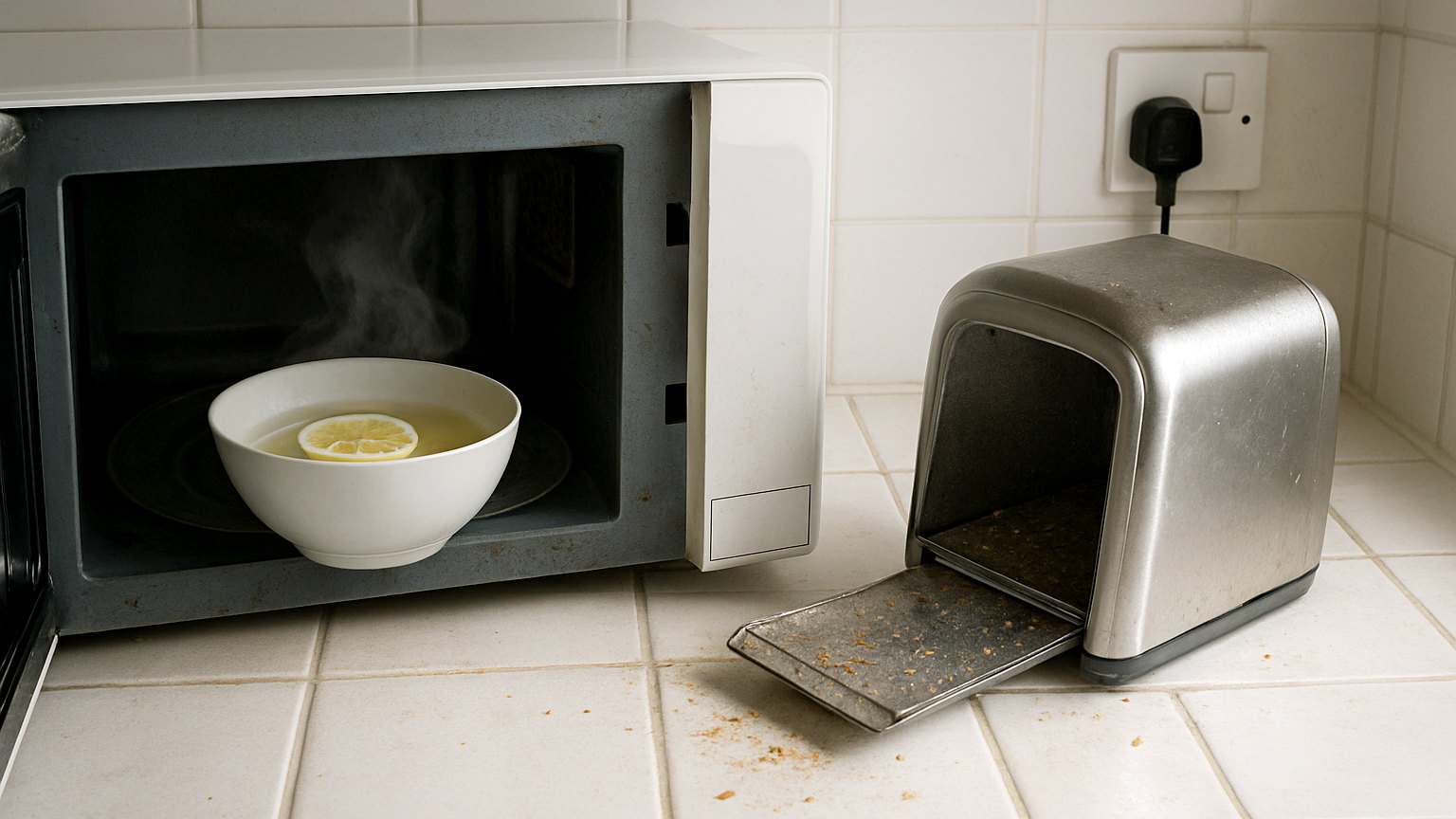
- Fill a microwave safe bowl with about 250ml of water.
- Add a sliced lemon, a few tablespoons of white vinegar or a spoonful of bicarbonate of soda.
- Heat on full power for four to five minutes until it is boiling and the interior is steamy.
- Leave the door closed for five minutes so the steam works.
- Open carefully, since the bowl will be very hot.
- Wipe the interior, roof, door and turntable with a damp cloth.
- Dry with a clean cloth and leave the door open for a few minutes.
Which addition should you use?
Lemon for the smell and a mild acidic effect. White vinegar for greasy build up and odour, which works better than lemon and smells worse while it is doing it. Bicarbonate of soda where the problem is a lingering smell rather than grease.
Plain water alone works nearly as well for a light clean.
What about the roof?
The most neglected part, because it is above eye level. Splatter lands there and bakes on, and it is the usual source of a burnt smell. After steaming, wipe the roof with the microwave turned off, and check the waveguide cover.
The waveguide cover is a small rectangular panel, usually mica, on the side or roof of the cavity. Wipe it gently with a damp cloth and never remove it or scrub it, since it is a component rather than a removable part. A cover that is badly burnt or damaged should be replaced.
What about the turntable?
It lifts out and can usually go in the dishwasher, though hand washing avoids the risk of thermal shock cracking the glass. Let it come up to room temperature before washing if it is still hot.
Wash the roller ring underneath as well, which collects debris and is frequently forgotten.
How do you deal with a burnt smell?
Steam with vinegar or lemon first. Then leave a bowl of bicarbonate of soda inside overnight with the door closed, which absorbs what remains.
A burnt smell that persists usually means a deposit on the roof or the waveguide cover that has not been removed, so check there before repeating.
What should never be used?
- Abrasive pads and powders, which scratch the interior coating.
- Oven cleaner, which damages the finish and leaves residue in a food space.
- Bleach, which taints and can damage the interior.
- Anything sprayed into the vents or at the waveguide cover.
- Metal tools to scrape deposits off.
What about the outside and the door?
Warm soapy water on a cloth, and a glass cleaner on the door window applied to the cloth rather than sprayed. Clean the door seal and the frame where it meets the cavity, which collects crumbs and affects how well the door closes.
Check the vents at the back or side are not blocked, since a microwave needs airflow.
How do you keep it clean?
Cover food with a plate, a vented lid or a splatter guard. Wipe any spill out on the day rather than heating it again. And do the steam clean monthly, which takes ten minutes including the waiting and prevents anything baking on.
What about a combination or grill microwave?
These need more attention, because the grill element bakes splatter onto the roof exactly as a conventional grill does. Run the grill empty for a few minutes to loosen deposits, let it cool, then steam clean and wipe. Any accessory rack or crisper plate should be washed separately after each use.
How do you clean a stainless steel interior?
Some microwaves have a stainless rather than painted cavity, which marks more visibly and cleans the same way. Wipe in the direction of the grain after steaming, and buff dry with a microfibre cloth. Avoid anything abrasive, which leaves permanent scratching that shows under the internal light.