Skylights and high level windows look like the most difficult glass in a house and are often the easiest, because most modern roof windows are designed to rotate fully within their frame so both faces can be cleaned while standing safely in the room below.
How does a rotating roof window work?
Centre pivot roof windows swing on a hinge halfway up the sash. Open the window, then look for a barrel bolt, a catch or a small lever on the side of the frame, usually near the top. Releasing it allows the sash to rotate through nearly 180 degrees, bringing the outer face into the room.
Once rotated, the catch engages to hold the sash securely in the cleaning position. Clean the outer glass, the outer frame and the gasket, then release the catch and rotate it back.
Always engage the safety catch before letting go, and keep fingers clear of the pivot. Do it with the room below clear of furniture and people.
What about top hung and fixed skylights?
Top hung roof windows often still rotate, with a separate handle at the top for opening and a bar at the bottom for the cleaning position. Check the manual for the model, which is usually available online using the code on a plate inside the frame.
A genuinely fixed skylight can only be cleaned from outside, and on a pitched roof that is work for someone with proper access equipment. This is not a job for a ladder leaned against a gutter.
How do you clean a high stairwell window?
With an extension pole rather than a ladder, in almost every case. A telescopic pole with a microfibre sleeve or a small squeegee head reaches the top of most double height stairwells from a safe standing position.
The complication is the drips. Cover the stairs and the floor below with dust sheets, use as little water as possible, and work from the top of the glass downwards so runs are dealt with rather than left.
Ladders on stairs are particularly hazardous because the feet sit at different heights. A stair platform or a scaffold tower is the correct equipment if a pole will not do the job, and hiring one for a day is inexpensive.
What needs cleaning besides the glass?
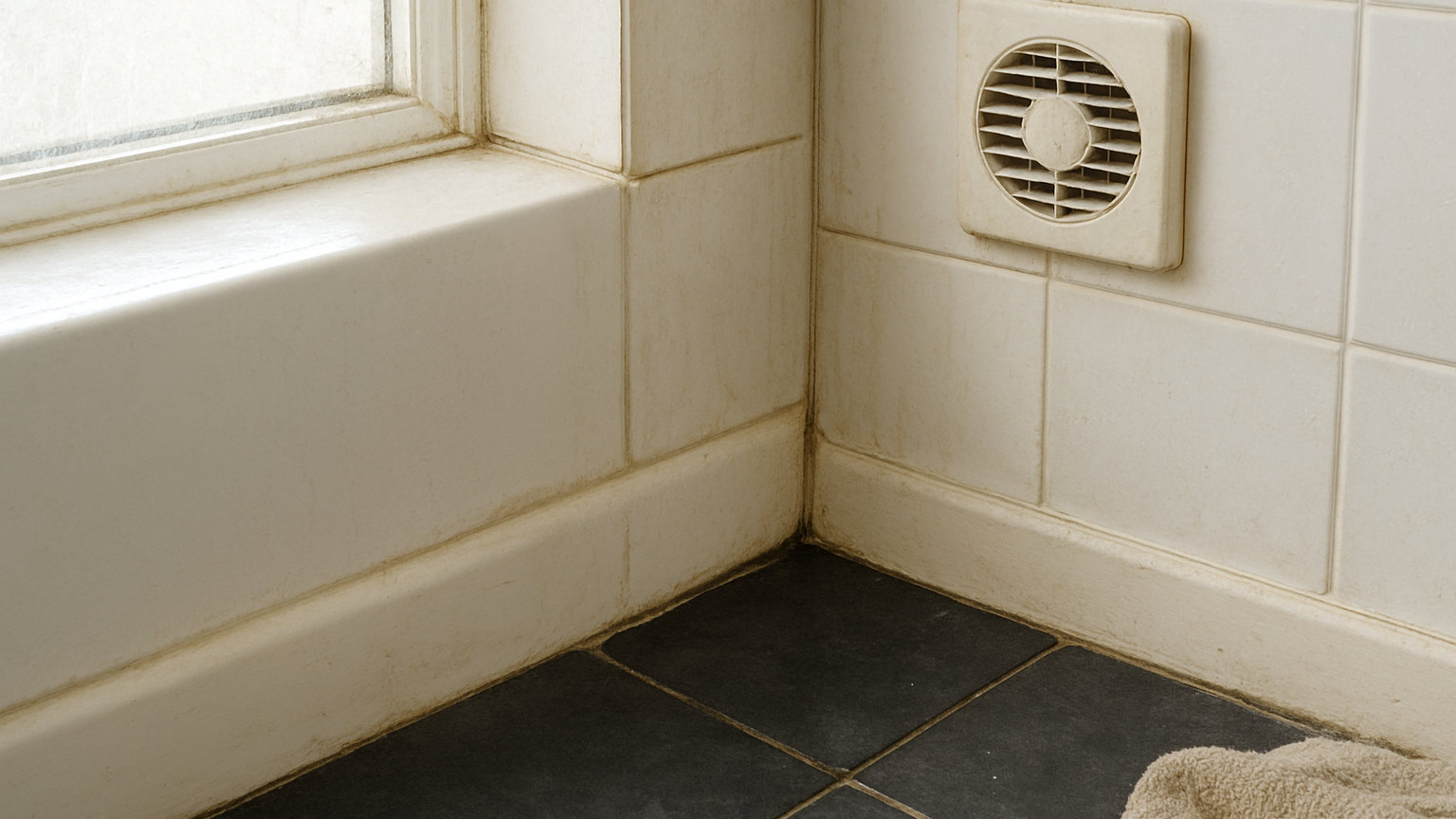
- The gasket around the sash, which collects dust and grows mould in a bathroom or kitchen skylight.
- The drainage channel at the bottom of the frame, which blocks with dust and dead insects.
- The internal reveal, which on a skylight is a deep splayed opening that collects a surprising amount.
- The blind or shade, if one is fitted, which shows dust badly against the light.
- The flashing and the roof surface immediately around the window, where leaves and moss collect and where water can pond.
Why does the flashing matter?
Because a blocked gutter of leaves and moss above a roof window forces water sideways under the flashing, which is the most common cause of a skylight that appears to leak. It is worth looking at from a window or with binoculars a couple of times a year, particularly in autumn.
Clearing debris from above a roof window is roof work and should be treated as such.
What about condensation on a skylight?
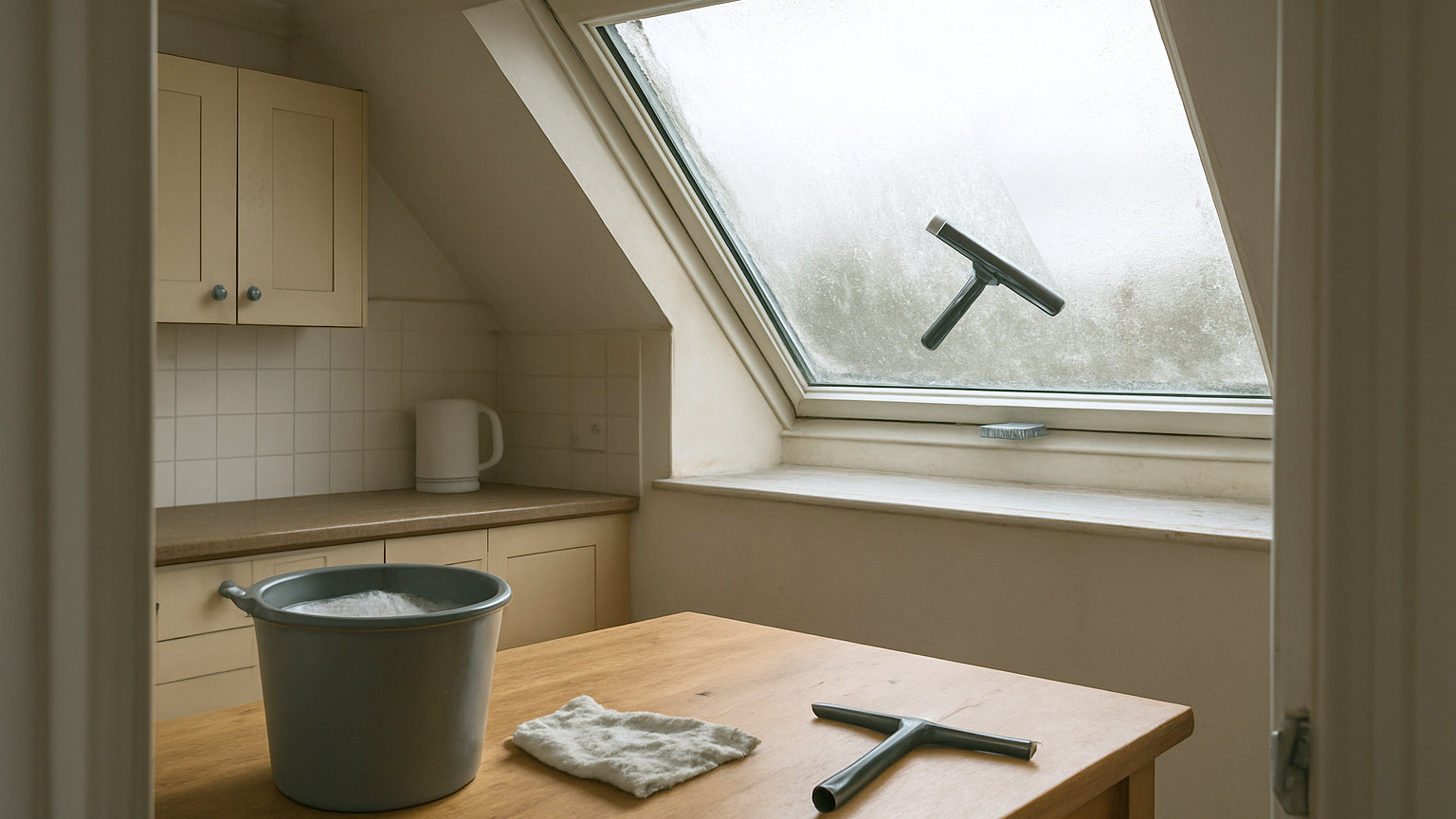
Roof windows condense more than vertical ones because warm moist air rises and collects at the highest point in a room. Kitchen and bathroom skylights suffer most. Opening the window on the vent setting, or running an extractor, deals with it, and wiping the glass and the drainage channel stops water pooling in the frame.
Water dripping from a roof window in cold weather is far more often condensation than a leak, and the way to tell is whether it happens on cold still nights rather than during rain.
How often do they need doing?
Twice a year for the glass, since roof windows accumulate dirt faster than vertical ones and show it more when the light comes through. The drainage channel and the gasket at the same time, and a look at the flashing each autumn.