Cleaning the outside of ground floor windows is a simple and low risk job. Cleaning the outside of upper floor windows is the point at which a routine chore becomes the most dangerous thing most people do around the house. Falls from height remain one of the leading causes of serious domestic injury, and a ladder on soft or uneven ground is the usual circumstance.
What is the safest approach for upper floors?
Staying on the ground. A water fed pole system reaches two and often three storeys from ground level, with a brush head on a telescopic pole and purified water pumped through it. The brush agitates the dirt, the purified water rinses it, and the glass is left to dry without being touched.
Purified water contains no dissolved minerals, so it dries without leaving marks. That is why professional window cleaners no longer squeegee upper windows and why the results look better than a ladder and a cloth ever did.
Domestic versions of these systems exist and are reasonable value if you have a lot of glass, though a professional visit two or three times a year is often cheaper and always safer.
If you must use a ladder, what matters?
- Level, firm ground, with a ladder mat or a stabiliser on soft ground.
- The right angle, roughly one metre out for every four metres up.
- A stand off bracket, so the ladder rests against the wall rather than the window or the gutter.
- Someone footing the ladder, or at minimum someone in the house who knows you are up there.
- Both hands free to climb, with tools carried in a belt or hooked to the ladder.
- No overreaching. Move the ladder rather than stretching sideways, which is the single most common cause of a fall.
Never use a ladder in wind, on wet ground, or when you are alone in the house and unwell or tired.
What about windows that open inwards?
Many modern uPVC windows are reversible or tilt and turn, and can be rotated so the outer face is accessible from inside the room. This is the safest and easiest option where it exists, and a large number of people do not realise their windows do it.
Look for a catch or a release button on the hinge side. Support the sash while reversing it, and engage the safety catch before cleaning.
What is the right order outside?
- Brush down cobwebs and loose dirt from the frame and the reveal, dry.
- Wash the frame and sill, working from the top down.
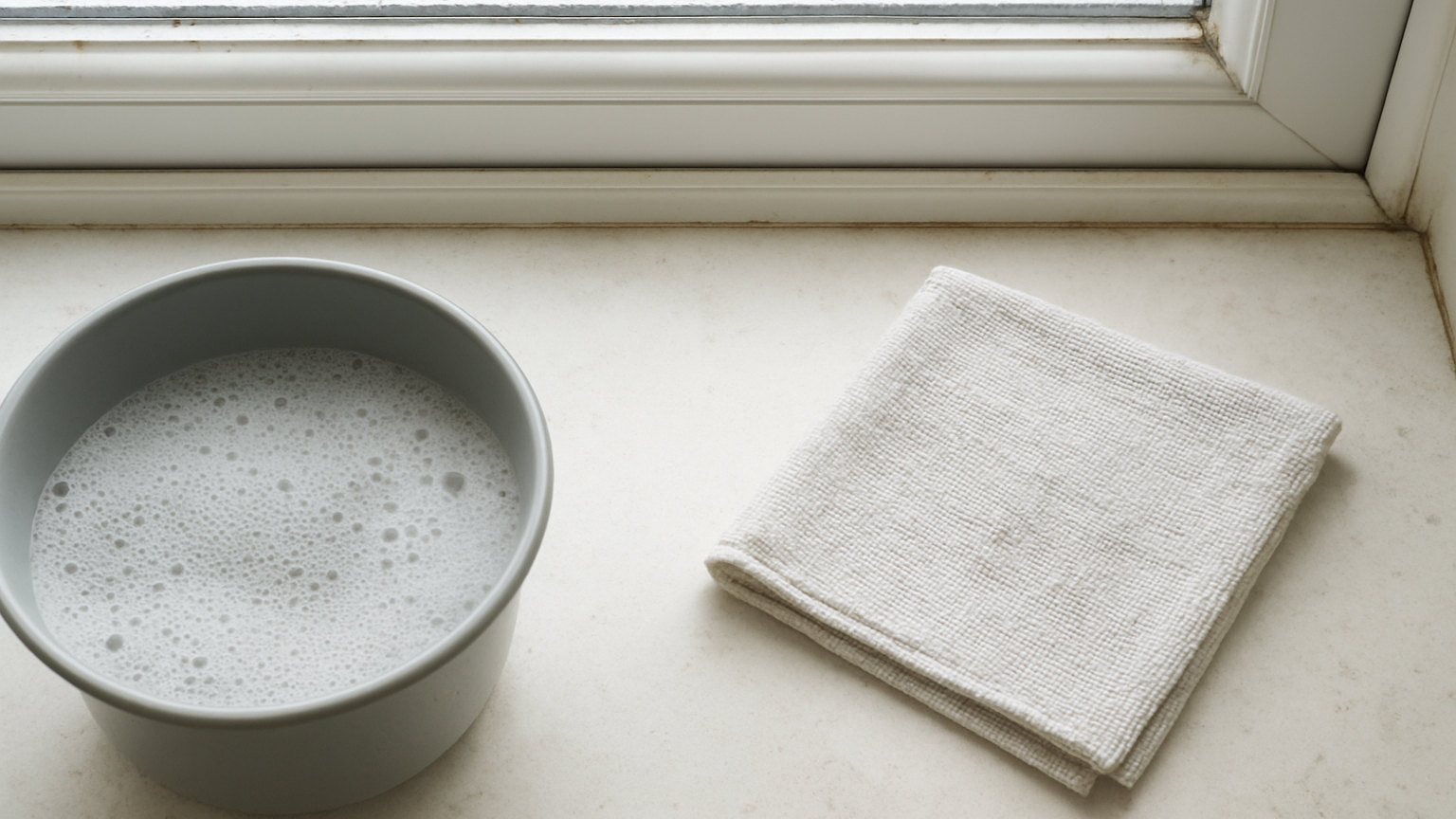
- Wash the glass with an applicator and a bucket of water with a drop of detergent.
- Squeegee the glass, drying the blade between strokes.
- Detail the edges and the bottom of the glass with a dry microfibre cloth.
- Wipe the sill last, since everything has drained onto it.
When is the best time to do it?
An overcast, still day. Direct sunlight dries the solution before it can be removed and guarantees streaks. Wind blows debris onto wet glass and makes a ladder unsafe. Frost makes everything more dangerous and the water freezes on the glass.
When should you simply pay someone?
Anything above a comfortable step ladder height, any window over a conservatory roof or a basement well, any property on a slope, and any situation where you would be working alone. Professional window cleaning is inexpensive relative to the risk, and a cleaner with a pole system will do a better job on upper floors than is achievable from a ladder anyway.
Check that whoever you use carries public liability insurance, particularly if they will be working over a conservatory or a neighbouring property.
What should you do before they arrive?
Move cars off the drive, unlock side gates, shut the windows, and move anything fragile away from beneath the windows. Mention any window that leaks or any frame that is in poor condition, since a pole system delivers a lot of water and a cleaner would rather know in advance than be blamed afterwards.