A bathroom mirror fogs because its surface is colder than the humid air in the room. Water vapour condenses on the first cold thing it meets, and a sheet of glass on an outside wall is usually the coldest surface available. The fix is either to warm the glass or to remove the moisture, and wiping the mirror does neither.
Why does it clear from the edges inwards?
Because the glass is fractionally warmer where it meets the frame or the wall fixing, which conducts a little heat into it from the structure behind. That pattern is a useful confirmation that the problem is surface temperature rather than anything to do with the mirror, the glass quality or the cleaning product last used on it.
What actually prevents it?
- A heated mirror or a demister pad fitted behind the glass. This is the only method that works reliably every time, and pads are inexpensive, though they need wiring in by an electrician.
- Warming the room before showering, so the glass is closer to air temperature when the steam arrives.
- Running the extractor fan from the start of the shower rather than afterwards, which keeps humidity down while it matters.
- Showering slightly cooler, which produces dramatically less vapour.
- Warming the glass directly with a hairdryer for thirty seconds, which works but only until the glass cools again.
Do the household tricks work?
Some do, briefly. Rubbing a thin film of shaving foam or washing up liquid over the glass and buffing it off leaves a surfactant layer that stops water forming separate droplets, so the condensation spreads into a clear sheet instead of a fog. It genuinely works for a few days and then needs redoing.
Commercial anti-fog sprays and wipes do the same thing more durably, typically lasting a week or two. Neither stops condensation forming; they change how it sits on the glass.
The trick of leaving hot water in the bath or basin to warm the room has a small effect and adds humidity, which is not a good trade.
Why does a mirror on an outside wall fog worse?
Because the wall behind it is cold, and the mirror is cooled by it. A mirror on an internal wall in the same room may not fog at all. If the mirror is fixed to an external wall and fogs every time, insulating behind it when it is next removed, or fitting a demister pad, is more effective than any surface treatment.
How do you clean mirror glass without streaks?
Clean it early in the bathroom routine, before the room gets humid from all the hot water used elsewhere. Wipe the glass with a cloth wrung out in warm water with a single drop of washing up liquid, then dry immediately with a clean dry microfibre cloth in long overlapping strokes.
Use as little product as possible. Most streaking is residue rather than dirt, and glass cleaner sprayed generously onto a mirror is the usual cause.
What damages a mirror?
Water getting behind the glass and reaching the silvered backing, which produces the black spotting around the edges of old bathroom mirrors. That damage is permanent. Never spray cleaner directly at the mirror, because liquid runs down to the bottom edge and wicks in behind. Spray the cloth instead.
Avoid ammonia based cleaners on mirrors with exposed edges for the same reason, and never use abrasives or blades on the surface.
What if the whole room fogs, not just the mirror?
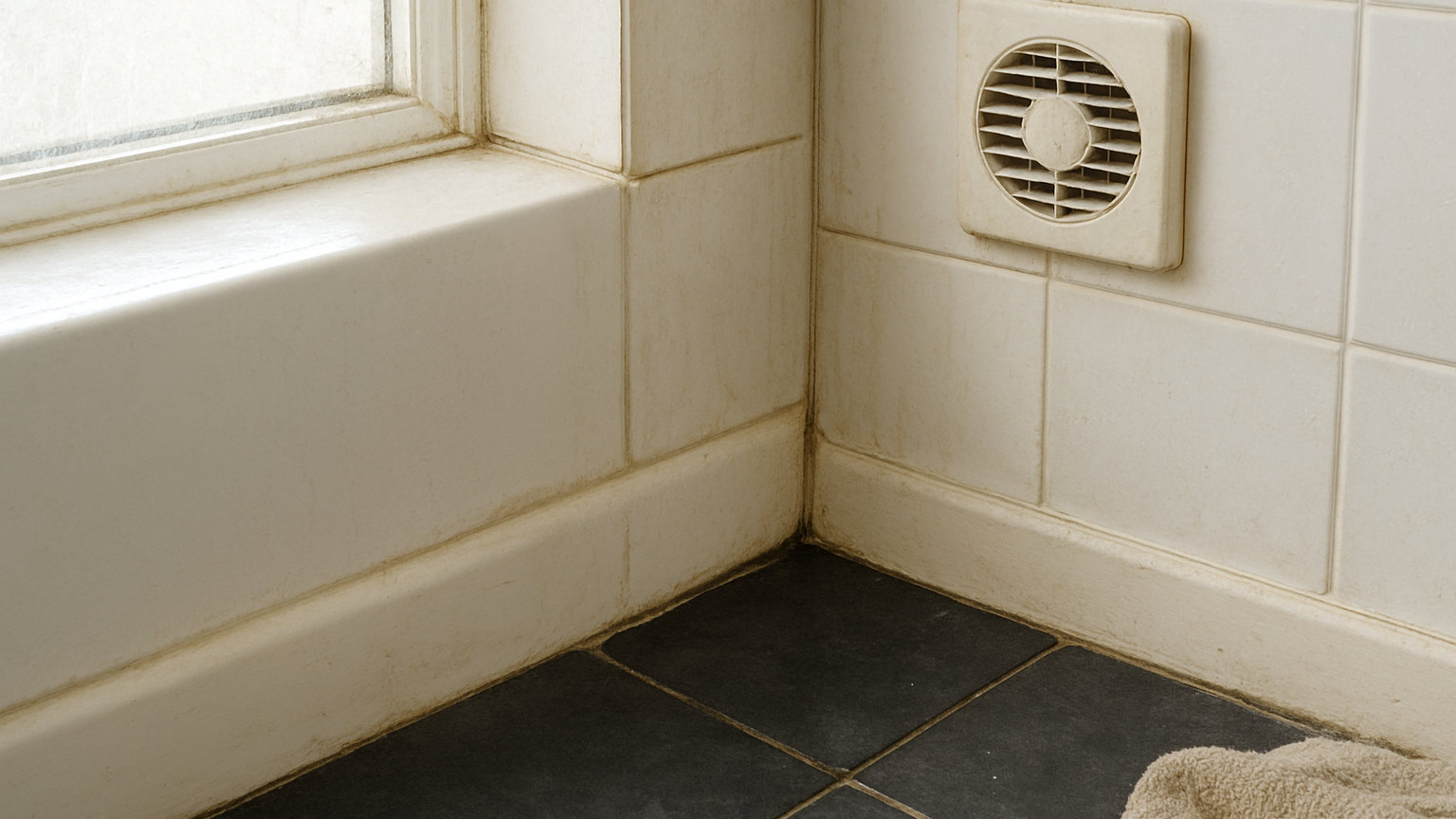
Then the problem is ventilation rather than the mirror, and solving it solves everything else in the room at the same time. Check that the extractor still holds a sheet of paper against the grille, clean it if it does not, extend the run-on timer, and keep the door closed while showering. A bathroom that clears in a few minutes has a mirror that clears in a few minutes too.