Winter is where laundry becomes a genuine household problem. Outdoor drying is unreliable, indoor drying puts litres of water into a house that is already closed up against the cold, and a tumble dryer is the most expensive appliance in the kitchen to run. The realistic answer is usually a combination rather than one method.
Does outdoor drying work in winter?
Better than most people expect. What actually matters for drying is air movement and low humidity rather than warmth. A cold, dry, breezy winter day dries washing very effectively, and often faster than a warm but still and muggy day in summer would.
The limitation is daylight hours and rain. Washing has to go out early and come in before the evening damp rises, and anything still out after dark will usually be wetter than when it went out.
What happens if washing freezes?
It dries, slowly, by sublimation, where ice turns directly to vapour without melting. Clothes come in stiff as board and finish drying quickly indoors once they thaw.
Avoid handling frozen garments roughly, since frozen fibres are brittle and can be damaged. Do not put frozen washing on a radiator to thaw, and do not hang anything delicate out in a hard frost.
What is the cheapest indoor method?
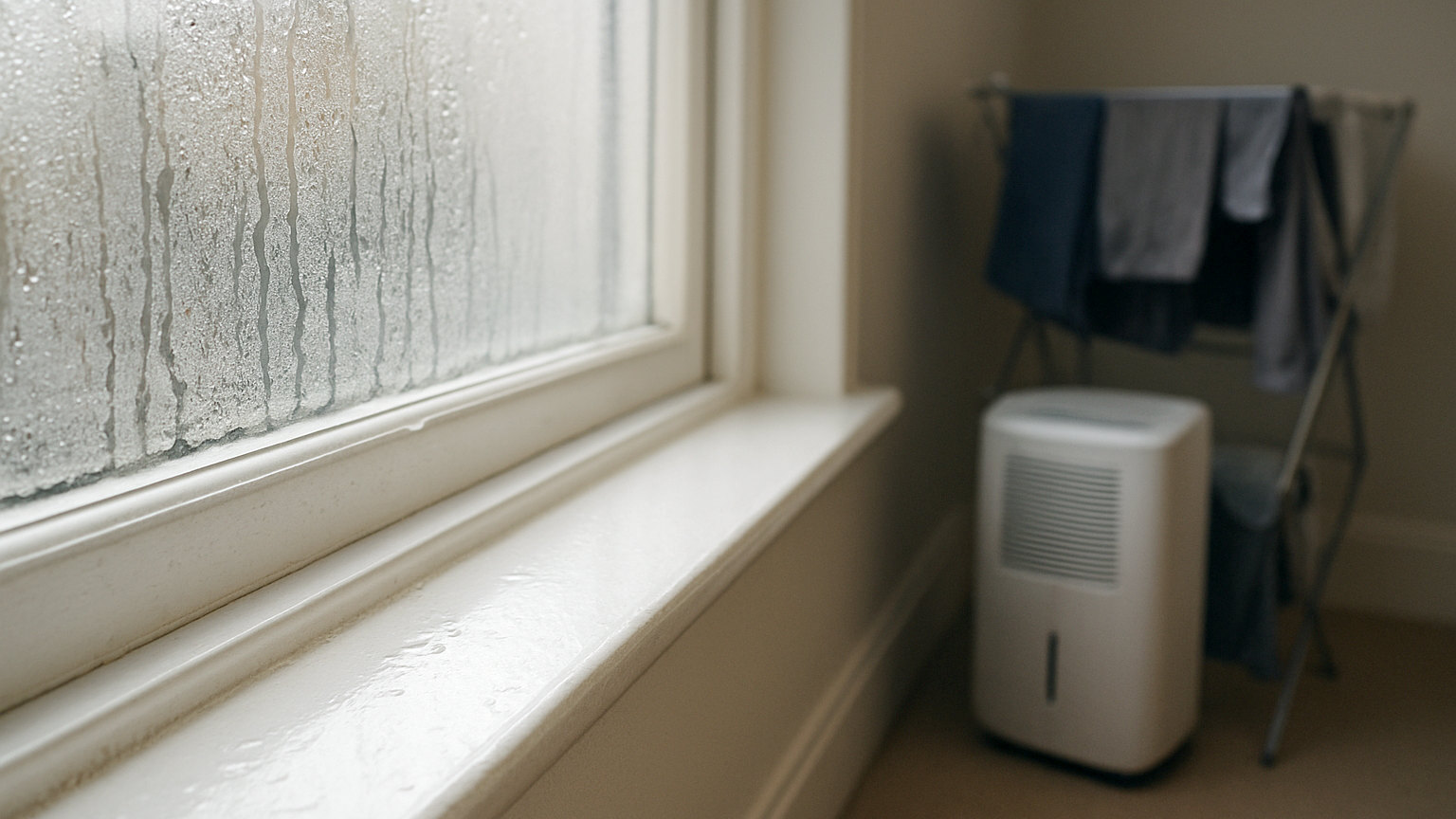
A dehumidifier with the airer in a closed room. It removes the moisture rather than letting it circulate, it costs a fraction of a tumble dryer to run, and it solves the condensation problem at the same time. Many models have a laundry mode that runs the fan continuously.
A heated airer is the next cheapest, particularly with a cover over it that traps warm air around the clothes. It speeds drying considerably but still releases the same volume of water into the room, so it works best alongside a dehumidifier or an open window.
A fan costs almost nothing to run and makes a surprising difference, because moving air is what carries moisture away from the fabric.
Why is winter indoor drying such a problem?
Because the house is sealed and the walls are cold. Two litres of water per load evaporate into the air, and that air then meets cold external walls, window reveals and unheated corners, where it condenses. That is the origin of most of the mould that appears in bedrooms between November and March.
In summer the same moisture leaves through open windows. In winter it has nowhere to go.
What is the practical routine?
- Spin at the highest speed the fabric allows, every time.
- Put the airer in one room, ideally a spare room, utility or bathroom, and shut the door.
- Run a dehumidifier in that room, or open the window and accept the heat loss.
- Space items generously and turn thick items such as jeans halfway through.
- Bring the washing out as soon as it is dry rather than leaving it hanging.
- Wipe condensation off windows and sills each morning during the drying period.
Is a tumble dryer worth it in winter?
For towels and bedding, often yes, since they are the slowest items to air dry and the most likely to develop a smell. A heat pump model costs roughly half what a condenser does to run, which changes the calculation considerably for anyone drying several loads a week.
A useful compromise is to air dry until items are nearly dry and finish with fifteen minutes in the dryer, which softens the fabric and removes creases for a small fraction of a full cycle.
What should you watch for?
Condensation on the windows first thing in the morning, black spotting on the sealant, a musty smell in the drying room, and damp patches appearing behind furniture on external walls. A humidity meter costs very little and takes the guesswork out of it entirely: keeping the house below about 60 per cent relative humidity is the target, and anything consistently above that needs a change of method.