Vacuuming stairs is widely disliked, and the reason is usually the machine rather than the task. A full sized upright balanced on a tread is heavy, unstable and genuinely dangerous, while the same stairs done with a lightweight handheld take five minutes and no effort at all.
Which direction should you work in?
Top to bottom, always. Dust and grit fall downwards as you disturb them, so working upwards means recontaminating stairs you have already done. Starting at the top also means you are moving down rather than backing up a staircase, which is safer and less tiring.
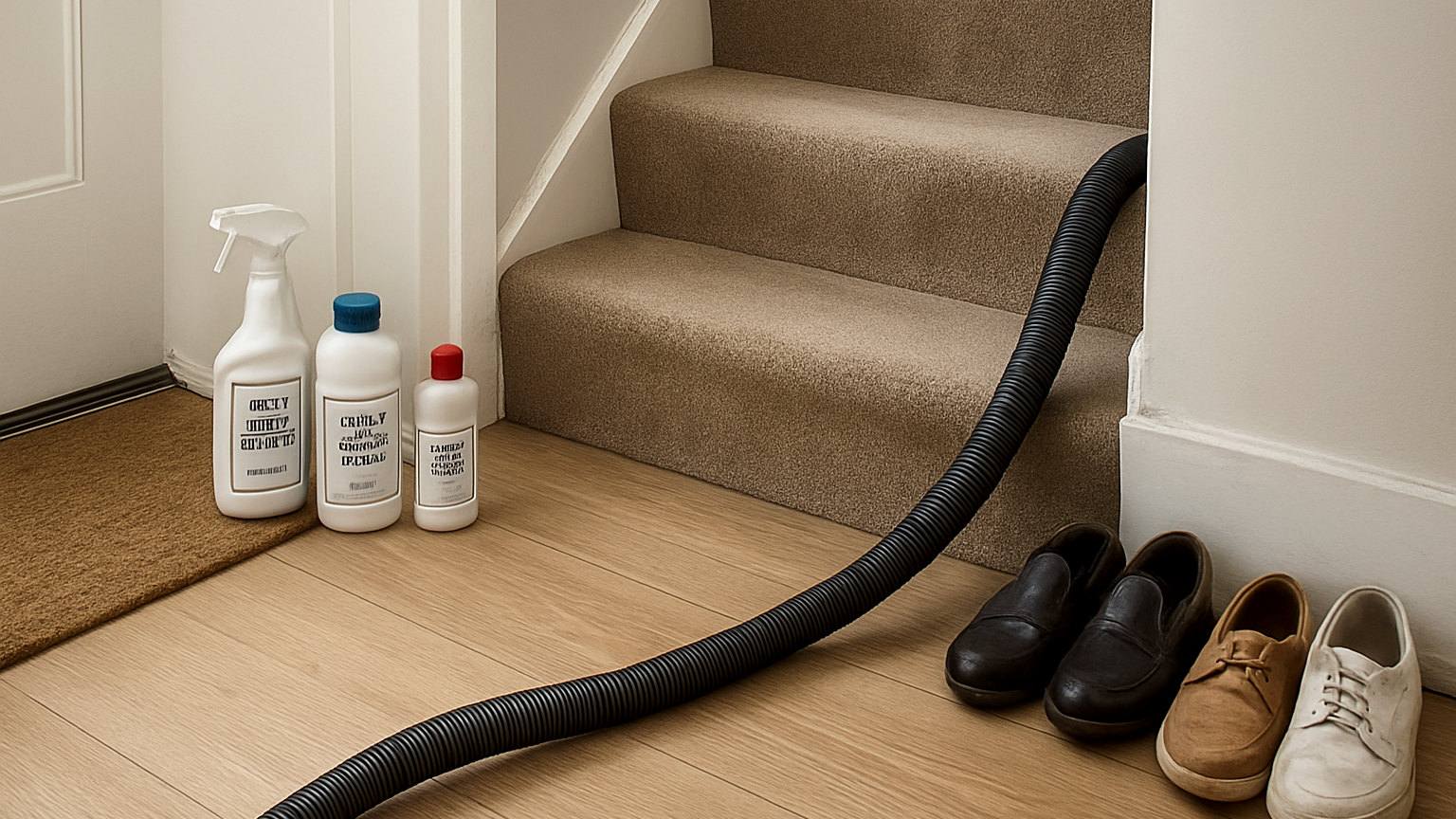
Place the machine so it is stable and never balance it on a tread above you. A cylinder vacuum is best left at the bottom with the hose extended, or on a landing if the hose will reach.
What is the safest setup for each type of machine?
- Cordless handheld or stick vacuum – the easiest by a wide margin. Light enough to hold in one hand, with the other hand free for the banister.
- Cylinder vacuum – leave the body at the foot of the stairs and work with the hose and wand. Check the hose is not looped around your feet.
- Upright vacuum – use the hose and tools rather than the machine itself. Set the body on the floor at the bottom, not on a step.
- Backpack vacuum – ideal if you have one, since the weight is carried rather than balanced.
Never carry a heavy machine up a staircase while also trying to clean it. More domestic falls happen on stairs than anywhere else in a house.
Which attachments make the difference?
Two, mainly. A crevice tool for the internal corner where each tread meets the riser and for the edges beside the skirting, which is where hair and grit compact into a line. And a small motorised turbo tool or upholstery brush for the body of the tread, since the brush agitates flattened pile that suction alone passes over.
A plain upholstery nozzle works but leaves noticeably more behind on a stair carpet with a dense pile.
What is the quickest sequence?
- Clear anything left on the stairs first, which is a job in itself in many houses.
- From the top, run the crevice tool along the back corner of each tread and down both edges.
- Switch tools and do the tread surface and the riser below it.
- Move down one step and repeat, rather than trying to reach two or three at a time.
- Do the landing and the bottom step last, as both take the heaviest traffic.
Doing the corners for the whole staircase first and then the treads means fewer tool changes, which saves more time than it sounds.
How often do stairs actually need it?
Weekly, and twice weekly with pets or a busy household. The top and bottom steps and the landing benefit from more frequent attention than the middle of the flight, since traffic concentrates at both ends.
What about wooden or painted stairs?
Vacuum first with a soft brush attachment, then wipe. Grit on bare timber is what scratches the finish, so removing it dry before anything damp goes near is the important step. Keep the hard plastic of the nozzle away from painted stringers and spindles, which chip easily.
What else should be done while you are there?
The spindles, the underside of the handrail and the stringer catch a surprising amount of dust and are all within reach while you work down. A dry microfibre cloth in your free hand adds about two minutes to the job and saves a separate trip later.
It is also the moment to notice a loose stair rod, a lifting carpet edge or a spindle that has come adrift, all of which are far easier to fix early than to trip over later. A staircase is the most common place for a fall in a house, so the weekly vacuum doubles as a useful inspection.