Almost every recurring bathroom problem – mould on the sealant, black spots in the grout, limescale on the screen, a musty smell, peeling paint – comes down to the same thing. Surfaces stay wet for hours after a shower. A room that dries in twenty minutes has none of these problems, and a room that stays damp until lunchtime has all of them.
Why does drying time matter more than cleaning?
Because mould germinates on surfaces that stay wet, and limescale forms where water is left to evaporate slowly. Both are prevented by removing the water rather than by treating the result. Cleaning mould off sealant every month treats a symptom that will return within weeks; getting the room dry stops it appearing at all.
What makes the biggest difference?
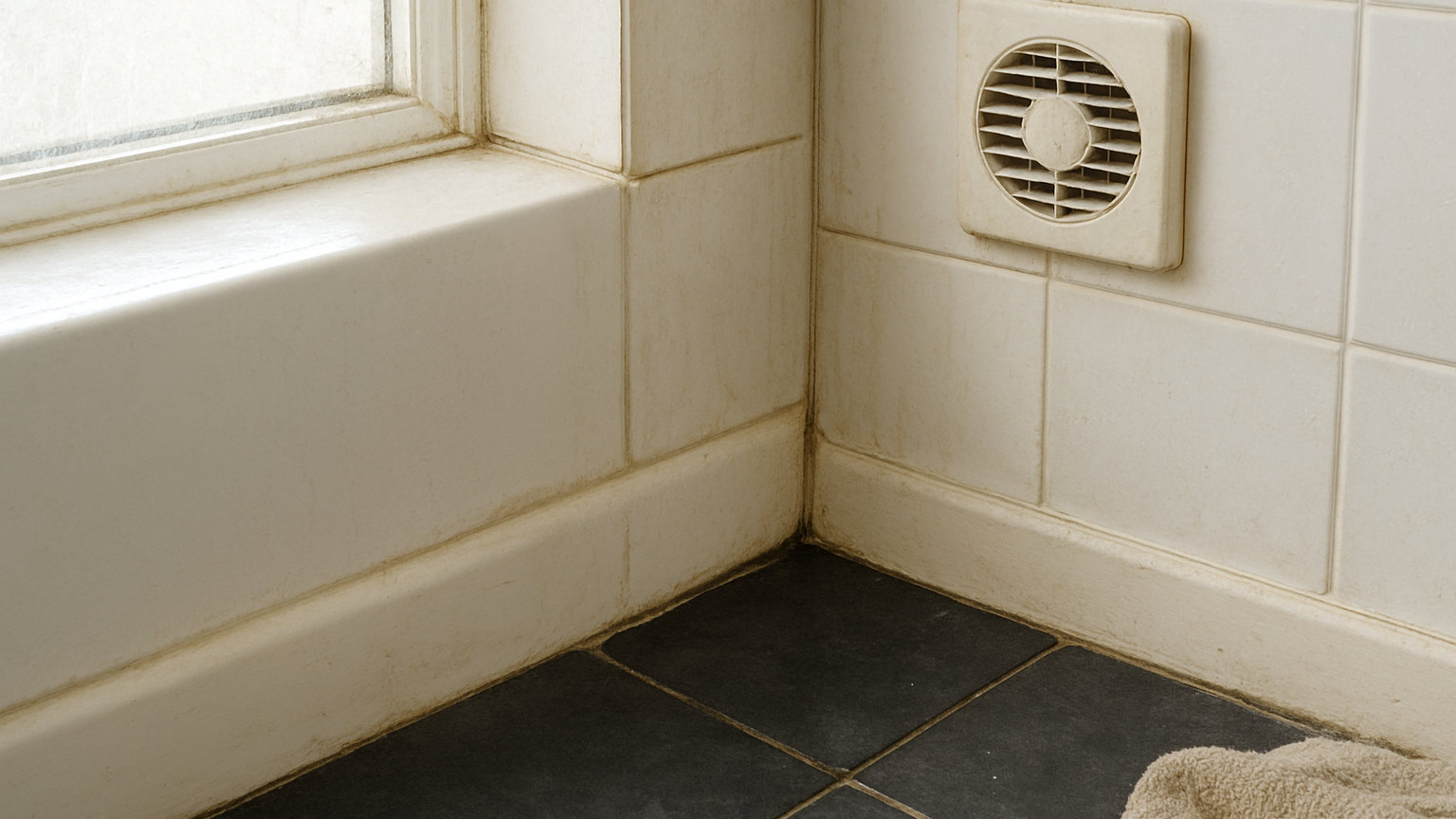
- Running the extractor for fifteen to twenty minutes after a shower, not two. Most run-on timers are set far too short and can be adjusted inside the housing.
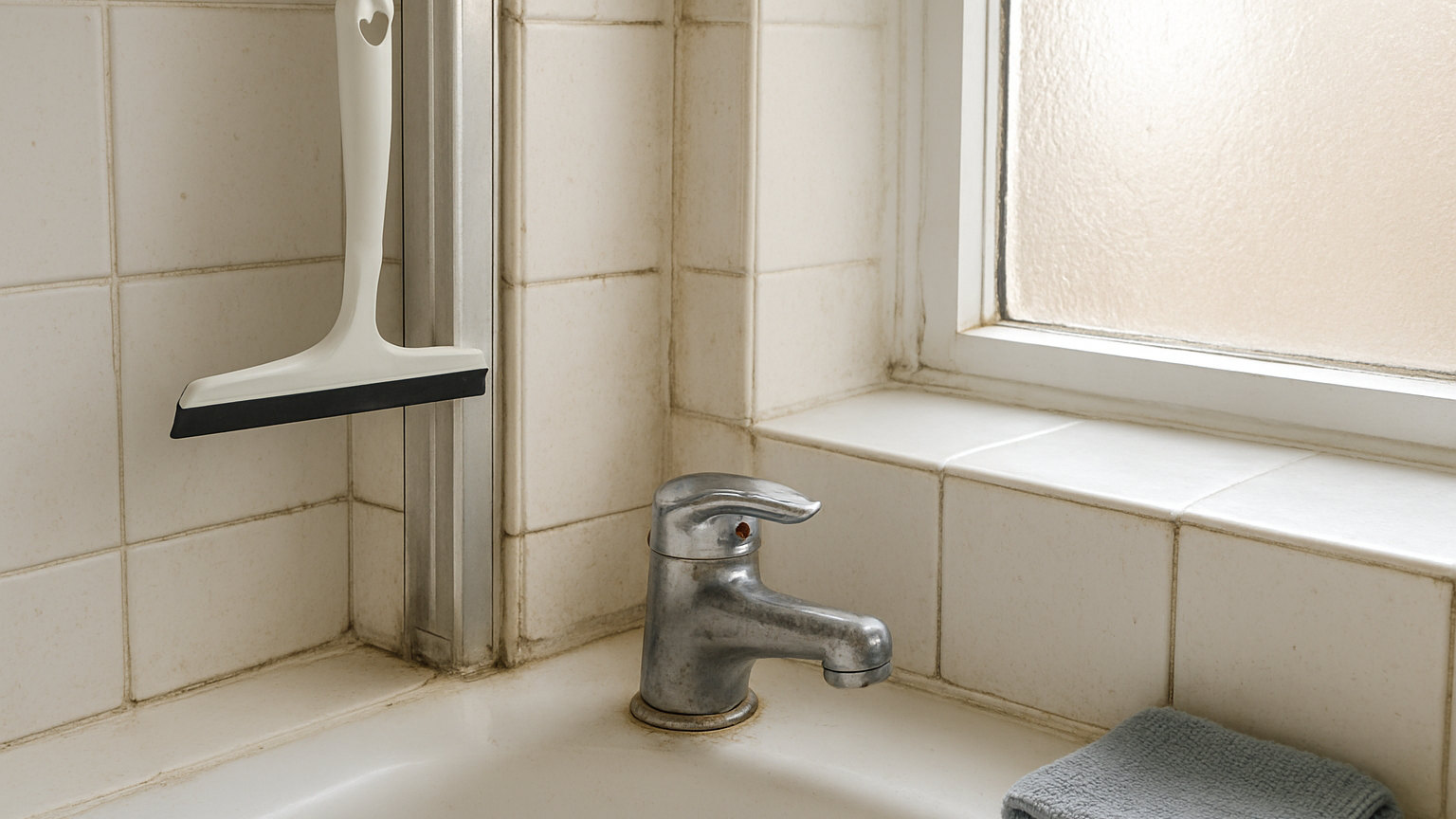
- Squeegeeing the screen and tiles, which removes most of the water in the room in about twenty seconds.
- Leaving the shower door or curtain open afterwards so the enclosure can dry.
- Keeping the bathroom door shut while showering and for a few minutes afterwards, so the moisture is extracted rather than spread through the house.
- Opening the window once the fan has done its work, which finishes the job faster than either alone.
Does opening the window during a shower help?
Less than you would expect in cold weather, and it can make things worse elsewhere. Cold air entering the room cools the walls and the window reveal, and warm moist air then condenses on those cold surfaces. Extraction while showering with the window shut, followed by the window open afterwards, dries the room faster and puts less moisture into the rest of the house.
What if there is no extractor fan?
An openable window, used properly, will do the job in most weather. Open it fully for a short burst rather than slightly for hours, since a wide open window for ten minutes moves far more air than a trickle vent all day and loses less heat.
Failing that, a small dehumidifier run in the bathroom for an hour after showers is effective and cheap to run. So is a heated towel rail, which raises the surface temperature of the room and speeds evaporation, provided the moisture then has somewhere to go.
Why do some bathrooms stay damp regardless?
Usually because of one of three things. A cold external wall that sits below the dew point, so condensation forms on it regardless of ventilation. An extractor that is clogged or connected to a blocked duct. Or a room that is heated intermittently, so the surfaces are cold when the warm moist air hits them.
Cold surfaces are the underrated factor. A bathroom kept at a steady low background temperature suffers far less condensation than one that is heated hard for an hour and then left to cool.
What about drying laundry in the bathroom?
A load of wet washing releases a litre or more of water into the air as it dries, all of it in the smallest room in the house. If it has to be done, do it with the door shut, the window open or the fan running, and preferably not at the same time as the room is being used for showers.
Which small habits are worth adopting?
Wipe the shower screen with a squeegee, hang towels spread out rather than folded so they dry rather than staying damp, wipe the window and sill after showering if condensation has collected, and leave the shower tray or bath dry rather than full of standing water.
None of these takes more than a few seconds, and together they change the room from one that needs mould treatment twice a year to one that does not. That is a far better return than any cleaning product.