The cloudy film on a shower screen is limescale, which is calcium and magnesium left behind when hard water evaporates, usually mixed with soap scum. It is a mineral deposit bonded to the glass, so it responds to acid and to time, and it barely responds at all to scrubbing with a general bathroom spray.
Why does a normal cleaner not touch it?
Because most bathroom sprays are detergents, and detergent lifts grease and dirt rather than dissolving minerals. A detergent will remove the soap scum layer and leave the scale underneath, which is why a screen often looks briefly better and then dries cloudy again. What is needed is something acidic to convert the deposit into a form that rinses away.
What actually removes it?
- White vinegar, neat and warmed slightly, is effective on light to moderate scale and costs almost nothing.
- Citric acid dissolved in warm water, roughly two tablespoons to half a litre, works faster than vinegar and smells less.
- A proprietary limescale remover is the strongest option and the right choice for heavy build up, though it needs ventilation and care around fittings.
Whichever you choose, the method is the same: get the acid onto the glass and keep it there.
What is the method?
- Warm the glass first with a hot shower run for a minute, which makes the deposit more reactive.
- Apply the acid generously. On vertical glass this is the difficult part, because liquid runs off. Soak kitchen paper or cloths and press them against the glass so they hold in place.
- Leave it for fifteen to thirty minutes for moderate scale, and up to an hour for heavy deposits. Re-wet the paper if it starts to dry.
- Work over the surface with a non-scratch pad or a soft brush. The deposit should now feel soft and come away easily.
- Rinse thoroughly with clean water, more than once.
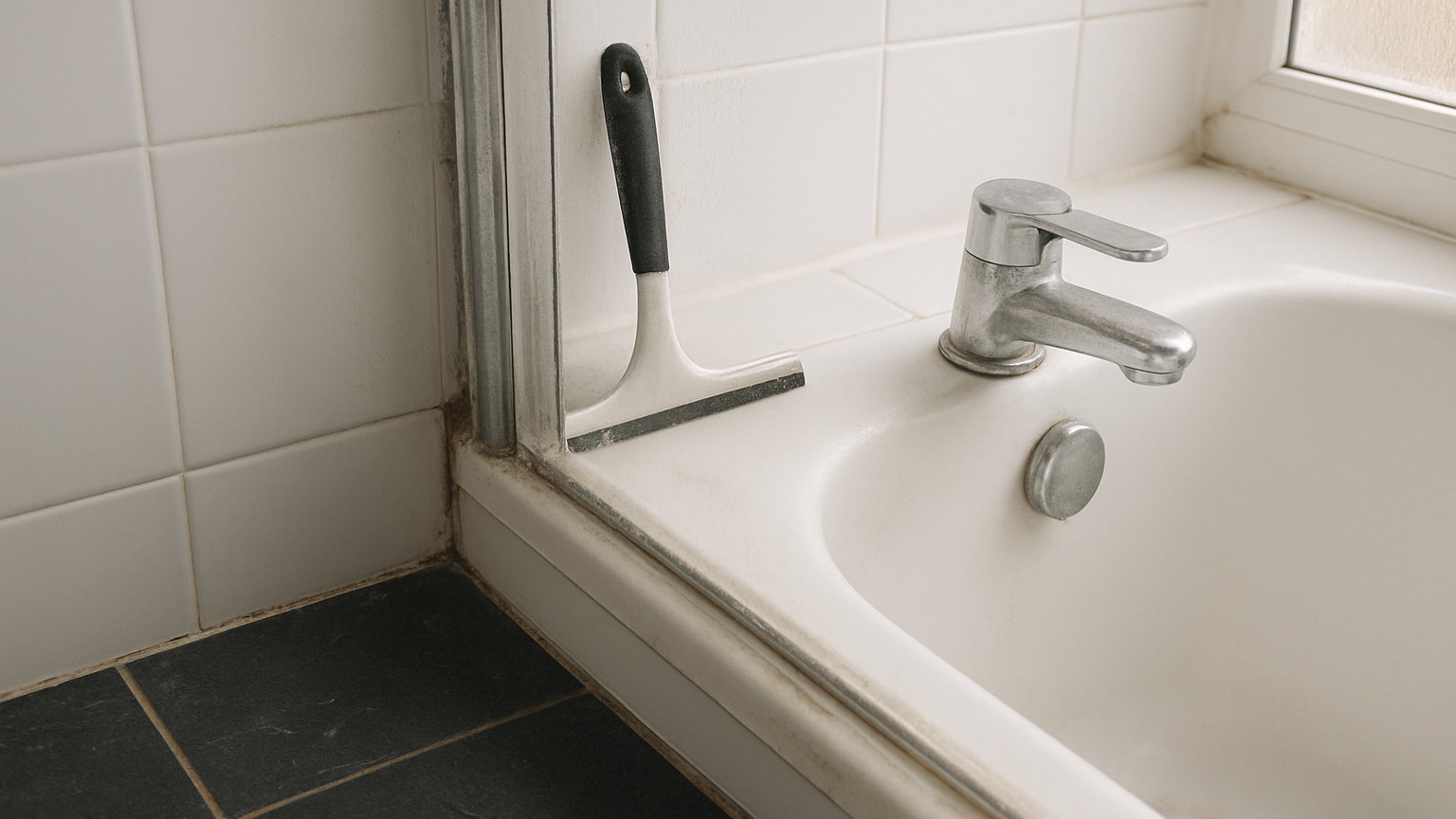
- Dry with a squeegee and then a microfibre cloth. Any water left to evaporate starts the process again immediately.
What should you not use?
Anything abrasive enough to scratch. Wire wool, scouring pads and even melamine sponges leave fine scratches that hold more scale and make the glass permanently hazy. A razor blade scraper works for a professional on plain float glass, but it will ruin any coated or treated screen.
Keep acid away from the metal frame, the hinges and any sealant. Rinse these immediately if they get splashed, as prolonged contact damages chrome plating and degrades silicone.
Why does some scale never come off?
Because glass is slightly porous, and over years the minerals etch into the surface rather than sitting on it. That damage is physical and permanent, and no cleaner will restore clarity. A glass polishing compound with cerium oxide can improve it, but the honest answer for a badly etched screen is replacement or a permanent haze.
This is the argument for dealing with a new screen properly from the start rather than waiting until it is bad.
What stops it coming back?
One habit, done consistently: squeegee the screen after every shower. It takes fifteen seconds, removes the water before it can evaporate, and means the screen never scales at all. A microfibre cloth kept in the bathroom does almost as well.
Beyond that, ventilating the room so the enclosure dries quickly helps, and a rinse aid style water repellent applied to clean glass two or three times a year makes the water sheet off rather than bead. In a very hard water area, a water softener or an inline shower filter is the only measure that addresses the cause.
Does the same approach work on tiles and taps?
Yes, with one exception. Acid works the same way on ceramic tiles, chrome taps and the inside of a shower enclosure, but it must never touch natural stone, marble, travertine or polished concrete, where it etches the surface immediately and leaves a dull mark that cannot be polished out.