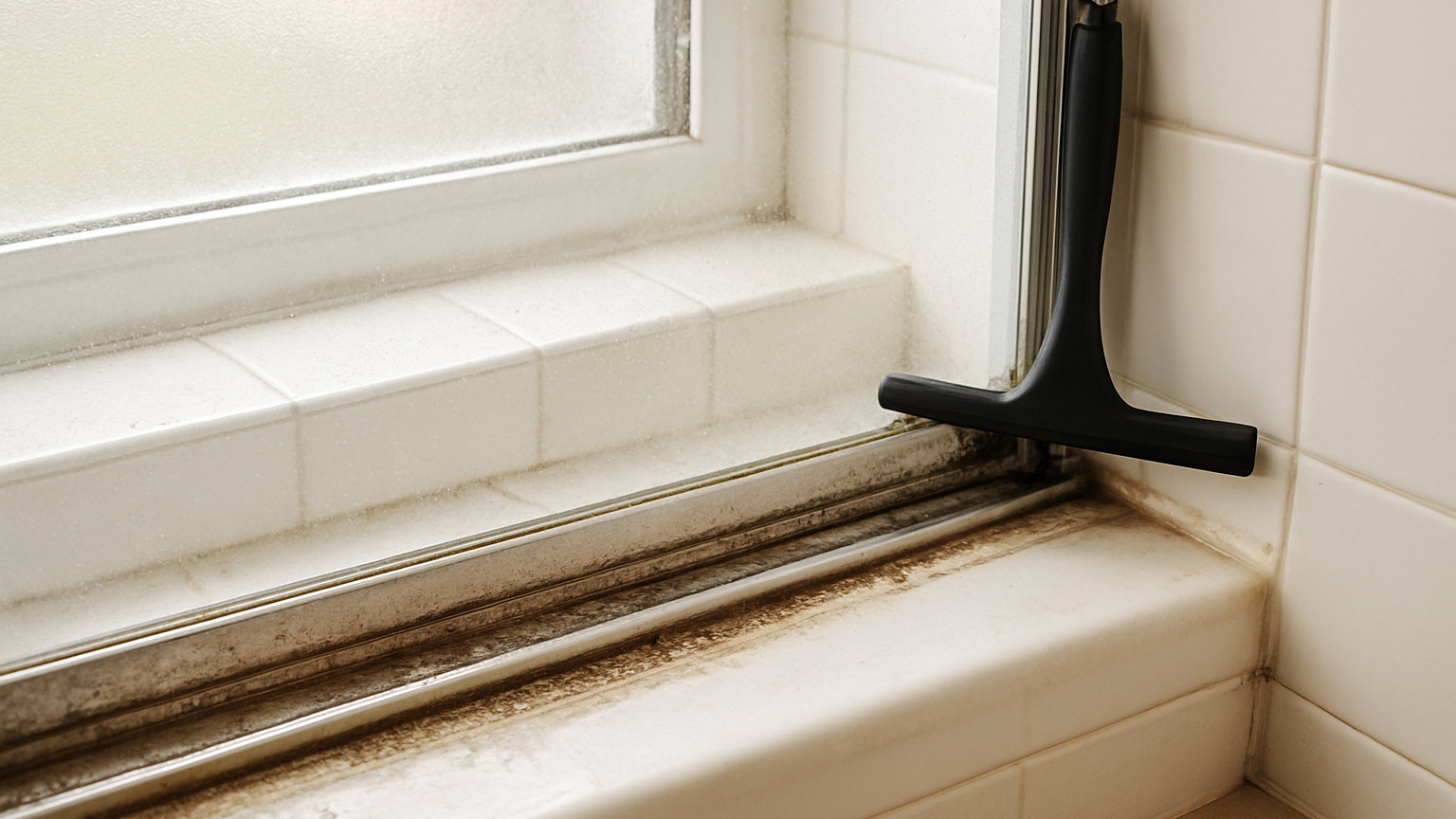
The bottom track of a sliding shower door is the least accessible part of a bathroom and the one that collects the most. Water sits in the channel after every shower, soap scum settles into it, limescale builds around the drainage slots, and the mixture eventually turns black. It is also where the rollers run, so a dirty track makes the door stiff as well as unpleasant.
Why does it get so bad?
Because it is designed to collect water and drain it slowly, and because nothing rinses it. Every shower deposits a little more scum, the drainage holes gradually block with scale, and once water stops draining the channel stays permanently wet. Permanently wet plus soap residue is the exact condition mould needs.
What is the method for cleaning it?
- Slide the doors to one end and work on the exposed half, then reverse.
- Pour hot water along the track to soften what is there, and let it sit for a minute.
- Fill the channel with white vinegar or a limescale remover, plug the ends with folded paper towel if it runs out, and leave it for twenty to thirty minutes.
- Work along the channel with an old toothbrush, then with a cloth wrapped around a thin blunt tool such as a lolly stick or a plastic knife to reach the corners.
- Clear the drainage holes with a cocktail stick or a piece of wire.
- Rinse with hot water and dry the channel with paper towel.
What if the doors can be lifted out?
Many sliding enclosures allow the doors to be lifted off, and doing so turns an awkward job into an easy one. Look for a retaining screw or a catch at the top rail. Lift the door slightly, swing the bottom out and lower it clear, and put it somewhere padded. With the doors out, the track can be cleaned in two minutes rather than twenty.
Take a photograph before you start, so the order of the rollers and any packing washers is recorded.
How do you deal with the rollers?
Rollers stiffen because scale builds in the bearings and because the track is dirty. Clean the wheels with a toothbrush and a little vinegar, rinse, dry, and add a small amount of silicone lubricant, not oil. Oil attracts dirt and turns into a black paste within weeks.
If a door still drags after cleaning, the rollers are usually adjustable by a screw at each end of the door, and worn rollers are a cheap replacement part.
What about the black residue that will not shift?
Black staining in the track is usually mould growing in the residue, and it lifts with a bleach based cleaner or a paste of bicarbonate of soda left for half an hour. If the black is in the silicone sealant rather than on it, cleaning will lighten it but not remove it, and replacing that short run of sealant is the only permanent answer.
Ventilate the room properly if you use anything bleach based in an enclosed shower space, and never mix it with an acidic limescale remover, which produces a dangerous gas.
How do you stop it coming back?
- Leave the doors open after showering so the track can dry rather than trapping moisture.
- Squeegee the track along with the glass, which takes an extra five seconds.
- Check the drainage holes monthly, since a blocked hole is what turns a damp channel into a standing puddle.
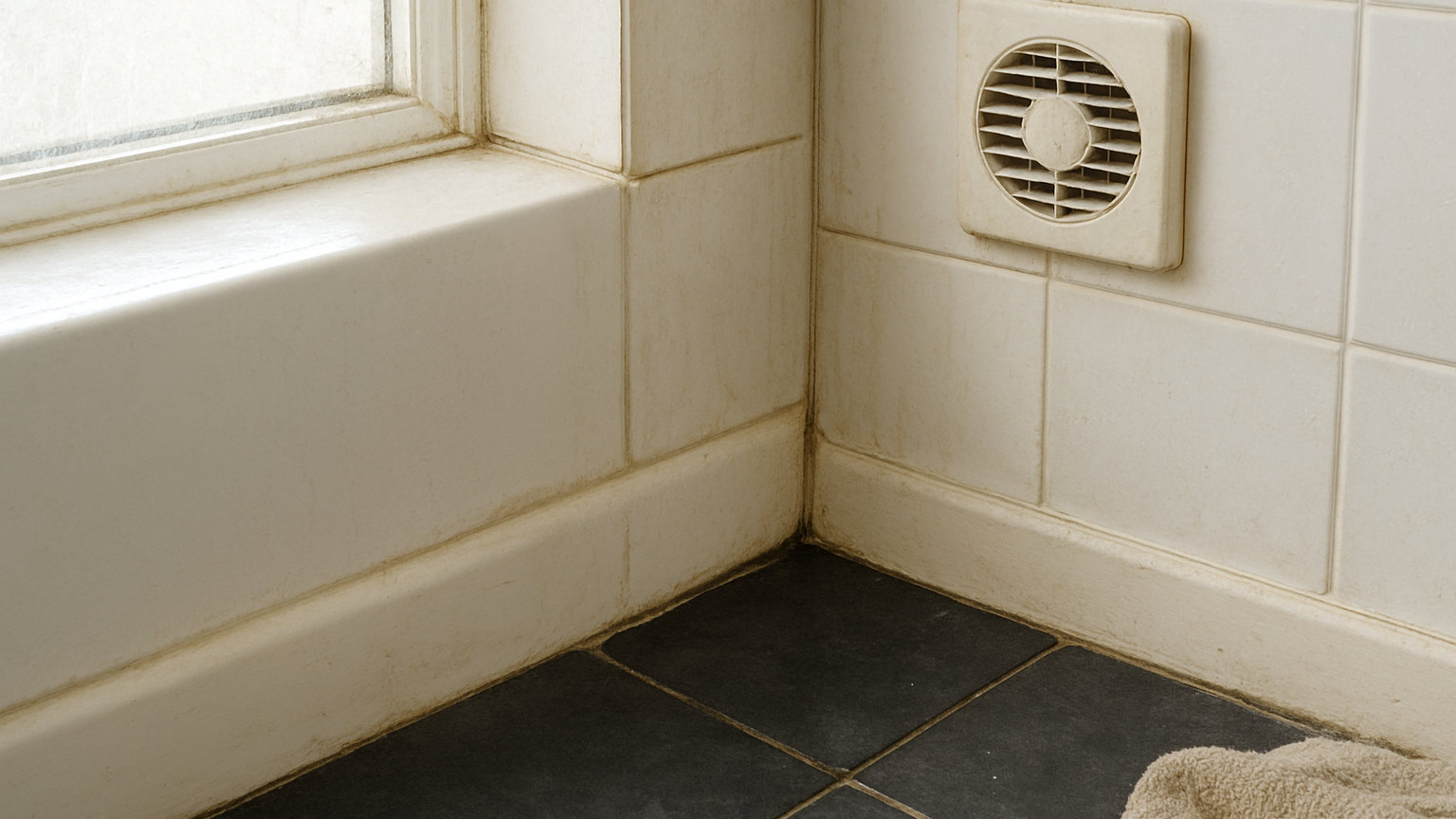
- Run the extractor for fifteen minutes after a shower, which dries the whole enclosure including the track.
- Use shower gel rather than bar soap, which produces far less scum for the channel to collect.
Is a track worth replacing?
If the channel is pitted, corroded or the drainage holes have been enlarged by scale removal attempts, water will keep sitting in it regardless of cleaning. Replacement tracks and rollers are available for most enclosures and cost far less than a new shower door, so it is worth identifying the manufacturer before assuming the whole enclosure needs replacing.