Large areas of glass are not simply bigger windows. The volume of water involved makes the drying stage the difficult part, the frames and tracks need as much attention as the panes, and a conservatory roof adds algae, leaf debris and access problems that ordinary windows never present.
What is the best approach to a large pane?
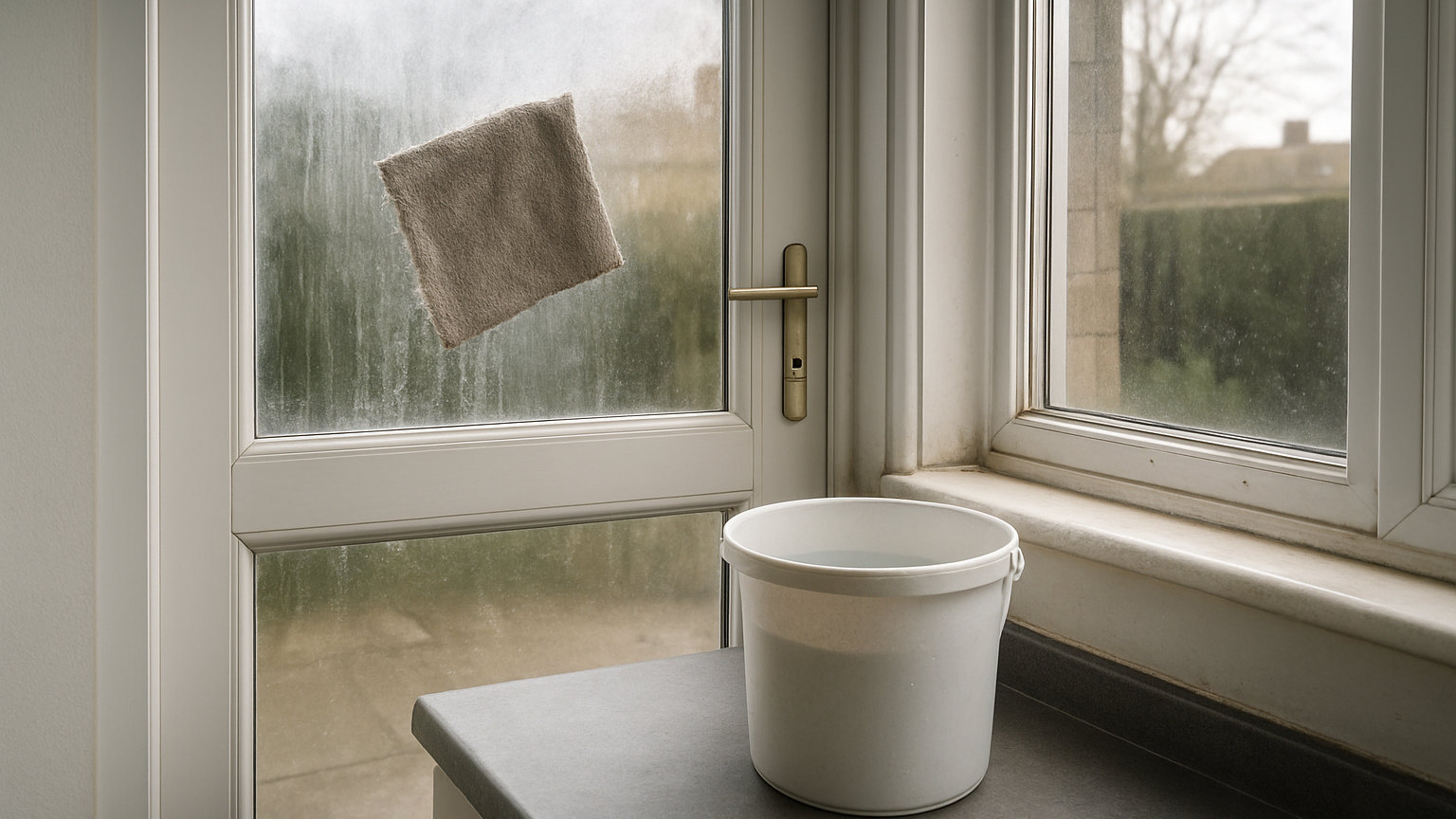
Work in sections and dry as you go. A full height patio door dried in one go will have streaked at the top before you reach the bottom, particularly in any sun or breeze.
An applicator loaded with water and one drop of detergent, followed immediately by a squeegee, is far more efficient than a spray bottle and a cloth, which on this scale is slow and gives a poorer result. A fanning squeegee technique pays off here more than anywhere else in a house.
What order should the work go in?
- Brush down the frames, the glazing bars and the roof structure dry, removing cobwebs and loose debris.
- Clear the gutters and the roof panels of leaves if it is a conservatory.
- Wash the roof panels first, working downwards.
- Wash the frames and glazing bars.
- Wash and squeegee the glass, one section at a time.
- Clean the tracks and the threshold last.
Top down is essential here. Everything washed above will run down over the glass below it.
How do you clean conservatory roof panels?
From the ground where possible, with an extension pole and a soft brush head. Never walk on a conservatory roof, whether glass or polycarbonate, under any circumstances. The panels will not take the weight and the consequences are severe.
Polycarbonate scratches easily, so use a soft brush and no abrasives. The channels inside twin wall polycarbonate can fill with algae and dust over years, which shows as green or grey streaking inside the panel and cannot be cleaned from outside. Once that happens the panel needs replacing.
What about the green growth on the frames?
Algae grows on north facing and shaded elevations, in the glazing bar channels and along the bottom of the frames where water sits. Warm soapy water and a soft brush removes most of it. For heavier growth, a proprietary algae remover or a dilute bleach solution works, though it must be kept off nearby planting and rinsed thoroughly.
Clearing the glazing bar drainage channels afterwards is worth doing, because blocked channels are what keep the frame wet and let the algae come back.
How do you deal with the tracks?
Vacuum first, then brush, then wipe. The bottom track of a patio or bifold door collects grit that wears the rollers, and the drainage holes at the outer edge block with debris, which lets water sit and eventually find its way inside.
Lubricate with a dry silicone spray afterwards, never oil, and check that the door still runs smoothly. A door that has become stiff usually needs the roller adjustment screws at each end rather than more lubricant.
What about the inside of a conservatory?
Heat and light make a conservatory dustier than an ordinary room, and the glass shows every bit of it. The interior of the roof is best done with a pole and a microfibre sleeve, with dust sheets thrown over the furniture first. Blinds fitted to a conservatory roof collect a great deal of dust and should be vacuumed with a brush attachment rather than wiped.
Ventilate while cleaning, since a closed conservatory in summer becomes uncomfortably hot very quickly.
How often is realistic?
Glass and frames three or four times a year, the roof twice, the gutters twice including a proper clear out in late autumn, and the tracks every three to six months. A conservatory under trees will need the roof and gutters doing considerably more often, and leaving them is what leads to overflowing gutters, staining down the frames and water eventually getting into the structure itself.