A living room that is shared with children will not stay tidy through more frequent tidying by adults. What makes the difference is storage a child can use without help, a smaller volume of toys in circulation, and a short reset at the same time every day. All three are structural changes rather than efforts of will.
What sort of storage actually works?
- Open baskets and low boxes rather than lidded containers with catches. Anything that needs two hands and a decision will not be used.
- Broad categories rather than precise ones. One box for building toys works; separate boxes for each set does not survive a week.
- Storage at child height, so tidying does not require an adult.
- Furniture that doubles as storage – an ottoman, a window seat, a coffee table with a deep shelf – which absorbs a lot without adding clutter.
- One basket that is simply for everything at the end of the day, which is far more realistic than sorting at bedtime.
How much of the problem is volume?
Most of it. A room with too many toys cannot be tidy, because there is nowhere for them all to go and no child can sort them. Reducing the number in circulation at any one time is the single most effective change.
Toy rotation works well: keep a third to half of the toys in a box elsewhere, and swap them over every few weeks. Children play with what is available more deeply when there is less of it, and the swapped-in box is treated as new.
What does the five minute reset look like?
Same time every day, ideally before a fixed event such as bath or a television programme, so it becomes part of the sequence rather than an interruption. Everyone in the room takes part. Music or a timer helps considerably, since a defined end point is what makes it tolerable.
Keep the standard low. Things in roughly the right container is a success. Sorting properly is an occasional job for an adult, not a nightly expectation.
How do you protect the furniture?
Washable covers, or a throw over the area that takes the most use, are worth more than any stain treatment. Deal with spills immediately rather than at the weekend, since almost every upholstery stain is easy in the first ten minutes and difficult afterwards.
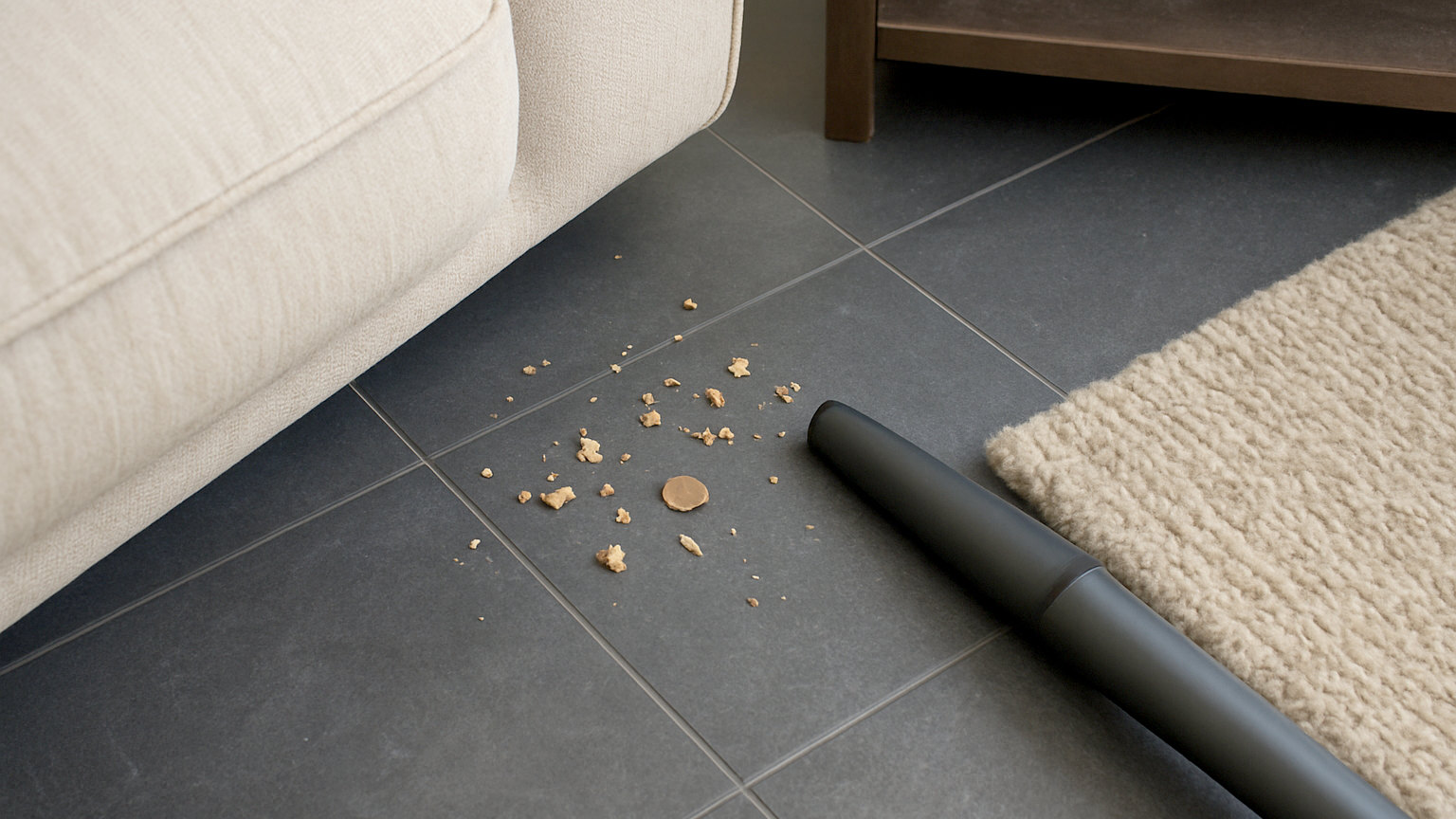
A rug that can be washed or replaced cheaply, in a colour that hides crumbs, saves a great deal of anxiety about the carpet underneath.
What about pens, paint and craft materials?
Keep them out of general circulation and bring them out for a session, then put them away. Washable and water based products only for anything used unsupervised. Permanent marker on a sofa is one of the few living room problems with no reliable domestic solution, and the easiest answer is to never let the two meet.
How do you get children to take part?
Make the job small, specific and visible. Put all the cars in the blue box works; tidy up does not. Doing it alongside them rather than supervising from a chair produces better results and less resistance, and praising the finished room rather than the effort of tidying is what builds the association.
Expect it to be genuinely useful only from around three or four, and expect regression whenever anything else changes.
Is it worth aiming for a tidy room at all?
During the day, not particularly. A living room in use by children is going to look used, and constant tidying during play is exhausting, pointless and faintly discouraging for everyone involved. The realistic aim is a room that returns to a clear state once a day, which keeps the mess from compounding, means the floor can actually be vacuumed at the weekend, and gives the adults the room back in the evening. That is a reasonable standard, and it is achievable in a way that a permanently tidy family living room is not.