Before anything else, find the cleaning code. It is on a label under a seat cushion, on the underside of the frame or on the back of the sofa, and it decides everything that follows. Cleaning a sofa with water when the label says otherwise is the most common way people ruin upholstery, and the resulting ring is usually permanent.
What do the cleaning codes mean?
- W – water based cleaners are safe. Most modern polyester and synthetic weaves.
- S – solvent only. Water will leave a ring or shrink the fibres. Common on linen, viscose and some cottons.
- WS – either water or solvent based products are acceptable.
- X – vacuuming and brushing only. No liquid of any kind at home.
If there is no label, treat the sofa as S and test any product on a hidden area, such as the back of the frame or the underside of a cushion, before going anywhere near the seat.
What does the routine clean involve?
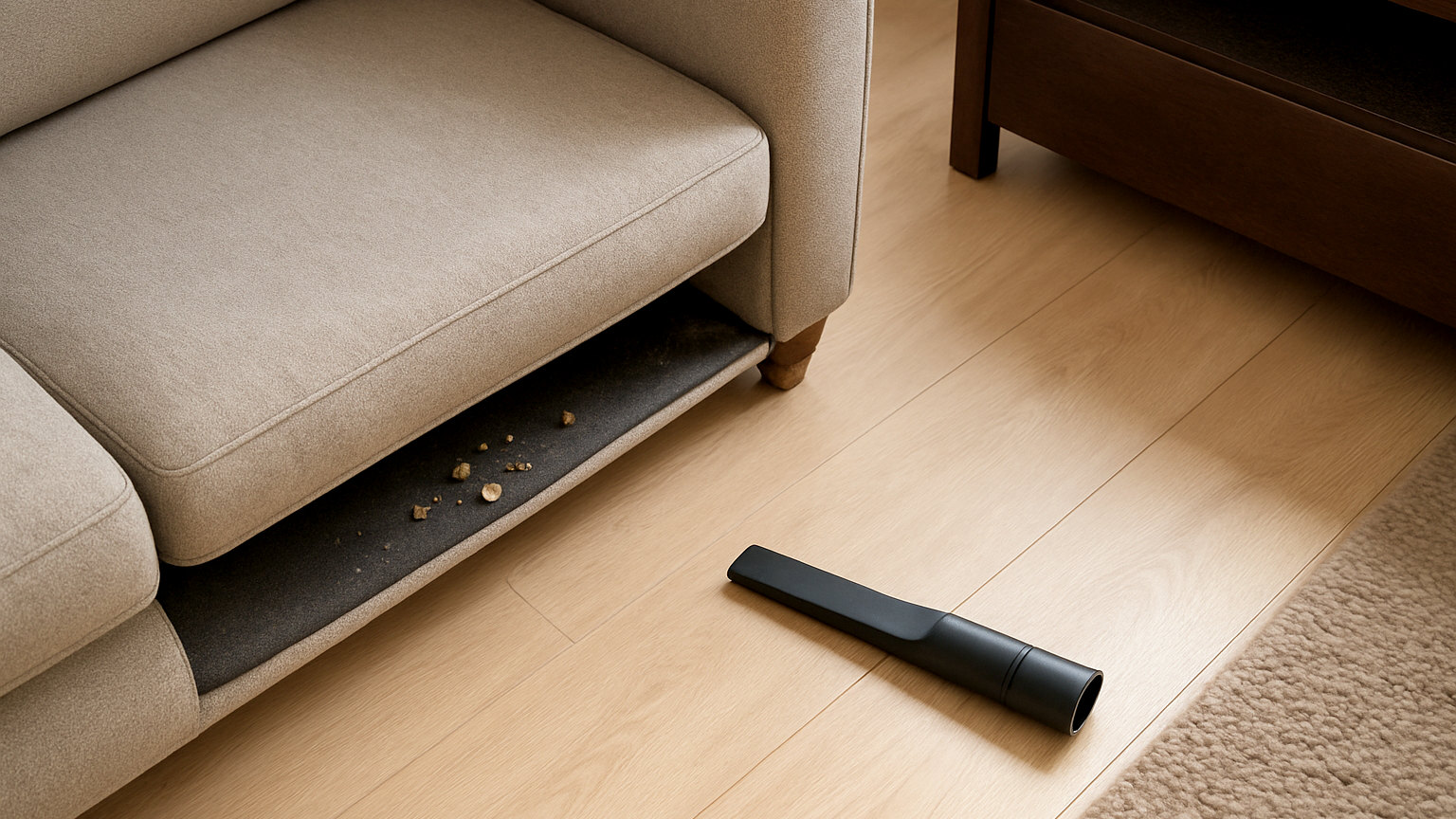
Vacuuming, which does the majority of the work and carries no risk at all. Take the cushions off, vacuum the seat deck and the frame, run a crevice tool along every seam and down the sides where objects and crumbs collect, then vacuum both faces of each cushion before putting them back.
Doing this weekly removes the grit that would otherwise work into the fibres and wear them from the inside, which is the main cause of a sofa looking tired long before the frame gives out.
How do you clean a W or WS sofa more deeply?
- Vacuum thoroughly first. Cleaning over loose dirt turns it into a stain.
- Mix a small amount of washing up liquid into warm water and whisk it to make a foam.
- Apply the foam only, not the water, using a cloth or a soft brush. The foam carries the cleaning action with very little moisture.
- Work in small sections, and always clean a whole cushion or panel rather than a patch, so there is no visible boundary.
- Wipe over with a cloth wrung out in clean water to lift the residue.
- Blot hard with a dry towel, then let it dry with a window open or a fan running.
Why does a water ring form?
Because water carries dissolved dirt outwards as it spreads, and when it evaporates it leaves that dirt concentrated at the edge of the damp area. On S coded fabrics, minerals in tap water make it worse. The way to avoid it is to use minimal moisture, work outwards to a natural seam or edge, and dry the area quickly rather than letting it wick.
If a ring has formed, lightly dampening the whole panel and drying it evenly sometimes blends it out, though on solvent-only fabric this often makes it worse.
How do you treat a fresh spill?
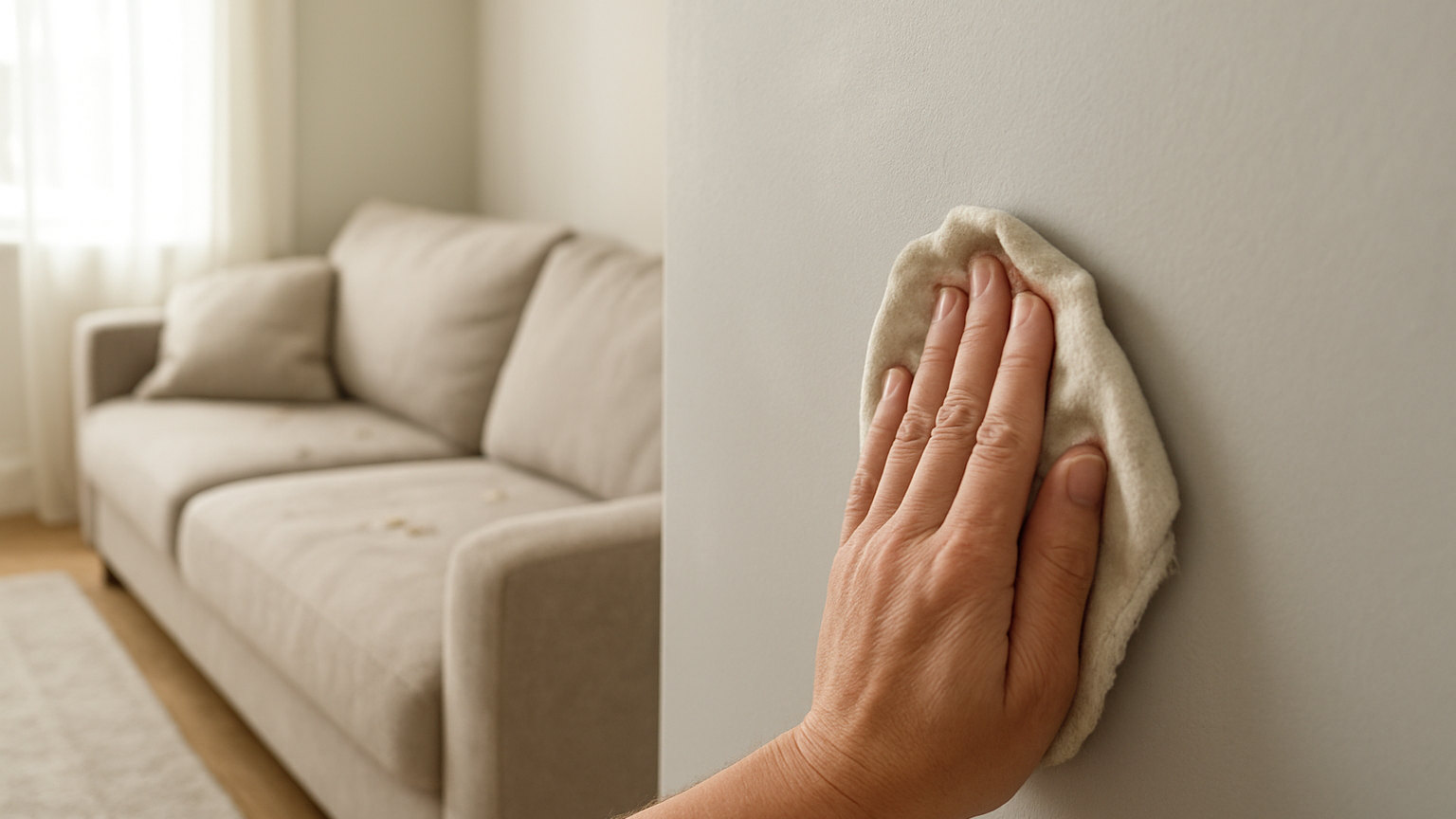
Blot immediately with a clean dry cloth, pressing rather than rubbing, and keep moving to a clean part of the cloth. Rubbing pushes the spill into the fibres and damages the pile. Work from the outside of the mark towards the middle.
Only once you have removed as much as possible should you consider a cleaner, and only one appropriate to the code.
Can you take the covers off and wash them?
Only if the label says so. Removable covers are not automatically washable, and many shrink enough at 30 degrees that they will not go back on. Where washing is permitted, wash cool, skip the tumble dryer, and put the covers back on while very slightly damp so they stretch to fit as they dry.
When is it worth calling someone in?
For an X coded sofa, for anything upholstered in velvet, silk or wool, for large set-in stains, and for a sofa that has never been cleaned in a decade. Professional upholstery cleaning uses extraction equipment that removes the water it puts in, which is the part that cannot be replicated with a cloth and a bowl.