Detergent removes bacteria from a surface. Disinfectant kills the ones that remain. For most kitchen surfaces most of the time, removal is what you actually want, and hot water with washing up liquid does it perfectly well. Disinfectant earns its place in a short list of specific situations rather than as a default for every wipe.
What is the difference in practice?
Detergent works mechanically. The molecules lift grease and food residue off the surface and hold them in the water so they can be carried away on the cloth and rinsed down the sink. Because bacteria live in and on that residue, removing it removes most of them.
Disinfectant works chemically, damaging bacteria where they sit. It does not remove anything. A disinfected surface can still be covered in dead bacteria, food residue and grease, which is why disinfecting without cleaning first is close to pointless: the organic matter both shields the bacteria and neutralises the active ingredient.
When is soap and water genuinely enough?
Almost always. Worktops that have held shopping, packets and dry goods; cupboard doors; the outside of appliances; the floor; the table; the hob. All of these need cleaning rather than sanitising, and detergent plus hot water plus a clean cloth handles them.
This is not a compromise position. Food safety guidance for domestic kitchens has consistently emphasised removal, sequence and handwashing over blanket disinfection, because that is where the real risk sits.
When does disinfecting genuinely matter?
- After raw meat, poultry, fish or eggs have touched a surface, board or utensil.
- On the taps, handles and switches touched while preparing raw food.
- When someone in the house has had a stomach illness, where surfaces, handles and the bathroom all need it.
- On a surface that will be used for ready to eat food immediately after being used for something raw.
- Baby feeding equipment, which has its own sterilising requirements.
How should disinfectant be used so it works?
- Clean the surface first with detergent and hot water, and remove all visible residue.
- Apply the disinfectant according to the dilution on the label, spraying the surface rather than the cloth.
- Leave it for the contact time stated on the label. This is usually thirty seconds to five minutes and it is the step most often skipped.
- Wipe with a clean cloth or leave to air dry, depending on the product.
- Rinse afterwards on any surface that will touch food directly, unless the label says it is food safe.
A single spray wiped off after three seconds has, in practical terms, done nothing except wet the surface.
What about antibacterial washing up liquid and sprays?
Antibacterial washing up liquid makes little difference in a sink, because the contact time is short and the dilution is high. Its value is largely in reassurance. Antibacterial multi surface sprays are effective when used properly, but the way they are typically used – sprayed onto a dirty surface and wiped immediately with a used cloth – delivers neither cleaning nor disinfection.
Is there a downside to overusing it?
Several small ones that add up. Residue builds on surfaces and can dull finishes, particularly on wood, stone and matt paint. Cost is significant compared with washing up liquid. Some products should not touch food preparation surfaces without rinsing. And relying on a spray tends to displace the habits that matter more: a clean cloth, hot water, handwashing and keeping raw and cooked food apart.
Which matters more, the product or the cloth?
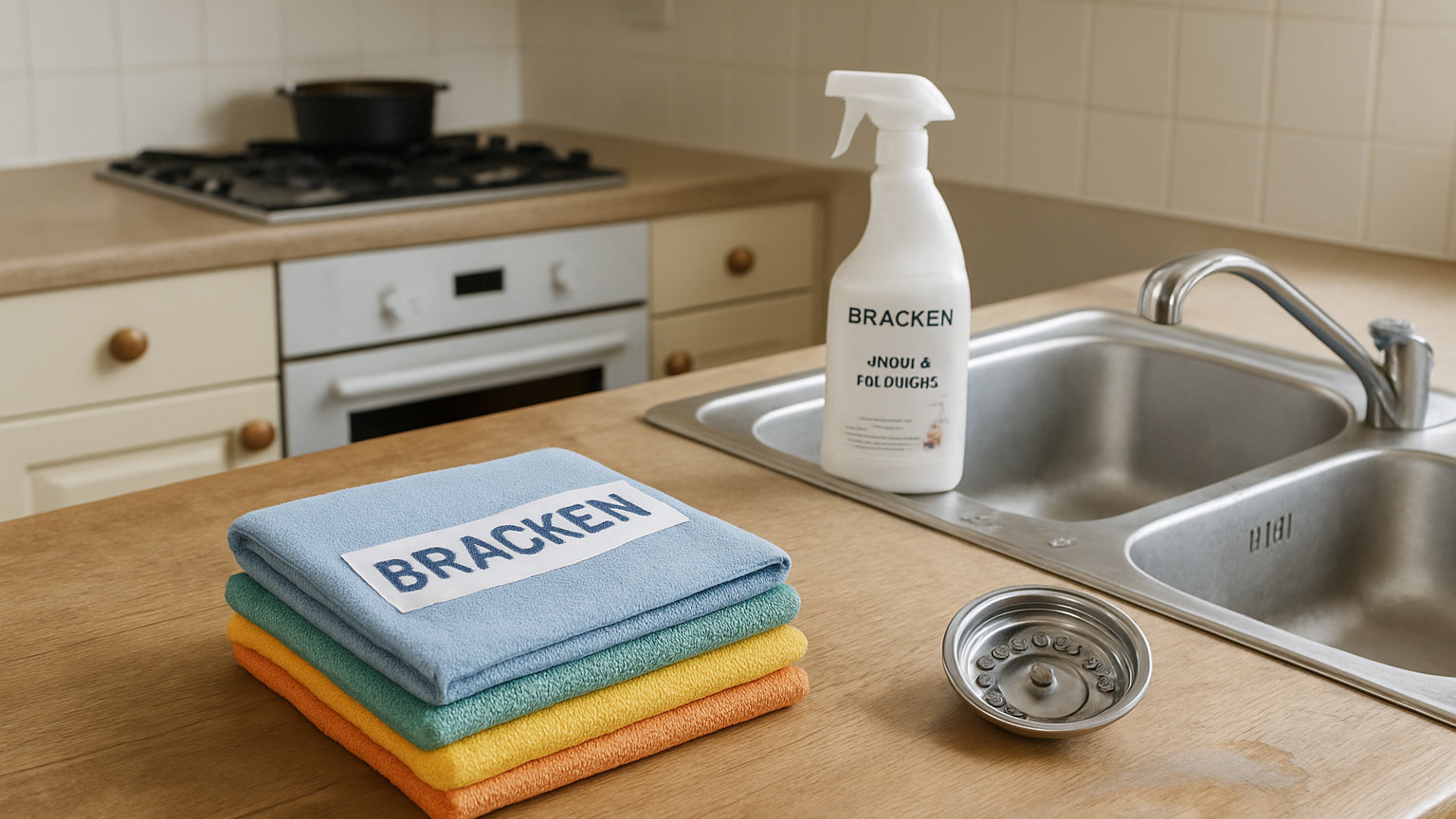
The cloth, comfortably. Wiping a surface with an excellent disinfectant using a cloth that has been damp in the sink for two days will leave that surface dirtier than wiping it with plain hot soapy water and a fresh cloth. If you change only one thing in a kitchen, change the cloth daily and wash them at 60 degrees or above. Buying a stack of cheap cloths and treating them as consumables does more for kitchen hygiene than any upgrade in spray. The choice of product is a secondary question.