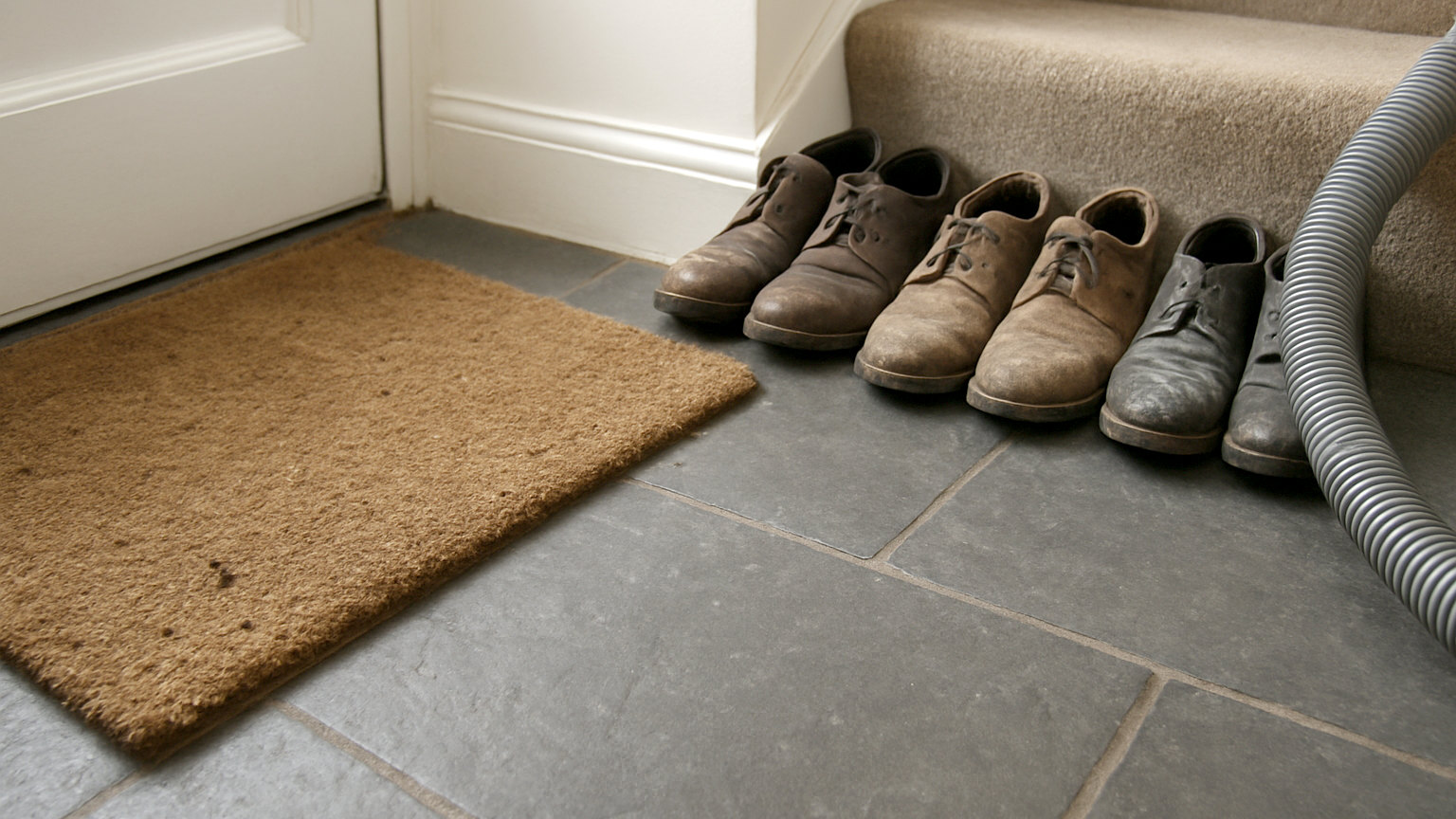
A large proportion of the dirt in a house arrives on the soles of shoes, and almost all of it enters through one doorway. Intercepting it at that point reduces the cleaning burden in every other room, which makes the entrance the highest return area in the house for effort spent.
How much difference does matting really make?
A great deal, provided there is enough of it. Studies of commercial buildings have long shown that most of the soil carried in on footwear is deposited within the first few steps, and that matting long enough for several footfalls captures the overwhelming majority of it. A small mat that takes one step catches a fraction of what a longer run does.
The practical version at home is a mat outside the door and a second one inside, giving three or four footfalls before anyone reaches the floor covering.
What does an effective entrance look like?
- A scraper mat outside, with a coarse rubber or bristle surface that removes heavy soil and grit.
- An absorbent mat inside, long enough for at least two steps, to take moisture and fine particles.
- A boot tray or a hard surface for wet or muddy footwear to be removed onto.
- Somewhere to sit, which is what actually makes a shoes off rule workable.
- Hooks and a rail for wet coats, away from the wall so they can dry.
Is a shoes off rule worth it?
It is the single most effective measure, and it removes not just soil but the grit that cuts carpet fibres and the residues picked up from pavements and roads. Households that adopt it usually report a noticeable drop in how often floors need cleaning.
The barriers are social rather than practical. It works best when there is an obvious place to sit, an obvious place for shoes to go, and slippers or socks available for visitors. Without those, the rule quietly lapses.
How should the mats be looked after?
A mat that is full stops working. Shake or vacuum the indoor mat twice a week, more in winter, and wash it according to the label every month or two. Lift and brush the outdoor mat regularly, and sweep the step underneath, since grit collects there and gets kicked back onto the mat.
Let a wet mat dry properly rather than leaving it saturated, which is both ineffective and a source of smell.
What about winter specifically?
Mud, wet leaves and road salt all arrive in far greater volumes, and salt is the most damaging of the three. It leaves white crystalline marks on carpet and can corrode the finish on hard floors if it is left. A boot tray inside the door, a second mat, and vacuuming the entrance daily rather than weekly all help.
Wet coats hung directly against a wall are a common cause of damp patches in a hallway, so a rail with space behind it is worth more than a row of hooks on the plaster.
Do pets need their own arrangement?
A towel kept by the door and a habit of wiping paws before the dog gets past the mat deals with most of it. A shallow tray of water for muddy paws works in a porch or a utility room. For heavy mud, it is far easier to intercept the animal at the door than to clean a hallway afterwards.
What if the front door opens straight into a living room?
The same principles apply in a smaller space, and matter more rather than less, since there is no hallway to absorb the dirt before it reaches the carpet. Use the longest mat that fits, add an outdoor scraper mat, and define a specific spot for shoes so they do not migrate across the floor. Where there is no room for a boot tray, a folded towel by the door during wet weather is a reasonable substitute and takes almost no space.