Wooden and painted staircases are cleaned with very little water and a great deal of attention to grit. Grit is what scratches a finish, and every scratch then holds dirt and catches more grit. Water is what lifts paint and raises grain at the joints. Get the dry stage right and the wet stage becomes almost trivial.
What is the correct sequence?
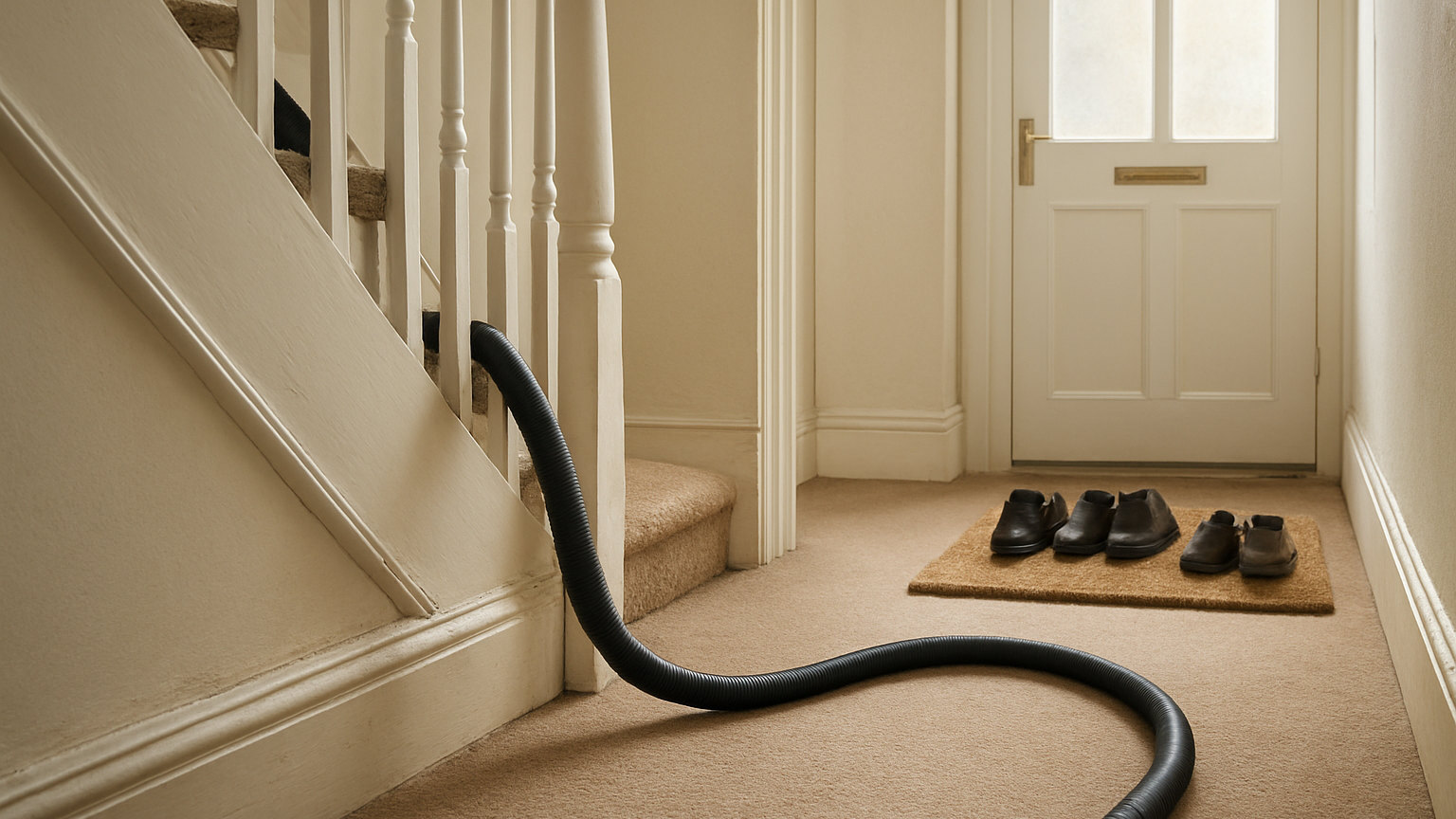
- Vacuum every tread, riser and corner with a soft brush attachment, top to bottom. Pay attention to the junction between tread and riser and to the edges beside the spindles.
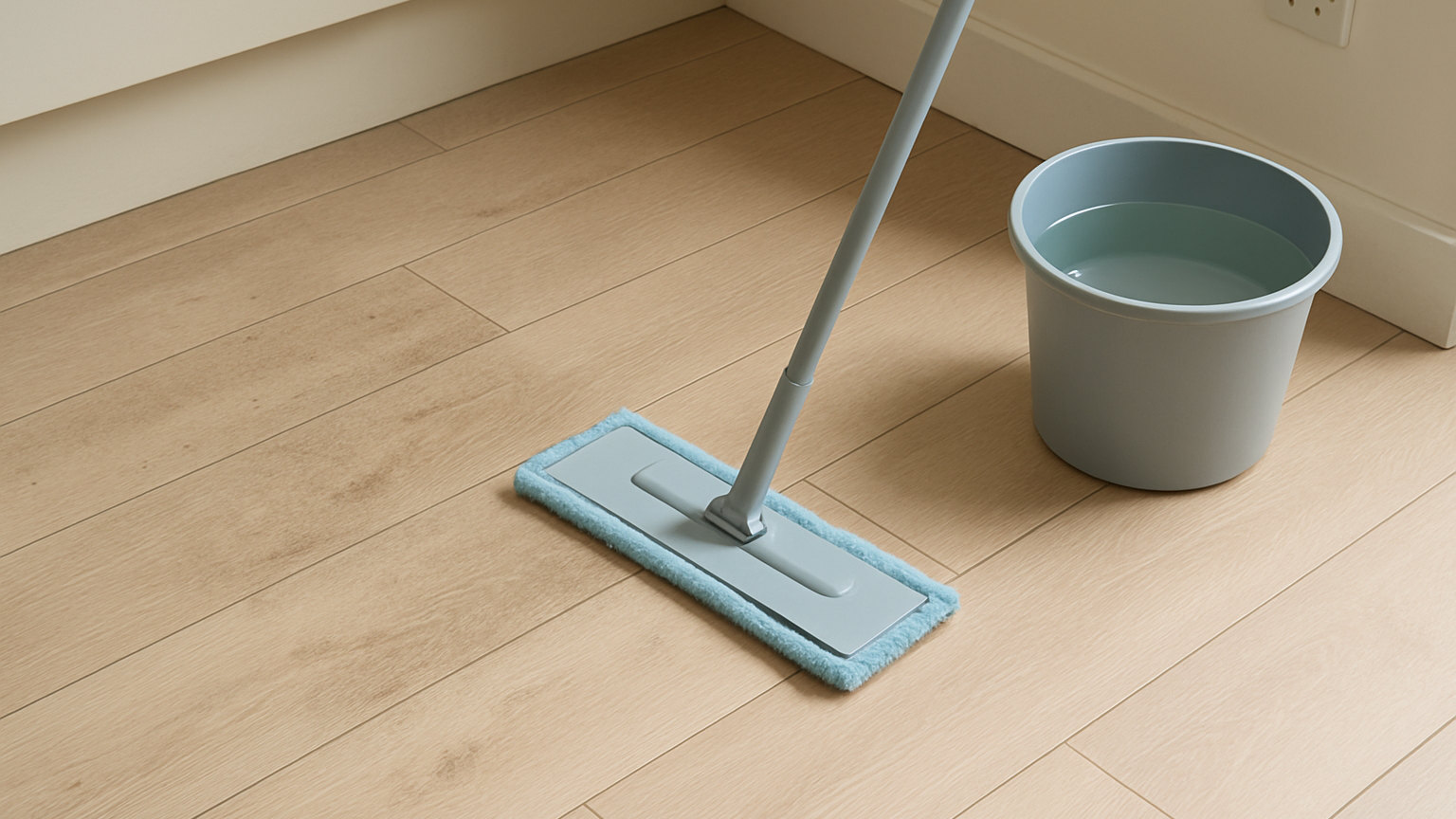
- Wipe with a barely damp microfibre cloth or flat mop pad. It should feel damp, not wet, and leave no visible film of water.
- Dry immediately with a second cloth if there is any moisture left on the surface.
- Work top to bottom so you are not walking on a damp tread.
The vacuum stage is not optional. Wiping over grit drags it across the finish and puts fine scratches into it, which is the main cause of a staircase looking dull after a few years.
How much moisture is safe?
Very little. On sealed or varnished timber, a damp cloth is fine provided the surface is dried straight away. On oiled or waxed wood, use even less and top up the oil or wax rather than washing repeatedly. On painted stairs, moisture that sits in a joint or along an edge will lift the paint film from below.
Never use a steam cleaner on a staircase. Steam forces moisture into the joints between tread, riser and stringer, and on painted stairs it will blister the paint.
What should you clean with?
For sealed timber, a dedicated wood floor cleaner at the correct dilution, or plain warm water if the finish is in good condition. For painted stairs, warm water with a drop of washing up liquid. Avoid general purpose sprays, which leave a residue that builds up and makes stairs slippery, and avoid anything with ammonia or bleach on wood.
Do not use furniture polish or any product containing silicone or oil on a staircase, for the same reason: it makes the treads dangerously slick.
Why are the stairs slippery?
Usually because of product residue rather than the finish itself. A build up from sprays, polishes or too much floor cleaner leaves a slick film. Stripping it back with plain hot water, changing the water frequently, usually solves it.
Where the finish itself is the problem, the answers are practical: a runner with stair rods, non-slip tread strips, or a matt rather than gloss varnish when the stairs are next refinished. Bare varnished timber in socks is genuinely hazardous and worth taking seriously in a household with children or elderly relatives.
How do you deal with worn nosings?
The front edge of each tread takes the most wear, and on a painted staircase the paint there will go first. Touching up the nosings annually with the same paint, rather than repainting the whole staircase, keeps it looking maintained for years.
On varnished timber, worn nosings can be lightly sanded and recoated individually, though matching an aged finish is difficult and doing the whole flight often looks better.
What about the risers and the stringer?
Risers collect scuffs from shoe toes and are usually painted even where the treads are bare. They take a damp cloth well and benefit from the same touch up approach as the nosings.
The stringer alongside the treads collects dust along its top edge and scuffs from vacuum heads and shoes. Wipe it while you work down the stairs rather than as a separate job.
How often does a wooden staircase need doing?
Vacuum weekly, damp wipe every two to four weeks, and check the finish annually. A bare timber staircase in a hallway that gets a lot of outdoor grit may need vacuuming twice a week, which is far less effort than refinishing it early.