The mop makes more difference than the cleaning product. The main variables are how much water it puts on the floor and how well it holds onto what it picks up, and those two things account for most of the difference between a floor that dries clean and one that dries streaky.
What are the main types?
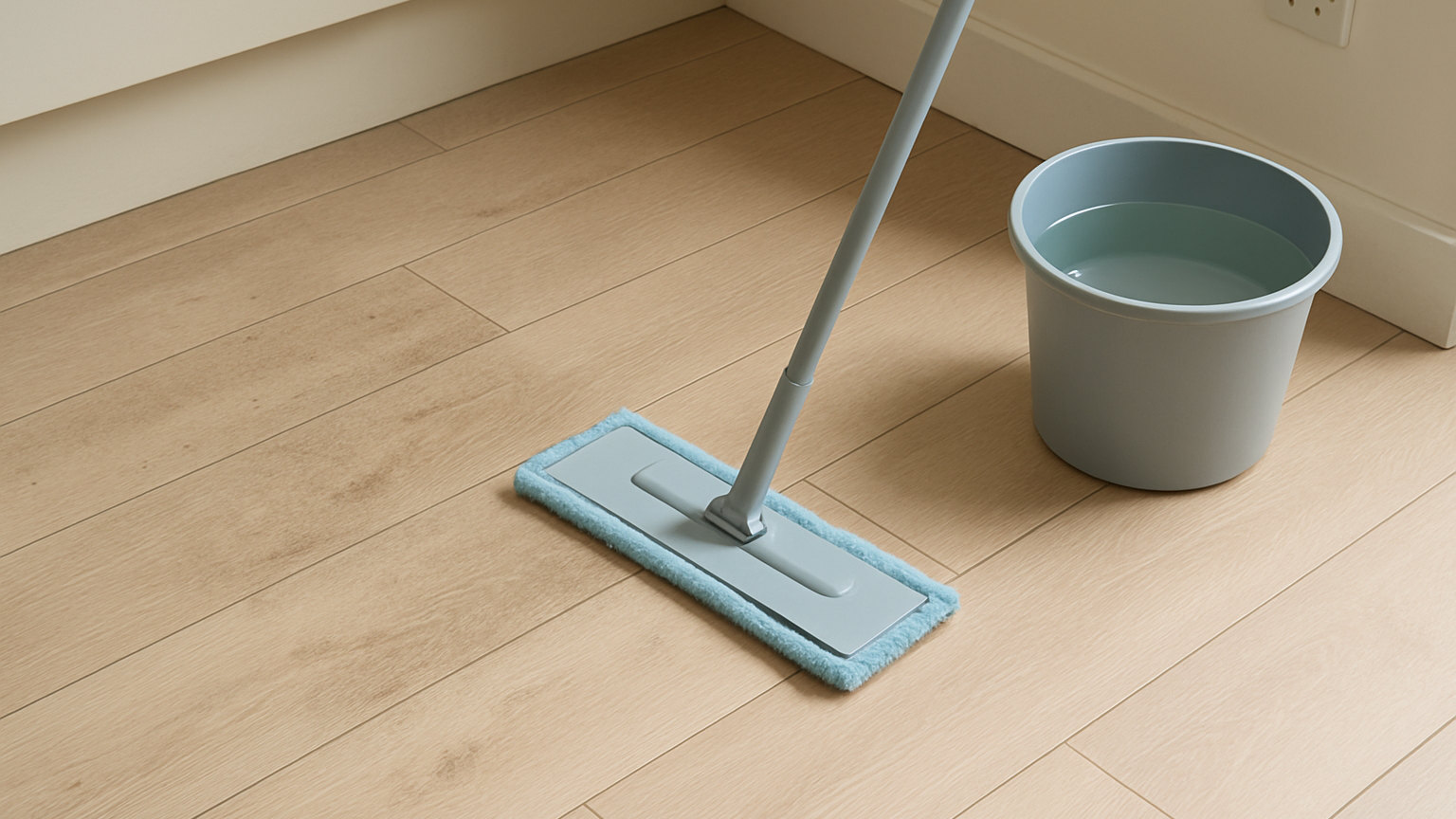
- Flat microfibre mop – a rectangular head with a washable pad. Applies little water, picks up well, gets under furniture, and the pad can be changed halfway through a large floor.
- String or strip mop – traditional, holds a lot of water, good for large hard floors with drains but poor for domestic use on anything moisture sensitive.
- Sponge mop – a foam head with a squeezing mechanism. Good at absorbing spills, less good at dislodging dirt, and the sponge degrades quickly.
- Spray mop – a flat mop with an integral bottle and trigger. Applies a controlled mist, which suits laminate and wood very well.
- Spin mop – a round microfibre head with a spinning wringer. A reasonable compromise, though bulky to store.
- Steam mop – uses heat rather than detergent, and is not suitable for every floor.
Which is best for each floor type?
Laminate and engineered wood: a spray mop or a flat microfibre mop, both of which control moisture precisely. Solid wood: the same, with a wood floor cleaner. Vinyl and LVT: almost anything works, and a flat mop is still the most efficient. Tile with wide grout lines: a string or spin mop gets into the grout better than a flat pad. Natural stone: a flat microfibre mop with a pH neutral cleaner.
For a large open plan kitchen or a utility room with a drain, a string mop still has its place.
Why do flat microfibre mops perform so well?
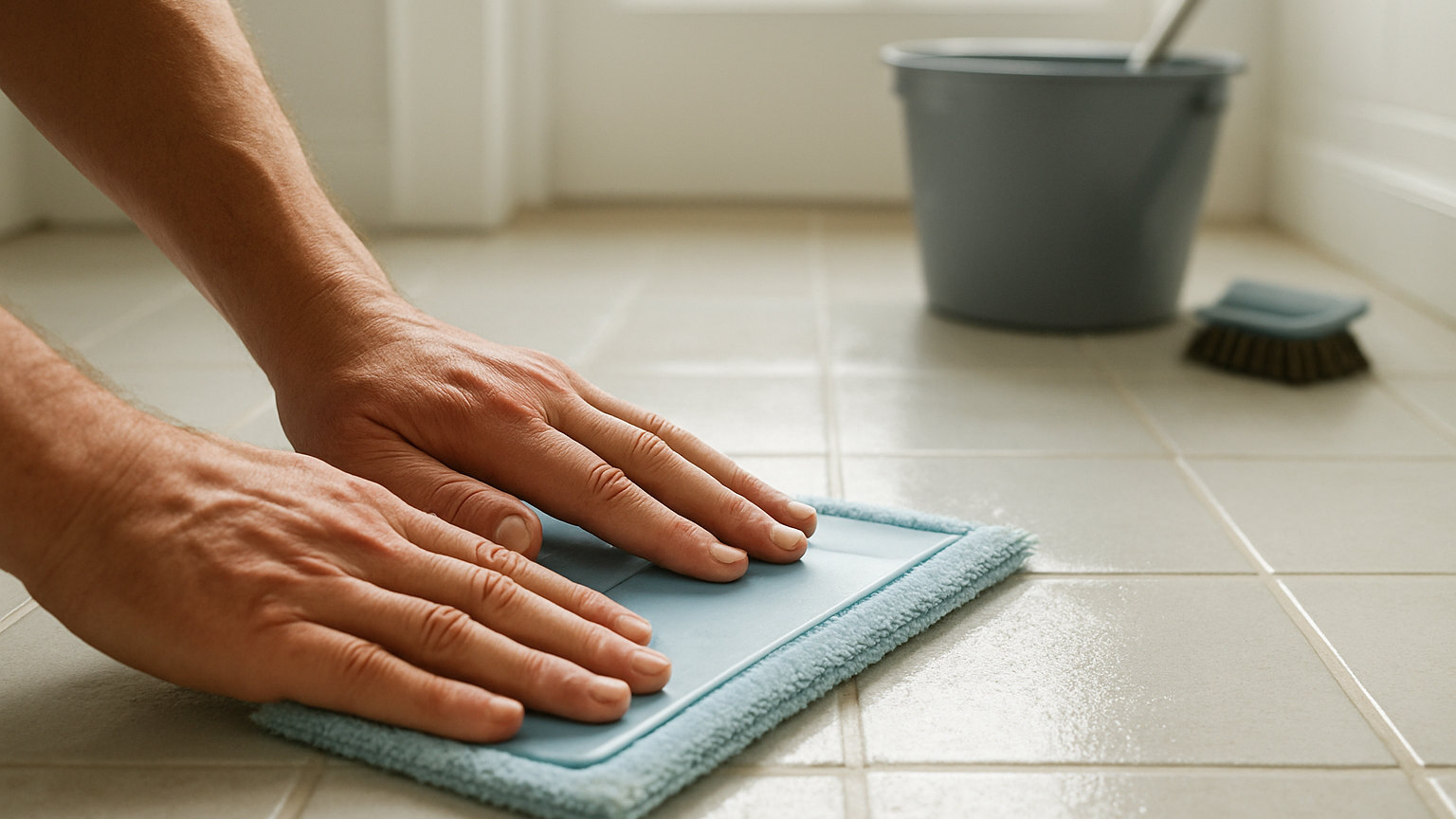
Because microfibre has an enormous surface area and a fibre structure that traps particles rather than pushing them along. It also releases water slowly, so the floor gets damp rather than wet. Combined with a swivel head that reaches under kickboards and furniture, that makes it the most practical choice for most homes.
The one requirement is washing the pads properly: hot wash, full detergent, no fabric conditioner. Conditioner coats the fibres and ruins their performance permanently.
Are steam mops a good idea?
On sealed tile and some vinyl, yes, and they clean very effectively with no chemicals at all. On laminate, engineered wood and solid wood, no. Steam drives moisture into the joints and beneath the surface layer, and it is a well known cause of swollen edges, lifted laminate and cloudy patches in a lacquer.
Many laminate manufacturers explicitly void warranties where a steam mop has been used. Check before buying one if that is the floor you intend to use it on.
What about a two bucket setup?
It is the single biggest improvement available to anyone using a traditional mop. One bucket holds the cleaning solution, the other holds plain water. Rinse the dirty mop in the plain water, wring it, then load it from the solution. The cleaning water stays clean for far longer and the floor gets noticeably better.
Flat mops achieve something similar by having several pads and swapping them as they load up.
What should you avoid?
Anything that cannot be washed, since an unwashable mop head simply redistributes the last job. Sponge mops with a fixed head that cannot be replaced. And a single mop used for the bathroom, the kitchen and the hallway without being washed between rooms, which moves bathroom floor bacteria onto the kitchen floor.
Two mop heads, colour coded, cost very little and solve that problem entirely.
How many pads or heads should you own?
More than one, and preferably four or five for a flat mop. The reason is the same as for cloths: a pad that has already collected the dirt from one room is not cleaning the next one, it is redistributing. Swapping to a fresh pad partway through a floor makes a visible difference, and washing five at once is no more effort than washing one.