Mopping goes wrong in three predictable ways: too much water, too much cleaning product, and water that stopped being clean long before the job was finished. Fix those three and most floors look better with less effort, and a great many sticky floor complaints disappear entirely.
What has to happen before the mop comes out?
Vacuuming or sweeping, thoroughly. Mopping over grit turns it into a gritty paste that gets dragged across the floor, scratching the finish and leaving streaks. It also loads the mop head immediately, so the rest of the floor is cleaned with a dirty mop.
Move what can be moved, including bins, chairs and anything on the floor, rather than mopping around it.
How much cleaner should you use?
The dose on the label, and no more. Doubling it does not clean twice as well; it leaves a film that dries tacky, attracts dirt and makes the floor progressively worse with each clean. For most hard floors, a capful in a bucket is genuinely enough, and on many floors hot water alone works perfectly well.
If a floor already feels sticky, mop it several times with plain hot water, changing the water each time, before going back to any product.
How wet should the mop be?
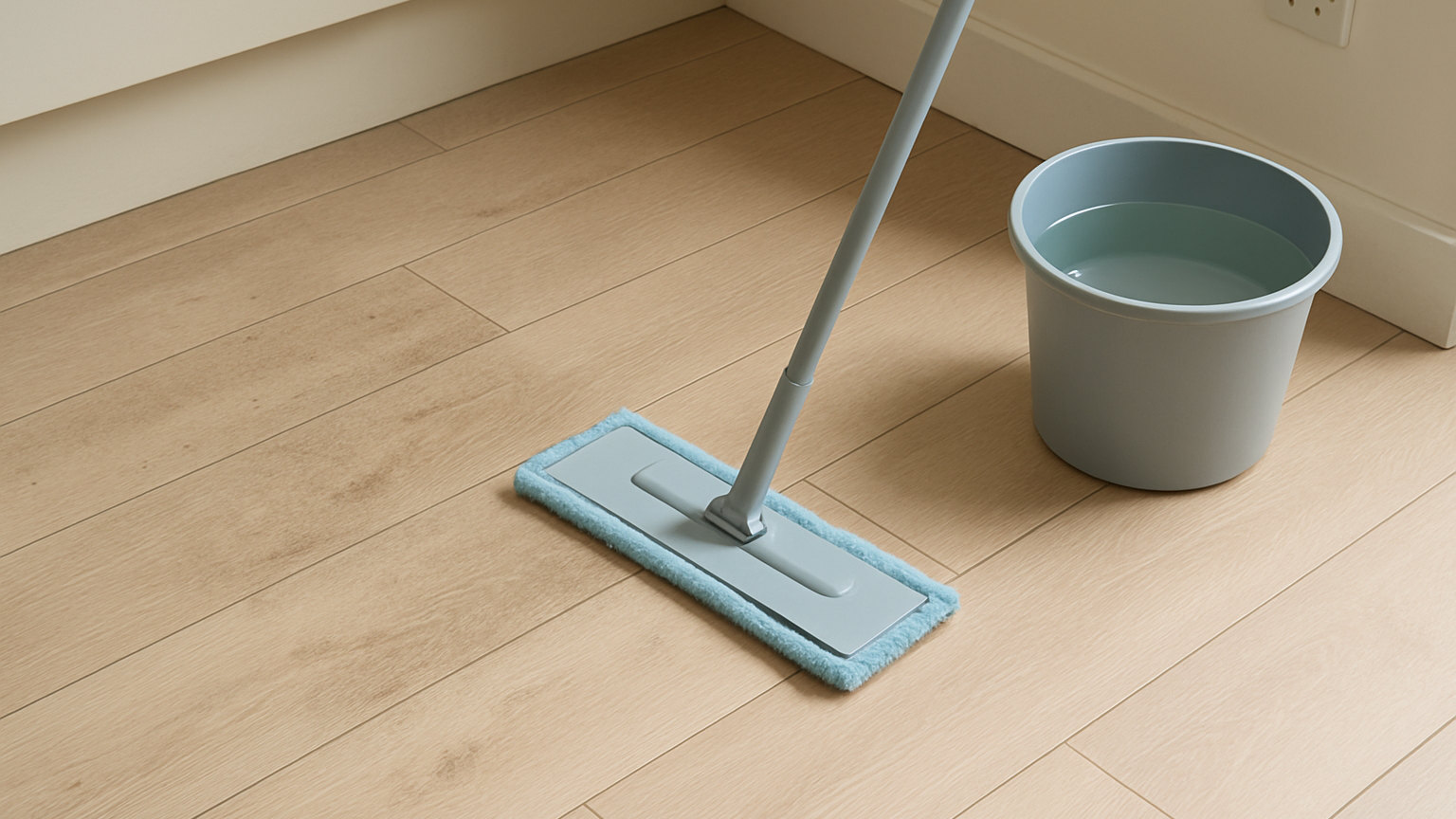
Damp rather than wet. Wring it out until it no longer drips, and on laminate or wood until it feels barely moist. The floor should dry within a couple of minutes. Visible standing water is always too much, and on laminate it is how swollen joints and lifted edges happen.
A floor that takes ten minutes to dry has had far too much water on it, and the slow evaporation is what leaves streaks.
Why does the water need changing so often?
Because after a few square metres it is a dilute solution of everything you have just removed. Mopping with it applies a thin layer of that solution to the rest of the floor. In a kitchen it will be grey within one room.
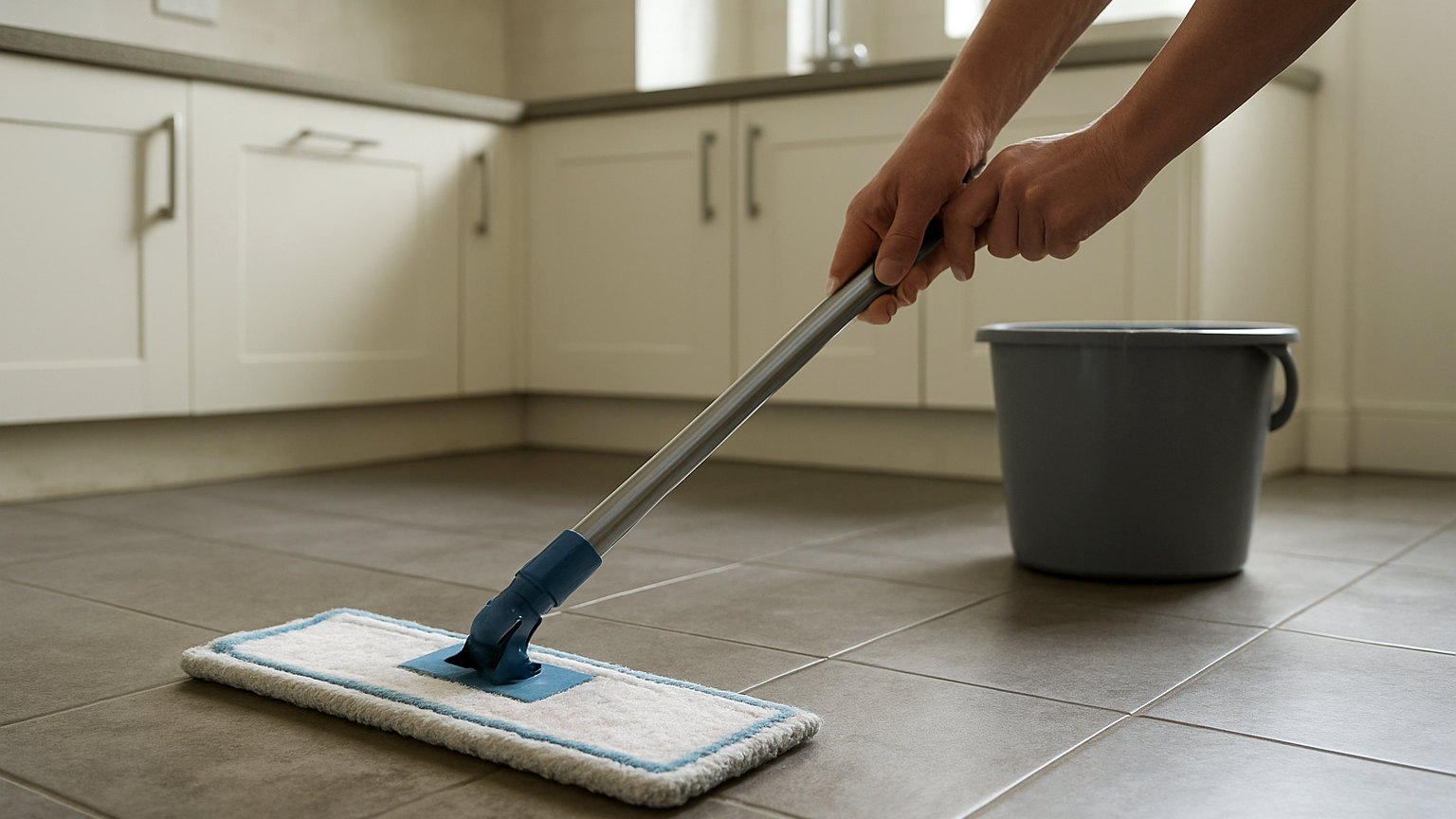
Change the water when it stops looking clear, which is usually two or three times for a whole ground floor. A two bucket system – one with the cleaning solution, one with plain water for rinsing the mop – keeps the solution clean for far longer and is the single biggest improvement most people can make.
What is the right sequence?
- Vacuum or sweep the whole area first.
- Start at the point furthest from the door and work backwards towards it.
- Mop in overlapping figure of eight strokes rather than straight back and forth, which just pushes dirt along.
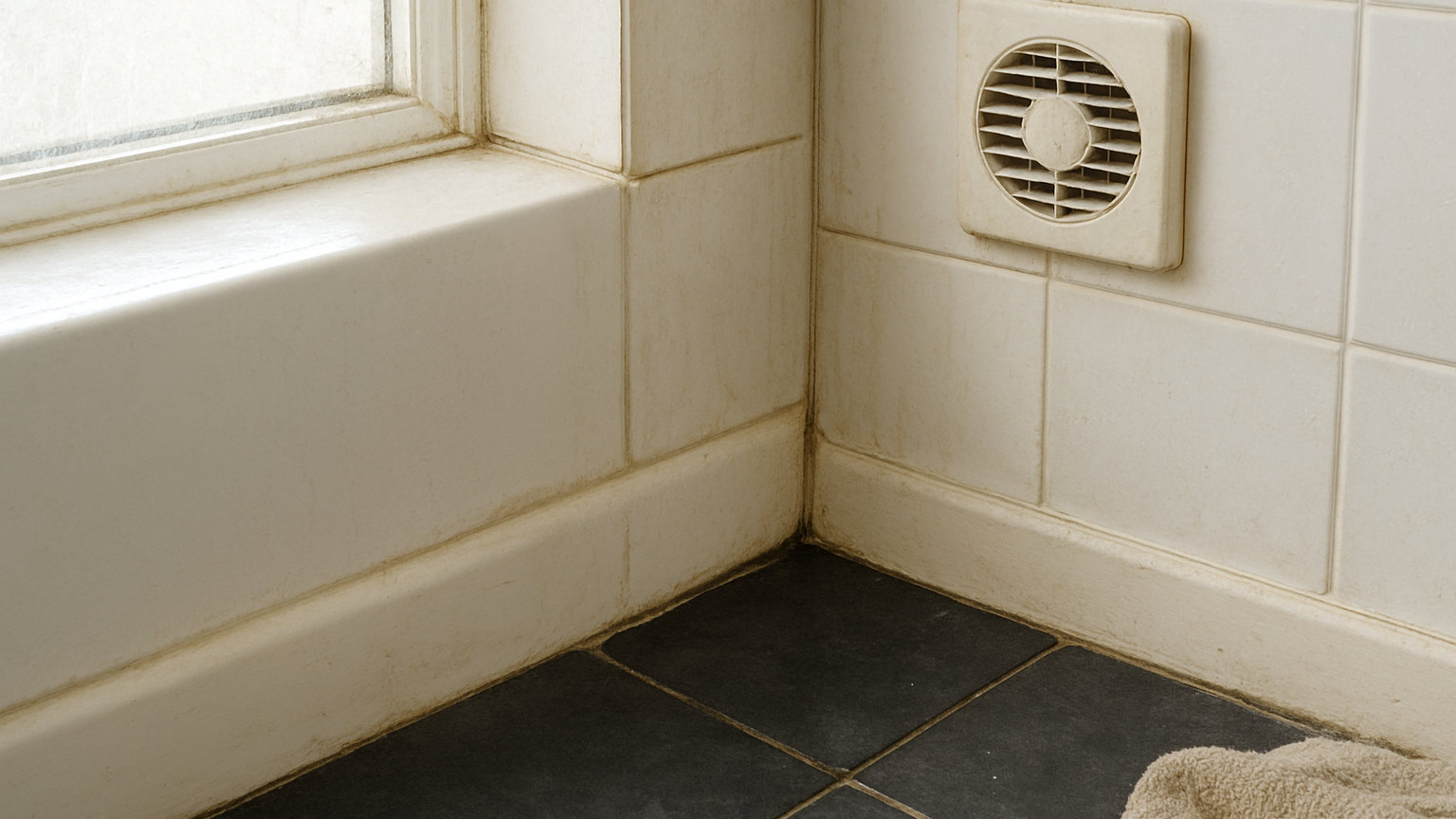
- Do the edges and corners with the mop turned on its side, or with a cloth.
- Rinse and wring the mop frequently, and change the water when it clouds.
- Finish with a plain water pass in a kitchen, where grease and detergent residue are worst.
Does the floor need drying?
On laminate, engineered wood and solid wood, yes, if any moisture remains. On vinyl, tile and stone it is optional but improves the finish, since drying prevents the mineral marks left by evaporating hard water. Opening a window or running an extractor speeds it considerably.
Keep people and pets off until it is dry, both for safety and because footprints on a damp floor are what create the patchy look that gets blamed on the product.
How should the mop itself be looked after?
Wash the head after every use and let it dry fully. A mop head put away damp develops a smell that transfers straight onto the next floor it touches. Microfibre flat mop pads go in the washing machine at 60 degrees with no fabric conditioner, which would coat the fibres and destroy their ability to pick anything up.
Replace a string mop head every few months and a microfibre pad once it stops gripping and starts pushing water around instead of absorbing it. Both are cheap, and both work considerably better when new than most people realise.