Tidying and cleaning are different jobs. Tidying is putting things where they belong; cleaning is removing dirt. Trying to do both at once is the main reason a quick tidy turns into an afternoon, because every object picked up becomes a decision, and every decision stops the work.
What is the ten minute sequence?
- Open the window and pull the bedding back. The room airs while you work.
- Take out what does not live here. Mugs, plates, glasses, post, other people belongings. One trip, one armful.
- Deal with the clothes. Three piles only: wash, put away, wear again. Handle each item once.
- Clear the flat surfaces. Bedside table, chest of drawers, windowsill, floor.
- Make the bed. This is last for airing reasons and first for visual impact.
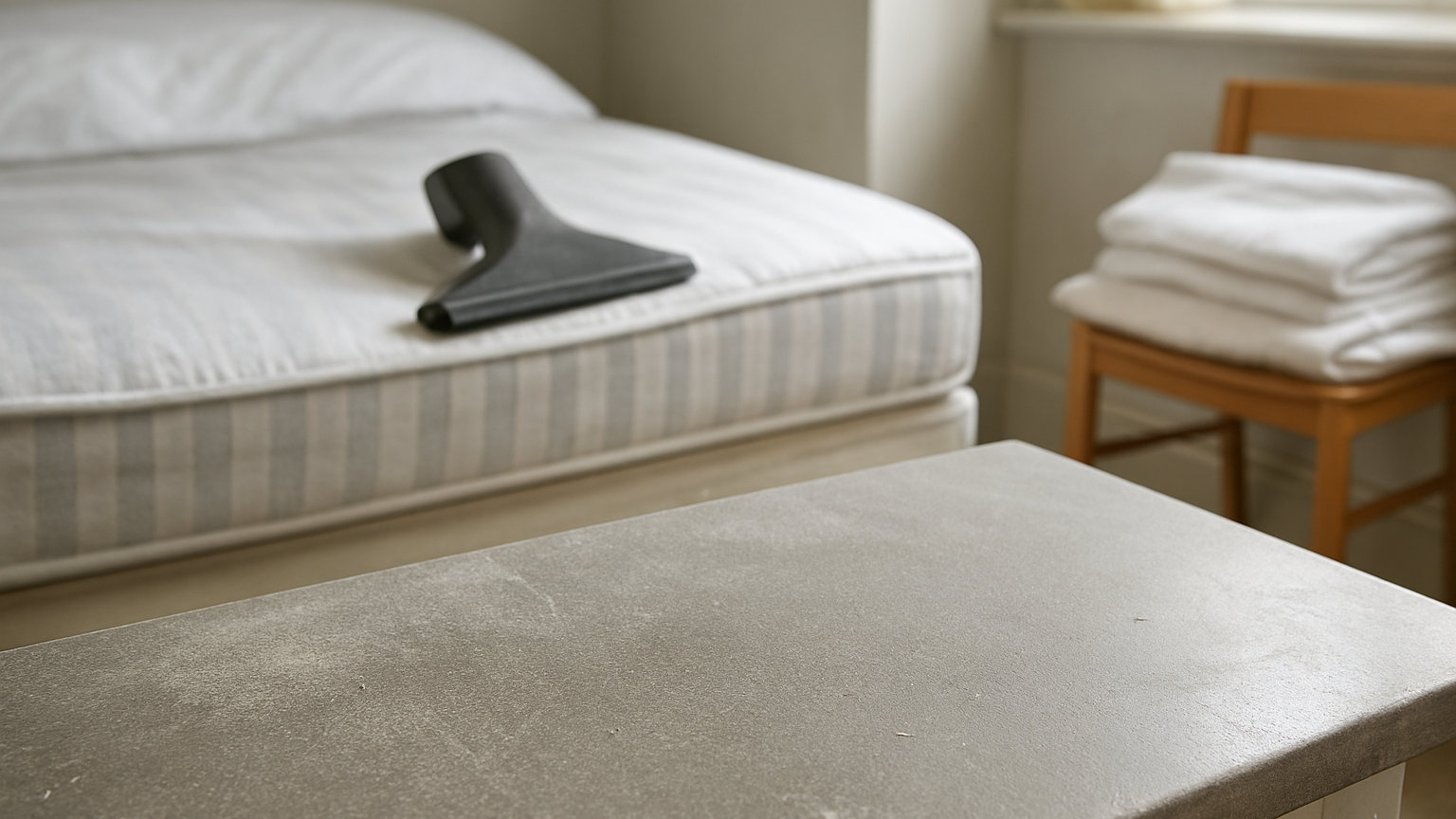
- Run the vacuum over the visible floor if there is time left.
The order matters because the bed dominates the room visually. A made bed makes a room with a few things out look tidy, while an unmade bed makes an otherwise perfect room look chaotic.
Why does the clothes pile cause the most trouble?
Because it involves a judgement on every single item, and because most bedrooms have nowhere obvious to put clothes that are neither clean nor dirty. A jumper worn for two hours does not belong in the wash and does not feel right going back on the shelf, so it gets put down instead. That is what produces the chair everyone has.
The fix is to give that category a home: a hook on the back of the door, a small basket, a single shelf. Once worn-once clothes have somewhere to go, the chair empties and the tidy gets much faster.
How do you stop it becoming a decluttering session?
By setting a timer and by having a holding box. Anything that requires a real decision goes into the box, and the box gets dealt with on a separate occasion. That single rule keeps a ten minute tidy at ten minutes rather than turning it into a two hour review of everything you own.
If the box is still full a month later, that is useful information in itself.
Which changes make a bedroom stay tidy?
- A laundry basket in the room, large enough to take a week, so clothes have an obvious destination.
- A bin, which surprisingly many bedrooms lack.
- Fewer flat surfaces. Every horizontal surface will collect objects, without exception.
- Closed storage rather than open shelving, which hides small clutter and collects less dust.
- A charging point with a defined spot for cables, which otherwise migrate across every surface.
- A two minute reset before bed, which prevents the accumulation that makes a full tidy necessary.
What works in a child bedroom?
Storage that a child can actually use. Low open boxes rather than high shelves, categories that are obvious rather than precise, and fewer toys in circulation at any one time with the rest rotated out of sight. A five minute tidy at the same point every evening works better than an occasional full clear out, and it teaches the habit rather than the event.
What if the room is genuinely overwhelming?
Work in a small area rather than trying to see the whole room. Clear one surface completely, then the next. Take everything off the floor first, since floor clutter is what makes a room feel unmanageable. Bin bags for rubbish and boxes for decisions, and accept that the first session is about getting to a baseline rather than finishing.
A room that has got away from you is not a ten minute job, and treating it as one is the reason it stays that way. Give it a proper hour with the radio on, get it back to a baseline you are happy with, and the ten minute version works from that point onwards. The maintenance routine and the recovery job are two different things, and expecting the first to do the work of the second is where most tidying plans fall apart.