Pillows should be washed two to four times a year and duvets once or twice, which is far more often than most get. The wash itself is straightforward. The part that goes wrong is drying, because a large item with a thick filling can feel dry on the outside while still holding moisture in the middle, and that moisture is what makes bedding smell musty within a fortnight.
Why do they need washing at all if they have covers?
Because covers are not sealed. Moisture passes straight through cotton, and a person loses a significant amount overnight. Body oils and skin cells migrate through too, particularly into pillows, which is why a pillow taken out of its case after a year is usually yellowed in the middle.
Protectors help considerably and extend the interval, but they do not remove the need entirely.
Which fillings can be machine washed?
- Polyester and hollowfibre – yes, and they are the easiest. Wash at 40 to 60 degrees.
- Feather and down – usually yes, on a gentle cycle at 40 degrees or as the label allows. They need thorough drying and shaking out.
- Wool – check the label carefully. Many wool duvets are dry clean only or specify a wool cycle at 30 degrees.
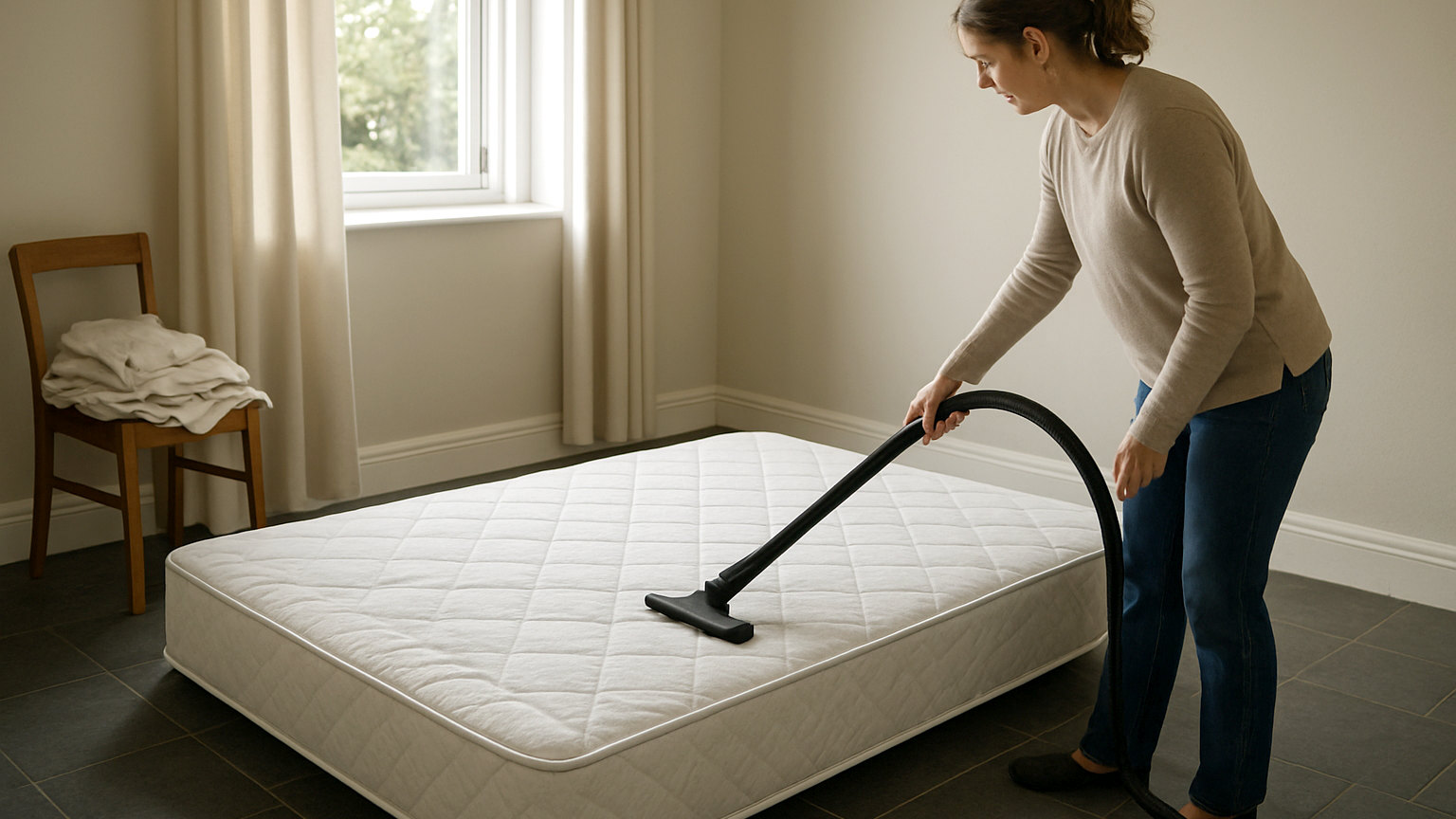
- Memory foam and latex pillows – no. Never put these in a machine. Spot clean the surface, vacuum them, and wash the cover instead.
- Microfibre – yes, at 40 degrees, though it may lose loft over time.
The label is the authority. Where there is no label, treat the item as delicate and wash cool.
Will it fit in the machine?
Pillows generally do, and washing two at once balances the drum and keeps the load even. Duvets are the problem. A single duvet usually fits a 7kg machine, a double needs 8kg or more, and a king or super king realistically needs a large commercial machine at a launderette.
The item must be able to move freely in the drum. A duvet crammed in so tightly that it cannot tumble will come out with detergent still in it, and that residue is a common cause of a stiff, slightly grey duvet that never feels clean.
What settings should you use?
Use about half the usual detergent dose, because bulky items are hard to rinse and residue is the main risk. Skip fabric conditioner entirely, since it coats the fibres and reduces loft. Add an extra rinse cycle if the machine offers one, and use a high spin to remove as much water as possible before drying.
How do you dry them properly?
A tumble dryer is genuinely the best option, on a low or medium heat and for far longer than you expect. Adding two or three clean dryer balls, or tennis balls in a sock, breaks up clumps in the filling as it tumbles. Stop the machine every twenty minutes, take the item out, shake it hard and redistribute the filling by hand, then carry on.
Without a dryer, dry flat outdoors on a warm breezy day, turning and shaking it every hour or two. It will take most of a day. Never put a duvet away while any part of it is still cool or heavy to the touch, because damp filling inside a stored duvet will develop mould and a smell that cannot be washed out.
How do you know when a pillow needs replacing rather than washing?
Fold it in half and let go. A pillow that springs back has life in it; one that stays folded has lost its support and washing will not restore it. Persistent yellowing, lumps that do not shake out and a musty smell that survives a wash are all signs it has done its time.
Most synthetic pillows last one to two years, feather and down considerably longer, and memory foam three years or so.
What extends the interval between washes?
A washable pillow protector under the pillowcase and a duvet cover changed regularly, plus airing the bed every morning with the window open so overnight moisture leaves the filling rather than sitting in it all day.