People rarely smell their own house. Nose blindness sets in within minutes, which is why a pet smell can build for months without the household noticing and be obvious to a visitor in seconds. Getting rid of it means finding where the odour actually lives, which is almost never the animal itself.
Where does the smell come from?
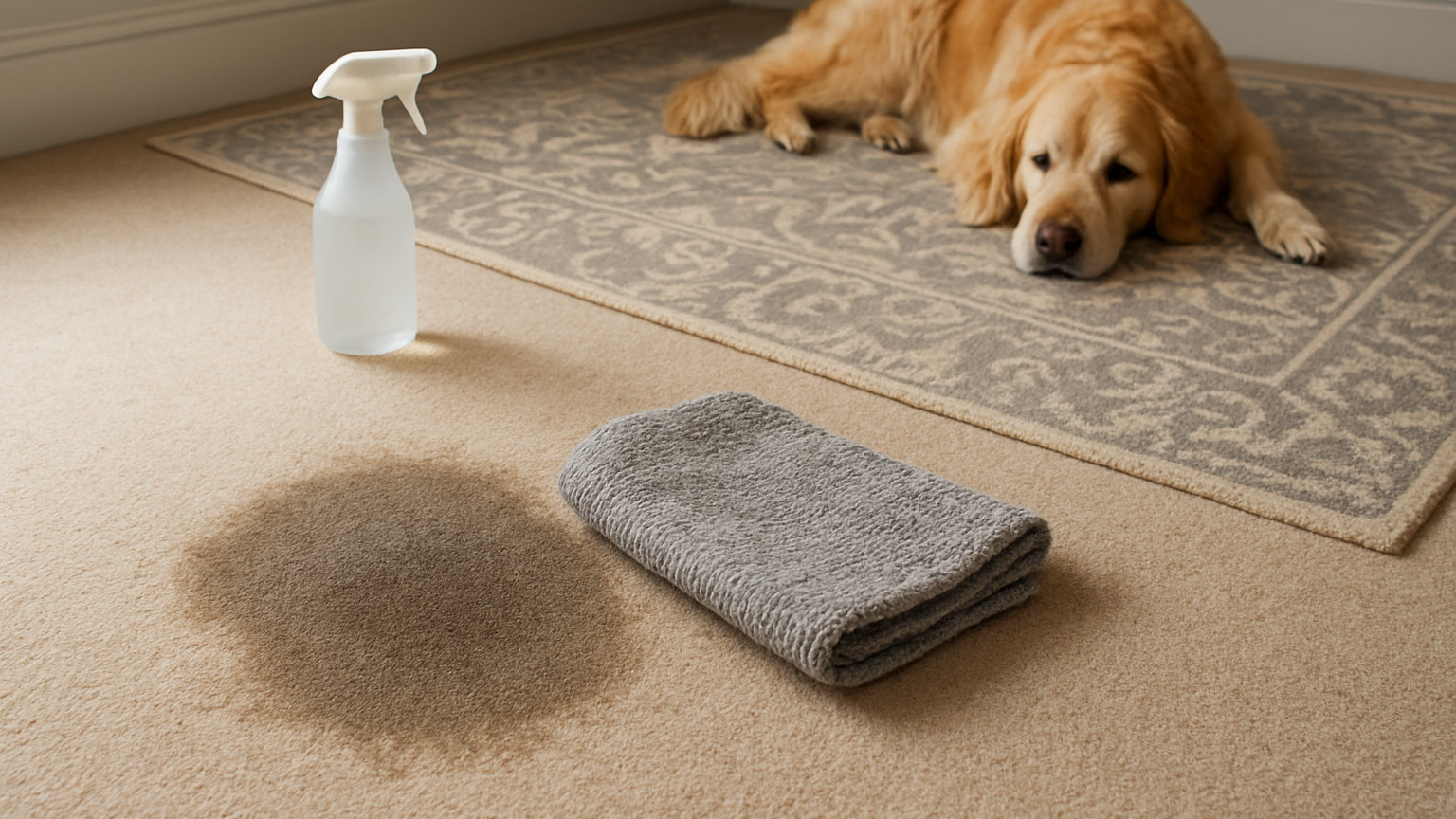
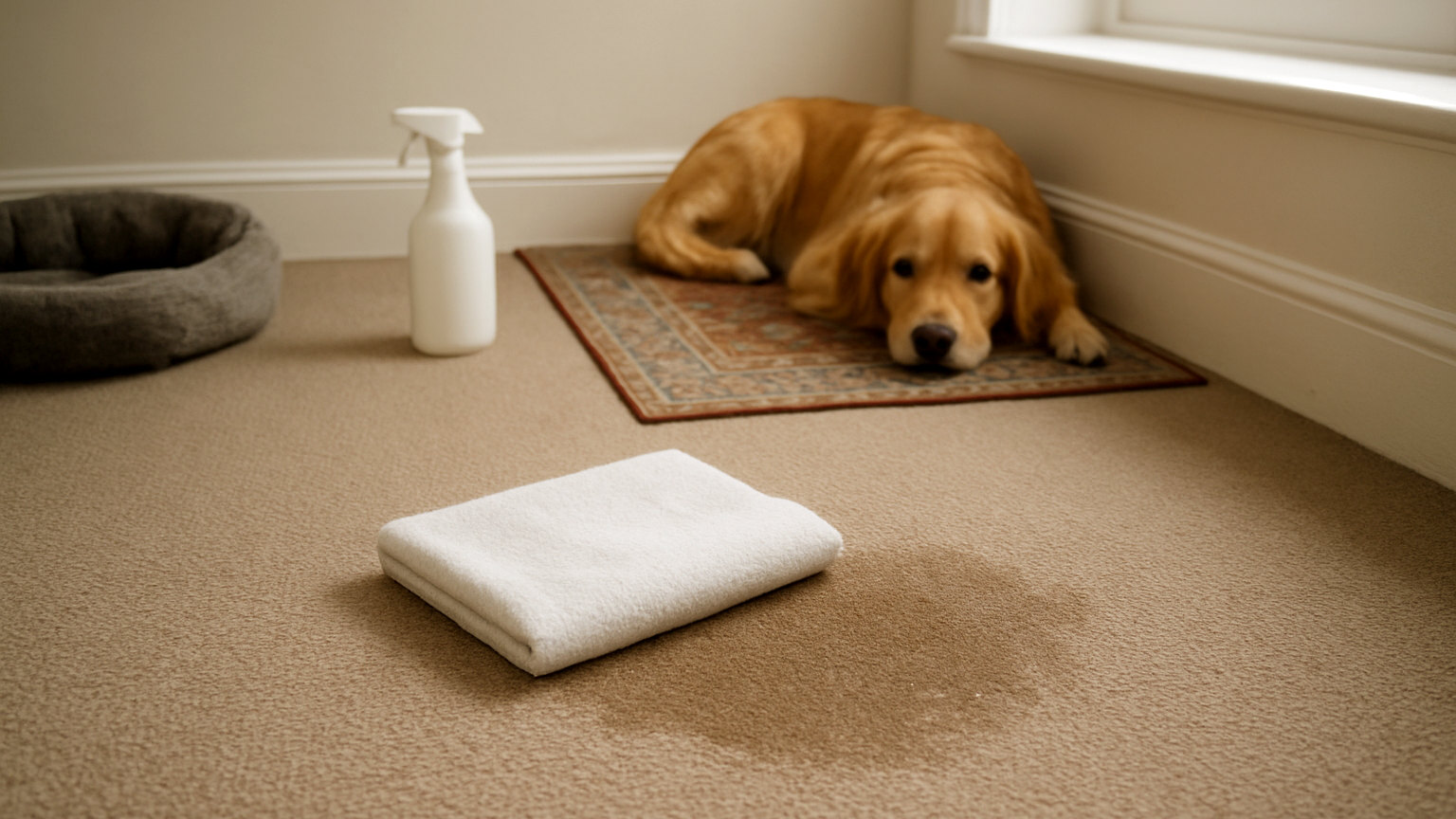
- Carpet and underlay, particularly anywhere there has been an accident.
- Soft furnishings – sofas, cushions, curtains and rugs, which absorb and hold odour.
- Pet bedding, which is frequently washed less often than it needs.
- The animal itself, particularly a dog with a damp coat or a skin condition.
- Litter trays and food areas.
- Poor ventilation, which lets everything accumulate.
The last one is underrated. A well ventilated house with a dog in it smells far less than a sealed one.
What is the order to work in?
- Wash everything washable: bedding, blankets, cushion covers, throws and curtains.
- Find and treat any urine with an enzyme cleaner, using an ultraviolet torch to locate it.
- Vacuum thoroughly, including upholstery, under furniture and along skirting.
- Deep clean the carpet, or have it done, with enzyme pre-treatment where needed.
- Wipe hard surfaces, including walls at animal height, doors and skirting.
- Clean the litter tray or feeding area properly.
- Ventilate hard for several days, with windows open on two sides.
Working in that order matters, because cleaning the carpet before washing the curtains means doing it twice.
What does bicarbonate of soda achieve?
More than most remedies. Sprinkled generously over dry carpet and upholstery, left for several hours or overnight and then vacuumed off thoroughly, it absorbs a genuine amount of odour. It is cheap, safe around animals and worth doing as a finishing step once the sources have been dealt with.
It is not a substitute for enzyme treatment on urine, which needs the residue broken down rather than absorbed.
Why do air fresheners make it worse?
Because they add a second smell on top rather than removing anything, and the combination is usually less pleasant than the original. They also let the household stop looking for the source, which is the real cost.
Plug-in fresheners and scented candles are also worth avoiding around birds, and strongly perfumed products can bother animals with far more sensitive noses than ours.
Do air purifiers help?
With airborne dander and some odour molecules, modestly. A unit with both a particulate filter and an activated carbon stage will reduce what is in the air, and it will do nothing about residue sitting in a carpet. Treat it as a finishing measure rather than a solution.
Ventilation is cheaper and more effective for odour specifically.
What about the animal?
Regular grooming removes loose hair and dander before it reaches the furniture, and it makes a noticeable difference. Dogs need bathing occasionally rather than frequently, since over-washing strips the coat oils and can make the smell worse.
A persistent strong smell from an animal, particularly from the ears, mouth or skin, is a reason to see a vet rather than to bathe more often.
How do you tell whether it has worked?
Leave the house for a few hours with the windows shut and come back in. That resets your sense of smell enough to judge. Better still, ask someone who does not live there, which is the only genuinely reliable test.
What if it persists?
The carpet underlay is the usual answer, particularly where there has been a long history of accidents. Lifting a corner to check is worth doing, and replacing underlay in an affected area is far cheaper than replacing carpet and often the only thing that finally works.
How long should it take?
A weekend for the washing and vacuuming, a few days of ventilation, and a week or two before you can judge it fairly. Odour clears gradually rather than all at once, and the temptation is to declare failure after two days and reach for something scented. Give it a fortnight with the windows open before deciding anything further is needed.