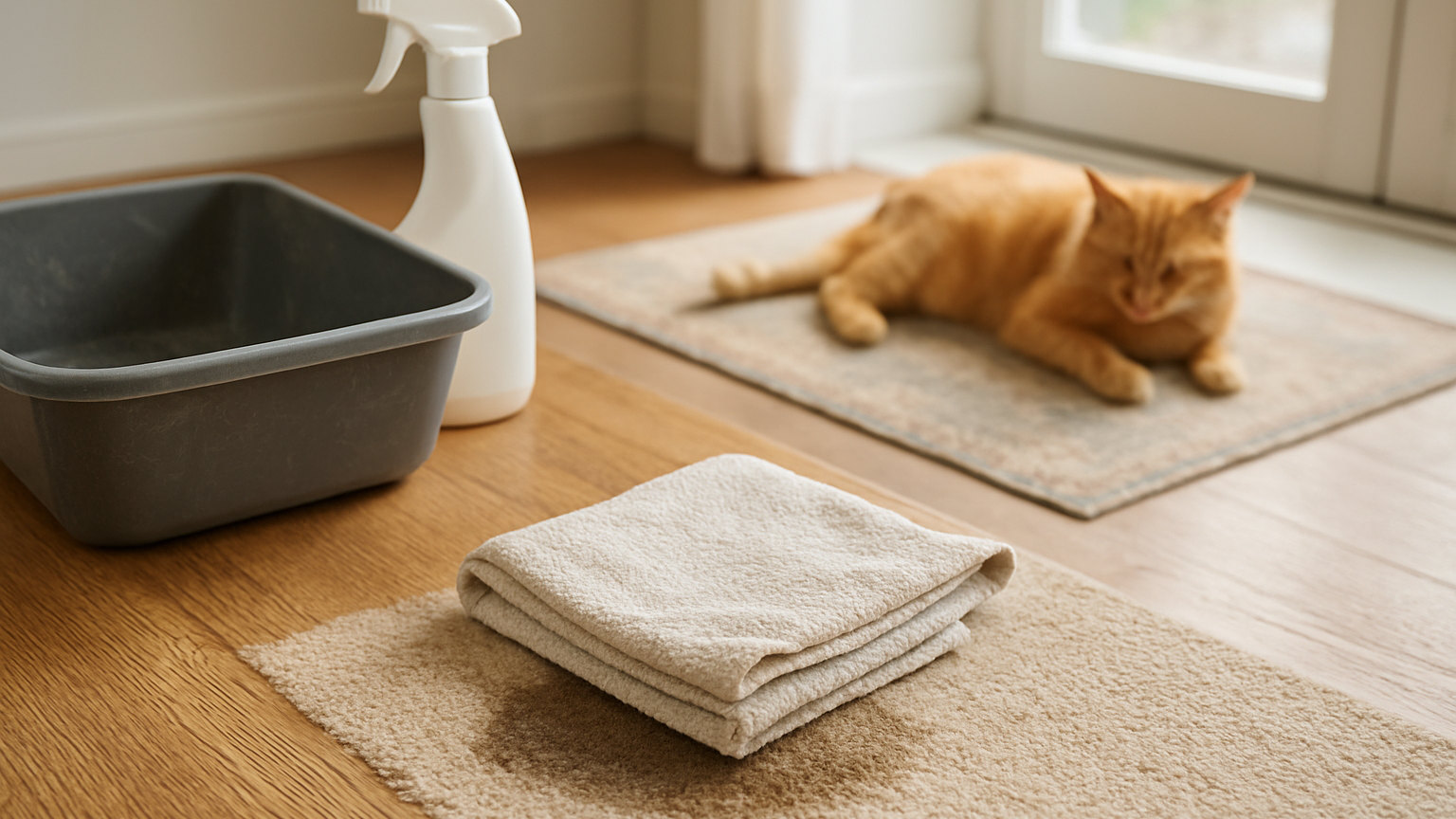
A litter tray that smells is usually not a scooping problem. It is a tray problem. Plastic that has been scratched by claws holds urine in the scratches where scooping cannot reach, and once that has happened no amount of fresh litter on top will fix it.
What is the routine?
- Scoop solids and clumps at least once a day, and twice where possible.
- Top up the litter to keep the depth consistent.
- Wipe the rim and the outside of the tray daily.
- Empty and wash the tray completely every week with clumping litter, or every two to three days with non-clumping.
- Sweep or vacuum the surrounding floor daily.
- Wash the mat or surface under the tray weekly.
The daily scoop matters more than anything else. A tray scooped twice a day barely smells even between full changes.
How should the tray be washed?
Empty it completely, then wash with hot water and washing up liquid, scrubbing all surfaces including the rim, the corners and the outside. Rinse thoroughly and dry before refilling, since damp litter clumps badly and sticks to the base.
For a tray that smells after washing, use an enzyme cleaner, left for the full contact time, which breaks down the uric acid that detergent leaves behind.
What should not be used?
- Ammonia based cleaners, which smell like urine to a cat and may put it off using the tray.
- Chlorine bleach, which reacts with urine to produce harmful fumes. If you use it, empty and rinse the tray thoroughly first.
- Pine and phenol based disinfectants, which are toxic to cats. Check the label of any disinfectant for phenols.
- Essential oils, including tea tree, which cats cannot metabolise safely.
- Strongly perfumed products, which many cats dislike enough to avoid the tray.
Hot water and washing up liquid is the safe default, with an enzyme cleaner for odour.
Why does a scratched tray smell permanently?
Because urine soaks into the fine scratches in the plastic and cannot be scrubbed out. Over a year or two of daily use, a plastic tray develops enough surface damage to hold odour regardless of cleaning.
Replace plastic trays annually, or when the base feels rough rather than smooth. They are inexpensive and it is the most reliable fix for a tray that smells despite a good routine.
How do you deal with litter tracking?
A tracking mat in front of the tray catches most of it, and a large one works far better than a small one. A high sided tray or a top entry tray reduces scatter considerably. Vacuum daily around the tray rather than weekly, since litter grit underfoot scratches hard floors.
Keep the tray off carpet where you can, or put a washable mat underneath it.
Where should the tray go?
Somewhere quiet, away from food and water bowls, with an easy escape route and not in a corridor or beside a noisy appliance. Cats avoid trays that feel exposed or that can be approached from only one direction.
In a multi-cat household, the usual guidance is one tray per cat plus one spare, placed in separate locations rather than side by side.
How often should the litter be changed completely?
Weekly for clumping litter with daily scooping, and every two to three days for non-clumping. Waiting until it smells is waiting too long, and a cat will often stop using a tray before a person notices a problem with it.
What if the cat stops using it?
Check the tray first, then the cat. Trays that are dirty, too small, covered, badly placed or filled with an unfamiliar litter all cause avoidance. If nothing has changed and the cat has stopped, a vet appointment is warranted, since urinary problems in cats can be serious and painful.
Does the type of litter affect the smell?
Considerably. Clumping clay litters allow daily removal of urine as well as solids, which is the single biggest factor in controlling odour. Non-clumping litters absorb the urine into the whole tray, so the litter has to be changed entirely far more often. Paper and wood pellet litters sit somewhere between, and scented litters mask rather than reduce and are disliked by many cats.