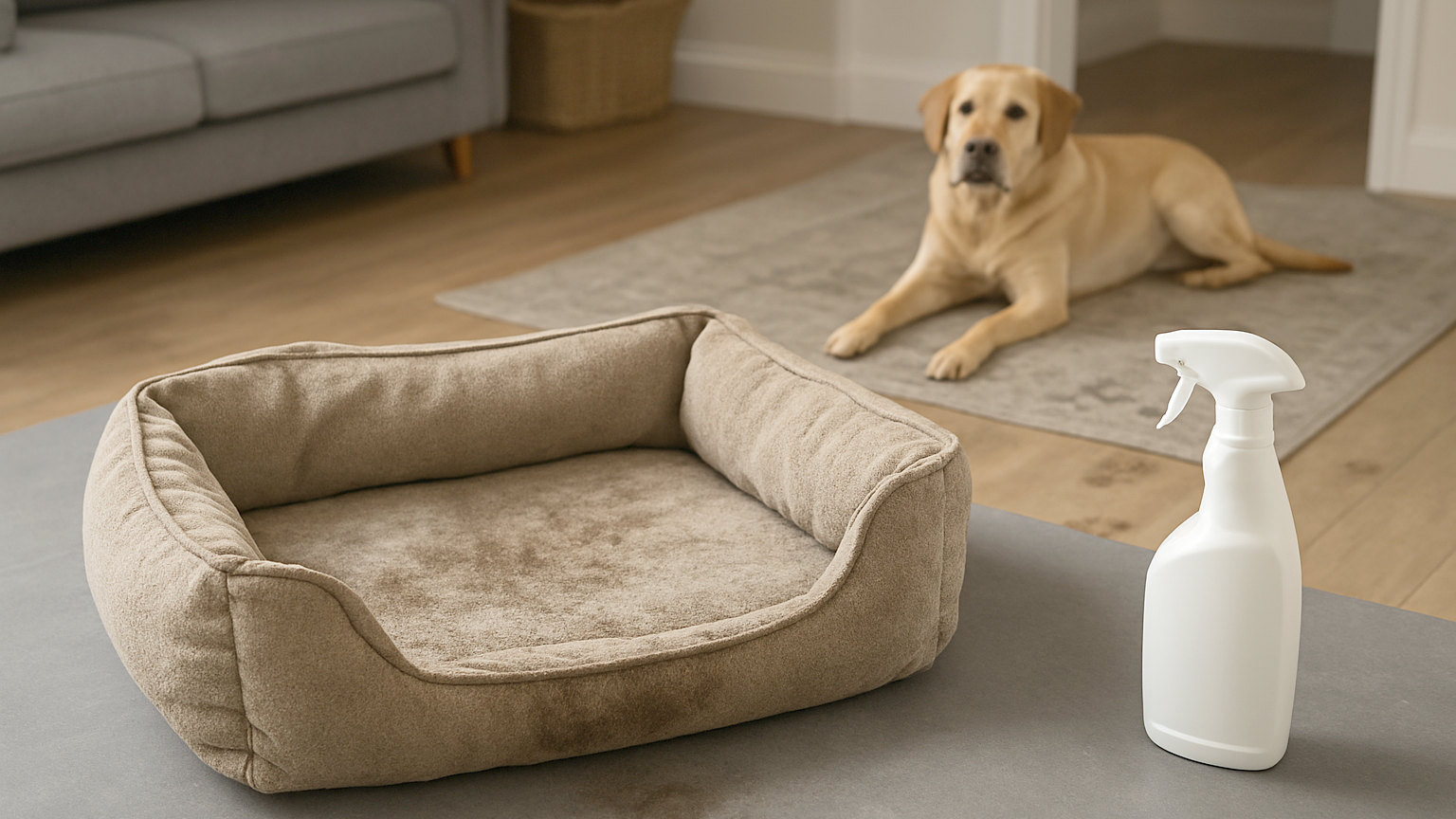
Pet bedding accumulates a particular mixture: hair, dander, saliva, skin oils, outdoor soil and occasionally worse. It needs washing more often than most people manage, at a higher temperature than most household laundry, and always as a load of its own.
How often should it be washed?
Weekly for a bed in regular use, and more often for a puppy, an older animal or one that goes out in all weather. Blankets and throws that a pet sleeps on should go in at the same frequency.
The clearest signal is smell. A bed that smells when you lean over it has needed washing for a while, since people acclimatise to it quickly.
Why wash it separately?
Because everything on it transfers. Hair redistributes across a whole load and is difficult to remove from clothing afterwards. Dander is the component that matters for anyone in the household with allergies. Outdoor soil and bacteria are not things you want in with bedding or towels.
Run a hot empty cycle afterwards if you wash pet items regularly, and clean the machine filter more often than the manual suggests.
What should you do before it goes in the machine?
- Shake the bedding outdoors to remove loose hair and debris.
- Vacuum it thoroughly, including the seams and any piping.
- Better still, tumble the items on a no heat air cycle for ten minutes, which releases the hair into the dryer filter.
- Scrape off any solid material and rinse soiled areas in cold water first.
- Treat stains with an enzyme cleaner before washing.
- Check for loose stuffing or damage, since a split cover will empty into the drum.
The hair removal stage matters most. Hair that goes into a washing machine ends up in the filter, in the pump and on the next load.
What temperature should be used?
Sixty degrees where the label allows, which deals with bacteria, dust mites and fleas at various stages. Many pet beds and covers state 30 or 40, in which case wash at the stated maximum and follow with a tumble dry on a hot setting, which achieves a similar result through heat in the drum.
Anything used by an animal with a skin condition, or during an illness, justifies the hottest wash the fabric can take.
Which detergent should you use?
A biological detergent, since almost everything on pet bedding is protein or fat based. Use a normal dose and add an extra rinse, because residue left in bedding can irritate skin and animals lie on it for hours at a time.
Skip fabric conditioner entirely. It leaves a coating that reduces absorbency and holds odour, and the fragrance can be unpleasant or irritating for the animal.
What about the inner cushion?
Most can be washed if they fit in the drum with room to move, at 40 degrees on a gentle cycle with a reduced detergent dose and an extra rinse. Drying is the difficulty: tumble dry on low with dryer balls, stopping regularly to shake and redistribute the filling.
Never put a cushion away damp. Foam inserts should not go in a machine at all; vacuum them, spot clean and air them outdoors.
What about beds that cannot be washed?
Vacuum thoroughly, including underneath. Sprinkle bicarbonate of soda over the surface, leave it for an hour and vacuum it off, which absorbs a good deal of odour. Spot clean with an enzyme cleaner and dry completely.
A washable cover over an unwashable base is the practical long term answer, and most beds accept a fitted sheet or a folded blanket.
How do you keep on top of it?
Own two sets, so one can be in the wash without the animal losing its bed. Put a washable blanket on top of the bed and change that mid-week, which halves how often the whole thing needs doing.
What if there are fleas?
Wash everything at 60 degrees, which kills all life stages, and vacuum the surrounding area thoroughly including under furniture, emptying the vacuum outside immediately afterwards. Bedding alone is not enough, since eggs and larvae drop into carpet and crevices nearby. Treating the animal itself is a separate job and one for a vet or a pharmacist rather than a cleaning routine.