Almost all makeup is pigment suspended in oil, wax or silicone, which is what makes it stay on skin. On fabric the same property makes it stubborn, because the carrier holds the pigment in place and protects it from anything water based. The grease has to be dealt with before the colour will move.
What is the general method?
- Lift off any solid or powder material with a blunt edge or by shaking the fabric.
- Do not rub, which spreads the pigment and grinds it into the weave.
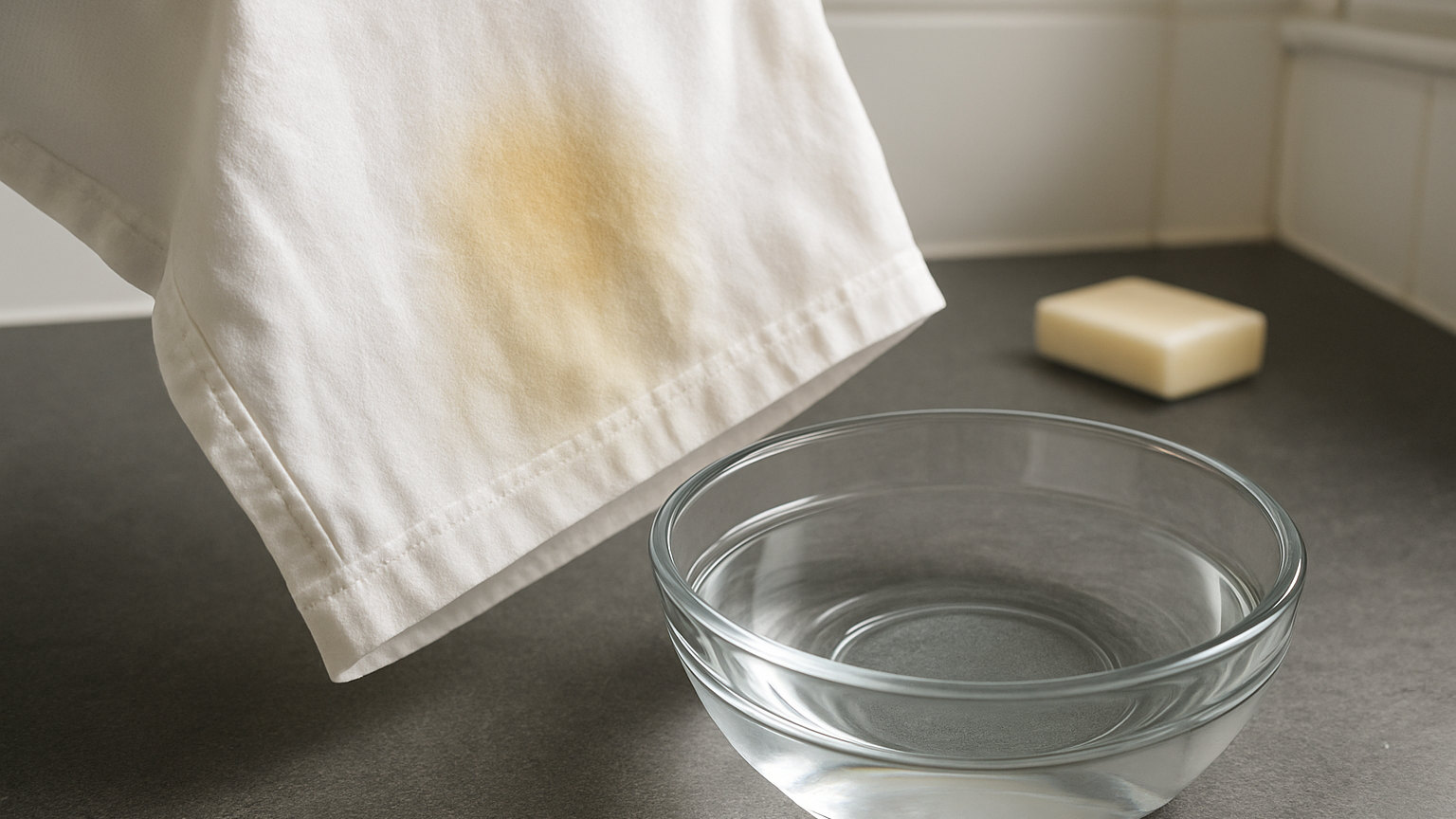
- Apply washing up liquid directly to the mark and work it in gently from the outside inwards.
- Leave for ten minutes.
- Rinse with warm water from the reverse side of the fabric.
- Repeat if the fabric still feels slick or the colour remains.
- Wash at the warmest temperature the label allows, checking before drying.
How does the formula change the approach?
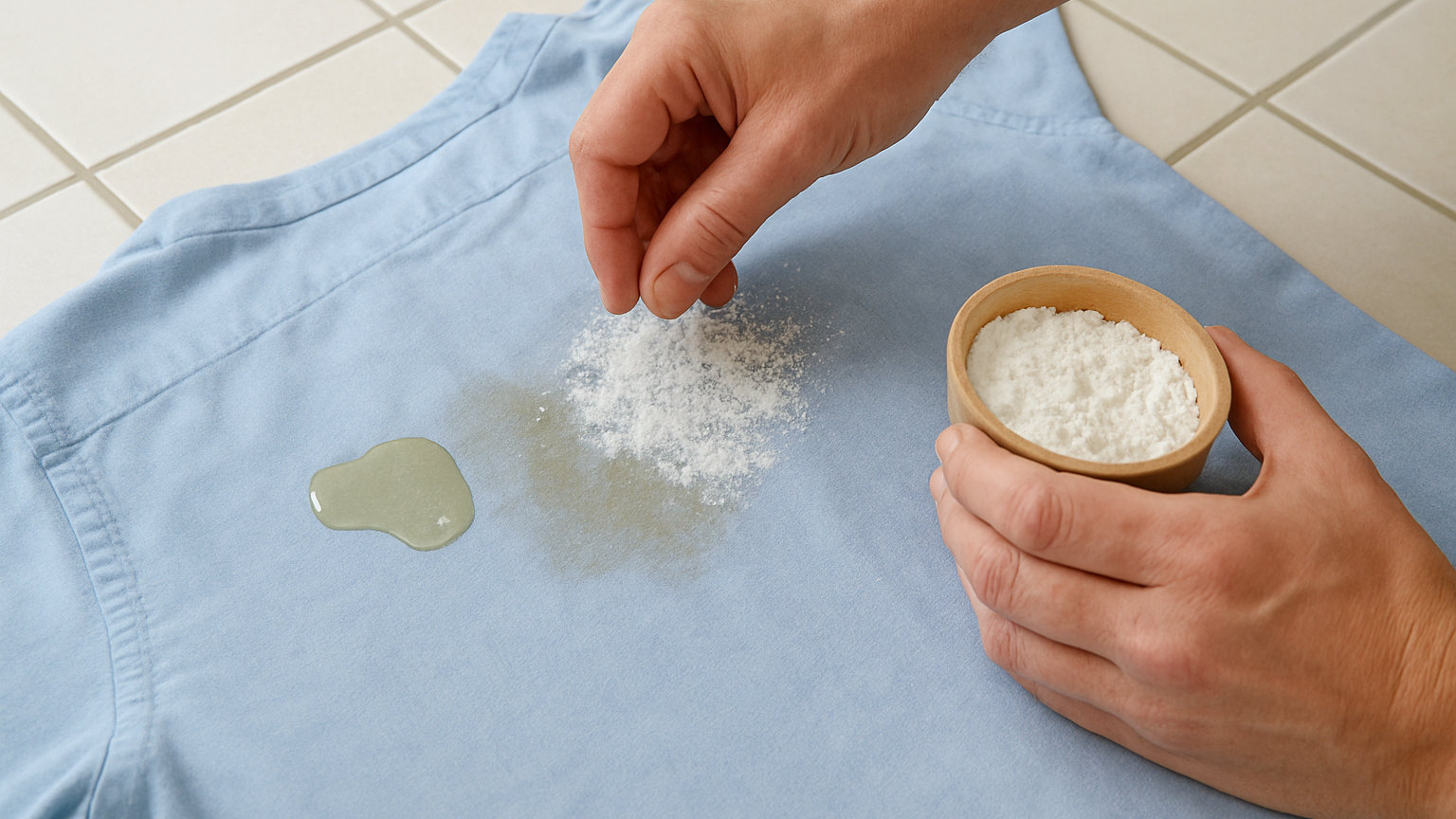
- Powder products such as eyeshadow and blusher – shake or brush off first, never wet. They lift easily when dry and smear badly when wet.
- Liquid and cream foundation – oil or silicone based. Degreaser first, then the pigment.
- Lipstick – wax and heavy pigment, the most stubborn category.
- Mascara – often waterproof, which means solvent rather than water.
- Tinted moisturiser and BB cream – lighter and usually the easiest.
- Fake tan – a dye rather than a pigment, and it behaves quite differently.
Does micellar water work?
Surprisingly well, and it is worth trying first on delicate fabric. Micellar water contains mild surfactants designed to lift oil based makeup off skin, and the same chemistry works on fabric. Apply it to a clean cloth and dab the mark rather than pouring it on.
It is gentler than washing up liquid, which makes it a sensible first attempt on silk, wool and anything you are worried about.
What about waterproof mascara and long wear products?
These are formulated specifically to resist water and detergent, so they need a solvent. Micellar water designed for waterproof makeup, an eye makeup remover, or surgical spirit dabbed on with a cloth will all break them down.
Work from the reverse side of the fabric where possible, pushing the product back out rather than through, and blot with a clean cloth underneath to catch what comes away.
What should you avoid?
Rubbing, which is the main cause of a small makeup mark becoming a large one. Hot water before the grease has been treated, which can set some pigments. And makeup wipes on fabric, which smear the pigment across a wider area without removing much.
Also avoid coloured cloths when blotting, since a damp cloth can transfer its own dye.
How do you deal with a collar or a neckline?
This is the most common location and it is usually foundation combined with body oils. Treat it as a greasy mark: washing up liquid worked in, left for ten minutes, then a warm wash. Doing it after every wear, before the mark builds, is far easier than dealing with an accumulated ring.
What about makeup on towels?
Towels are usually cotton and tolerate everything, so treat with washing up liquid and wash at 60 degrees. For a dark ring that persists, soak in oxygen bleach overnight. Keeping a separate dark flannel for removing makeup avoids the problem entirely.
What if the fabric cannot be washed?
For upholstery and clothing that cannot go in a machine, check the cleaning code and use either a foam of washing up liquid and water, or a solvent based cleaner for solvent only fabrics. Work in small sections, blot rather than rub, and dry quickly.
For anything valuable, particularly silk and tailoring, a professional cleaner is the safer choice and worth telling what the mark is.
How do you avoid it in the first place?
Dress before applying makeup where the order allows, and let everything set before pulling a top over your head. A scarf or a makeup cape takes thirty seconds and prevents the most common transfer of all. For jumpers and anything pulled over the head, holding the neckline wide rather than dragging it past the face avoids most of the damage.