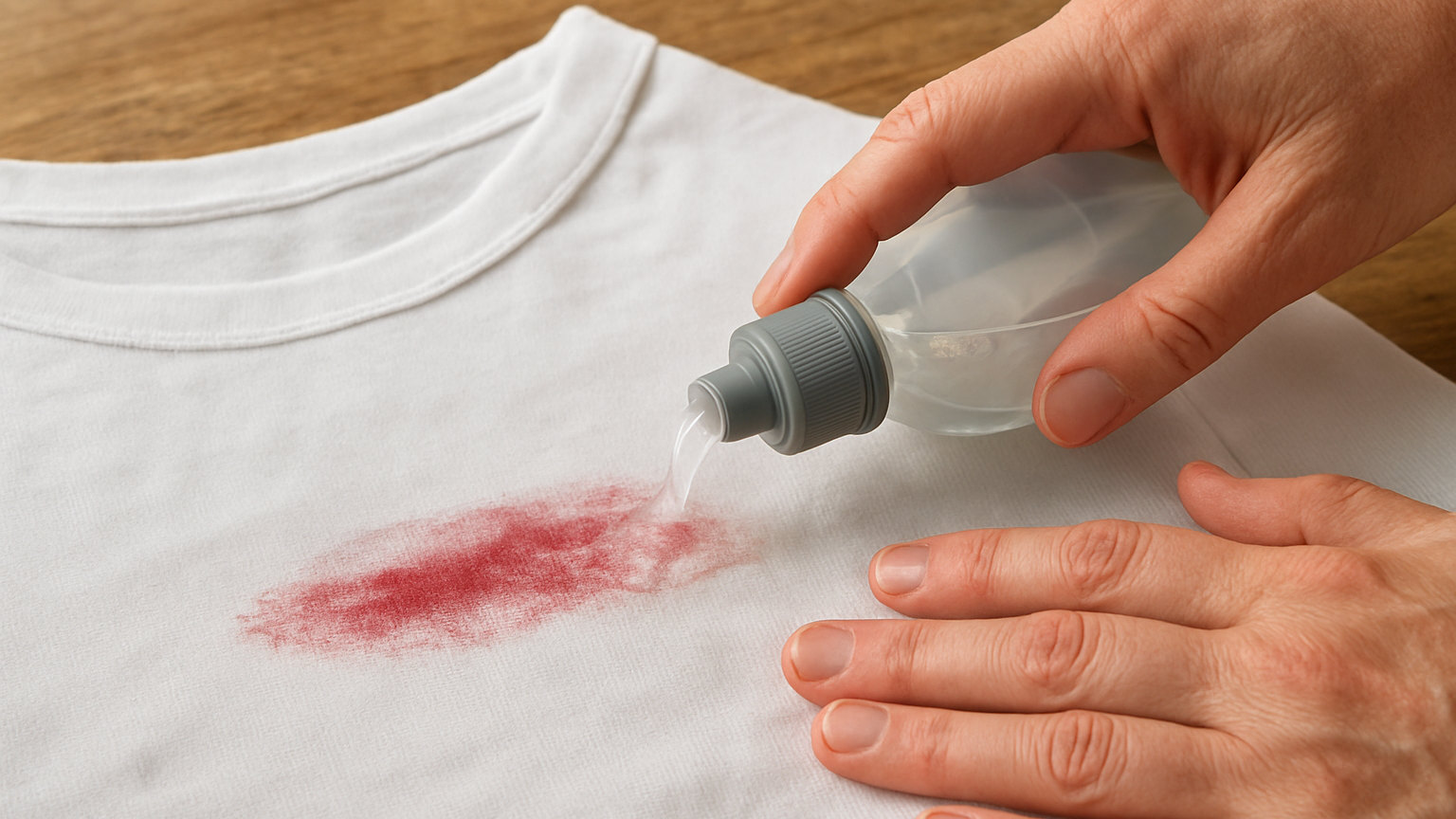
Lipstick is the most concentrated makeup stain there is. It combines wax, oil and a very high pigment load, all designed to stay put. On fabric that means it smears at the slightest contact and resists water completely, and the instinctive response of wiping it turns a small mark into a wide smudge.
What should you do first?
Nothing wet, and nothing that involves rubbing. Lift off as much of the solid material as possible with a blunt edge such as a spoon handle or a plastic card, working from the outside of the mark towards the middle so it does not spread.
If the lipstick is soft, chill it first with an ice cube in a bag for a few minutes so it hardens and lifts cleanly.
What is the method?
- Scrape off the solid material.
- Lay the fabric face down on a pad of clean white kitchen paper.
- Apply a solvent to a cloth and dab the reverse of the stain, pushing the pigment out into the paper.
- Move to a clean section of paper frequently as it takes up colour.
- When no more transfers, apply washing up liquid to the mark and work it in gently.
- Leave for ten minutes, then rinse with warm water.
- Wash at the warmest temperature the label allows, checking before drying.
Working from the back and onto absorbent paper is what makes the difference. Treating it from the front pushes the pigment further through the weave.
Which solvent should you use?
- Surgical spirit – effective and widely available. Test on a hidden seam first.
- Micellar water for waterproof makeup – gentler, good for delicate fabric.
- An eucalyptus based stain remover – works on the wax element.
- A proprietary pre-wash stain spray – convenient and reliable on cotton.
- Shaving foam – a traditional remedy that works because it is essentially a surfactant foam.
Avoid nail varnish remover containing acetone, which will damage acetate, some synthetics and many dyes.
Why is the pigment so stubborn?
Because lipstick pigments are chosen to resist transfer and fading, which is exactly the opposite of what you want on a shirt. Long wear and matte formulas are worse again, since they are designed to bond to a surface and stay there.
Expect two or three rounds on a long wear product, and expect a faint shadow that clears with sunlight rather than one that disappears at once.
What about the mark left after the colour has gone?
Usually the oil and wax, which shows as a slightly darker translucent patch. Treat it as a grease stain: washing up liquid, ten minutes, warm rinse, repeat. On white cotton, an oxygen bleach soak afterwards deals with any remaining tint.
How do you deal with collars and napkins?
These are the two most common locations. On a shirt collar, treat before the garment goes in the basket rather than at the weekend, since the mark sets. On napkins, which are usually cotton, soak the whole batch overnight in warm water with oxygen bleach and wash at 60.
A dark or patterned napkin is a practical choice for a household where this happens regularly.
What about lipstick in a washing machine?
A tube left in a pocket and put through a hot wash is a genuine problem, because the wax melts and the pigment distributes across the entire load. Rewash everything immediately with a full dose of detergent and a cup of white vinegar, and do not dry anything until it is clear.
Clean the drum afterwards with a hot empty cycle, and wipe under the door seal, or the next load will pick up what is left behind.
What about delicate fabrics?
Silk, wool and anything structured should go to a professional cleaner, and it is worth telling them what the mark is so they can select the right solvent. Home solvents on silk frequently leave a ring that is more visible than the original stain.