A foundation mark on a collar is different from a spill. It accumulates over several wears, mixing makeup with body oils, sweat and sometimes moisturiser, and by the time it is obvious it has been building for weeks. That is why it often survives a normal wash: the material has had time to work into the fibre and oxidise.
Why does a normal wash not shift it?
Because the detergent is diluted across a whole drum and the collar gets the same treatment as everything else. A concentrated greasy deposit in one small area needs concentrated treatment applied directly to that area, which a wash cycle cannot provide.
It is also a combination of oil based makeup and body oil, both of which need warmth and a degreaser rather than agitation.
What is the treatment?
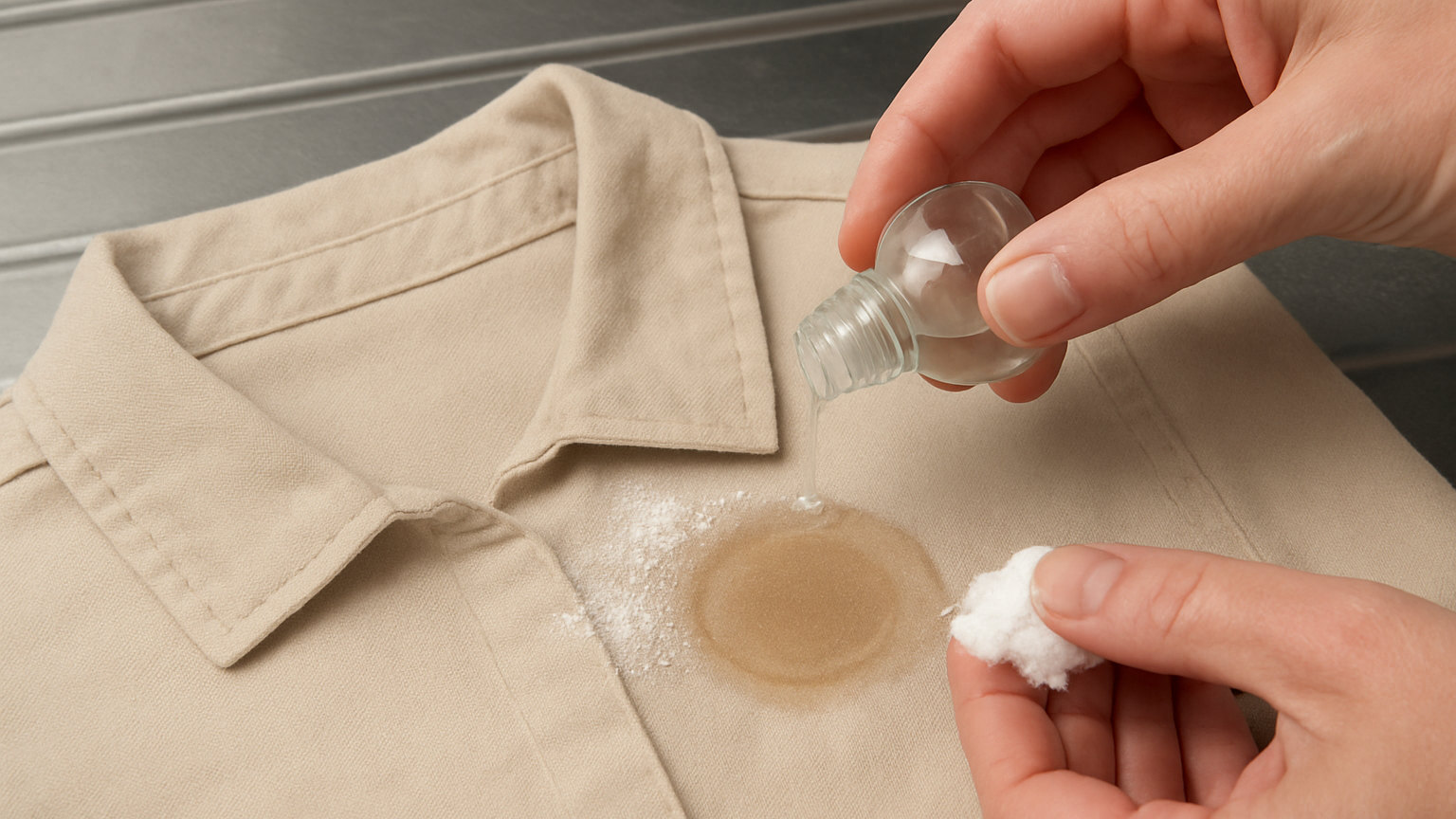
- Lay the collar flat and apply washing up liquid directly along the marked area.
- Work it in with a soft brush, an old toothbrush or a fingertip, along the length of the collar.
- Leave it for fifteen minutes.
- Rinse in warm water.
- Repeat if the fabric still feels slick.
- Wash at the warmest temperature the shirt allows, with a biological detergent.
- Air dry and check before ironing or tumble drying.
What else works?
Shaving foam is a well established remedy and works because it is a surfactant foam that clings to a vertical surface. Apply it, work it in, leave for fifteen minutes and rinse.
A pre-wash stain spray or stick applied before the shirt goes in the machine is the most convenient option for regular use. So is a paste of bicarbonate of soda and a little washing up liquid, worked in and left for half an hour.
For a heavily built up ring, a soak in warm water with soda crystals is the strongest household option, though it should not be used on wool, silk or anything with elastane.
Why does the collar go yellow?
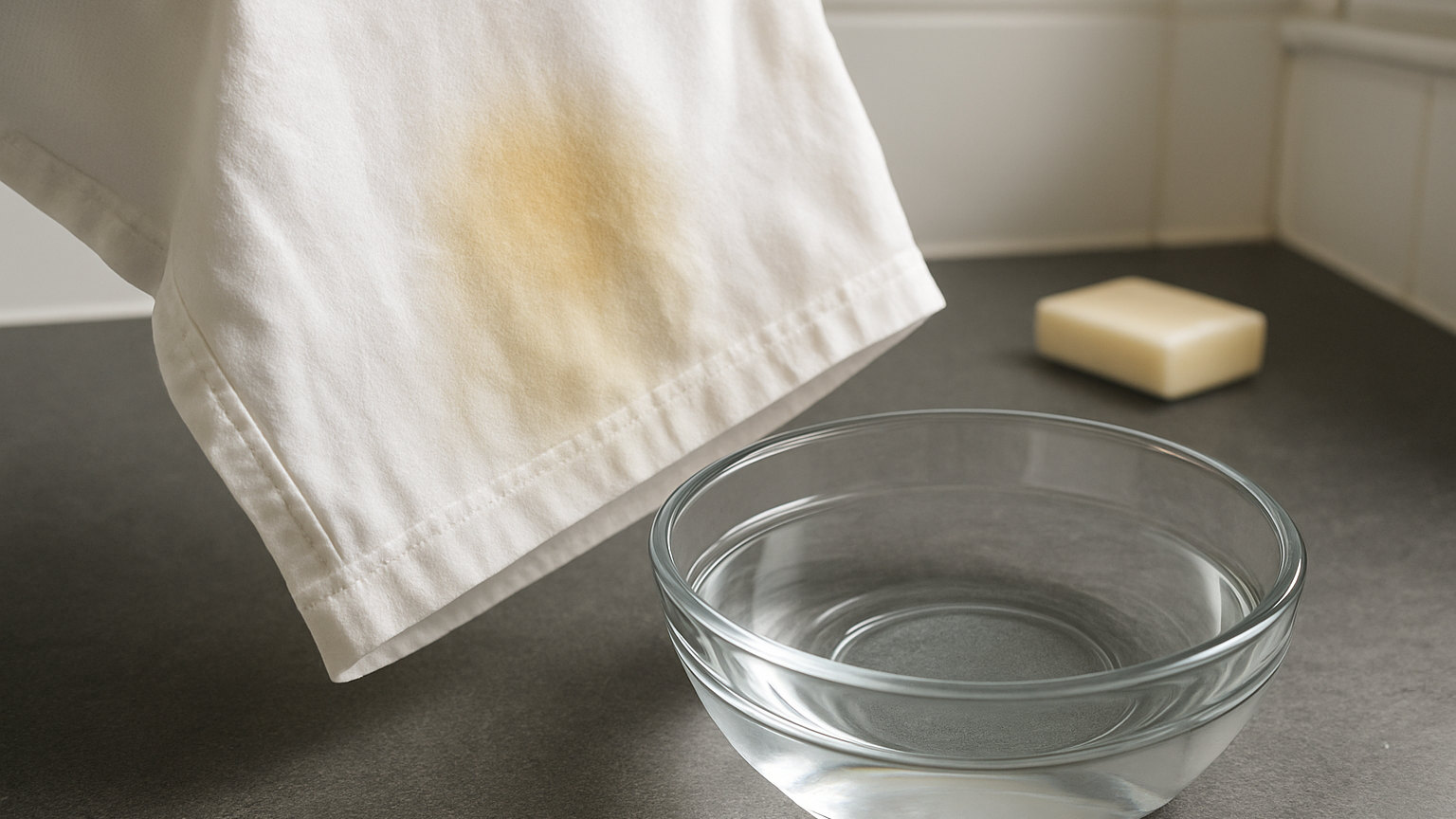
Because body oils oxidise over time, exactly as cooking oil does. The yellowing is not the makeup itself but the oils that were never fully removed, and it develops in the wardrobe as much as during wear.
An oxygen bleach soak on a white shirt deals with this well, particularly followed by drying in sunlight. It needs doing before the marks become established rather than after a year of accumulation.
How do you stop it happening?
- Let foundation set fully before dressing, and dress before applying it where practical.
- Apply less product along the jawline, which is where transfer happens.
- Use a setting powder or spray, which reduces transfer considerably.
- Treat the collar after every wear rather than letting the deposit build.
- Wash shirts after one wear rather than two if you wear makeup.
A collar treated each time takes thirty seconds. One treated after three months takes three attempts and may not come out completely.
Does the same apply to other garments?
Yes, anywhere makeup meets fabric repeatedly: scarves, the inside of jumper necklines, pillowcases and the shoulder of a coat. The treatment is identical, and the prevention is the same.
Pillowcases are worth mentioning separately, since they take a full night of contact and yellow faster than anything else in a house.
What about dark shirts?
The mark is less visible and the oil is still there, still oxidising and still weakening the fibre over time. Treat dark collars on the same schedule even though nothing shows, and avoid oxygen bleach, relying on the degreaser stage instead.
What if it has been there for months?
Expect several rounds. Apply washing up liquid generously, leave for an hour rather than fifteen minutes, and wash warm. Repeat across two or three washes. On white cotton, finish with an overnight oxygen bleach soak, which usually clears the remaining yellow entirely.
Does the shirt fabric make a difference?
A noticeable one. Pure cotton releases the oils more readily and tolerates the hot soak that finishes the job. Polycotton and easy care shirts hold oxidised oil more stubbornly and cannot take the same temperatures, which is why a non-iron shirt collar often stays faintly yellow when a cotton one comes clean.