Most grease on upholstery is not a spill. It is body oil transferred from heads, hands and arms over months, which is why the dark patches appear on headrests, armrests and the front edge of seat cushions rather than randomly. It builds gradually, attracts dirt as it goes, and by the time it is obvious it is well established.
What does the cleaning code allow?
Everything starts here. The label under a seat cushion or on the frame gives a code that determines what can be used.
- W – water based cleaners are safe.
- S – solvent only. Water will leave a ring.
- WS – either is acceptable.
- X – vacuum and brush only.
With no label, treat the piece as S and test any product on the back of the frame or the underside of a cushion.
What is the method for W and WS fabric?
- Vacuum the area thoroughly with an upholstery tool.
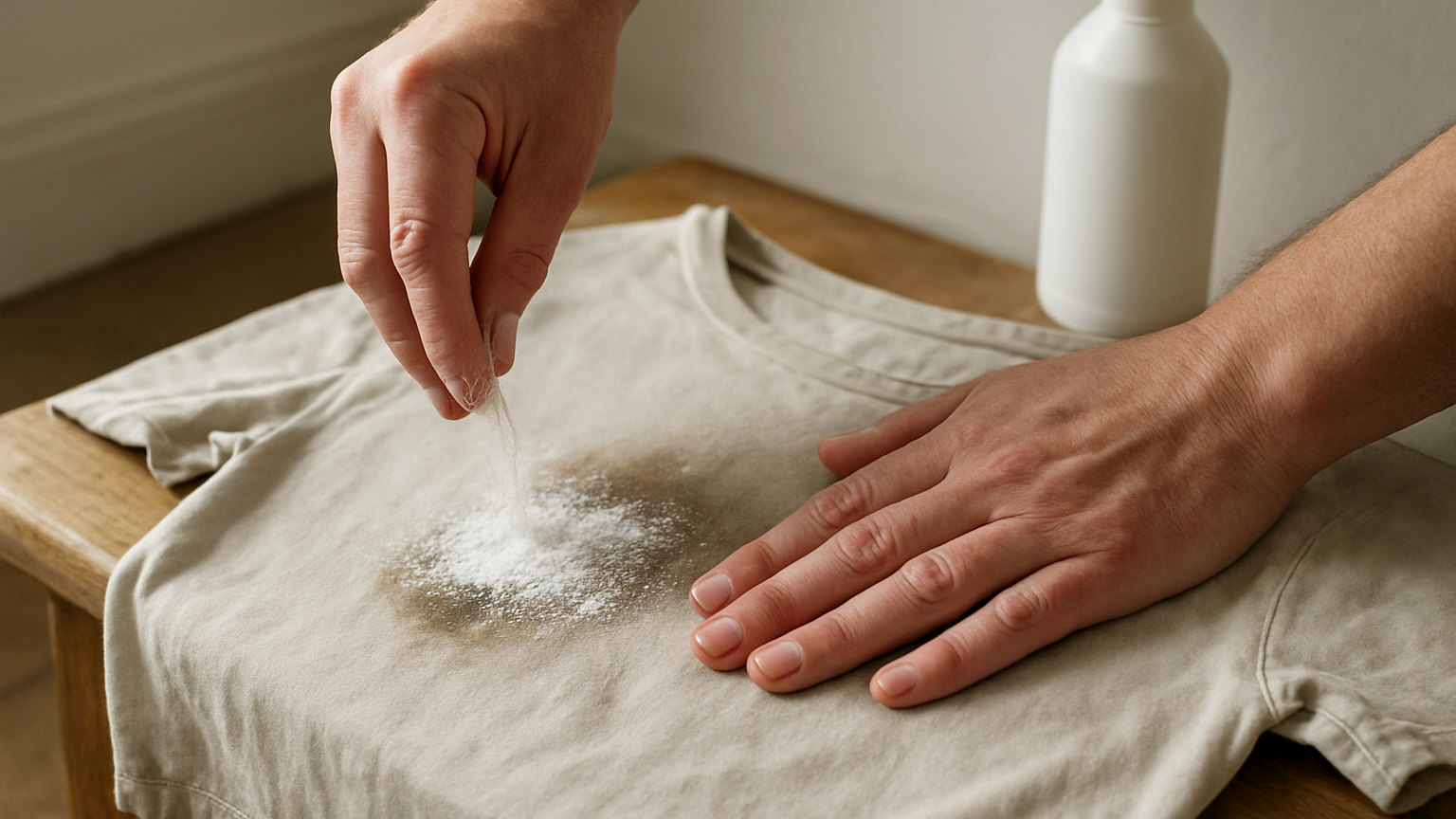
- Apply absorbent powder to a fresh greasy mark and leave it an hour, then vacuum.
- Mix a few drops of washing up liquid into warm water and whisk it into a foam.
- Apply the foam only, not the liquid, with a cloth or a soft brush.
- Work across a whole panel or cushion rather than a patch, so there is no visible boundary.
- Blot with a clean dry cloth.
- Wipe over with a cloth wrung out in clean water to remove the residue.
- Press a dry towel down and dry quickly with a fan.
Using the foam rather than the water is what avoids a ring. It carries the surfactant with a fraction of the moisture.
Why treat a whole panel?
Because cleaning one patch of an armrest that has darkened over two years leaves a clean area surrounded by a dirty one, and the contrast is more obvious than the original mark. Working to a seam gives a natural boundary.
What is the method for S coded fabric?
Vacuum, use absorbent powder for anything fresh, then use a proprietary solvent based upholstery cleaner following the instructions on the can. Do not improvise with household solvents, which can dissolve backing adhesives.
Test in a hidden area and let it dry fully before judging the result, since some solvents lighten dye.
What about leather?
Grease on pigmented leather usually wipes off with a damp cloth, since the coating keeps it on the surface. For a build up on a headrest, wipe with a cloth wrung out in warm water with a trace of washing up liquid, dry immediately, then apply a leather conditioner.
Aniline and unfinished leather absorbs oil and a mark may be permanent. Blot fresh spills, use an absorbent powder, and contact a leather specialist rather than experimenting.
How do you deal with a headrest that has gone dark?
This is the most common version of the problem and it needs patience rather than strength. Several light foam treatments over a few days work better than one aggressive attempt, which risks a water ring and a lightened patch.
A washable antimacassar or a throw over the headrest prevents it recurring, which is what those covers were invented for.
What about food grease on a dining chair?
Treat it promptly with absorbent powder and then the foam method, since a chair seat takes concentrated marks rather than a general film. Removable seat pads can often be unscrewed from the frame and treated flat, which is far easier than working vertically.
When should you call someone in?
For an X coded piece, for velvet, silk or wool upholstery, for a large spill that has soaked into the foam, and for anything valuable. Professional cleaning uses extraction that removes the moisture it introduces, which is the part that cannot be replicated at home and the reason water rings happen.
How often should upholstery be cleaned?
Vacuum weekly with an upholstery tool, which removes the dust that combines with body oil to make the dark patches. Treat marks as they appear rather than at a spring clean. A full clean once every year or two is enough for most sofas, and doing it before the armrests have visibly darkened gives a far better result than waiting.