Sugar based stains are among the simplest to remove, because sugar dissolves readily in warm water. Honey, golden syrup, maple syrup and jam all come out with very little effort if treated promptly. The trap is that heat from a dryer caramelises any residue into a brown mark that is far harder to shift than the original.
What is the basic method?
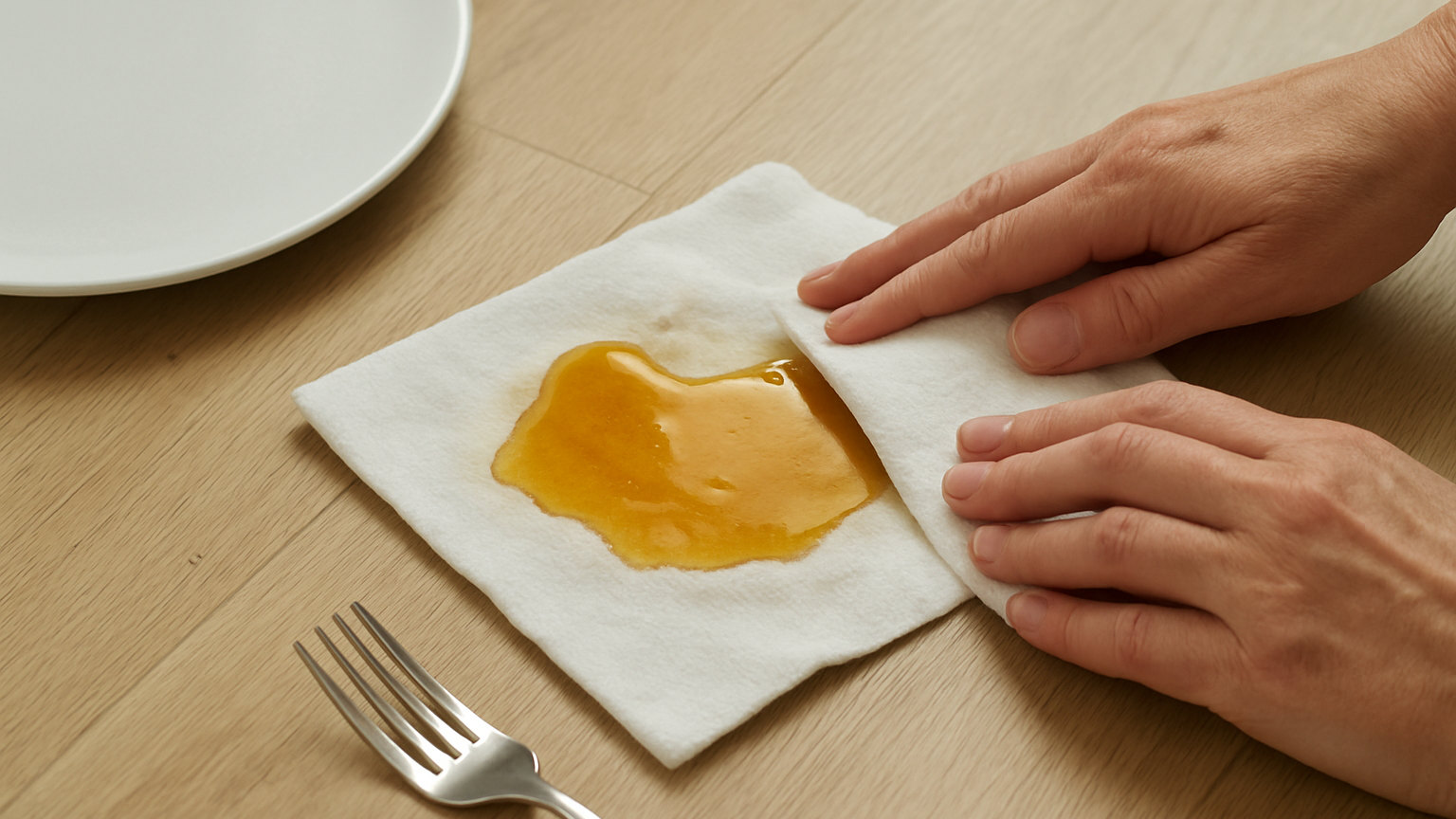
- Lift off as much as possible with a blunt edge, taking care not to press it in.
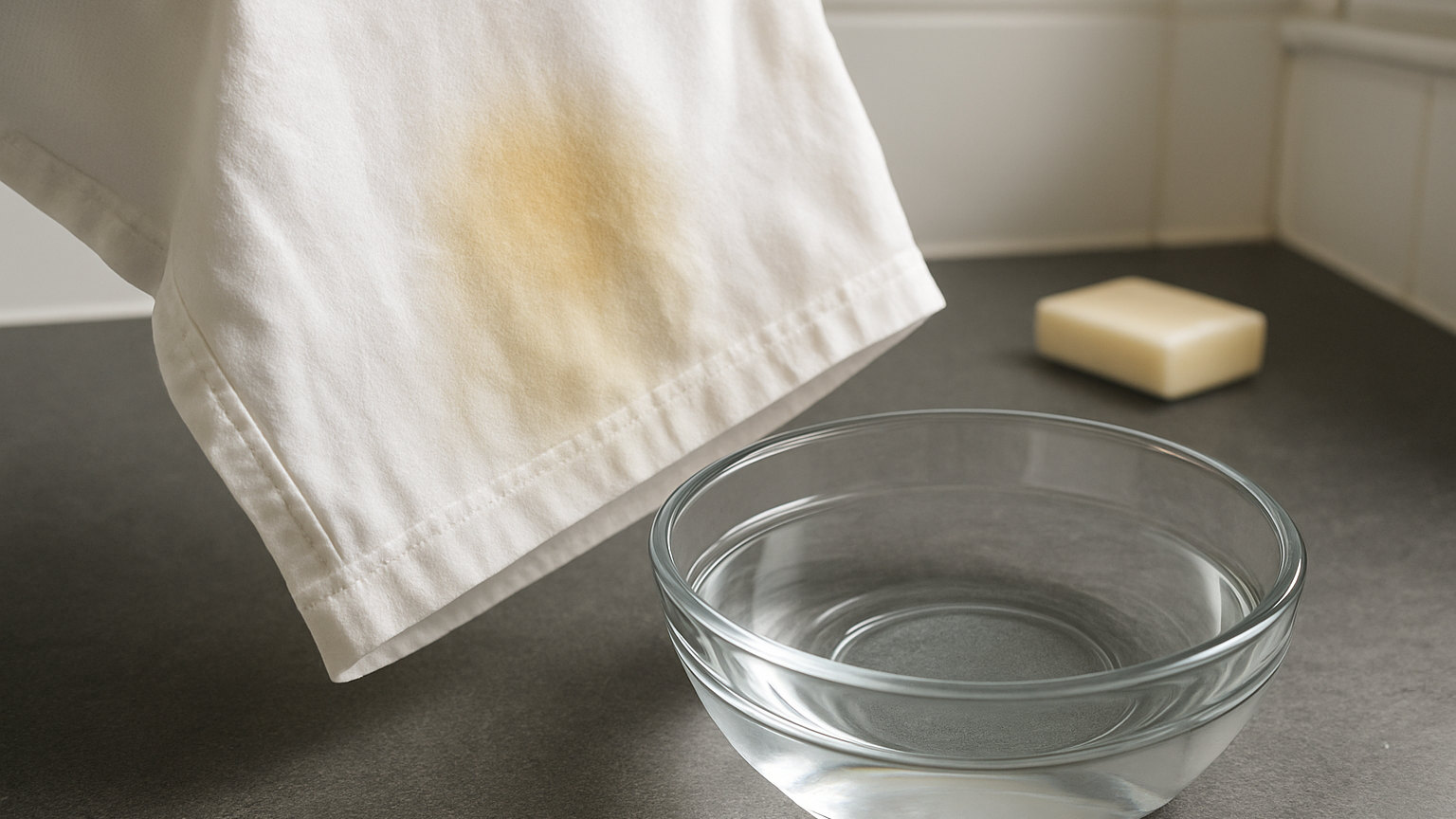
- Flush the back of the fabric with warm running water. Sugar dissolves quickly and most of the stain will go.
- Rub a little washing up liquid into whatever remains.
- Leave for five minutes, then rinse.
- Wash at the warmest temperature the fabric allows.
- Check before drying, since any residue will caramelise in a dryer.
Warm water is correct here, unlike most food stains. There is no protein to set, and warmth is what dissolves sugar.
Why is jam harder than honey?
Because jam is sugar plus fruit pigment. The sugar dissolves out easily and leaves the fruit colouring behind, which behaves like any other fruit stain and oxidises to brown over a few hours.
So treat jam in two stages: warm water for the sugar, then an oxygen bleach soak or sunlight for the pigment. Blackcurrant, strawberry and blackberry jams leave the strongest marks.
What about honey specifically?
Honey is almost entirely sugar and water and leaves very little colour. Warm water usually clears it completely. The reason honey stains persist is that people wipe at them, which spreads a sticky film over a wider area without removing anything.
Flush rather than wipe, and the mark disappears.
What about golden and maple syrup?
Both are sugar with some colouring. Treat the same way, with warm water flushing and a detergent rub for anything remaining. Maple syrup has more pigment than golden syrup and occasionally needs a second pass or an oxygen soak on white fabric.
What is the method for carpet?
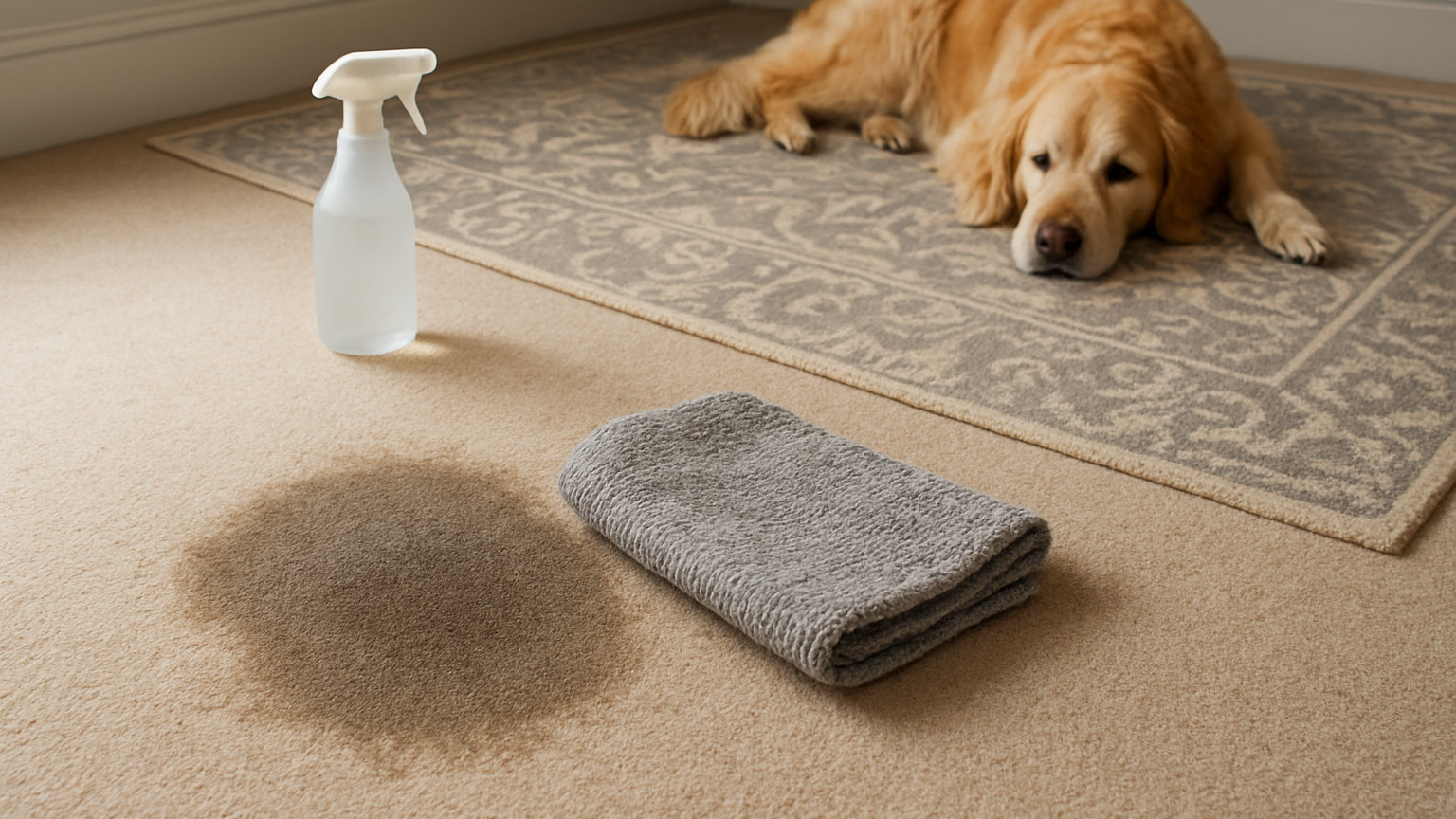
Lift off the solids, then blot with a cloth dampened in warm water, changing to a clean section frequently. Repeat until the stickiness has gone, which is the part that matters, since sticky residue in carpet attracts dirt and produces a dark patch within weeks.
Follow with a blot using warm water and a drop of washing up liquid, then rinse by blotting with clean water and press a dry towel down under weight. Check the area by touch once dry; if it still feels tacky, there is sugar left and it needs another pass.
What about upholstery and car seats?
Check the cleaning code first. On a W or WS coded fabric, the carpet method applies with minimal moisture. On an S coded fabric, water will leave a ring, so use a solvent based upholstery cleaner and accept that sugar is harder to remove without water.
Car seats are usually robust, and the priority is removing all the stickiness rather than the colour.
What if it has dried hard?
Soak it. Dried sugar becomes a hard glassy crust, and scraping at it damages the fabric. Warm water rehydrates it within a few minutes and it releases easily. For a large deposit, soak the whole item rather than spot treating.
Do not be tempted to chip it off, which pulls fibres and leaves a fluffy patch.
What if it has been through a dryer?
Caramelised sugar is a brown mark bonded to the fibre. Soak in warm water with a biological detergent for several hours, which softens it, then treat with an oxygen bleach soak if the fabric allows. It usually improves considerably over two attempts, though a heavily caramelised patch on a coloured garment may leave a shadow.
What about sticky hands and surfaces?
Warm soapy water, every time. Sugar residue on a worktop, a table or a high chair wipes away with warm water where a dry cloth simply moves it. The common frustration of a surface that stays tacky is nearly always a cloth that was not wet enough or water that was not warm enough.