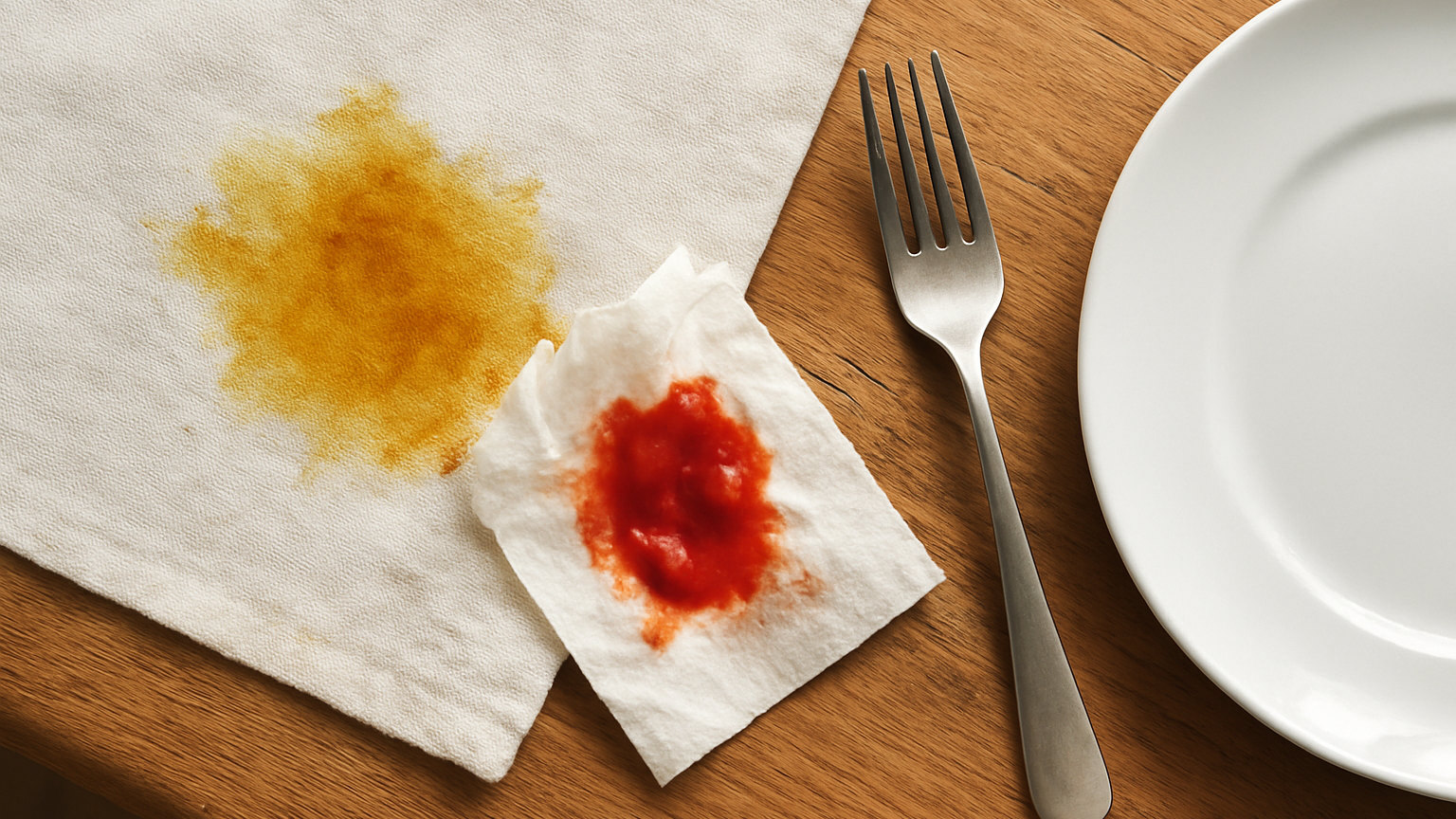
A tablecloth after a meal is not one stain but several, often overlapping, and usually including wine, gravy, candle wax and something greasy. Treating each mark individually is slow and gives uneven results. Soaking the whole cloth deals with all of them at once and is the approach most likely to work.
What should you do at the table?
As little as possible, and quickly. Blot a spill with a napkin, pressing rather than rubbing. Lift off any solids. Avoid the folk remedies that get suggested at dinner tables, particularly pouring salt or white wine onto red wine, neither of which helps and both of which add something else to remove later.
The aim is to stop the spill spreading until the cloth comes off the table.
What is the treatment sequence?
- Shake off crumbs and lift off any solid food and wax.
- Treat greasy marks individually with washing up liquid, worked in and left for ten minutes.
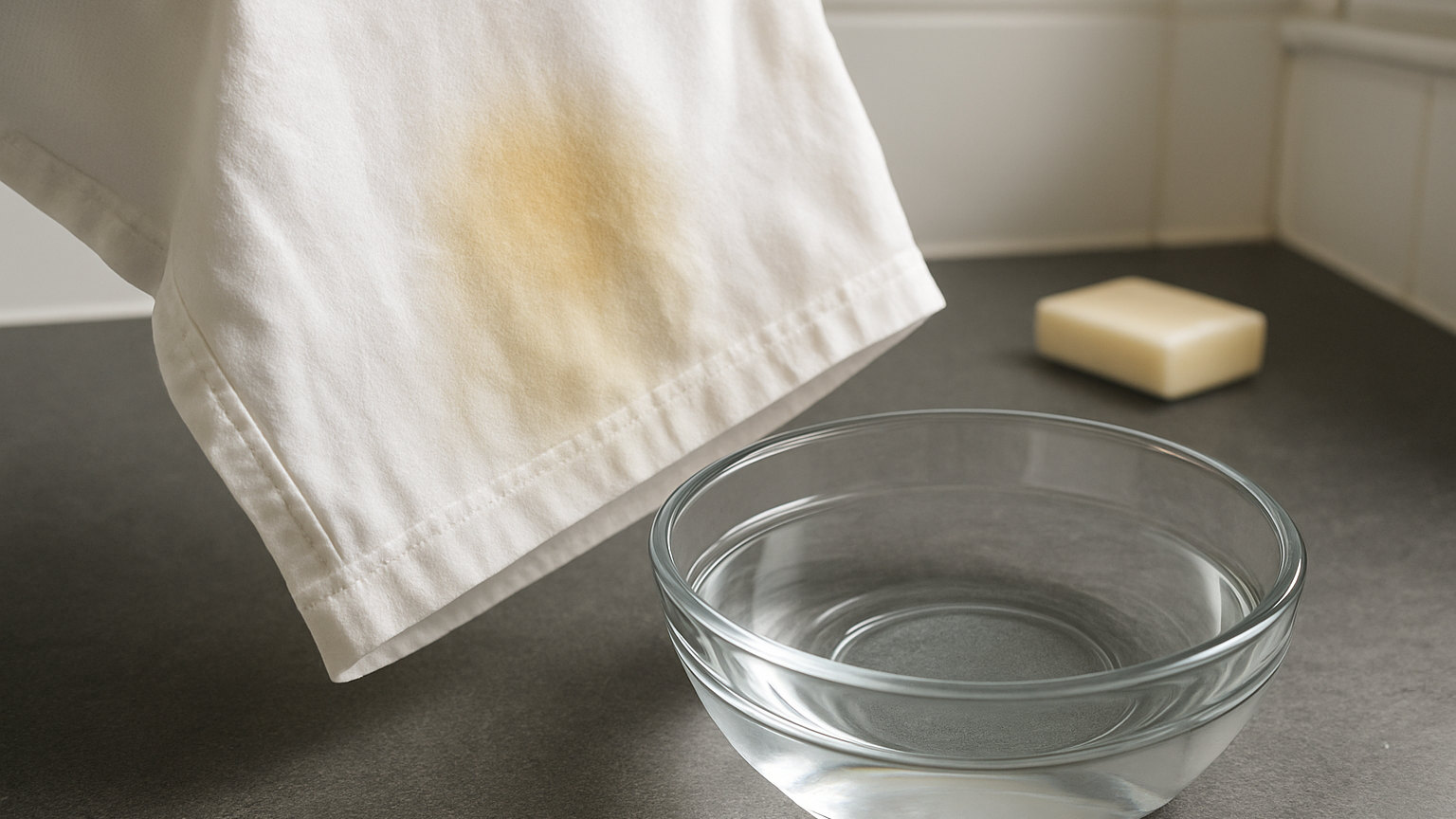
- Fill a bath or a large tub with warm water and dissolve a generous dose of oxygen bleach.
- Submerge the whole cloth, making sure nothing floats above the waterline.
- Leave it overnight.
- Wash at 40 or 60 degrees depending on the fabric, with a powder detergent.
- Dry in sunlight if the weather allows.
Why soak the whole cloth?
Because spot treating leaves visible patches where the treated areas are cleaner than the surrounding fabric, which is particularly obvious on white linen. A whole cloth soak lifts the general dinginess as well as the individual marks and leaves an even finish.
It also catches the marks you have not noticed, which on a tablecloth is most of them.
How do you deal with candle wax?
Let it harden completely, then flex the fabric and lift off as much as possible with a blunt edge. Place brown paper or kitchen paper above and below the remaining wax and press with a warm iron. The wax melts and is absorbed into the paper.
Move to a clean part of the paper each time and repeat until no more transfers. Treat any remaining colour from a dyed candle with washing up liquid, then include the cloth in the general soak.
What about red wine?
Blot immediately, then flush the back of the fabric with cold water. Do not use hot water, which darkens the tannins. An oxygen bleach soak is the reliable treatment afterwards, and white cotton and linen respond very well.
Salt is the usual advice at the table and does little beyond absorbing a small amount of liquid. Blotting achieves more.
What temperature should table linen be washed at?
Sixty degrees for white cotton and linen, which tolerate it and benefit from the higher temperature on food soiling. Forty for coloured cloths and for anything with embroidery or lace trim.
Check for shrinkage on a new cloth, since unwashed linen can lose a noticeable amount on the first hot wash.
How do you deal with an old yellowed cloth?
Yellowing in stored linen is usually oxidised residue or age. A long soak in oxygen bleach, repeated over several days, followed by drying in sunlight, improves it considerably. Be patient rather than aggressive, since chlorine bleach weakens old fibres and can leave them brittle.
Support a wet vintage cloth fully when lifting it, since linen is weaker when saturated.
How should table linen be stored?
Clean, completely dry and out of direct light. Fold with tissue between the layers for anything valuable, and avoid sharp permanent creases, which weaken the fibres along the fold over years. Refold occasionally so the crease lines move.
Never store a cloth with an untreated stain in it. An invisible sugar or oil mark will oxidise into a clear brown patch over a few months in a cupboard, which is how a cloth comes out at Christmas marked in places nobody remembers spilling anything.
Is it worth ironing table linen?
For a special occasion, yes, and linen in particular looks markedly better pressed. Iron it damp on the highest setting with plenty of steam, since bone dry linen is hard work and gives a poor result. For everyday use, folding a cloth neatly while it is still slightly warm from drying removes most of the creasing without an iron at all.