Wax is unlike other stains because it is solid at normal temperatures. It does not dissolve in water and it does not respond to detergent while it is hard. The technique is a two stage one: make it brittle and break most of it off, then melt what remains directly into absorbent paper.
What is the first stage?
- Let the wax harden completely. Never touch it while it is liquid.
- Chill it further with an ice cube in a bag, or put the item in the freezer for an hour.
- Flex the fabric to crack the wax.
- Lift the pieces off with a blunt edge such as a spoon handle or a plastic card.
- Pick off as much as will come away before introducing any heat.
Getting the bulk off cold is what makes the second stage quick. Going straight to the iron with a thick deposit simply spreads melted wax over a wider area.
What is the iron and paper method?
Place a sheet of brown paper, a paper bag or plain kitchen paper above and below the remaining wax. Set an iron to a low to medium heat with no steam, and press it onto the paper for a few seconds at a time.
The wax melts and is absorbed into the paper. Move to a clean section of paper each time and repeat until no more transfers. Using the same patch of paper repeatedly simply puts the wax back.
Do not use a high heat, which can scorch the fabric, and do not use steam.
What about the coloured mark left behind?
Dyed candles leave a pigment stain once the wax has gone, and that is a separate problem. Treat it with washing up liquid worked into the mark, left for ten minutes, then rinsed in warm water.
For anything remaining on white or colourfast fabric, soak in oxygen bleach and dry in sunlight. Surgical spirit dabbed on from the reverse works on stubborn candle dye, tested first.
Which fabrics cannot take the iron method?
Synthetics with a low melting point, including acetate, acrylic and some nylons, where the iron risks melting the fabric along with the wax. Anything with a plastic print or applied decoration. And delicate fibres such as silk.
For these, freeze and pick off as much as possible, then treat the residue with a solvent based stain remover or take the item to a professional cleaner.
How do you remove wax from carpet?
The same two stages. Chill with ice in a bag, break the wax up and pick the pieces out with the pile rather than against it. Then lay brown paper over the area and press with a warm iron, moving to clean paper as it absorbs.
Take care with synthetic carpet, which can melt. Keep the iron on a low setting, keep it moving, and test at the edge of the area first.
What about wax on a hard surface?
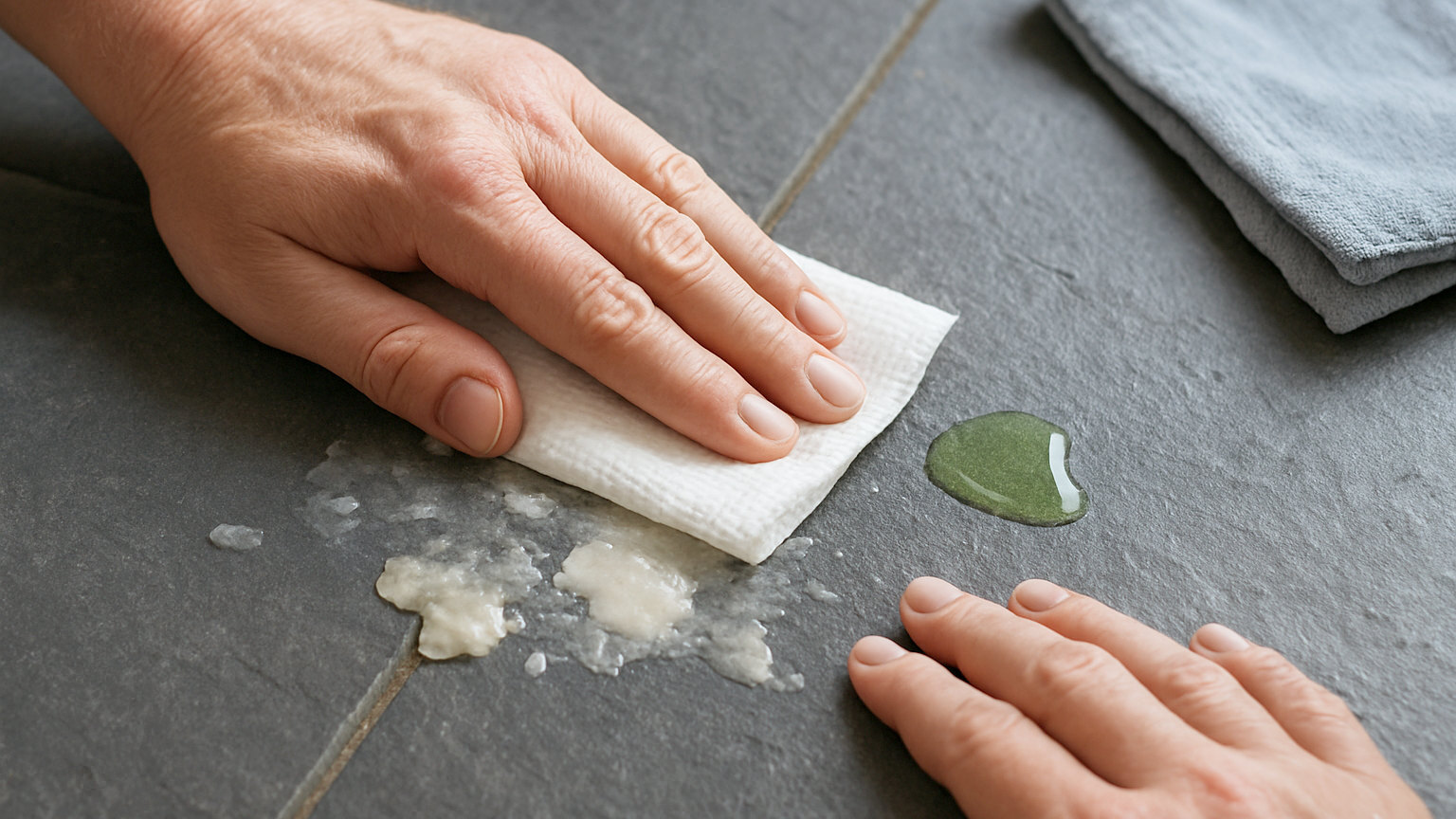
On a table or a worktop, let it harden fully and lift it with a plastic scraper. Soften a stubborn edge with a hairdryer rather than an iron. Follow with warm soapy water and a soft cloth.
On polished wood, be particularly careful not to scrape the finish, and use a hairdryer and a soft cloth rather than a blade. On natural stone, avoid heat entirely and use a plastic scraper, since some stone can crack.
What about wax in a candle holder or a jar?
Put the holder in the freezer for a few hours and the wax will usually contract enough to come out in one piece. For a glass jar, pouring in boiling water floats the wax to the surface, where it can be lifted off once cool. Do not pour molten wax down a sink.
What causes the most damage?
Trying to wipe wax while it is still liquid, which spreads it into a much larger area and forces it deep into the weave. The correct response to a spill is to let it set completely, which feels wrong and is right.